




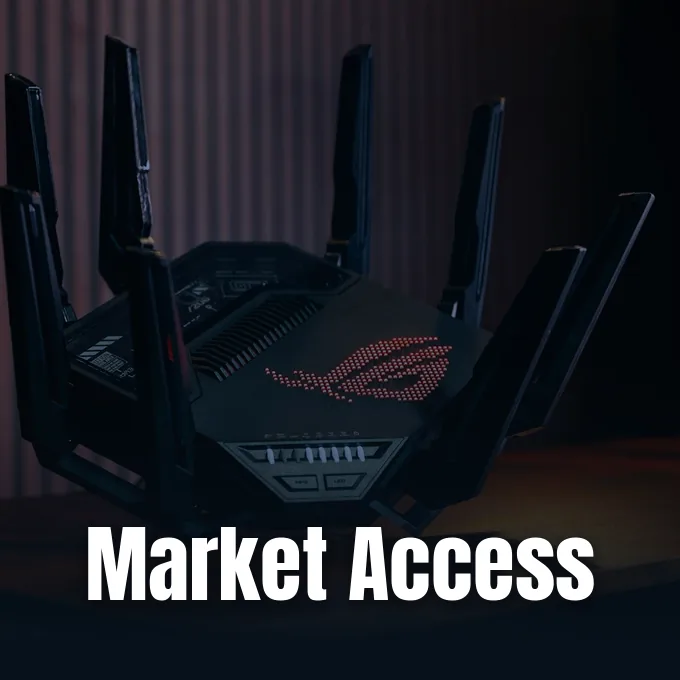
A March 2028 expiry date now hangs over the next generation of Asus routers. The Federal Communications Commission (FCC) has granted the Taiwanese company conditional approval covering its consumer and small-business networking families, according to reports citing the agency’s notice. The decision opens a US route for upcoming Asus wireless routers, including Wi-Fi 8 hardware. TP-Link still awaits the same exemption, although its previously authorized models can remain on sale. [1–3]
Asus Routers Get a Deadline
Asus secured a window running from September 9, 2026, through March 6, 2028, TechRadar reports. Roughly 18 months. Within that period, the company can move ahead under an exemption from restrictions that have blocked authorization of new foreign-produced consumer routers since March, a hurdle affecting manufacturers across the industry. The FCC calls the exemption conditional approval. Its expiry date makes clear that Asus has gained time-limited clearance, rather than an indefinite release from regulatory scrutiny. [1, 2]
The FCC’s list reaches well beyond a single gaming router: it covers the RT Series, ROG GT Series, ROG Strix GS Series, TUF Gaming Series, ExpertWiFi Series, ZenWiFi Mesh Series and 5G MiFi Series. Wireless repeaters qualify too. So do wireless access points. For Asus, that scope matters because the decision reaches home networking, gaming equipment and small-business products together, instead of clearing only the next flagship launch while leaving the rest of its portfolio waiting. TechSpot and Tom’s Hardware both reproduce the covered product families in their reports, with ZenWiFi mesh systems and ExpertWiFi business hardware sharing the same March 2028 deadline. The exemption spans product families, including equipment outside the familiar standalone home-router category. [2, 3]
Asus now joins manufacturers that secured clearance earlier. Netgear moved in April; Amazon’s Eero/Leo and Nokia also appear among the approved companies. [1, 2]
What the March Restrictions Changed
The FCC added foreign-produced consumer routers to its Covered List in March, according to TechSpot. The list identifies equipment subject to national-security restrictions. New models need conditional approval from the Department of War or the Department of Homeland Security to overcome that barrier. The FCC cited supply-chain vulnerabilities and cybersecurity risks, pointing to the Volt, Flax and Salt Typhoon campaigns in explaining its decision. Those are the agency’s stated grounds. [2]
Manufacturers face questions extending beyond a router’s specifications. TechRadar describes scrutiny of corporate ownership, board members, intellectual-property ownership, router designs and firmware updates (the software updates that change how the device operates). TechSpot adds another requirement: applicants must offer a plan to establish or expand router manufacturing in the United States, bringing production arrangements into a process that also examines corporate control. Neither report details Asus’s manufacturing commitments. [1, 2]

US institutions have also shaped technology stories through other kinds of intervention, including the White House Tetris clone’s removal after company pushback. Here, the FCC controls access for new hardware through equipment authorization. That leaves the next product launch dependent on a manufacturer’s regulatory position as well as its development schedule, and Asus has Wi-Fi 8 devices approaching that gate.


Wi-Fi 8 Reaches the Gate
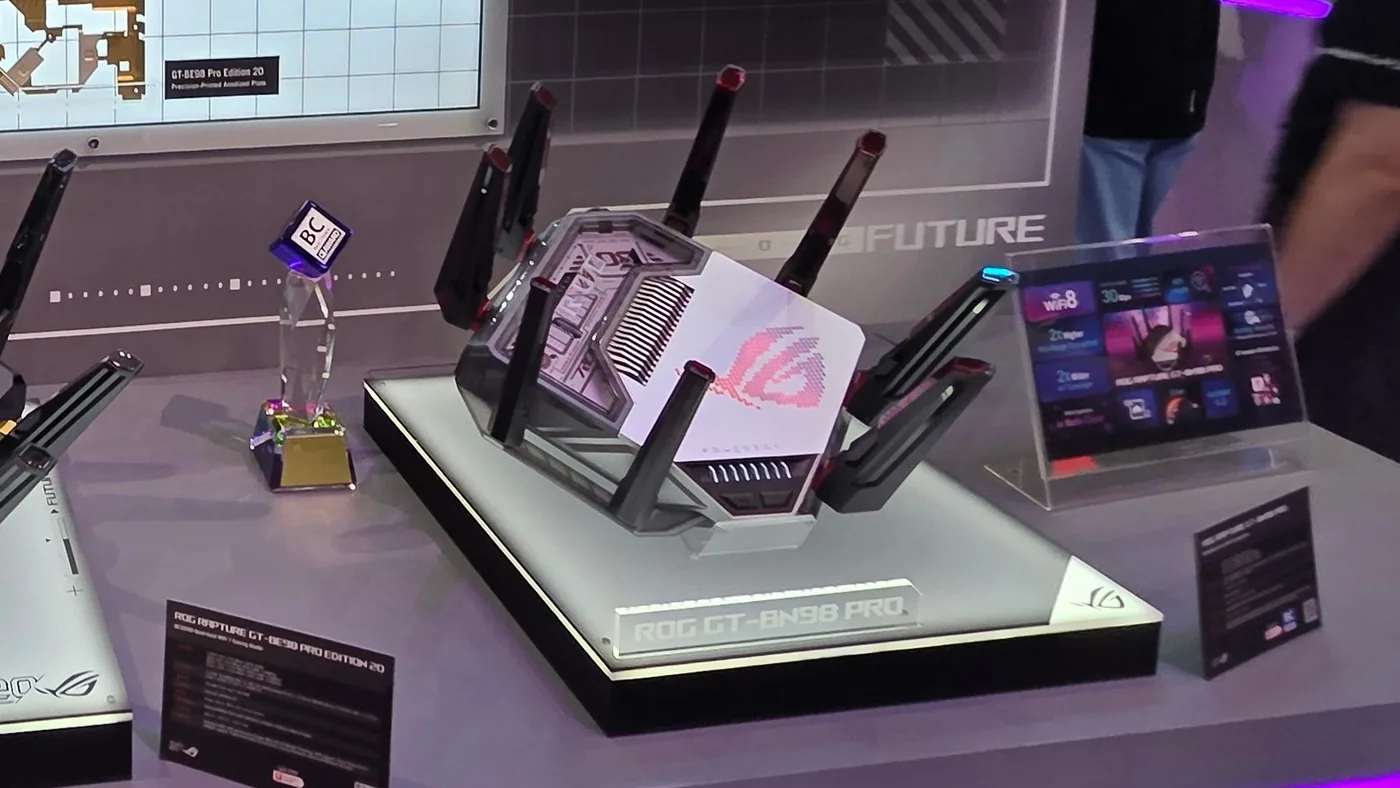
Asus brought its ROG NeoCore Wi-Fi 8 concept to CES this year, then announced the ROG Rapture GT-BN98 Pro in June, according to Tom’s Hardware. The company promises twice the real-world throughput of its current Wi-Fi 7 products. That is Asus’s performance claim. The supplied reporting does not independently verify it. Regulatory clearance supplies no benchmark result, and the approval should not turn a manufacturer’s speed promise into an established finding. [3]
TechSpot identifies the ROG Rapture GT-BN98 series and ZenWiFi BN12 mesh system among Asus’s new Wi-Fi 8 hardware. It reports that the former has reached Canada, with a broader rollout starting in October and US launch details still to follow from Asus. Canada has a head start. For American availability, the approval removes a regulatory obstacle, while the company’s own launch announcement remains the missing piece of the timetable. [2]
Wi-Fi 8 gives Asus routers a product story beyond the exemption itself: Tom’s Hardware describes the generation as targeting improvements in reliability and everyday wireless performance as manufacturers move beyond Wi-Fi 7. No confirmed US launch date appears in these reports. The distinction matters for TP-Link as well, because announcing a new generation does not settle whether a company can introduce it in the American market. [2, 3]
TP-Link Still Awaits Its Exemption
TP-Link remains outside the conditional-approval group in the September reporting. The company met FCC officials in April and argued that TP-Link Systems is an American business headquartered in Irvine, California. TechRadar reports that US authorities investigated its historic Chinese ties in late 2024 and 2025, and that Texas sued the company in early 2026. TP-Link disputes those allegations. Its corporate-identity argument has yet to secure the exemption described by its competitors. [1, 2]
TP-Link says California-based TP-Link Systems is separate from China’s TP-Link Technologies, and says it has manufactured all US-bound networking equipment in Vietnam since 2018. Those are the company’s representations. In an April statement quoted by TechRadar, TP-Link said it “fully complies with all US regulatory requirements.” The supplied reports do not independently establish the company’s ownership and production claims, but they record its rejection of the allegations behind the dispute. [1]
TP-Link has its own Wi-Fi 8 schedule at stake. TechSpot says the Archer 8 announcement targeted October 8, while Tom’s Hardware reports no confirmed US release date for its newly announced Wi-Fi 8 “Ultra” routers. October 8 is not a confirmed US launch. Until TP-Link obtains clearance for new models, its announced hardware faces an authorization barrier that Asus and several other rivals have already crossed. [2, 3]
Existing Routers Can Stay Connected
Previously authorized TP-Link models can still sell and operate in the United States, TechSpot reports. Existing owners face no replacement requirement under this measure. The restriction targets authorization of new models, so a blocked future launch and a router already providing a home’s connection occupy different positions under the policy. That also explains why broad headlines about a router “ban” can obscure what actually changes on shop shelves. [2]
How secure are Asus routers? The FCC’s finding addresses national-security risk: Tom’s Hardware quotes the agency describing a determination that the covered devices “do not pose risks to U.S. national security.” The reporting contains no independent security audit of every model. Approval alone cannot answer every question about an individual router’s firmware or security history, just as the absence of TP-Link’s exemption does not establish that every existing TP-Link device is compromised. [2, 3]
Asus still owes the US market launch details for its next hardware, and TP-Link still needs a decision that would let it introduce new models under the exemption process. Neither report supplies a date for TP-Link’s clearance. For Asus routers, the concrete milestone already on the calendar is March 6, 2028, when the current conditional approval expires; what happens beyond that window remains unstated in the supplied reporting. [1–3]
- ONLINE NEWS Hale, C. (2026, September 11). Asus routers can now be sold in the US — but it’s bad news for TP-Link. TechRadar. [Article Link]
- ONLINE NEWS Thubron, R. (2026, September 11). Asus routers escape US router ban, but TP-Link is still waiting. TechSpot. [Article Link]
- ONLINE NEWS Hill, B. (2026, September 10). Asus routers gain FCC’s ‘Conditional Approval’ for sale in the US as TP-Link remains locked out — Asus’s Wi-Fi 8 ambitions remain intact. Tom’s Hardware. [Article Link]


