





Star Wars Galactic Racer landed critical acclaim across major gaming outlets on October 2, establishing the arcade title as one of the highest-rated releases in the franchise’s history. Developed by UK-based Fuse Games and published by Secret Mode, the high-speed racer combines intense repulsorcraft competition with roguelite progression systems. The project arrives officially on PC, PlayStation 5, and Xbox Series X/S on October 6 [1].
Critical Acclaim Propels Star Wars Galactic Racer
Reviews published ahead of launch propelled the title to an aggregate score of 88 on Metacritic across 50 critic reviews, securing a position among the five best-reviewed games in the brand’s history. That critical standing places the experience directly in company with legendary franchise releases such as Knights of the Old Republic, Dark Forces II, Rogue Squadron II, and Jedi Outcast [1]. Outlets including Eurogamer, Giant Bomb, Radio Times, and Mirror Gaming awarded the release perfect five-star scores. GamesRadar+ reviewer Will Sawyer praised how the game “brings the carnage-filled arcade racing of the 2000s into the modern day” [2].
The critical reception marks a welcome resurgence for Lucasfilm video game adaptations following strong community enthusiasm for Star Wars Zero Company releases across the modding community earlier in the year [1]. Reviewers highlighted that the score surpasses modern franchise entries, outperforming both Respawn Entertainment’s Cal Kestis adventures and EA’s Star Wars Battlefront titles. The lowest registered scores remained respectable at 68 and two 7/10 assessments. The Metacritic score reached eighty-eight.
UK studio Fuse Games produced the title as its debut release, drawing upon seasoned creative leadership from racing veterans. The studio includes five Criterion veterans [2]. Fuse Games developed the title. Those creative leads contributed significantly to acclaimed entries in the Burnout and Need for Speed series, while also supporting DICE on technical development for modern battlefront shooters. That pedigree directly informs the tactile driving model and cinematic crashes that dominate every contest.

Criterion DNA Shapes the High-Speed Driving Model
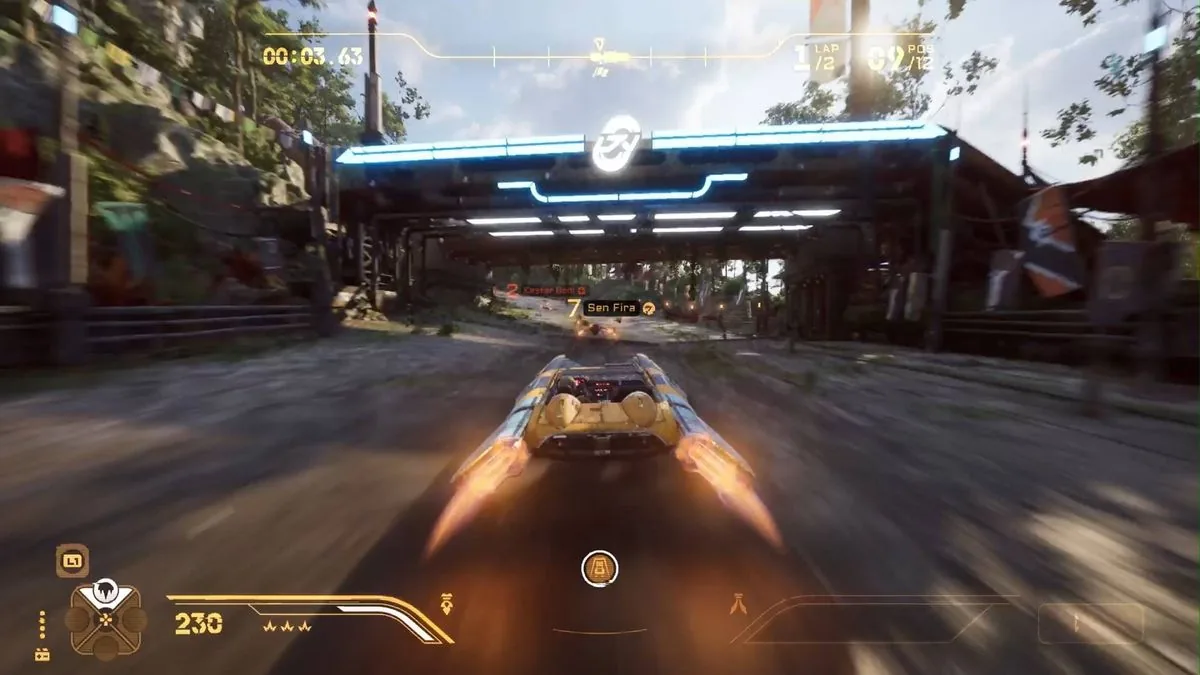
Instead of conventional wheeled sports cars, competitors pilot four distinct repulsorcraft vehicle classes that hover smoothly on responsive antigravity cushions across rugged planetary courses [4]. Landspeeders serve as durable, balanced vehicles with smooth, sweeping drift trajectories. Speeder bikes offer blistering straight-line acceleration at the cost of lightweight chassis fragility. Skim speeders bank vertically along sheer canyon walls to thread through narrow chasms. Podracers achieve the highest recorded top speeds in the game, though their extreme sensitivity and volatility make them specialized tournament highlights rather than everyday campaign rides [3]. Four repulsorcraft classes are available [4].
Speed management revolves around two distinct acceleration systems that demand strict tactical discipline from drivers during every lap [3]. The standard Afterburner delivers a predictable, rechargeable surge of forward momentum with minimal mechanical liability. In sharp contrast, the Ramjet system supercharges the repulsorcraft engines to hit velocities exceeding 600 km/h, but rapidly drives sensitive temperature gauges into hazardous redline territory [2]. Drivers must disengage the supercharger before internal thermal spikes trigger sudden vehicular explosion. Speeder crashes trigger slow-motion takedown cameras reminiscent of Burnout 3: Takedown, scattering crumpled hull plating across the tarmac as rival machines disintegrate into burning shrapnel.
Every race begins with an interactive pre-flight checklist. Drivers input rapid directional sequences within a five-second window to prime ignition coils and system batteries [2].


Roguelite Tours Define the Galactic Racer Campaign
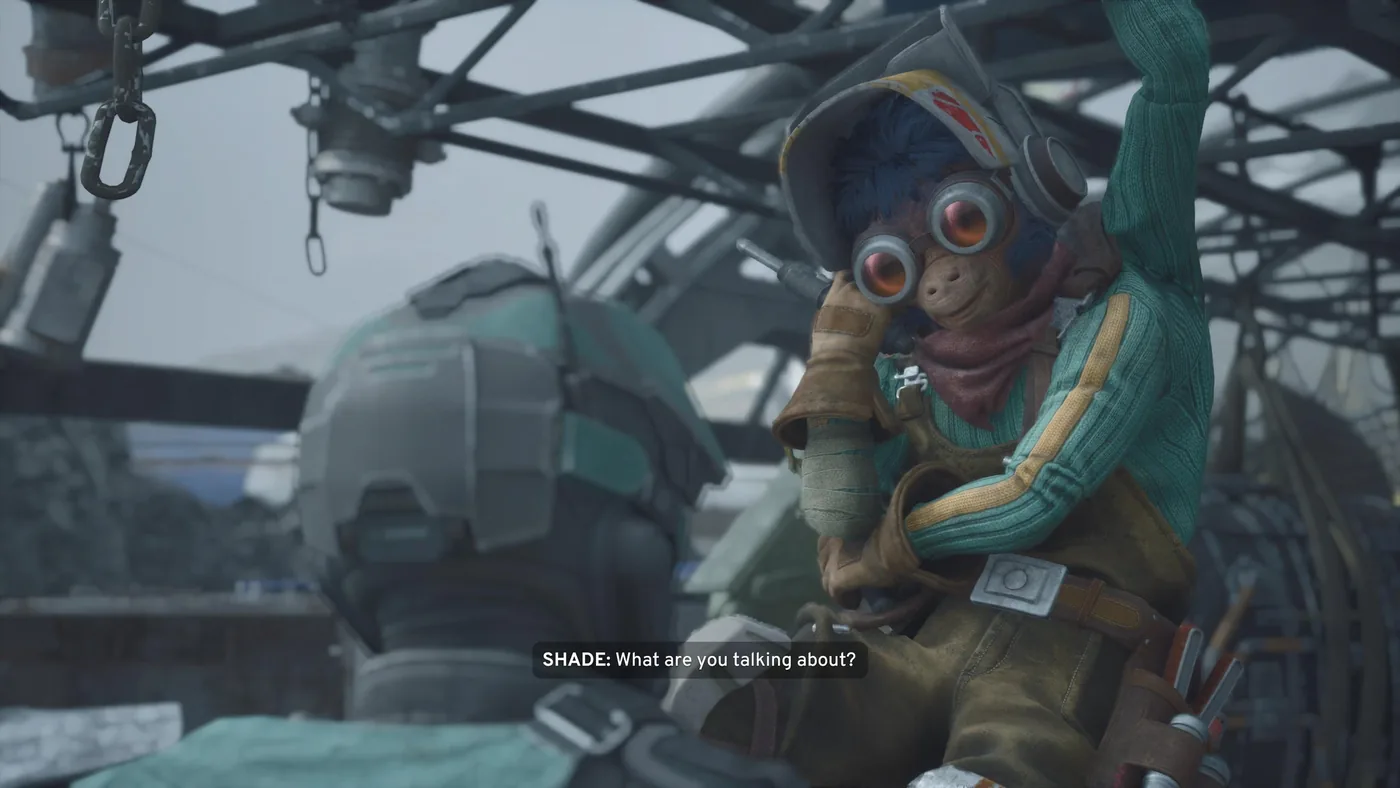
Set during the transitional New Republic era following Return of the Jedi, the narrative follows Shade, an overlooked courier from the industrial colony world of Gathleon [6]. Shade enters the underground Galactic League to challenge the haughty reigning champion Kestar Bool, whose wealthy family subjugated Shade’s home world. League founder Darius Pax sponsors Shade’s qualification bid to prevent Bool from seizing autocratic control over the circuit. While the revenge storyline takes a secondary role behind the racing action, critics noted that the personal underworld stakes provide genuine narrative momentum throughout the campaign [4].
Rather than following a traditional linear cup schedule, the single-player campaign structures each championship tour as a branching objective map inspired by roguelite titles like FTL: Faster Than Light [3]. Players select paths across varied event nodes, weighing low-risk time trials against hazardous eliminator races where competitors in last place are disqualified every thirty seconds [4]. Elimination events offer lucrative credit bounties and rare chassis parts, but finishing outside the top three deducts a precious League Entry Token [7]. Three crashes wreck your craft [2]. Wrecking your speeder ends the current tour, wiping unbanked upgrades and forcing an ambitious pilot to restart the act.
Between intense tournament heats, racers explore atmospheric third-person paddock hubs to consult mechanics, negotiate black-market component exchanges, and accept high-risk sponsor bounties from notorious underworld figures [6]. In garages, Shade consults four-armed engineer Hibi, who repairs stabilizers and installs randomized performance enhancements [5]. Narrative Director Nathaniel Daw revealed that voice actor Lucy Montgomery originally suggested Hibi’s distinctive Liverpool accent during studio recording sessions to establish the character’s comedic personality. Lucy Montgomery voices mechanic Hibi [7]. Retired prequel champion Sebulba also frequents the garages, giving Shade access to playable flashback races on the classic Boonta Eve circuit [6].
Planetary Hazards Challenge Vehicle Builds Across Six Worlds
Course designs emphasize distinct environmental obstacles across six core worlds: Tatooine, Ando Prime, Sentinel I, Jakku, Crait, and Lantaana [2]. On the sub-zero tundra of Ando Prime, frigid winds induce a Cooled status that freezes steering linkages, yet simultaneously allows pilots to fire their Ramjet superchargers for prolonged bursts without overheating. Conversely, the treacherous volcanic routes of Sentinel I present open magma flows and caustic waste reservoirs that rapidly inflict damaging Burning or Corroded penalties on unshielded hulls [5]. Drivers who graze these acid zones watch their shielding evaporate while engine manifolds rapidly overheat.
Vehicle customisation empowers players to formulate specialized technical responses to these environmental hurdles by acquiring randomized performance components, passive perks, and triggered tactical abilities [3]. Pilots can install hull plates that regenerate energy reserves upon violent collisions, or equip emergency vent systems that dump stored heat instantly [5]. A controversial autopilot gadget grants brief bursts of computerized steering assistance through chaotic chicanes, which can save struggling pilots in tight cave networks. Christian Donlan of Eurogamer described creating an extreme build focused entirely on boost capacity and automated steering, sacrificing manual handling to survive brutal later stages [3].
Such synergistic builds reward strategic experimentation throughout repeated championship attempts. What happens when a poorly configured speeder enters an acid trench? The engine explodes immediately [5].
Track Readability Issues Temper Blistering Speeds
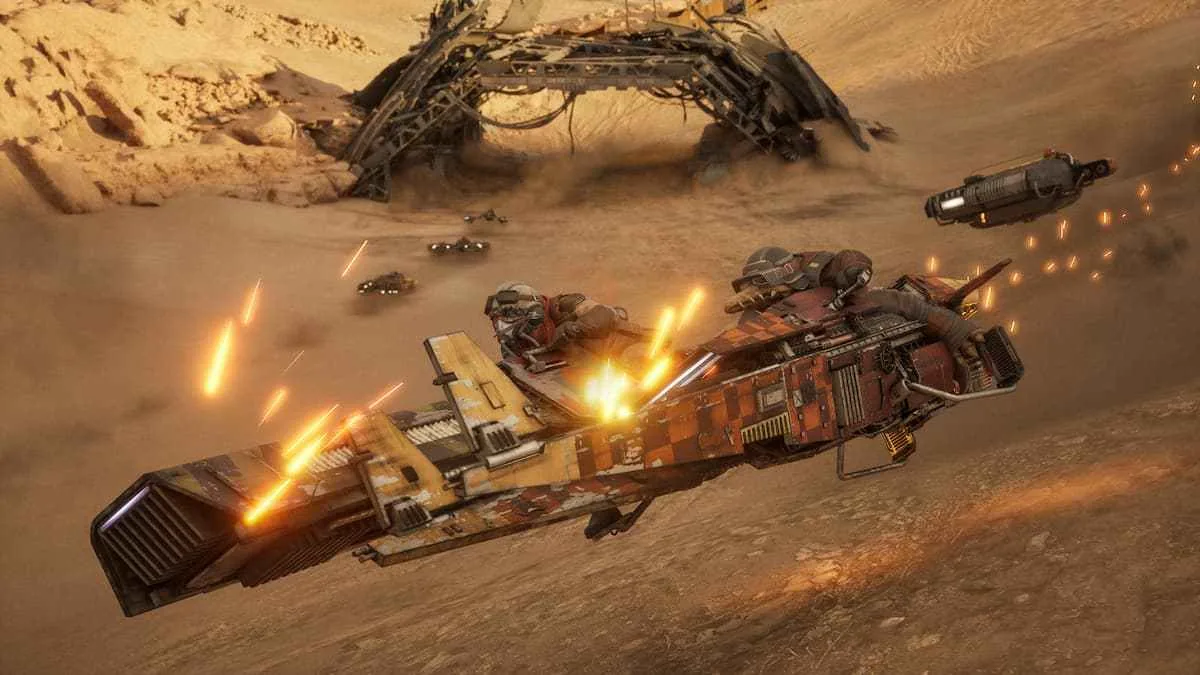
Despite sweeping praise for its handling and presentation, critics singled out track readability as a recurrent obstacle during high-velocity runs. At speeds exceeding 450 km/h, distinguishing white ice obstacles from white snow tracks on Ando Prime proves exceptionally difficult without additional course markers. Similar visual confusion occurs across the brown sandstone formations of Tatooine, where unlit rock outcroppings blend into surrounding dust clouds [5]. Reviewers reported frequent catastrophic collisions caused entirely by low environmental contrast rather than player piloting errors.
Structural pacing in the campaign’s third act also drew criticism for excessive repetition. While initial tours cycle dynamically through unpredictable event nodes, Act 3 forces competitors through an unvarying gauntlet spanning all six planetary circuits in a rigid predetermined order. Because each planet divides a single sprawling terrain mesh into several similar circuits, track layouts on worlds like Jakku begin to blur together after thirty hours of play [2]. Podracing enthusiasts also noted that classic high-speed twin-engine craft remain largely confined to scripted flashback sequences and multiplayer lobbies rather than integrating freely into the core campaign [4].
Competitive online multiplayer modes support eight pilots in podracers or twelve competitors in standard repulsorcraft classes across intense custom championship circuits featuring shared upgrade progression. The standard edition costs sixty dollars [5]. The title launches October 6 [6].
- ONLINE NEWS McCrae, S. (2026, October 2). Star Wars: Galactic Racer Metacritic score makes it one of the best-rated Star Wars games of all time, beating every Battlefront title. GamesRadar+. [Article Link]
- ONLINE NEWS Sawyer, W. (2026, October 2). Star Wars: Galactic Racer review: “True to its Burnout legacy, blisteringly fast space racing keeps me coming back to the grid”. GamesRadar+. [Article Link]
- ONLINE NEWS Donlan, C. (2026, October 2). Star Wars: Galactic Racer review – sci-fi royalty gets the Burnout treatment, and the result is absolute racing paradise. Eurogamer. [Article Link]
- ONLINE NEWS Parijat, S. (2026, October 2). Star Wars: Galactic Racer Review – Now THIS is Podracing. GamingBolt. [Article Link]
- ONLINE NEWS Macgregor, J. (2026, October 2). Star Wars: Galactic Racer review. PC Gamer. [Article Link]
- ONLINE NEWS Zwiezen, Z. (2026, October 2). Star Wars: Galactic Racer: The Kotaku Review. Kotaku. [Article Link]
- ONLINE NEWS Güster, L. (2026, October 2). Star Wars: Galactic Racer Review: Every Crash Makes You Better. DualShockers. [Article Link]


1 comment