



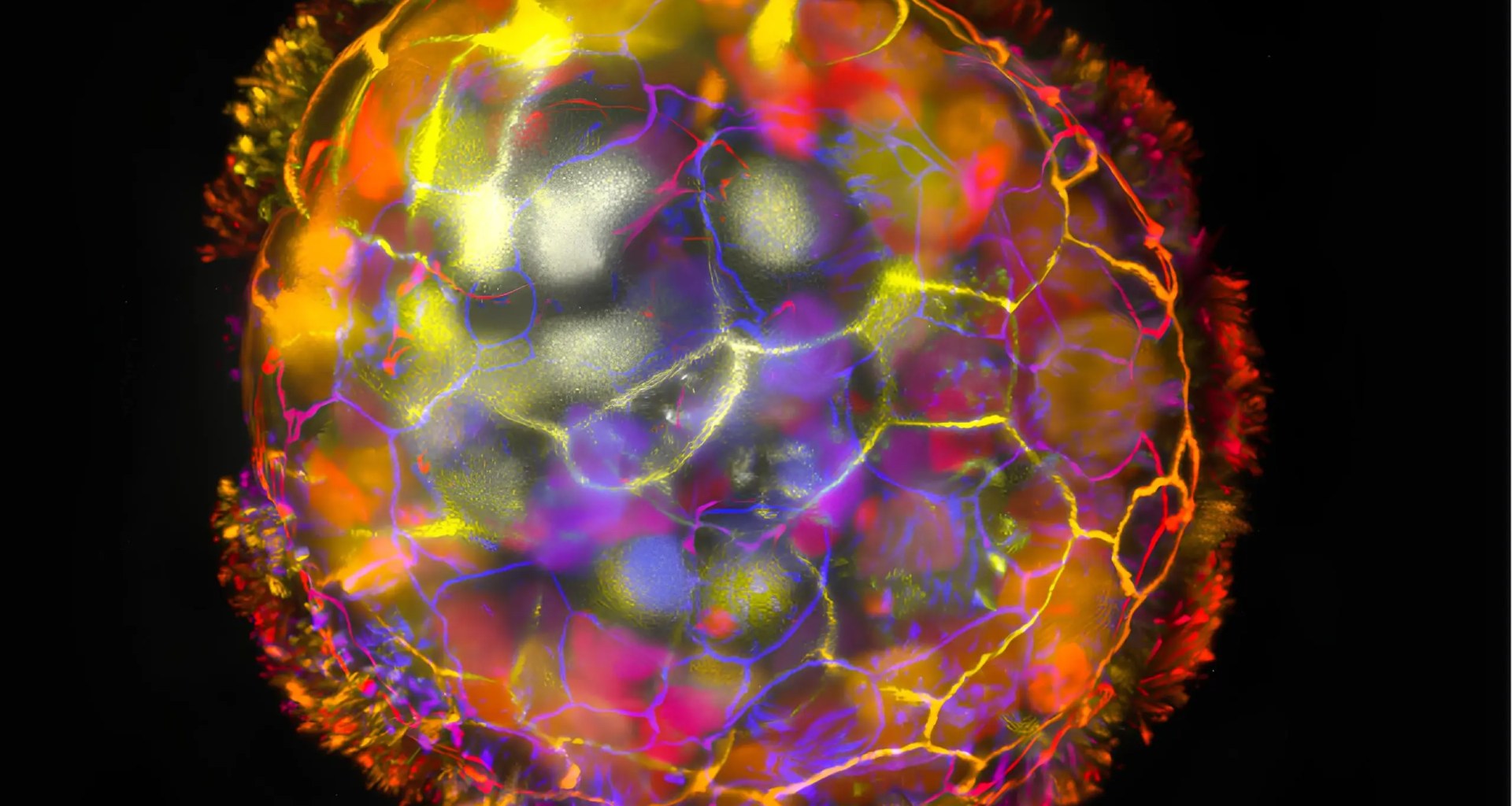
Researchers have crafted minuscule robots composed of human cells capable of repairing damaged neural tissue. Dubbed ‘anthrobots,’ these constructs, created from human tracheal cells, hold potential applications in personalized medicine. This breakthrough suggests a pathway toward “tissue engineering 2.0,” wherein synthetic control over various developmental processes becomes achievable, according to Alex Hughes, a bioengineer at the University of Pennsylvania in Philadelphia.
Previously, developmental biologist Michael Levin and his team at Tufts University had developed tiny robots, known as ‘xenobots,’ utilizing clumps of embryonic frog cells. However, these xenobots faced limitations in medical applications due to their non-human origin and the manual carving required to achieve specific shapes. The recent advancement involves self-assembling anthrobots, opening avenues for exploring their therapeutic capabilities using laboratory-grown human tissue. The findings are detailed in Advanced Science.
Levin and his research team cultivated human tracheal skin cell spheroids within a gel for a period of two weeks. Subsequently, they transferred the clusters to a less viscous solution for an additional week. This change prompted the tiny cilia, or hairs, on the cells to reposition themselves outside the spheroids instead of within. Functioning as oars, these cilia facilitated the movement of the resulting anthrobots, each comprising a few hundred cells. The anthrobots exhibited various swimming patterns, with some moving in straight lines, others in circles or arcs, and some displaying chaotic motion.
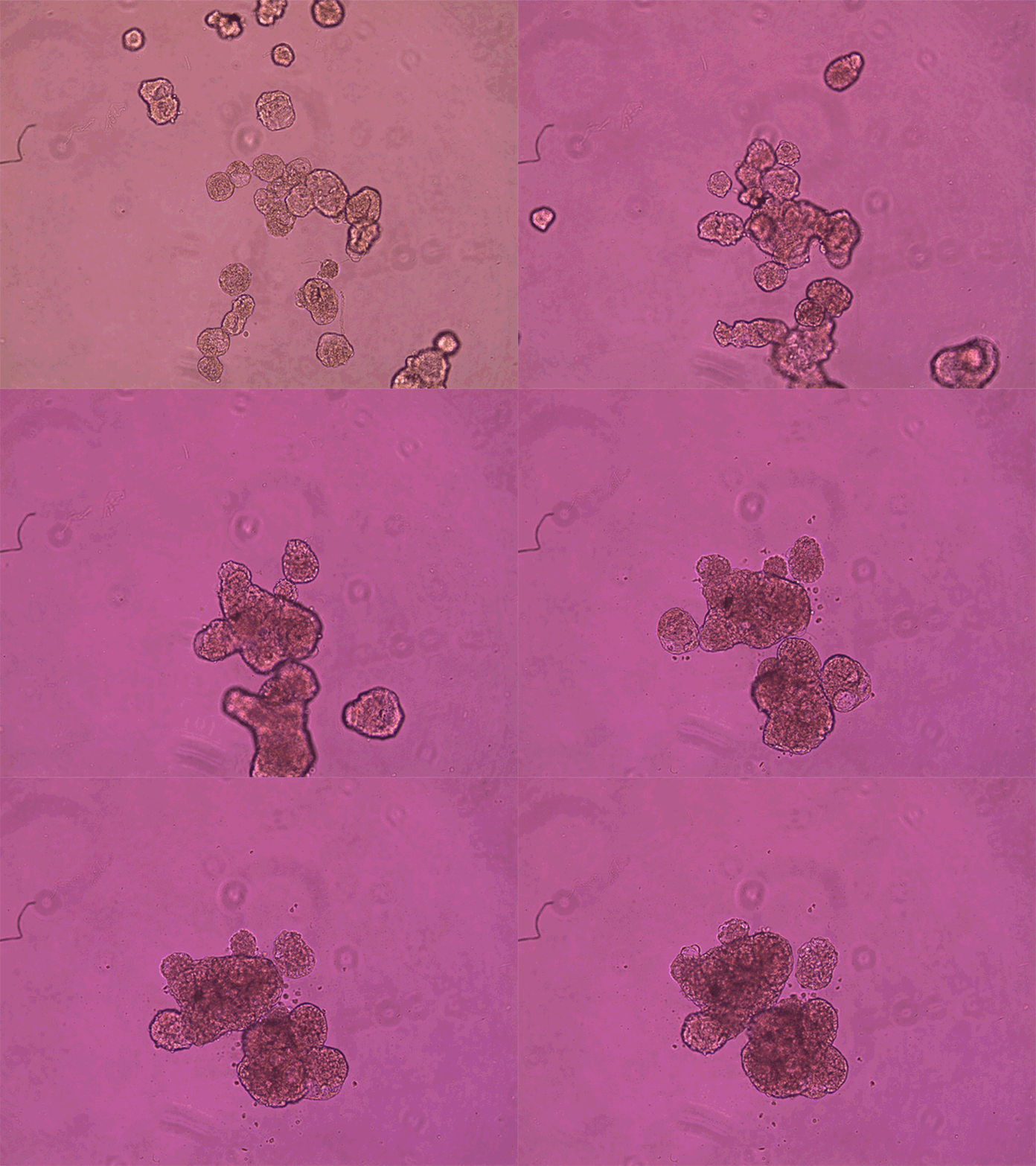
To assess the therapeutic capabilities of the anthrobots, Levin and his team placed several of them in a small dish. Interestingly, these anthrobots fused together to create a ‘superbot,’ which the researchers then positioned on a layer of neural tissue that had incurred a scratch. Remarkably, within a span of three days, the sheet of neurons underwent complete healing facilitated by the superbot. Study co-author Gizem Gumuskaya, a developmental biologist at Tufts, expressed surprise at this outcome, emphasizing that the anthrobot cells demonstrated the ability to undertake the repair function without necessitating any genetic modification. She notes that achieving such a response was not initially evident.
In future applications, Levin, Gumuskaya, and their team envision the use of anthrobots constructed from an individual’s own tissue for tasks such as clearing arteries, disrupting mucus, or administering drugs. Importantly, these functions could be achieved with or without genetic engineering. Additionally, through the combination of diverse cell types and the exploration of various stimuli, there is potential to advance beyond anthrobots to develop biobots—robots crafted from biological materials. Such biobots could find applications in areas ranging from sustainable construction to outer-space exploration.
Levin emphasizes that gaining a comprehensive understanding of what collective cells are capable of achieving allows researchers to move towards effective control, not only for standalone robots but also for applications in regenerative medicine. This control could extend to processes such as regrowing limbs.
Resources
- JOURNAL Hutson, M. (2022). Tiny robots made from human cells heal damaged tissue. Nature. [Nature]
- JOURNAL Gümüşkaya, G., Srivastava, P., Cooper, B. G., Lesser, H., Semegran, B., Garnier, S., & Levin, M. (2023). Motile Living Biobots Self-Construct from Adult Human Somatic Progenitor Seed Cells. Advanced Science. [Advanced Science]
Cite this page:
APA 7: TWs Editor. (2023, December 1). A New Way to Heal Damaged Tissue: Tiny Robots Made from Human Cells. PerEXP Teamworks. [News Link]


