



Honeybees have shown remarkable potential in detecting cancer, particularly lung cancer, through their acute sense of smell. In laboratory experiments, these insects can identify the subtle scents associated with the disease, even detecting faint aromas in a patient’s breath.
Scientists, inspired by the honeybee‘s advanced olfactory capabilities, connected the brains of live bees to electrodes and exposed them to various scents. By recording the bees’ brain signals, they observed clear and distinct responses to different chemicals, demonstrating the honeybee‘s ability to discern scents with precision.
Research published on June 4 in Biosensors and Bioelectronics revealed that different odors produced recognizable brain activity patterns in honeybees, essentially creating a neural fingerprint for each scent. This discovery suggests that honeybees could one day be utilized in medical settings as living sensors for early cancer detection.
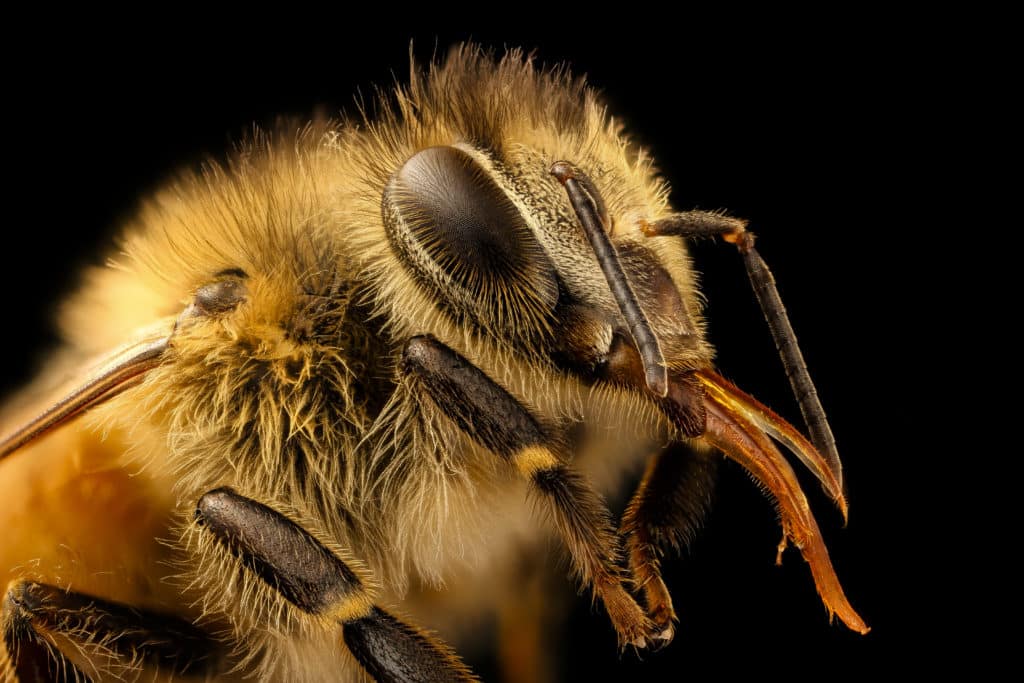
While electronic noses (e-noses) and other mechanical odor-sensing devices exist, they fall short of the honeybee‘s capabilities. The biological ability of honeybees to differentiate between very similar scent mixtures surpasses that of engineered sensors.
The significance of scent in insect communication is well-documented, with many species relying on it as a form of language. The unique proficiency of honeybees in this area highlights their potential role in enhancing early detection methods for cancer, offering a novel approach that leverages their natural sensory skills.


The concept that animals can detect diseases through their senses is well-established. For instance, in 1989, a border collie and a Doberman were reported to have sniffed out their owner’s melanoma. More recently, research has demonstrated that dogs can identify COVID-19 cases by smelling people’s sweat. Similarly, many insects, including ants, have been found to possess disease-detecting abilities. Ants, for example, can be trained to recognize the scent of cancer cells grown in a laboratory. However, until now, the capabilities of honeybees in this area had not been fully understood.
Scientists have developed a method to directly tap into the neurons of insects, bypassing the need for extensive behavioral training. Unlike training dogs to respond to suspicious scents, which can take weeks, researchers can obtain immediate results by analyzing brain activity.
In their experiments, researchers used 3-D printed plastic harnesses and wax to hold honeybees in place. They then performed brain surgery to attach wires to the part of the bee’s brain that processes odors. A device delivered puffs of air to the bees’ antennae, similar to how scents are tested at a perfume counter.
These air puffs contained a variety of odors, including those exhaled by healthy individuals. Another set of air puffs mimicked the scent of breath from lung cancer patients, which includes distinct odors undetectable by human noses. By reading the electrical signals from the bees’ brains, researchers were able to distinguish between the synthetic breath of healthy individuals and that of lung cancer patients with an accuracy of at least 93 percent.

In a separate experiment, the researchers collected air samples from above lung cells grown in the lab. The honeybees successfully differentiated between air from healthy cells and air from cells of two types of lung cancer: small-cell lung cancer and non-small cell lung cancer. This demonstrates the potential of honeybees to serve as a tool for early cancer detection through their remarkable olfactory abilities.
Ongoing research in Saha’s laboratory has uncovered that honeybees possess the ability to detect trace scents, including those from perfluoroalkyl and polyfluoroalkyl substances (PFAS), often referred to as forever chemicals. This discovery is particularly noteworthy because PFAS compounds are notoriously difficult to detect in the environment.
Saha and his team are exploring the potential of their honeybee scent sensor to analyze the breath of cancer patients. One limitation of the device is its short operational lifespan; after a few hours, the bees’ brain health deteriorates, leading to unstable responses. However, the device operates swiftly and provides real-time results. Saha suggests that with just one honeybee brain, his team could potentially analyze over 100 samples.
This innovative approach underscores the honeybee‘s rapid and sensitive olfactory capabilities, positioning them as promising tools for future applications in cancer detection and environmental monitoring.
- ONLINE NEWS Rosen, M. (2024, June 25). Honeybees can “smell” lung cancer. Science News. [Science News]
- JOURNAL Parnas, M., McLane-Svoboda, A. K., Cox, E., McLane-Svoboda, S. B., Sanchez, S. W., Farnum, A., Tundo, A., Lefevre, N., Miller, S., Neeb, E., Contag, C. H., & Saha, D. (2024). Precision detection of select human lung cancer biomarkers and cell lines using honeybee olfactory neural circuitry as a novel gas sensor. Biosensors & Bioelectronics/Biosensors & Bioelectronics (Online), 261, 116466. [Biosensors & Bioelectronics/Biosensors & Bioelectronics]
APA 7: TWs Editor. (2024, June 26). Honeybees Detect Lung Cancer!. PerEXP Teamworks. [Online News Link]


