



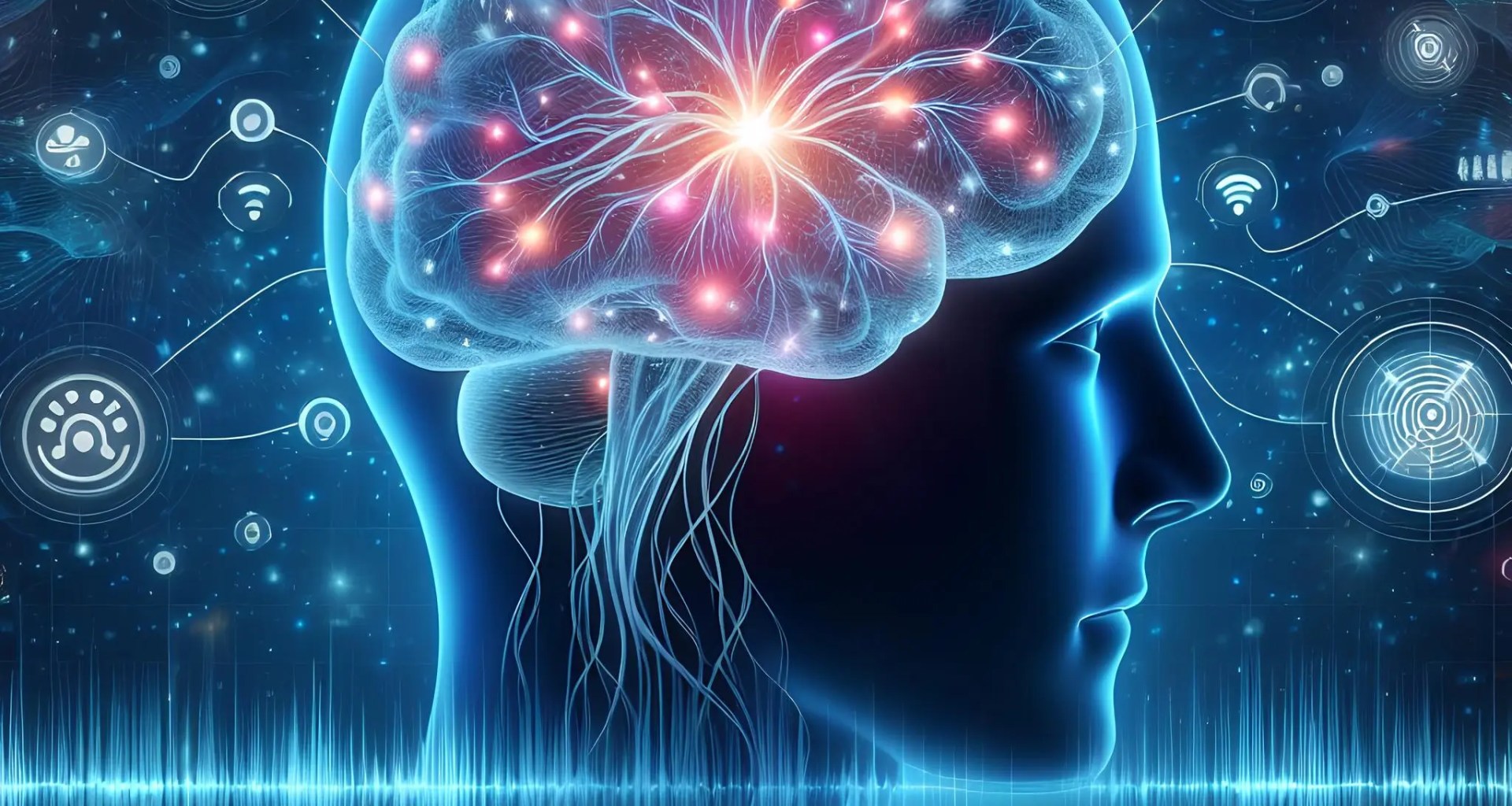
In an unprecedented breakthrough, wire-thin probes inserted into the brains of awake individuals undergoing surgery have provided unparalleled insights into the intricacies of speech interpretation. Recordings from hundreds of individual neurons were obtained as participants listened to various sentences, including the one mentioned, shedding light on the nuanced responses of certain speech-processing neurons. Notably, these neurons exhibited increased activity in reaction to specific speech components, such as the nasal sounds ‘m’ and ‘n,’ or the commencement of a sentence. The groundbreaking study, reported in Nature, marks a significant advancement in the field of language neurophysiology, unraveling new dimensions of how the brain processes speech.
Describing the significance of the findings, measurement scientist Tim Harris at the Howard Hughes Medical Institute Janelia Research Campus compares it to a moon landing, highlighting the transformative nature of the research. Although not directly involved in the study, Harris played a pivotal role in developing the technology that enabled this remarkable exploration.
Neuroscientist William Muñoz at Massachusetts General Hospital in Boston emphasizes the crucial nature of the data uncovered, expressing that language neurophysiologists have long sought such comprehensive insights. The study’s revelations open up new frontiers in understanding the neural intricacies underlying our interpretation of speech.
A single probe with almost a thousand sensors
Neurophysiologists have traditionally relied on aggregated data from numerous neurons to decipher brain activity, akin to attempting to discern individual fan comments outside a bustling concert venue, notes neuroscientist Angelique Paulk from Massachusetts General Hospital, not involved in the study.
Fortunately, a recent technological advancement, Neuropixels, provides enhanced resolution, as highlighted by neuroscientists Matthew Leonard at the University of California, San Francisco, and Laura Gwilliams at Stanford University in California, co-lead authors of the study.
A Neuropixel probe, resembling a wire-thin, centimeter-long rod, is equipped with nearly a thousand sensors capable of detecting electrical signals from individual neurons. Once inserted into brain tissue, the sensors make contact with different neurons along the probe’s length, providing activity readings. With each insertion, researchers can capture information from one to several hundred neurons.
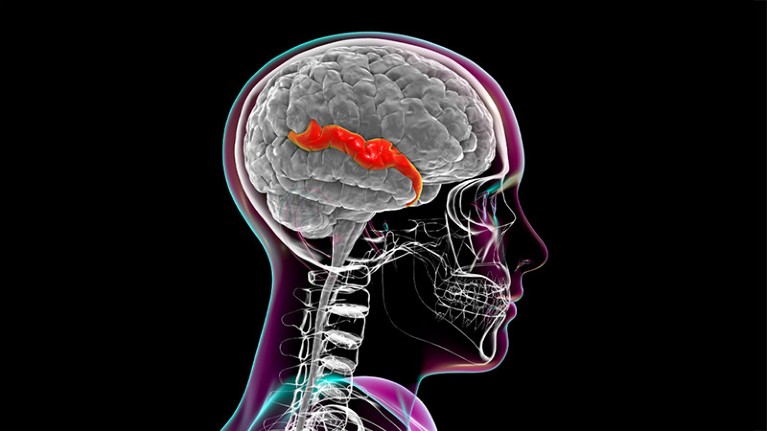
In their study, Leonard, Gwilliams, and colleagues utilized Neuropixels to record data from the superior temporal gyrus, an auditory brain region, in eight participants listening to 200 English sentences. The probe’s length revealed specialized functions along its regions, such as responsiveness to vowels or the rising intonation denoting a question. Interestingly, each region also housed neurons exhibiting functions beyond its specialized role. This technology promises a more nuanced understanding of individual neuron contributions to complex cognitive processes.
The coexistence of neurons with diverse functions observed in this study suggests a potential mechanism for the brain to effectively process fleeting information, such as speech, which occurs rapidly and exists only momentarily after being spoken. Neuroscientist Matthew Leonard emphasizes the speed at which speech unfolds, highlighting that once uttered, it ceases to exist. The presence of neurons with complementary functions in close proximity may facilitate the brain’s ability to rapidly integrate incoming information and respond promptly.
The insights gained from this research contribute to a deeper understanding of how the brain executes its functions. Rather than categorizing brain regions simply by specific features like vowels, the study allows for a more nuanced comprehension of the intricate processes involved in creating representations, providing a more comprehensive answer to how the brain accomplishes its cognitive tasks, as stated by Laura Gwilliams.
Keep watching
This study marks only the third instance of Neuropixels being employed in human subjects and stands out as the first to furnish such comprehensive insights into brain activity.
Adapting this technology for human use presented various challenges. To prevent breakage within the dense brain tissue, the probes required thickening. Additionally, accounting for the inherent slight movement of the human brain even during stillness posed a challenge. Scientists had to develop software capable of tracking signals from individual neurons, compensating for their movement over adjacent sensors.
As technical obstacles are gradually overcome, and with a growing interest in Neuropixels, researchers anticipate delving into various facets of the human experience using these tools. Neuroscientist Angelique Paulk encourages anticipation for future developments in this space, hinting at the potential for groundbreaking insights into human brain function.
Resources
- JOURNAL Sidik, S. (2023). How our brains decode speech: special neurons process certain sounds. Nature. [Nature]
- JOURNAL Leonard, M. K., Gwilliams, L., Sellers, K. K., et al. (2023). Large-scale single-neuron speech sound encoding across the depth of human cortex. Nature. [Nature]
- JOURNAL Paulk, A. C., Kfir, Y., Khanna, A., Mustroph, M. L., Trautmann, E. M., Soper, D. J., Stavisky, S. D., Welkenhuysen, M., Dutta, B., Shenoy, K. V., Hochberg, L. R., Richardson, R. M., Williams, Z., & Cash, S. S. (2022). Large-scale neural recordings with single neuron resolution using Neuropixels probes in human cortex. Nature Neuroscience, 25(2), 252–263. [Nature Neuroscience]
- JOURNAL Chung, J., Sellers, K. K., Leonard, M. K., Gwilliams, L., Xu, D., Dougherty, M., Kharazia, V., Metzger, S., Welkenhuysen, M., Dutta, B., & Chang, E. F. (2022). High-density single-unit human cortical recordings using the Neuropixels probe. Neuron, 110(15), 2409-2421.e3. [Neuron]
Cite this page:
APA 7: TWs Editor. (2023, December 14). How We Understand Speech? The Function of Certain Neurons in Processing Sounds. PerEXP Teamworks. [News Link]


