


A recent study has shed light on how elevated levels of androgens can profoundly influence the immune system in individuals grappling with polycystic ovary syndrome (PCOS). PCOS, a multifaceted disorder characterized by irregular menstrual cycles, ovarian cysts, and potential reproductive and metabolic complications, affects approximately one in ten women of reproductive age. Despite its prevalence, our understanding of its underlying mechanisms remains incomplete, posing significant challenges to women’s health.
Sara Torstensson, a Ph.D. student at the Reproductive Endocrinology and Metabolism research group and the study’s lead author, underscored the importance of their findings. She emphasized that immune dysfunction is a central component contributing to the reproductive challenges commonly observed in women with PCOS.
In their comprehensive investigation, Torstensson and her colleagues explored diverse immune cell populations across various bodily tissues. Their focus was on cells intricately linked to immune responses, reproductive functions, and metabolic regulation. By pinpointing specific differences, they aimed to deepen our understanding of how PCOS disrupts immune system dynamics.
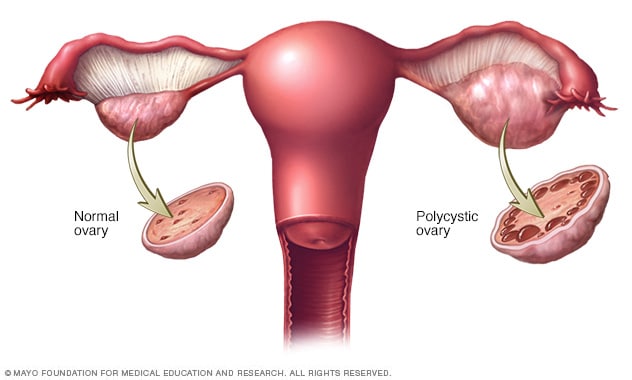
Their research underscores the critical role of immune cells within reproductive tissues. These cells are pivotal in essential reproductive processes such as ovulation, implantation, and placenta formation, which are notably impaired in women with PCOS. This highlights the complex interplay between the immune system and reproductive health in this condition, underscoring the need for further research to advance our knowledge and therapeutic approaches.
Furthermore, these patients frequently experience insulin resistance and early-onset type 2 diabetes, which the team believes may be connected to immune cells within a specific type of adipose tissue responsible for regulating metabolic functions.
The research highlights immune system dysfunction as a potential factor in the pathology of polycystic ovary syndrome, suggesting it could offer new avenues for therapeutic intervention. Currently, the team is investigating whether androgens influence the function of these immune cells and whether this interaction contributes to the reproductive issues and metabolic conditions observed in these patients.
Connection between the immune system and polycystic ovary syndrome
Research into the effects of high androgen levels, similar to those found in women with Polycystic Ovary Syndrome (PCOS), on the immune system is still relatively sparse. Androgens, such as testosterone, play vital roles in maintaining bone density, reproductive health, and overall wellbeing when present at normal levels.
To simulate the symptoms of PCOS, scientists exposed female mice to elevated levels of androgen hormones and monitored their health over an extended period. One of the most notable discoveries from this study centered on changes observed in immune cells within visceral adipose tissue, which surrounds internal organs in the abdomen. These immune cells are crucial in conditions related to obesity, such as insulin resistance and type-2 diabetes.
Interestingly, despite the fact that the overall fat mass remained unchanged in the androgen-exposed mice, significant alterations were observed in the immune cell composition within the adipose tissue. This finding is particularly intriguing given the high incidence of insulin resistance and type-2 diabetes among lean women diagnosed with PCOS.
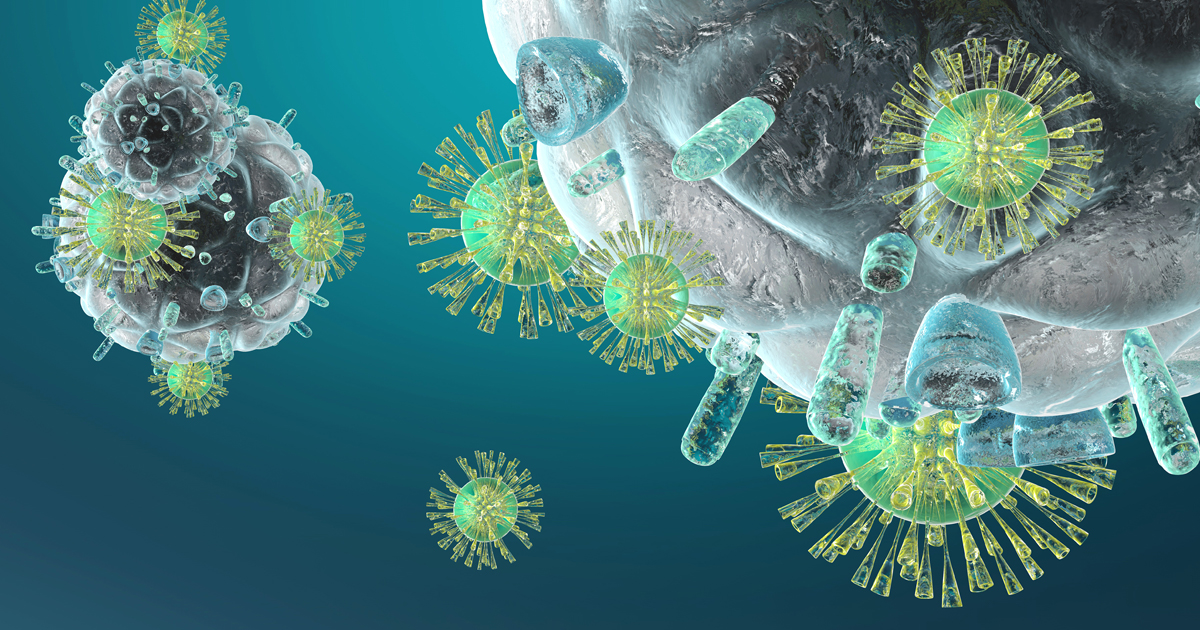
Of particular note is the observation that while androgens clearly affected immune cells, certain types like eosinophils and NK cells did not possess receptors that would enable direct interaction with androgens. This suggests that any changes in their behavior are likely occurring through indirect mechanisms that are not yet fully understood.
Elisabet Stener-Victorin, the lead author of the study from the Department of Physiology and Pharmacology at Karolinska Institutet, emphasized that androgens exert a broader and more complex influence on the immune system than merely activating receptors on immune cells.
Further insights emerged when researchers examined reproductive tissues, particularly the ovaries, where PCOS-like mice exhibited a lower frequency of macrophages—immune cells essential for triggering ovulation—compared to healthy control mice. This decrease in macrophages is significant because irregular ovulation is a hallmark diagnostic criterion for PCOS in women.
Forging a path towards future therapies
This breakthrough represents the initial identification of a potential connection between altered immune cells and polycystic ovary syndrome, providing a crucial groundwork for uncovering the condition’s underlying mechanisms.
The research team anticipates that their comprehensive findings on immune system changes in various tissues associated with polycystic ovary syndrome will pave the way for the development of improved treatments for affected individuals, given the current absence of curative options.
According to Elisabet Stener-Victorin, the condition affects different tissues in distinct ways, necessitating targeted treatments tailored to address specific tissue dysfunctions. Future research endeavors aim to deepen the understanding of these intricate mechanisms, potentially leading to more effective and precise therapeutic strategies.
- ONLINE NEWS Agosti, F. (2024, June 17). New study reveals immune system impact in polycystic ovary syndrome. Advanced Science News. [Advanced Science News]
- JOURNAL Torstensson, S., Ascani, A., Risal, S., Lu, H., Zhao, A., Espinosa, A., Lindgren, E., Johansson, M. H., Eriksson, G., Barakat, M., Karlsson, M. C., Svensson, C., Benrick, A., & Stener‐Victorin, E. (2024). Androgens modulate the immune profile in a mouse model of polycystic ovary syndrome. Advanced Science. [Advanced Science]
- WEBSITE Mayo Clinic. (2022, September 8). Polycystic ovary syndrome (PCOS) – Symptoms and causes. Mayo Clinic. [Mayo Clinic]
- WEBSITE NIAID. (2013, December 30). Overview of the immune system. National Institute of Allergy and Infectious Diseases. [NIAID]
Cite this page
APA 7: TWs Editor. (2024, June 18). Immune System’s Role in Polycystic Ovary Syndrome. PerEXP Teamworks. [Online News Link]