




Who is Kaveh?
Kaveh emerges as a compelling and playable Dendro character within the immersive world of Genshin Impact. Renowned as the visionary architect responsible for the majestic Palace of Alcazarzaray, Kaveh’s journey is deeply intertwined with the distinguished Kshahrewar Darshan of the Sumeru Akademiya. Graduating with honors, he earned the esteemed moniker “Light of Kshahrewar.”

However, despite his impressive academic accomplishments, Kaveh faced financial hardship following the completion of the opulent Palace of Alcazarzaray. This unforeseen downturn led him to take up residence with Alhaitham, a situation that has added layers of complexity to their relationship. Behind the façade of his illustrious reputation, Kaveh grapples with inner turmoil. He carries the weight of guilt stemming from his father’s demise, a burden exacerbated by his struggles with economic challenges and the shame associated with his newfound poverty.
As he navigates these internal conflicts, Kaveh also contends with the delicate task of reconciling his ideals with the practicalities of his current circumstances. In the realm of Genshin Impact, Kaveh’s narrative unfolds as a rich tapestry of personal and professional challenges, adding depth to his character within the game’s intricate storyline.
Personality of Kaveh
Kaveh, a distinguished Sumeru architect, graduated with honors from Kshahrewar, establishing himself as a luminary in his field. His passion for the arts is unwavering, and he places great emphasis on aesthetics and artistic maturity, extending this appreciation to various realms such as architecture, interior design, mechanics, and storytelling. In contrast to the rationality of his counterpart, Alhaitham, Kaveh navigates the world guided by his deeply rooted sense of what he deems right.
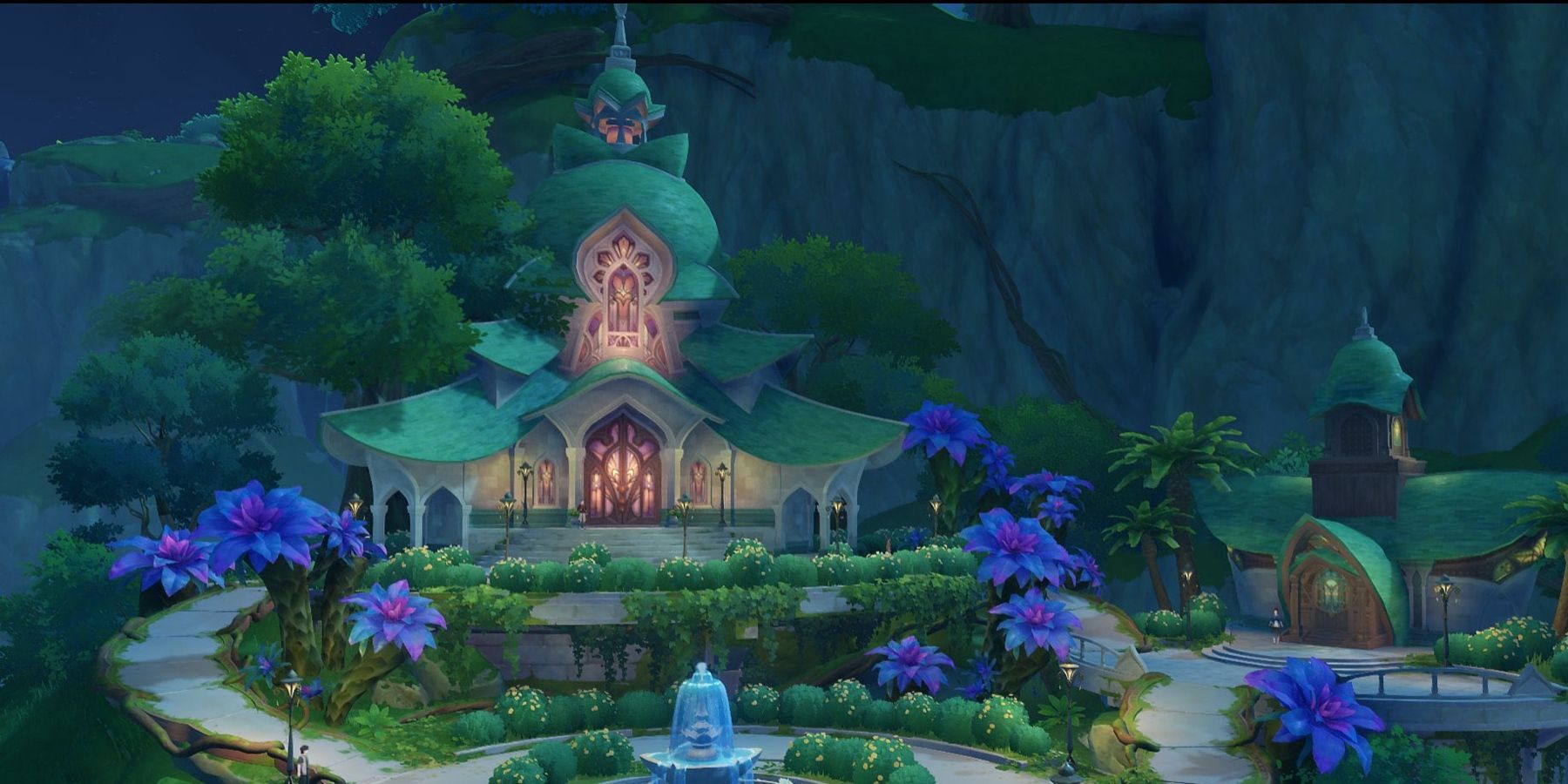
Renowned among Akademiya students and Sumeru citizens, Kaveh is hailed as a genius and talented architect. His masterpiece, the Palace of Alcazarzaray, draws admiration from NPCs like Sasani, who expresses regret at not having the honor to speak with him. Araby and Nilou also shower praise on his magnum opus. Faruzan characterizes Kaveh as a promising individual with original ideas, while Dori notes his unique open-mindedness among Akademiya scholars. Alhaitham, in particular, recognizes Kaveh as a “light of the Kshahrewar,” portraying him as a genius and master builder. However, Alhaitham notes a misalignment between Kaveh’s exceptional abilities and his personality and values.
Beyond his professional acclaim, Kaveh reveals a thoughtful and empathetic side. He readily approaches those he senses are in trouble, extending a helping hand, even offering his own Mora. Known for his passion for his career, Kaveh dedicates himself to satisfying his clients, often working tirelessly to meet their expectations.
Despite these commendable traits, Kaveh’s interactions with Alhaitham are marked by stark ideological clashes and personality conflicts. Scenes, voice-lines, and bulletin board messages throughout Sumeru City and Port Ormos depict their intense disagreements. Furthermore, Kaveh’s intolerance for alcohol is notable, rendering him easily inebriated after only a few glasses. This multifaceted portrayal of Kaveh adds layers of complexity to his character within the intricate world of the game.
Appearance of Kaveh
Kaveh’s character is distinguished by a captivating and unique appearance that adds to his overall charm. His medium-length blond hair, adorned with red hair clips and a subtle braid, frames his face, accentuating his striking red irises. Notably, he wears distinctive ear ornaments featuring eye-catching red and blue squares, contributing to the overall individuality of his look.
His attire further reflects his distinctive sense of style. Kaveh dons a white shirt with a high collar, showcasing a triangular chest window that adds an element of intrigue to his ensemble. A meticulously designed cape, incorporating a blend of black, gold, and blue hues, is a standout feature, split into two halves and adorned with intricate patterns that add an air of sophistication to his appearance.

Completing his ensemble, Kaveh sports a Dendro Vision on his left, emphasizing his connection to the elemental forces within the game’s universe. Coastal blue sashes, complemented by white tassels, contribute to the overall color palette, creating a visually appealing contrast. Not to be overlooked are his distinctive footwear, adding a final touch of flair to his overall look.
Together, these carefully curated elements of Kaveh’s appearance not only make him visually striking but also contribute to the rich tapestry of his character within the immersive world of Genshin Impact.
Character stories of Kaveh
In the realm of abundant talent that is Sumeru, the mention of architects inevitably evokes the name “Kaveh.” Heralded as the preeminent architect of his generation and bestowed with the illustrious title, the Light of Kshahrewar, Kaveh remains seemingly indifferent to these accolades.
These flattering designations, to him, are both acknowledgment and burdens. Take, for instance, Kaveh’s financial struggles, a source of enduring shame. While someone with lesser renown might openly admit to such challenges, a celebrated architect like Kaveh finds himself constrained by the weight of expectations. Candidly discussing his financial hardships could potentially tarnish his reputation, forcing him to maintain a facade of affluent living.
Despite his prowess in design and remarkable aesthetic achievements, people invest their faith not only in his talent but also in the carefully crafted veneer that shields his personal challenges from public view. For, in the eyes of the world, what could possibly trouble Kaveh, the extraordinary architect?
1st character story
To this day, the halls of Kshahrewar resonate with discussions and speculations among students about their esteemed alumnus, Kaveh. These conversations unfold not only at the Palace of Alcazarzaray but echo through various corners of the Akademiya. Within the hearts of his Darshan-mates, Kaveh is revered as a genius nearly unparalleled in the last few decades, a luminary architect whose fame extends far and wide. Through his exceptional works, Kaveh has etched his name indelibly into the annals of Akademiya history.
Engage in conversations with Kshahrewar students, and you’ll likely be regaled with tales of Kaveh’s extraordinary achievements. From single-handedly designing the iconic Palace of Alcazarzaray to the meticulous renovation of Port Ormos’ landmark lighthouse, his influence extends to modifying port elevators and cargo-handling structures. His pioneering contributions to the spatial optimization of peripheral areas surrounding forests and valleys further solidify his legacy. The accolades seem boundless.
Wrapped in these laurels, Kaveh transcends being a mere name; he becomes a synonym for achievement in the realm of design. Many aspire to possess a resume akin to his—a brilliant student, sought after by major construction agencies post-graduation, and eventually venturing into independent work under his own esteemed name.
Yet, this external narrative merely scratches the surface, leaving the hidden truths concealed behind the façade of success. Few are privy to the fact that Kaveh, despite his exceptional design prowess, grapples with a life that falls short of the perceived perfection others imagine. His story is one of complexity, where the shimmering exterior masks the internal struggles he endeavors to keep hidden from the world.

Reflecting on his life journey, Kaveh distills his experiences into a profound realization: misunderstandings are both troublesome and inevitable. People, he believes, are susceptible to momentary lapses in judgment and the influence of rigid labels. The term “designer,” for instance, often conjures up fantasies of effortless wealth and instant fame, where success is achieved with a mere flick of the fingers or a few strokes of a pen. Similarly, when contemplating “the arts,” minds tend to conjure images of lackadaisical, self-centered individuals swinging between bouts of gloom and mania, reveling in bossing others about.
Contrary to these imaginative constructs, Kaveh doesn’t neatly fit into such fantastical narratives. His designs are not completed with a single stroke; rather, he approaches each project with earnest dedication. While his attire may exude success, Kaveh doesn’t solely judge the merit of a project by remuneration. His principles stand out in Sumeru, firmly rooted in the belief that “art” serves as the wellspring of a life in design. Yet, he remains grounded, never forsaking humanistic purpose or practicality. In navigating this delicate balance, Kaveh is willing to make compromises. Whether sacrificing rest time, trimming the ornate elements of a project, or adjusting his own pay, he demonstrates a commitment to his craft that goes beyond the superficial perceptions associated with his profession.
After numerous years of relentless effort, Kaveh finally achieved triumph—the completion of the awe-inspiring Palace of Alcazarzaray. Returning to Sumeru in a blaze of glory, his colleagues were effusive in their praise for this mythical palace nestled atop a grand tree. They marveled at the designer’s remarkable imagination, indulging in the seamless fusion of architectural function and human narrative within its elegant design values. The result was a testament to luxurious craftsmanship, a manifestation of precision and elegance that reshaped the very atmosphere of the surrounding mountainous expanse.
However, the colleagues showering accolades remained blissfully unaware of the hidden realities that accompanied Kaveh’s triumph. Behind the scenes, he faced bankruptcy due to a complex interplay of personal principles, life’s unpredictable vicissitudes, and a myriad of layered problems. The truth, much like the tumultuous journey leading to this success, remained concealed, a testament to Kaveh’s determined efforts to shield the intricate complexities that defined his path to triumph from the prying eyes of those around him.
2nd character story
Kaveh entered the world through the embrace of a quintessential scholarly family in Sumeru. His lineage was steeped in academic tradition—his father hailed from the Rtawahist Darshan and had a stint at the prestigious Akademiya, while his mother, much like the destiny he would later carve for himself, stood as a renowned architect who had graduated from Kshahrewar. The echo of architectural design reverberated through the household, with block puzzles becoming the playground of his early curiosity, a silent communion that rendered words unnecessary in their abode. It was a time when the concept of “home” crystallized in young Kaveh’s understanding.
Yet, the serenity of their existence faced an abrupt disruption. Before his enrollment in the Akademiya, his father, spurred by Kaveh’s encouragement, entered the Interdarshan Championship. Although the competition itself was straightforward, the near-miss of his father, who was poised to become the champion, marked the beginning of an unforeseen tragedy. Shortly after, the disheartening news arrived—his father had met his demise in a desert accident. The sudden loss sent shockwaves through the once-blissful household, particularly affecting Kaveh’s sensitive mother. Overwhelmed by grief, she descended into a state of anxious and melancholic contemplation.
For Kaveh, the memories of his father lingered vividly. His father’s laughter and the promises of bringing something delightful back for him resonated in his mind, closing his eyes to sleep. A young Kaveh, grappling with guilt, harbored the belief that his father might not have participated in the contest had he not encouraged him. The sequence of events, from his participation to subsequent disappearance and eventual demise, haunted Kaveh’s thoughts. Yet, as he pleaded with the past to alter its course, the immutable truth remained—history could not be rewritten, and the specter of regret lingered in the corridors of his memories.

The weight of his father’s untimely death and his mother’s enduring agony became an unshakable burden for Kaveh, a constant reminder of the irreversible consequences triggered by a single utterance. The guilt cast a long shadow over his existence, eclipsing the warmth and light that once defined the concept of “home.” His mother, once a source of joy, found solace only in memories, her smile extinguished with the passing of her beloved husband.
As the home transformed from a sanctuary into a cold and lonely hall, Kaveh became a witness to his mother’s silent despair. Each time he found her staring at her trembling hands, unable to draw or conceive designs, he grappled with an overwhelming sense of responsibility. The crushing weight of guilt bore down on him, prompting relentless self-questioning: Did his words single-handedly lead the family down this desolate path?
Despite his youth, Kaveh endeavored to be a comforting presence for his grieving mother. He shielded her from the disappointment etched on his face and offered whatever support he could, even if it amounted to just a drop in the vast ocean of her sorrow.
As Kaveh reached school age and secured enrollment into Kshahrewar, the demands of academia naturally distanced him from his mother. Seeking solace, she ventured to Fontaine, where a job opportunity awaited her. Although aware that this would leave him to live alone, Kaveh, with a heavy heart, supported his mother’s decision. On the day of her departure, he watched the ship sail away, concealing his loneliness for her sake. He assured her that he was all grown up and capable of independent living.
Deep down, he harbored a profound sense of longing and loneliness, but he masked it with a facade of strength. For Kaveh, this solitude was not just an isolated circumstance but a penance for his role in encouraging his father to participate in the ill-fated competition. Convinced that he deserved every ounce of pain for causing such deep harm to his parents, he accepted his lonely existence as the enduring brand of guilt he must carry.
“Home” for Kaveh became an enduring teacher, imprinting upon him lessons of care and compassion while simultaneously expunging any capacity for knowingly inflicting harm on others. These profound reflections have been his constant companions, shaping his personality and ideals in the years that followed. Kaveh, tethered to an unwavering desire to assist those who seek his help, finds himself incapable of opposing others, even in instances where resistance might be warranted.
Despite the multitude of good deeds he undertakes, the specter of guilt remains an ever-present companion. Furthermore, Kaveh struggles to accept pure goodwill, firmly convinced that his choices should invite punishment. Paradoxically, he finds a peculiar comfort in the pain that accompanies his perceived penance.
If one were to envision Kaveh as a sculpture, he would appear nearly flawless at first glance, yet harboring a vulnerability that could lead to utter destruction if the weak point at its core were to be discovered. His inner turmoil, intricately interwoven with his compassionate nature and lingering guilt, defines the intricate sculpture that is Kaveh.
3rd character story
Upon graduating, Kaveh embarked on his inaugural project, collaborating with fellow students from the same Darshan, albeit under different mentors. As the newly anointed person responsible for design, the weight of this endeavor pressed heavily upon him. Acknowledging his own stubborn nature, Kaveh poured all his energy into the work, tirelessly shouldering the responsibilities for various projects for two consecutive years.
As his reservoir of experience swelled, Kaveh transitioned from collaborative efforts to establishing his solo career, attracting a clientele drawn to his distinctive style. Requests to design buildings marked the inception of his professional journey. Through sheer determination and hard work, he amassed a commendable sum of Mora. However, the trajectory of his career encountered a bottleneck. The demands of the market proved to be markedly different from the realm of academic design—pragmatic, discerning, and with clients whose requirements were more challenging than those of his mentors.
Simultaneously, the shifting landscape of academic trends in Sumeru introduced disruptions to his work. Kaveh began to grapple with the realization that his ideals and career goals, once seemingly within reach, were, as someone astutely observed, not easily attainable.
In the dynamic intellectual milieu, new schools of thought and viewpoints continually emerged among researchers. A climate of self-critique and introspective questioning prevailed, spurred by changes and improvements in societal factors. As a result, concepts and works once lauded could swiftly become subjects of criticism, whether they be tangible creations like books or art. The evolving currents of academia presented Kaveh with the challenge of navigating through an ever-changing landscape where the certainties of yesterday might become the uncertainties of tomorrow.

In the intricate tapestry of Sumeru’s artistic landscape, a growing divide emerged between those wholly dedicated to the pursuit of art and the wider populace who struggled to comprehend the trials borne by the artists. The escalating emphasis on academic achievements in Sumeru resulted in researchers prioritizing pure academic accomplishments and practical skills. The doctrines of the Six Sages took on increasingly radical hues, and a prevailing sentiment that “the arts provide no tangible benefits” gained prominence. Consequently, those immersed in artistic endeavors found themselves marginalized, and subjects associated with the arts sought to distance themselves from this perceived impractical pursuit.
The engineering projects that Kaveh encountered were starkly pragmatic, lacking the embellishments of flair or style. His attempts to introduce aesthetically pleasing designs were met with rejection, dismissing them as “meaningless presentations” or asserting that the project only required practical structures. Kaveh, originally driven by the vision of creating designs that seamlessly merged artistic beauty with practicality, now grappled with a disheartening reality. The arts had become the subject of derision, with people dismissing their necessity and value. Denied the freedom to bring his artistic vision to fruition, Kaveh staunchly opposed this prevailing mindset, steadfast in his belief that architecture was, indeed, a form of art.
However, the demands of his profession tethered him to the need for technical support and investments. Struggling within these confines, Kaveh faced a dilemma—he couldn’t escape these circles, yet openly expressing his views risked dragging others down with him. The tension between his artistic convictions and the pragmatic demands of his job created a complex tapestry of challenges for Kaveh to navigate.
As the schism between Kaveh’s dreams and his professional reality deepened, he granted himself an extended respite. However, upon his return home, an unexpected letter from Fontaine awaited him. Penned by his mother, it carried the news of her decision to remarry, having found someone with whom she could entrust the remaining chapters of her life. This revelation, tinged with both trepidation and anticipation, was shared with her sole living relative—Kaveh.
Responding with congratulations, Kaveh not only conveyed his well wishes but also committed to attending the wedding in Fontaine. The ceremony unfolded with simplicity, attended by only a handful of guests. Witnessing his mother’s smile once more brought a fleeting sense of joy to Kaveh, yet it left him grappling with a renewed sense of disorientation.
Upon his mother’s departure, she bequeathed all her property in Sumeru to him. Three days later, Kaveh returned to his homeland, confronted once again by the haunting emptiness of his home. The act of sitting on the sofa became a torment, a poignant reminder of unmatched solitude. In this poignant moment, Kaveh found resonance with the age-old wisdom: “Do the right thing, no matter what it costs you.” The echoes of this sage counsel reverberated through the quiet chambers of his existence, compelling him to navigate the complex interplay of duty, sacrifice, and personal fulfillment.
4th character story
As Kaveh continued to toil within the construction industry, his discontent with the prevailing societal conditions swelled. At this juncture, a pivotal moment materialized when the affluent merchant, Lord Sangemah Bay, sought his expertise for the construction of a private mansion.
Unbeknownst to Kaveh, the title of “Lord” concealed the true identity of his patron, who turned out to be none other than Dori. Her fame had spread far and wide, yet Kaveh remained oblivious to her formidable influence and wealth until their encounter. Lord Sangemah Bay presented Kaveh with two uncomplicated conditions: the mansion should be grand and opulent. When Kaveh delved into inquiries about design preferences and stylistic nuances, Dori displayed a distinct lack of interest. Among his clientele, Dori emerged as an anomaly, a businesswoman who appeared indifferent to the opinions of researchers. She specified a secluded location for her mansion, citing business needs, and directed Kaveh to refrain from prying too deeply. Her sole directive was clear — craft an estate that inspired awe. Remarkably, in matters of aesthetics, Dori neither dictated nor hindered Kaveh’s creative freedom, allowing him to shape the mansion according to his artistic whims.
Upon receiving this extraordinary commission, Kaveh swiftly recognized the rarity of such an opportunity. A mansion construction project devoid of constraints meant that he could invest his creativity wholeheartedly. The established dynamic between Party A, providing resources, and Party B, executing the work, seemed to align seamlessly with the essence of their business dealings. The realization dawned on Kaveh that allowing academic perspectives to curb innovation and advancement was a fundamentally flawed approach. Fueled by this revelation, he immersed himself in the planning process with newfound zeal.
In his role as “Party B,” Kaveh advised Dori on certain adjustments. To transcend mere opulence and etch the estate into the annals of history, Kaveh advocated for visionary elements. A meticulously curated garden, featuring carefully chosen flowers with input from professional botanists, became an essential component. The conceptualization demanded boldness, and the planning, meticulousness. While the structural components prioritized practicality, the warehouses and facilities requested by Dori rested upon a foundation of luxurious aesthetics. Regarding the location, Kaveh envisioned the cliff-side in the northern mountains, offering Lord Sangemah Bay daily awakenings with breathtaking natural vistas.
Despite Dori’s insistence that proximity to a cliff was unnecessary, Kaveh’s unwavering engineering spirit and artistic aspirations spurred him to persuade her otherwise. Thus, the project commenced with a flourish, and as the days unfolded, progress unfolded under Kaveh’s vigilant supervision.
However, Kaveh’s aspirations faced an unexpected obstacle. Despite his meticulous site selection and comprehensive considerations, he could not have foreseen the rapid expansion of the Withering that year. When the project was 70% complete, on a tranquil night, the Withering stealthily infiltrated, annihilating everything built overnight. The devastation of his creation struck Kaveh like a relentless thunderbolt. Dori, arriving promptly upon receiving the news, was incensed, demanding Kaveh’s departure from the project. Though the Forest Rangers swiftly dispelled the Withering, the structures were irreparably damaged.

Aware that opportunities of this magnitude were scarce, Kaveh implored Dori to allow him to complete the Palace of Alcazarzaray. Dori sharply highlighted the critical issue: Kaveh had insisted on changing the site. Now, with the palace demolished and the invested funds lost, continuing the project was a financial challenge. Even if they were to rebuild, who would bear the cost of the incurred losses?
Throughout the night, Kaveh sat atop the ruins, contemplating his options. His savings and the property his parents left behind were at his disposal. Once, it had been his “home,” but now, it stood as an empty structure. What defined a “home,” he pondered? As an architect, he understood better than most that a building devoid of occupants or a family was not a true “home”; it was simply a structure.
At sunrise, Kaveh returned to Sumeru City and sold his family house. Combining the proceeds from the sale with his savings and the funds provided by Dori, he managed to muster 70% of the required Mora, with Dori covering the remainder.
On a radiant and sunny day, the Palace of Alcazarzaray was finally erected. Kaveh had relinquished everything he owned to create a legendary palace that held no claim to his ownership. Not a single Mora was earned from this endeavor. Instead, a slight overspending on subsequent work left him significantly indebted to Dori. Despite Kaveh’s feeble attempts at resistance, deep down, he acknowledged the undeniable truth of his indebtedness. The old guilt rekindled within him, and Lord Sangemah Bay, the astute merchant she was, could discern that he was sacrificing not for her benefit but for the sake of his ideals.
In the grand scheme, construction was a business transaction, but ideals, as Lord Sangemah Bay acknowledged, were truly priceless. If someone chose to sacrifice their entire fortune on the altar of their ideals, who was she to impede them? Construction might be a business, but ideals were beyond measure. As for Kaveh’s impending homelessness, that tale unfolded on a separate trajectory.
5th character story
Following his bankruptcy, Kaveh plunged into a period of despondency. The fleeting fulfillment brought by the Palace of Alcazarzaray had momentarily filled the void in his heart, but it also underscored the relentless truth that, regardless of his sacrifices to realize his ideals, it was never sufficient. Now adrift, Kaveh found himself navigating a world where every step required Mora, a currency he sorely lacked. However, accustomed to projecting a facade of strength since his youth, he hesitated to reveal his near-penniless state to colleagues and friends. Seeking solace, he frequented a local tavern, ordering a few bottles and engaging in conversations to ease his troubled mind. After just one bottle, he would slump at the table, only to wake up in the same position later.
Lambad, the tavern owner, showed kindness by reserving a seat and offering some complimentary drinks. In gratitude, Kaveh assisted in redesigning and refurbishing the booth seating area on the tavern’s second floor. Occasionally meeting friends from his Akademiya days, he pretended that he was merely there for inspiration and camaraderie. This routine persisted for over a fortnight, during which he encountered a friend he could no longer truly call a friend.
In discussions about Kaveh’s old acquaintances, the name of Alhaitham of Haravatat, the current Akademiya Scribe, invariably surfaced. Although Alhaitham joined the Akademiya later than most, his academic prowess set him apart. People knew little about him, except that he was a high-achieving student. Mentioning his name prompted nods from even the seasoned researchers of Kshahrewar, who would remark on his extraordinary intelligence and elusive nature.
During the period when Kaveh had recently bid farewell to his mother and was adjusting to a solitary existence, chance encounters with a junior student in the library led to conversations fueled by curiosity. This was how he first crossed paths with Alhaitham of Haravatat, an academic prodigy. However, the passage of time would reveal that mere hopeful thinking does not foster genuine friendships. Kaveh soon recognized that, despite being two years his junior and undeniably talented, Alhaitham differed markedly from him in personality, interpersonal skills, academic pursuits, and convictions.
Kaveh’s school days left him with a trove of memories, the least pleasant of which centered on a collaborative project they embarked upon. Acknowledging each other’s capabilities, they decided to delve into research encompassing ancient structures, runes, and linguistics, with Kaveh suggesting that Alhaitham take the lead in selecting the topic. Initially, others joined the cooperative effort, but gradually, as the complexity of the work increased, fellow students withdrew, unable to keep pace.
During this project, Kaveh encountered the stark and harsh reality of the divergent levels of talent among individuals for the first time. The Akademiya, by its very nature, emphasized the strong link between talent and resources, a truth well-known to all its denizens. Alhaitham, in his characteristic manner, succinctly expressed this reality by stating that certain matters had an upper limit determined by talent and a lower bound set by hard work. The ordinary and the genius, he argued, were separated by practical realities, and there was no need for individuals to force themselves into groups where they didn’t belong.
Kaveh, however, clung firmly to his conviction that these were challenges to be overcome in the process, and that true wisdom would emerge from the collective efforts of many. To prevent his fellow students from abandoning the project, Kaveh invested considerable time and effort in assisting them, shouldering a substantial burden himself. Alhaitham, however, staunchly maintained the opposing viewpoint, deeming Kaveh’s approach overly idealistic. According to Alhaitham, academia wasn’t charity work, and temporary interventions wouldn’t alter the fundamental reality of their differing abilities. This philosophical discord became a source of tension between the two.
Finally, the day arrived when only two individuals remained dedicated to their chosen topic: Alhaitham and Kaveh. The ongoing disputes between them reached a boiling point and erupted into a spectacular clash. Kaveh argued vehemently that Alhaitham’s egotism hindered his ability to connect with people, suggesting that a more compassionate approach would endear him to others. Alhaitham countered by asserting that Kaveh’s impractical idealism was a flight from reality, destined to become a burden, and that Kaveh’s altruism stemmed from an unshakable sense of guilt.
In that moment, Kaveh felt a profound sting, experiencing a piercing truth from someone he considered his best friend. Alhaitham had exposed a reality that Kaveh had long avoided confronting, delivering a harsh wake-up call. This realization led Kaveh to regret ever forming a friendship with someone so perceptive. The two abruptly parted ways — Alhaitham removed his name from the thesis, and Kaveh, in a fit of anger, tore his copy apart, only to painstakingly reassemble it with a profound sense of remorse. It became evident to Kaveh that changing his friend was as implausible as changing himself.
Subsequently, the two engaged in numerous academic clashes through journal publications, each critiquing the other’s perspectives. Despite their discord, their collaborative project, “Decoding the Runes and Architectural Philosophy of the Ruins of King Deshret’s Civilization,” had initially shown great promise. Progress in linguistics filled critical gaps in the grammatical logic of ancient minor languages, enabling the successful interpretation of significant texts. The architectural studies had practical implications, enhancing load-bearing structures for specific terrain features in Sumeru and improving the lives of those in remote regions. The Akademiya had even designated a special research site to support the project. Regrettably, due to a lack of manpower and a unified vision among the primary researchers, the project eventually came to a standstill.
The failure of this endeavor became an indelible part of Kaveh’s history. Over the passing years, repeatedly confronted by the harsh realities of life, Kaveh reluctantly acknowledged that his persistent idealism, fueled by wishful thinking, did not always yield practical results. It was only in his destitution that he grasped the profound meaning behind his friend’s earlier words. His unyielding desire to ascend to the heavenly garden on steps made of thin air had led him to step onto an empty stair and fall to his demise. As a genius, Kaveh yearned to be part of the collective, secretly dreading the prospect of separation — a distinction that set him apart from Alhaitham.
Returning to the scene at the tavern table, Kaveh found himself profoundly shocked by the unexpected presence of Alhaitham, who had coincidentally come to purchase some alcohol. Alhaitham, ever perceptive, immediately sensed that Kaveh was going through a rough patch. Having been battered by life’s relentless onslaught, Kaveh spilled out his myriad miseries to his estranged friend right then and there. With no refuge from his troubles, Kaveh bemoaned a litany of misfortunes, falling silent only when they exited the tavern under the veil of night, and his gaze settled on a place he once called home. Alhaitham, attentive to Kaveh’s words, saw through his facade once more and posed a challenging question: “How have your ideals fared in reality?”
For a researcher, only the unyielding grip of reality could force an acknowledgment of error. Yet, Kaveh grappled with the question of what he should truly consider as reality. He longed for a fantasy so perfect and beautiful that no one would need to escape it, even if the cost of this dream meant losing himself. He steadfastly clung to the belief that his ideals, in essence, were not flawed, attributing the failure solely to the methods employed in their pursuit.
One should never relinquish their efforts, for even if their altruistic actions stem from a desire to atone for something, the outcomes still hold significance for others. Even if Kaveh couldn’t step into the utopia promised by his ideals, it didn’t mean the brilliance and allure of such a realm should be dismissed.
And amid those surreal realities — stumbling upon a home in the name of his friend, a dwelling that had once been the research center offered by the Akademiya; the transformation of this academic asset into a residence, a decision that wouldn’t have transpired without Kaveh’s resolve to relinquish it; the acknowledgement that Alhaitham, with his conditional goodwill, would prompt Kaveh to initiate household chores, burdening him with domestic responsibilities — these quirks might pose as irritations for someone at a low ebb, yet they also stand as evidence that an unwavering constant in one’s past is a friend who remains unaltered. Rationality and sensibility, language and architecture, knowledge and human emotions — the elements that defy integration compose the two sides of the mirror, indeed, the entirety of the world.
Vision
While still immersed in his studies, Kaveh busied himself with various projects, often exploring ancient ruins alongside fellow students. Despite their youth and inability to delve deep into the heart of the tombs, they managed to achieve significant progress.
However, the pursuit of ancient ruins always carries risks, and the student team found themselves in peril during one expedition, facing a treacherous cave-in. Kaveh, displaying remarkable courage, pushed two fellow Kshahrewar students to safety, narrowly averting tragedy. Despite his heroic actions, the incident led to an unexpected turn of events. Rather than viewing him as a savior, many of his peers perceived a difference in ability, leading to a shift in sentiment. Troubled by this development, a majority of his fellow students chose to withdraw from the project.
Familiar with the existence of Visions, Kaveh had initially believed that these mystical objects would manifest in moments of crisis. Yet, when confronted with a life-threatening situation, he received no divine favor. Instead, he relied solely on his strength to rescue his companions from the jaws of danger. This experience left Kaveh grappling with the complexities of human perception and the unpredictable nature of divine intervention.
After graduating from the Akademiya, Kaveh immersed himself in his architectural endeavors, setting aside contemplation of Visions and the nature of those deemed worthy to possess such mystical items. It seemed he had resigned himself to the mundane flow of life, where acknowledgment of the arts was scarce, and the weariness of unappreciated creativity took its toll. Meanwhile, his mother established a new family in Fontaine, bequeathing her home and possessions to her son. These events unfolded like a monotonous stream, seemingly unremarkable and unworthy of note.

This uneventful rhythm persisted until the fateful day when the initial iteration of the Palace of Alcazarzaray succumbed to The Withering. Sitting amidst the ruins, Kaveh spent a night contemplating the shattered dream before him. In a sudden burst of determination, he resolved to stake everything on the pursuit of that elusive dream. Swiftly returning home, he navigated bureaucratic transactions with surprising ease, transferring ownership of his house and converting the resulting funds into the revitalization of his ambitious project. This marked the inception of a new chapter, one where Kaveh dared to defy the mundane and chase the extraordinary.
After tending to various mundane affairs, Kaveh returned for the last time to the familiar walls of the home he had inhabited for many years. There, in the comfort of his kitchen, he engaged in the act of crafting a simple yet nostalgic dish—a flatbread rendition of the Palace of Alcazarzaray. Drizzled with sauce and yogurt, the makeshift delicacy held a special significance.
This culinary creation was no culinary feat; rather, it was a dish his father had taught him in his youth. Since his father’s departure, Kaveh had not attempted to recreate this dish often, and on this particular day, it was an impulsive decision that guided him back to this cherished recipe. While not his preferred culinary indulgence, an unexpected wave of bitterness surged within him as he prepared to consume the flatbread palace.
As he began to break apart the edible monument, an astonishing discovery awaited him within—the shimmering glow of a Vision. Kaveh, in disbelief, stared at the radiant object before him. Despite its belated arrival by several years, the Vision lay there, a captivating spectacle reminiscent of a celestial realm. Fortunately, it was much closer to him than the lofty ideals he had pursued for so long.
Etymology of the Kaveh character
The name Kaveh, originating from Persian, serves the dual purpose of a given name and a surname. Among notable figures bearing this name is Kaveh the Blacksmith, a prominent character chronicled in the Shahnamah. Renowned for leading a rebellion against the serpent Zahhak, also identified in Avestan as Azhi Dahāka, Kaveh the Blacksmith serves as the inspirational archetype for Azhdaha.
Kaveh’s story, rich with complexities and nuances, speaks to the universal themes of ambition, adversity, and the pursuit of one’s dreams. As players navigate the digital landscapes of Genshin Impact, they find in Kaveh a character whose struggles and triumphs reflect the intricate dance of life itself. In the end, Kaveh invites players to contemplate the true cost of success, the weight of personal ideals, and the delicate balance between the public persona and the private self.
- DICTIONARY ENTRY Genshin Impact. (n.d.). Kaveh. In Fandom. [Fandom]
APA 7: TWs Entertainment. (2023, December 3). Kaveh (Genshin Impact). PerEXP Teamworks. [Article Link]


