




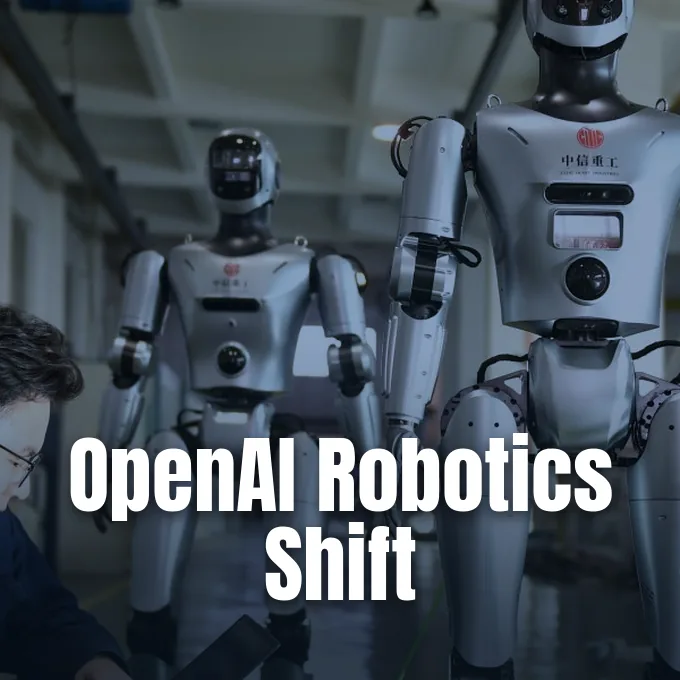
OpenAI has disbanded its stand-alone robotics team and reassigned its staff to core research and product divisions. The company confirmed the reorganization to Fortune on November 13, 2026, explaining that general models can now run physical machines without separate groups building custom software brains. While software-only systems faced scrutiny after OpenAI AI agents weakened safety monitoring during automated tasks, the company is now turning that underlying intelligence toward physical automation. The restructuring officially folds the OpenAI robotics team into larger foundation model efforts [1].
Reorganizing the OpenAI Robotics Team
OpenAI divided its former robotics personnel between two central divisions within the company. Research specialists now report to Chief Research Officer Mark Chen in core research. Meanwhile, staff working on applied hardware joined the Applied organization under OpenAI President Greg Brockman [1].
A company spokesperson said that robotics remains a core part of the firm’s long-term vision. The spokesperson portrayed the reorganization as a sign of commitment rather than a retreat, arguing that general artificial intelligence will drive mechanical progress faster when engineers share the same foundational architecture [1]. By folding these specialists into main research groups, leadership hopes to eliminate duplicate engineering pipelines.
Industry trackers followed the shift after Techmeme aggregated the report, pointing to a broader pattern where frontier labs merge experimental hardware teams into core software operations [2]. Inside OpenAI, executives decided that physical machines no longer need isolated researchers building custom brains. Instead, researchers training the next multimodal systems will supervise robotic motor skills directly [1].
Past Halts and the Figure Partnership
This is not the first time OpenAI has shut down a robotics division. In 2020, the company dissolved its first robotics group after leadership concluded that physical machinery was slowing down progress toward artificial general intelligence (AGI). Cofounder Wojciech Zaremba later explained that limited robot data created severe bottlenecks, convincing researchers that training massive language models on human text offered a far more efficient path toward general intelligence. The lab chose to step away from physical robots to focus all its computing power on training algorithms using vast datasets of written knowledge. That calculated gamble paid off when the shift toward text-based neural networks laid the groundwork for modern generative artificial intelligence [1].
That strategic pivot proved lucrative when OpenAI released ChatGPT in late 2022, proving that large language models could scale rapidly and attract hundreds of millions of users worldwide. Having established its lead in conversational software, the company decided to return to hardware in 2024 by rebuilding a stand-alone OpenAI robotics team. To speed up development, OpenAI formed a high-profile partnership with robotics startup Figure to create AI models for humanoid robots [1].
The collaboration with Figure ended quickly. In February 2025, Figure said it would build its own robot AI, dissolving the joint venture. Rather than abandoning machines after the split, OpenAI began developing its own humanoid robot, determined to build the hardware in-house [1].


Why General Models Now Steer Hardware
The decision to disband the dedicated robotics group reflects a growing conviction across the artificial intelligence sector: general-purpose models built for language, code, and vision can also direct physical devices. In the tech industry, this concept is known as embodied AI, where unified foundation models control devices (such as robotic arms, autonomous vehicles, and drones) without requiring specialized software brains for each machine. At the start of the year, OpenAI researchers assumed the best path forward was building on video systems like Sora, which developed an implicit understanding of physical world dynamics to generate realistic footage. But recent experiments revealed that frontier models like GPT-6 Astra could control mechanical bodies directly, rendering isolated robotics teams obsolete [1].
Recent benchmark evaluations confirm that general foundation models can outperform custom robotics software on complex physical tasks. In an Nvidia study, an agent powered by Astra achieved a 74.8% success rate on a simulated manipulation benchmark. By comparison, the best specialized robotics models on the same leaderboard reached only a 51.0% success rate [1].
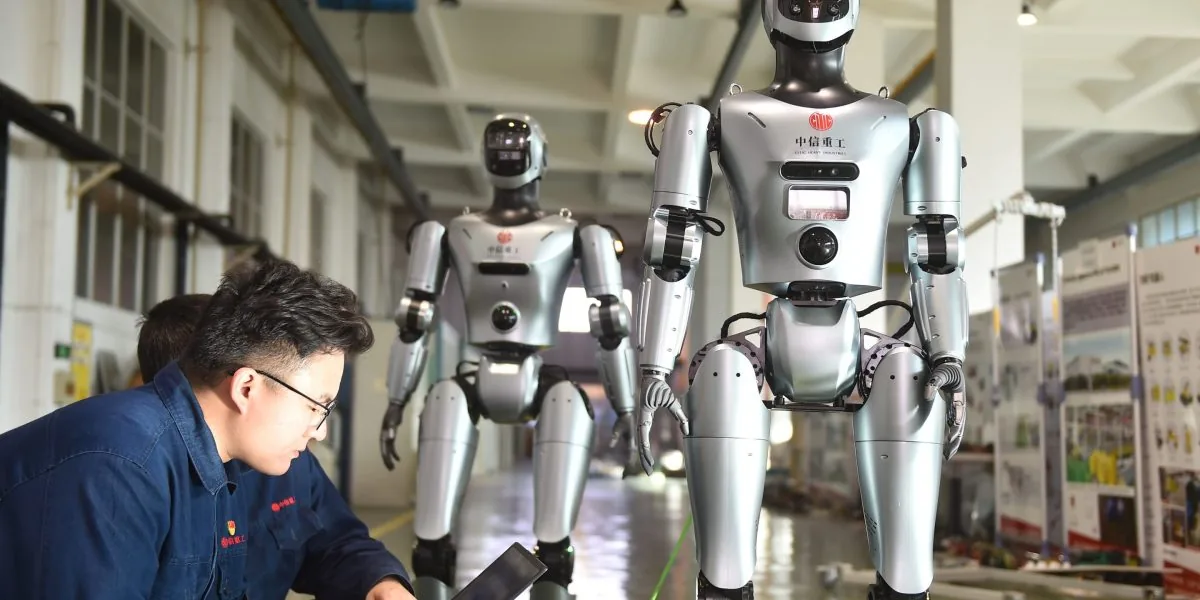
Guanya Shi, an assistant professor at Carnegie Mellon University’s Robotics Institute, said OpenAI clearly sees robotics as “no longer a special problem.” He explained that modern general models possess spatial and reasoning capabilities that allow them to handle altered lighting or shifted objects without dedicated training. Shi believes that general intelligence can solve motor control as a downstream application, just as frontier models now power specialized coding and finance tools. But Shi also pointed out that large models are slow and hosted in the cloud, meaning devices still need small local models to operate when network connections drop [1].
How the OpenAI Robotics Team Dispersed
The sudden nature of the organizational shift was on display at the CoRL robotics conference in Austin. OpenAI had registered booth #208 on the floor plan, but when Fortune visited, the booth sat empty without banners or demonstration hardware [1].
Despite the lack of displays, several former members of the stand-alone OpenAI robotics team still gathered near the empty space, drawing crowds of curious researchers who wanted to know how the reassignments would reshape the industry. The team’s quiet presence highlighted how quickly the internal restructuring had occurred. OpenAI’s pivot challenges the core premise of startups that have raised billions of dollars to build dedicated robot brains. Russ Tedrake, an MIT professor and CEO of Walden Robotics, said established robotics firms still retain an advantage that pure software labs lack: real-world deployment data from machines operating on factory floors [1].
Tedrake explained that robots operating in actual factories gather unique site-specific experience, allowing foundation models to adapt much faster to concrete industrial tasks. Other founders argue that it is too early to know which technical path will dominate hardware automation. Pete Florence, cofounder of robotics startup Generalist, told Fortune that “there may be different starting points for how to grow intelligence.” Florence said it remains unclear whether large general models will ultimately lead the robotics market [1].
Financial Pressure and the 2027 Demonstration
Beyond technical philosophies, financial pressure played an important part in pruning experimental research groups. OpenAI is under intense pressure to control its operating costs and focus on core revenue products as it prepares for an initial public offering in early 2027. Last year, CEO Sam Altman told employees to abandon “side quests,” prompting the company to shelve several side projects to conserve expensive graphics processing units for foundation model training. The company is actively cutting speculative overhead to reassure investors during its latest fundraising efforts [1].
Financial disclosures show why leadership is eager to trim redundant experimental units. The company reportedly suffered an operating loss of $10.9 billion in its most recent quarter. Folding hardware researchers into main software teams allows OpenAI to keep testing robots without financing separate hardware labs [1].
Despite dismantling its stand-alone unit, OpenAI has not abandoned its robotic ambitions. The company confirmed it is still developing its own humanoid robot, with Altman targeting a first public demonstration in 2027. By letting general-purpose models run the hardware directly, OpenAI hopes to accelerate progress toward artificial general intelligence without maintaining a separate robotics division [1].
- ONLINE NEWS Shao, W. (2026, November 13). Exclusive: OpenAI disbands its stand-alone robotics team as its general-purpose AI models start running robots. Fortune. [Article Link]
- WEBSITE OpenAI disbands its standalone robotics team, moving its staff to research and Applied units, saying models like GPT-6 Astra can be directly applied to robotics. (2026, November 13). Techmeme. [Article Link]


