



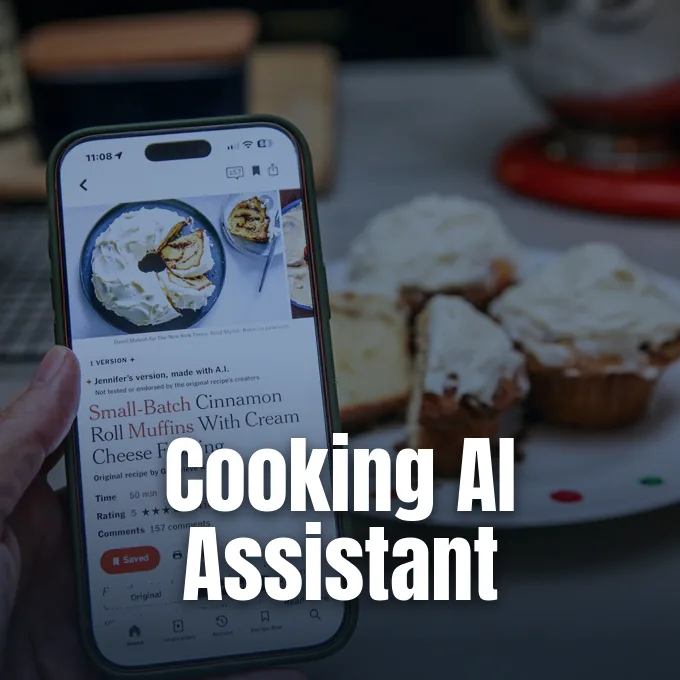
The New York Times rolled out an experimental NYT Cooking AI assistant for iOS subscribers, letting home cooks swap ingredients, scale servings, and adjust cookware inside the app. Announced by senior editor Genevieve Ko, the beta tool operates through a prompt box on recipe pages and draws on reader comments from the publication’s digital archive [2]. While dinner tests proved helpful, baking evaluations uncovered context drift and rounding slips [3].
Core NYT Cooking AI Features
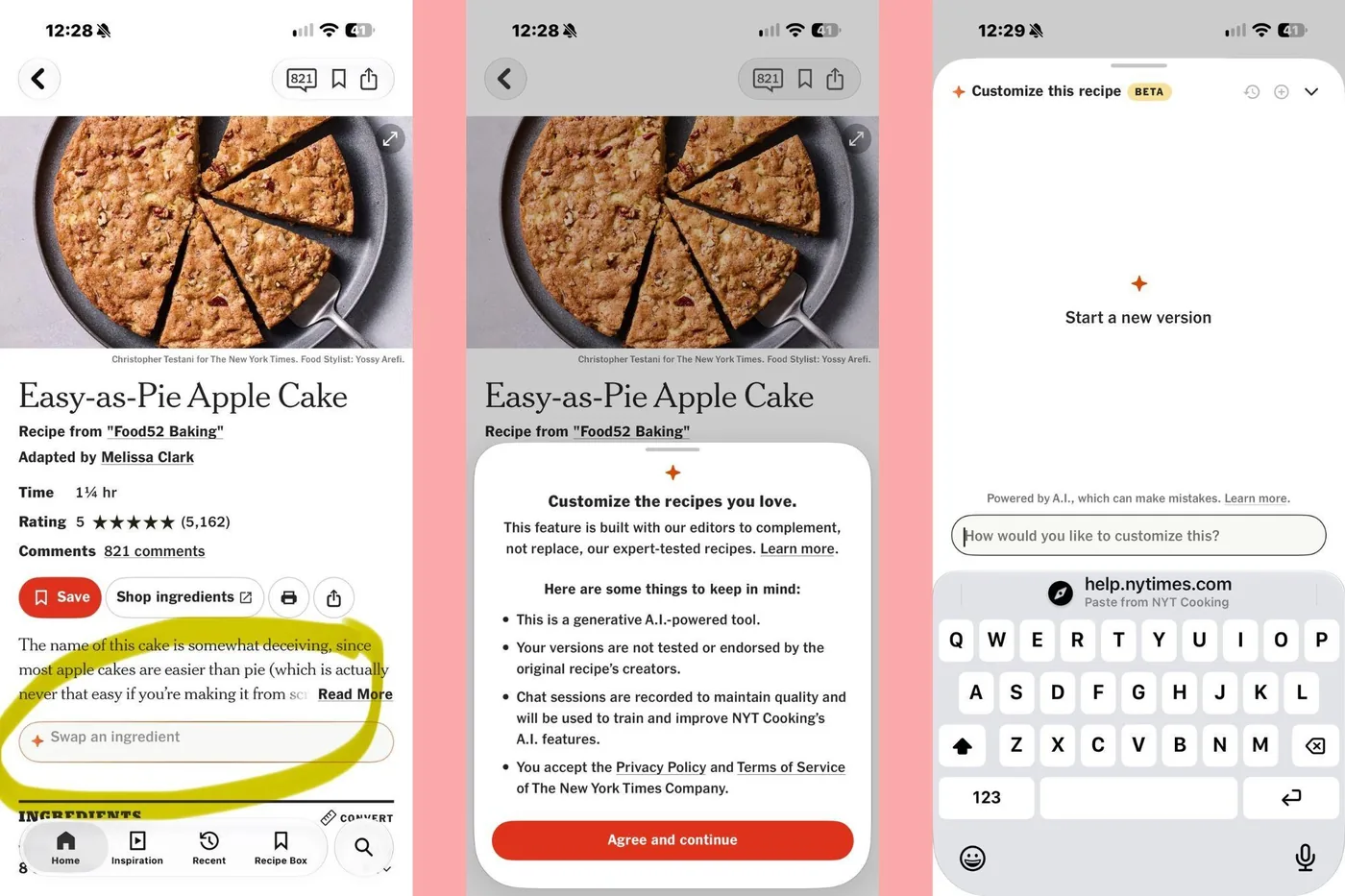
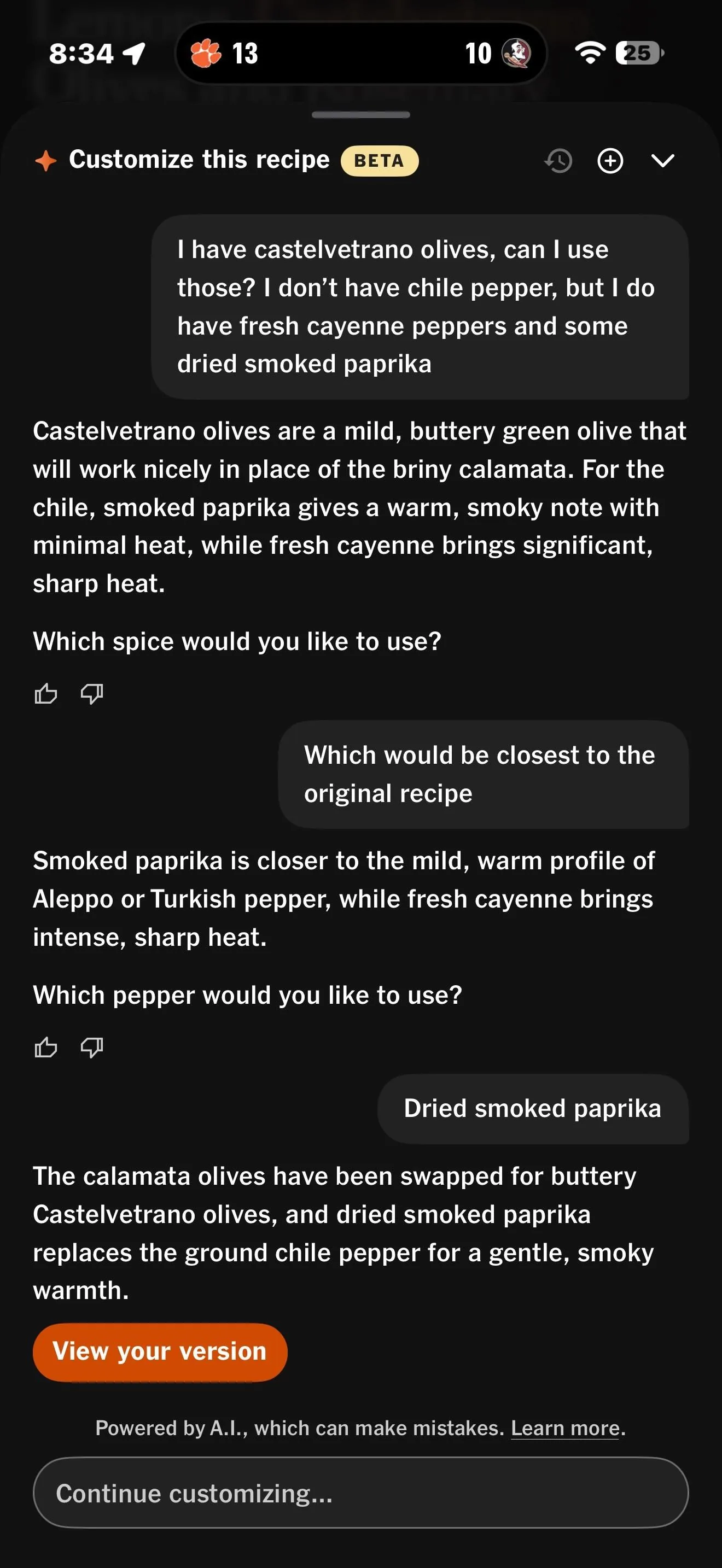
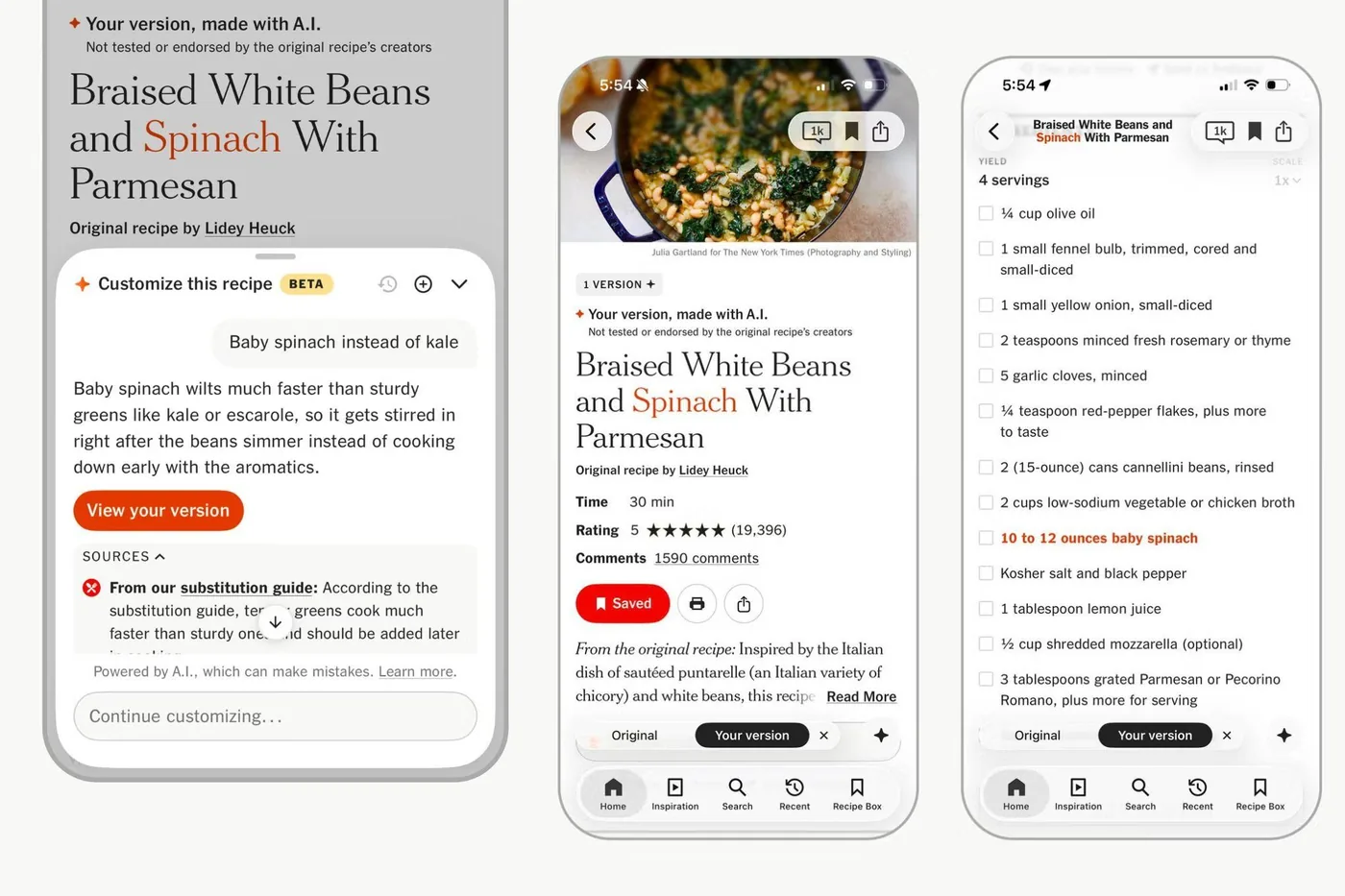
The assistant appears on recipe pages in a text box with the prompt “Customize this recipe…”. From that box, subscribers testing the NYT Cooking AI tool can ask simple questions about replacing ingredients or request larger changes, such as making a dish vegan and scaling it to feed seven guests [1]. The tool does not alter the original recipe text. Instead, it creates a separate version under a tab called Your Version, where every ingredient change appears marked in orange so cooks spot differences right away [3]. Cooks can jump back to the tested formula at any point [1]. Unvetted changes cannot alter the permanent archive [3].
The Times labels the feature as a beta tool. NYT Cooking states that answers and custom recipes have not been reviewed by editors and carry no endorsement from original recipe creators such as columnists and chefs. Dr Elena Marchetti reviewed the launch in Shattered. Marchetti explained that the assistant handles four jobs: suggesting ingredient swaps, scaling serving sizes, adapting recipes for different pans, and generating personalized recipes [3]. Ko said customized recipes stay private inside individual user accounts on iOS, so subscribers cannot post or share their altered versions through Cooking [2].
This update builds on earlier machine learning work in the cooking department. Ko said the team used automated tools two years ago to turn imperial volume measurements into metric weights. Last year, engineers added a feature that doubles or halves recipe serving sizes [2]. The publisher chose a gradual rollout on iOS to check system speed and see how people interact with the chat box before considering any wider release [3]. Jordan Cohen, a spokesperson for the New York Times, said the company keeps conversations open during rollouts to learn from subscriber feedback [2].
Dinner Ingredient Substitutions
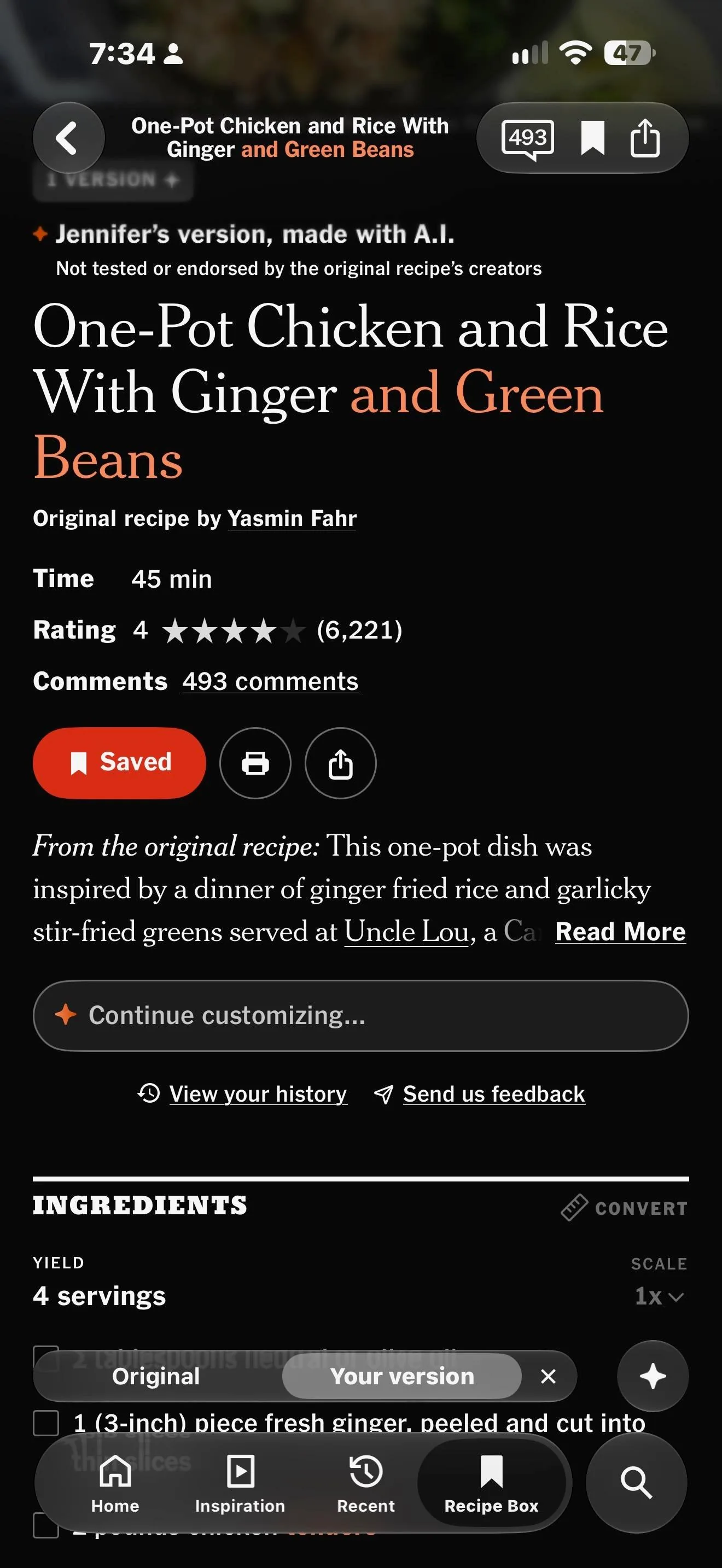
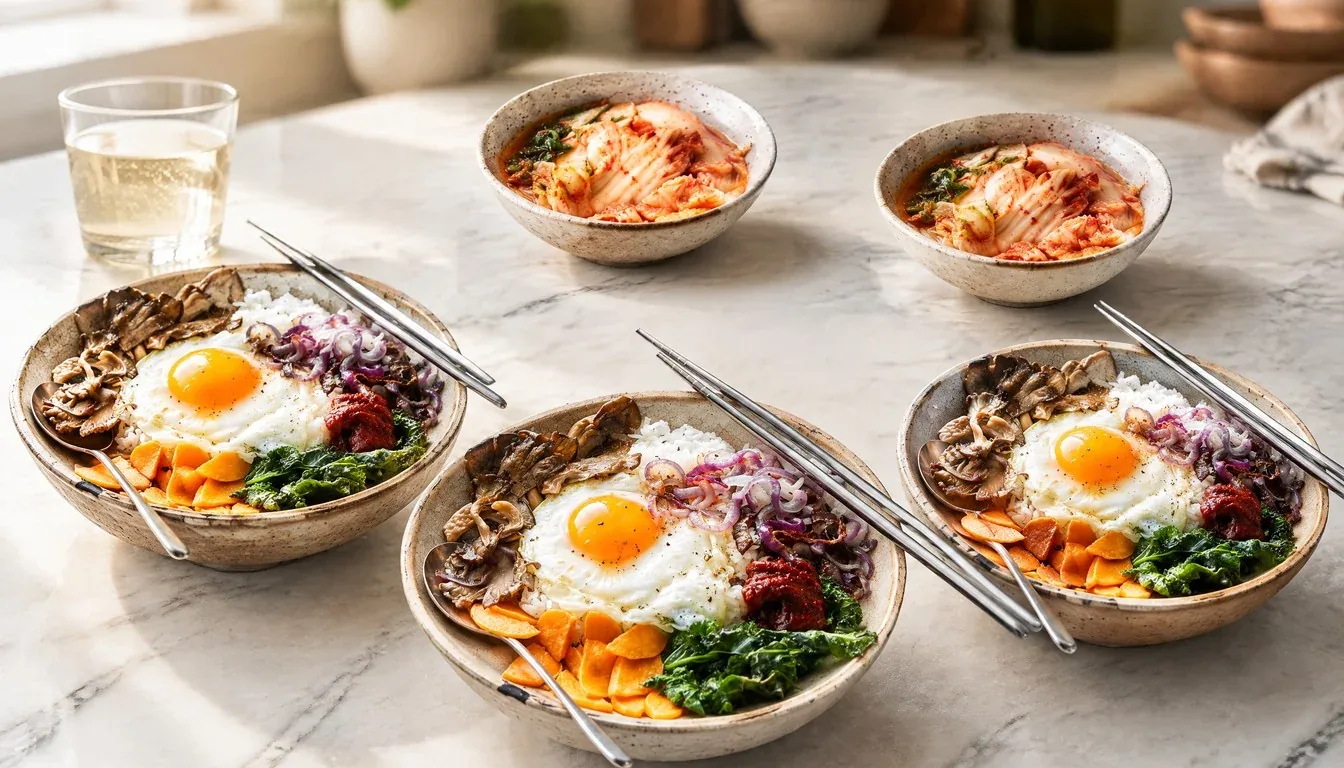
Reviewer Jennifer Pattison Tuohy tested the software during dinner preparation with a recipe by Yasmin Fahr called One-Pot Chicken and Rice With Ginger. Tuohy, a veteran writer for Wirecutter, Wired, and Dwell, had chicken tenders, green beans, red onions, ginger, garlic, and rice, but lacked chicken thighs, chard, and scallions. She entered her ingredients into the prompt box. The system created a revised recipe titled One-Pot Chicken and Rice With Ginger and Green Beans. It adjusted cooking steps within seconds [1].
The revised chicken recipe shortened browning time for tenders and directed Tuohy to cook red onions with the chicken. It suggested steaming green beans over rice for the last eight minutes of cooking instead of wilting chard. When Tuohy asked to add Thai basil instead of cilantro, the assistant agreed, explaining how the herb shifts flavor. In further trials of the NYT Cooking AI software, the assistant handled unusual requests with sensible advice. When asked what could replace makrut lime leaf in a Thai red curry, the assistant suggested grated lime zest, though it warned that “it misses the deeper floral, herbal aroma” of fresh leaves. In a roasted halibut dish, it warned that substituting fresh cayenne peppers for chiles “brings significant, sharp heat” [1].
Tuohy also tested a joke prompt based on the television comedy Friends, asking to put ground beef into a dessert trifle. The assistant firmly replied that “minced beef cannot be used in place of the ladyfingers or anywhere in this sweet dessert trifle”. Comparing the app against Amazon’s Alexa Plus on an Echo Show 11 display, Tuohy found the phone app far more reliable for reading altered steps. Alexa pulls select New York Times recipes, but got confused and improvised steps [1].


Bundt Cake and Muffin Tests
Baking introduces chemical rules that do not apply to savory cooking, because flour, fat, leavening, and liquid must interact in exact proportions to form proper crumb and rise. Testers chose a Cinnamon Roll Bundt Cake created by Genevieve Ko to examine how the assistant handles pan conversions and ingredient scaling [1]. A heavy Bundt pan bakes slowly over three hours, while shallow muffin cups bake fast, forcing the model to reason about heat transfer and batter volume instead of applying simple arithmetic [3]. The assistant adapted the bake by reducing cooking time down to 50 minutes and dividing batter across two 12-muffin tins (yielding 24 muffins) [1]. That change showed the model understood the general direction of the pan swap [3].
Two dozen muffins proved excessive for a small household. Tuohy asked the assistant to halve the recipe to yield 12 muffins [1]. The original cake called for five eggs, meaning a true half needs two and a half eggs. Instead of asking the baker to measure a fraction, the assistant rounded the figure up to three whole eggs [3].
That rounding choice sparked debate among food science observers who examined the test results. Writing for Shattered, Dr Elena Marchetti pointed out that using three eggs in a halved batch means the batter carries 20 percent more egg than an exact half. While pastry chefs often round up to preserve structure in cakes that need lift, the assistant gave the number without explaining why it changed. A human editor writing a scaled recipe would usually tell the reader to beat an egg and use half of it. The assistant simply delivered the new figure, leaving the cook unaware that liquid ratios had shifted [3].
Version Tracking and Butter Errors
A more serious error occurred when the tester switched between the original recipe and the customized version in the app. While preparing the original cake, Tuohy used voice input to ask how much butter the recipe needed. The assistant answered six tablespoons without stating which version it was quoting [1].
The original full-sized cake called for three-quarters of a cup of butter (12 tablespoons), so six tablespoons was correct only for the halved muffin batch [3]. The baker faced a dry cake [1]. During NYT Cooking AI evaluations, Marchetti explained in Shattered that this mistake stemmed from a version-tracking problem instead of bad arithmetic, because six tablespoons was mathematically accurate for the custom tab. The model lost track of context during conversation. Answering about the custom version while the user read the original recipe produced an error that sounded believable. In evaluations like those Shattered ran on ChatGPT and Claude, this drift passes fluency checks while failing grounding checks [3].
Because customized recipes cannot be saved as separate documents in the app, users risk mixing up quantities when switching tabs. Tuohy advised subscribers to delete their custom version once cooking ends to avoid confusing the tool later [1]. Syndicated coverage by Payal Lal in Skoar pointed out that home cooks must double-check exact amounts against the original text [4].
Subscriber Feedback on NYT Cooking AI
The arrival of automated recipe customization prompted pushback from subscribers who value tested recipes from New York Times writers and food editors. In the comments following Ko’s announcement, readers questioned whether generative tools belong in a collection known for kitchen testing. Many subscribers objected to the move. In debates over the NYT Cooking AI assistant, one reader called the feature “unbelievably disappointing to see,” arguing that automated tools risk changing the personal feel of the cooking service. Others questioned the energy consumption of large server clusters. When readers asked to turn off the feature, Ko stated that the chat box cannot be disabled. Using the tool is optional [2].
Jordan Cohen said the Times kept announcement comments open for four days so editors could answer reader concerns. Cohen stated that closing discussions on older posts is standard procedure for moderators. He added that many iOS subscribers are already trying the assistant and reporting good cooking results [2].
The New York Times has not named the underlying language model powering the tool, nor has it shared details on subscription pricing or future Android availability [3]. Coverage from Spanish technology site La Primera en Línea reported that the beta stays limited to United States subscribers on iOS during this testing phase [5]. JournalArta and The Verge also tracked early rollout performance [3]. For now, the assistant serves as a handy kitchen helper for quick weeknight swaps, but home bakers will want to keep their eyes on original measurements before putting delicate batters into the oven [1].
- ONLINE NEWS Tuohy, J. P. (2026, November 7). NYT Cooking’s AI assistant saved my weeknight chicken, but almost ruined my cake. The Verge. [Article Link]
- ONLINE NEWS Weatherbed, J. (2026, October 29). The NYT Cooking app is testing AI recipe modifications. The Verge. [Article Link]
- ONLINE NEWS Marchetti, E. (2026, November 7). NYT Cooking AI gets 3 egg & butter swaps wrong. Shattered. [Article Link]
- ONLINE NEWS Lal, P. (2026, November 8). AI cooking assistant saved my weeknight chicken but nearly spoiled my cake. Skoar. [Article Link]
- ONLINE NEWS La Primera en Línea. (2026, November 7). NYT Cooking’s AI assistant saved my weeknight chicken, but almost ruined my cake. [Article Link]


