






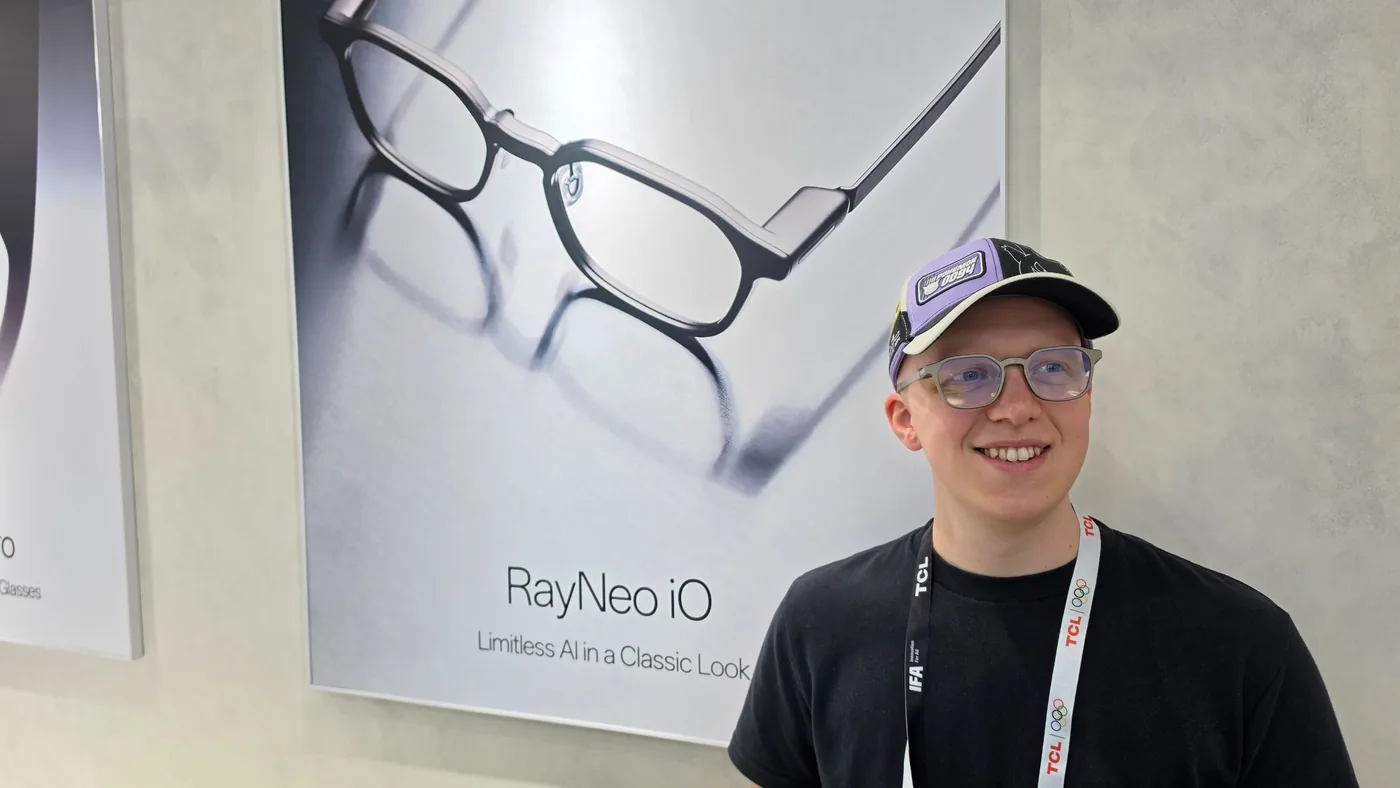
RayNeo unveiled the RayNeo iO smart glasses at IFA 2026, dropping outward lenses to build an audio-first wearable around dual microphones and hidden display prisms. Can camera-free smart glasses deliver artificial intelligence without provoking bystander hostility? Meta Ray-Bans sparked widespread public pushback over hidden recording, prompting hardware makers to rethink consumer surveillance on the street. RayNeo answered that tension in Berlin by replacing visual sensors with ambient listening and on-lens text prompts. [1]
RayNeo iO Smart Glasses Drop the Camera
At the IFA 2026 consumer electronics trade show in Berlin, TechRadar reviewer Hamish Hector tested two distinct head-mounted prototypes from RayNeo: the flagship GT Max frames and the camera-free RayNeo iO smart glasses. Hector noted that current market leaders like Meta Ray-Bans provide mobile application integration and on-the-go artificial intelligence, yet outward-facing camera lenses have provoked intense public blowback over covert recording. The camera is gone. RayNeo eliminated imaging hardware entirely to counter privacy alarms while retaining transparent optical waveguides (transparent display prisms embedded directly within prescription-capable lenses) that project heads-up display (HUD) graphics into the user’s view. [1]
Dropping the camera fundamentally reshapes what a wearable accessory can accomplish throughout a typical day. Wearers forfeit first-person photography, hands-free video recording, and visual context algorithms that parse physical objects in the environment. Removing optical sensors trades visual search for public comfort. Earlier camera-less hardware often suffered from sluggish software, clunky frame controls, and an absence of compelling tools once imaging disappeared. Hector acknowledged being unimpressed by prior models in this category, leaving lingering questions about whether audio alone justifies wearing connected eyewear. [1]
RayNeo addresses that gap by pairing lightweight frames with focused interface utilities rather than general photography. The glasses display notification popups, record voice memos, stream real-time language translations, and present live stock quotes directly before the eyes. The lenses show clear text. Users can also summon an on-lens teleprompter for speaking presentations. For people with hearing impairments, the real-time captioning engine transcribes speech into text without requiring the user to watch sign language, even signaling when someone approaches from behind. Accessibility provides immediate practical value. [1]
Physical Dials Replace Swipe Gestures
Smart eyewear frequently stumbles over basic physical input. Touch-sensitive temples and capacitive swipe gestures regularly fail when fingers brush sweaty plastic, causing missed taps or accidental app launches during movement. RayNeo bypasses that frustration on the iO by mounting a dedicated Digital Crown on the right temple arm. Rotating this textured mechanical dial cycles through menus with distinct tactile feedback. Hardware dials feel more dependable. [1]
The dial rotates cleanly. It mimics controls popularized by Apple Watch and AirPods Max, keeping navigation responsive without reaching for a phone. [1]
Companion software often determines whether wearable hardware succeeds in daily use, and TechRadar reported that RayNeo avoided the software sluggishness that crippled competing smart specs. The accompanying mobile application synchronizes instantly with the glasses, opening menus and rendering live feeds without noticeable latency during hardware demonstrations. Responsive software changes the user experience. By offloading complex computational tasks to the paired phone while retaining local menu rendering on the frame’s lightweight processor, the system maintains steady frame rates inside the optical display. Wearers can flick between live translation, incoming calendar alerts, and teleprompter scripts within seconds, demonstrating that smart glasses can operate as agile secondary screens rather than cumbersome novelty goggles. [1]

Microphones Capture Daily Life Logs
The centerpiece of RayNeo’s software architecture is Life Log, an ambient audio transcription system that monitors environmental sound throughout the day. Built-in microphones continuously register spoken exchanges, workplace meetings, and personal musings, converting raw speech into structured diary entries. Microphones log the entire day. The software extracts key activity summaries and populates automated to-do lists, identifying deadlines or follow-up commitments mentioned during routine dialogue. Wearers receive an evolving daily chronicle without typing. RayNeo also permits users to export these compiled logs to external third-party artificial intelligence engines for further synthesis. [1]
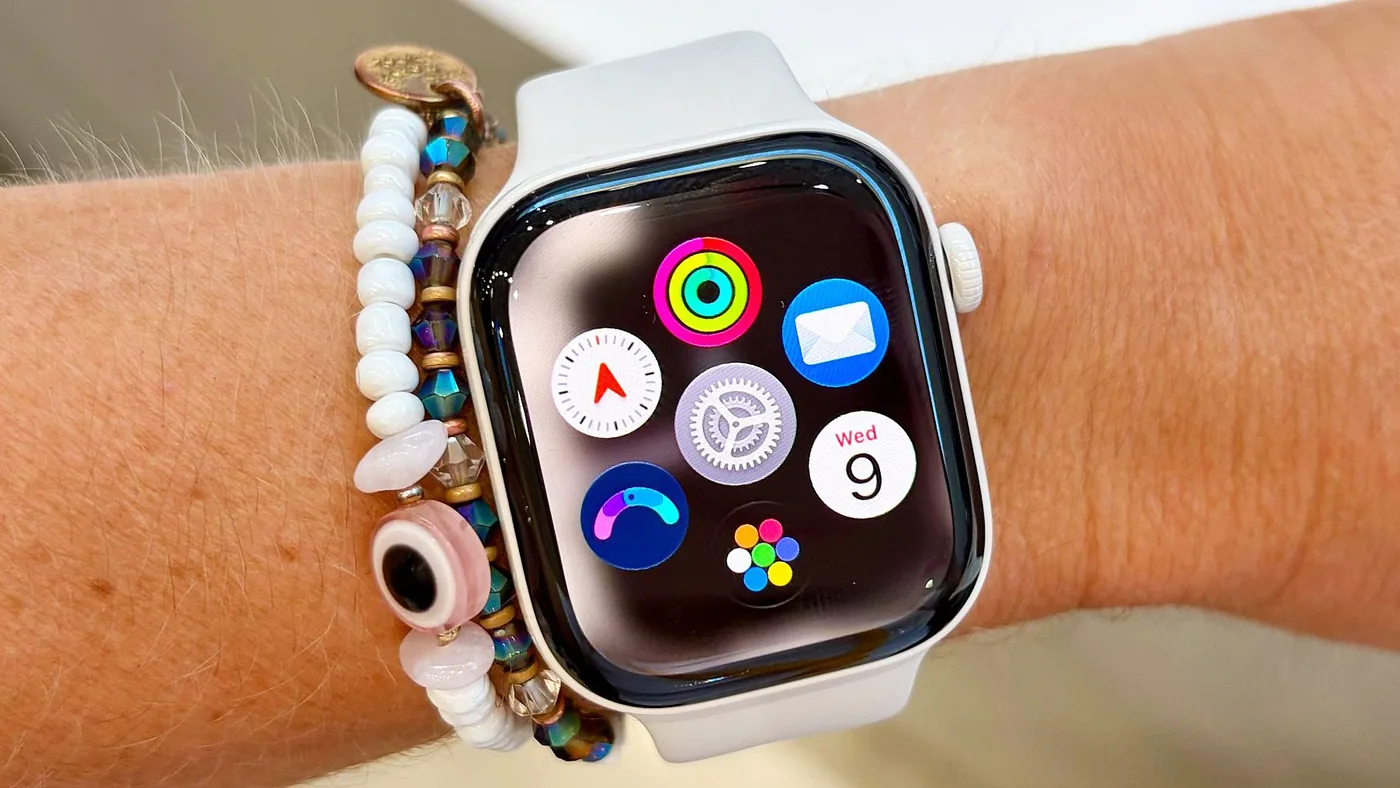
This passive acoustic capture closely parallels Apple’s newly unveiled Audio Intelligence ecosystem for watchOS. As Dan Bracaglia reported for Tom’s Guide, Apple introduced Live Rewind on Apple Watch Series 12 and Apple Watch Ultra 4 to assist forgetful users who struggle to retain spoken information on the fly. Apple hardware discussed in PerEXP Teamworks’ coverage of Apple Watch Ultra 4 satellite navigation shifts now incorporates an upgraded Apple S11 processor dedicated to background audio handling. Apple’s architecture continually buffers up to 15 seconds of ambient sound day and night. Double-tapping the wrist crown plays back that fleeting buffer or displays an instant transcription. [1][2]
While Apple confines Live Rewind to a rolling 15-second retrieval window for catching missed names or restaurant specials, RayNeo iO smart glasses pursue whole-day audio indexing. The glasses aim to serve as a comprehensive cognitive memory aid. Wearers do not need to raise a wrist or wear earbuds to read transcripts. The screen sits directly ahead. Floating optical elements present immediate textual recaps within the line of sight. Both designs treat human conversation as transient data ripe for algorithmic retrieval. [1][2]
Wearable Audio Confronts Privacy Hurdles
Eliminating cameras removes public anxiety about secret photographs, yet constant microphone recording introduces legal and ethical complications. RayNeo emphasized to TechRadar that the iO operates under a strict privacy-first architecture. No raw acoustic recordings are ever stored on local storage drives or cloud servers. Instead, onboard machine learning models transcribe spoken dialogue and generate summaries in real time. Processing remains distributed strictly between the glasses and the paired smartphone. Audio processing stays local. Sound stays off external servers. [1]
Physical notifications attempt to inform bystanders when recording takes place. The frames feature an integrated recording indicator light that illuminates while microphones remain active, although Hector observed that the small emitter is not particularly conspicuous in bright surroundings. Recording consent varies sharply across global jurisdictions. In several American states and international regions enforcing two-party consent laws, recording spoken conversations without the explicit permission of all participating parties constitutes an illegal act. A tiny glowing LED rarely satisfies rigorous legal consent requirements when wearers navigate crowded social spaces. [1]
Apple implements comparable safeguards on its smartwatches to defuse user hesitation. In his assessment for Tom’s Guide, Bracaglia explained that Apple Watch Series 12 and Ultra 4 never preserve persistent audio files on device flash memory or in iCloud storage. Every 15 seconds, buffers reset. Incoming sound overwrites old samples continuously, data stays protected by end-to-end encryption, and Apple algorithms deliberately refrain from identifying individual speaker identities. Raw sound remains protected. RayNeo similarly lets wearers utilize device features without surrendering private personal data to remote corporate platforms. [1][2]
HUD Prompts Enter Live Conversations
While Life Log operates quietly in the background, RayNeo’s most provocative capability actively intervenes in human dialogue. Branded as Conversation Assistance, this tool monitors live conversations and projects suggested spoken replies directly onto the heads-up display. Official demonstration videos showed wearers relying on prompted lines during nervous job interviews and romantic dates. The AI generates real-time dialogue cues. Wearers can glance at pre-formulated responses without breaking eye contact or pausing the exchange. [1]
That automated social scripting prompted immediate skepticism from reviewers on the IFA show floor. Hector characterized the experience as an unappealing direction for personal technology, arguing that interpersonal dialogue during dates or office meetings represents a fundamental human quality that people should not offload to software algorithms. Outsourcing spontaneous empathy to predictive text risks turning authentic conversation into rehearsed performance. Human conversation requires authentic presence. Hector stressed that people should engage actively in daily life rather than sitting back mindlessly while generative models script their interactions. [1]
Despite reservations surrounding AI conversational coaching, the underlying hardware demonstrates how smart eyewear can mature without outward cameras. Real-time captioning provides vital accessibility assistance for deaf and hard-of-hearing individuals, turning ambient voices into visible text and signaling when someone seeks attention from behind. Bystanders notice fewer optical intrusions. Wearers at IFA expressed growing appreciation for camera-free smart glasses as public scrutiny over Meta Ray-Bans intensifies. RayNeo iO smart glasses show that wearable computing can retain responsive software and ambient artificial intelligence while leaving the camera behind. [1]
- ONLINE NEWS Hector, H. (2026, September 13). RayNeo iO might finally get camera-less smart glasses right — but the ‘conversation assistance’ is an icky future I don’t want to live in. TechRadar. [Article Link]
- ONLINE NEWS Bracaglia, D. (2026, September 13). I’m a smartwatch reviewer: This is the new Apple Watch 12 feature I’m most excited for. Tom’s Guide. [Article Link]


2 comments