



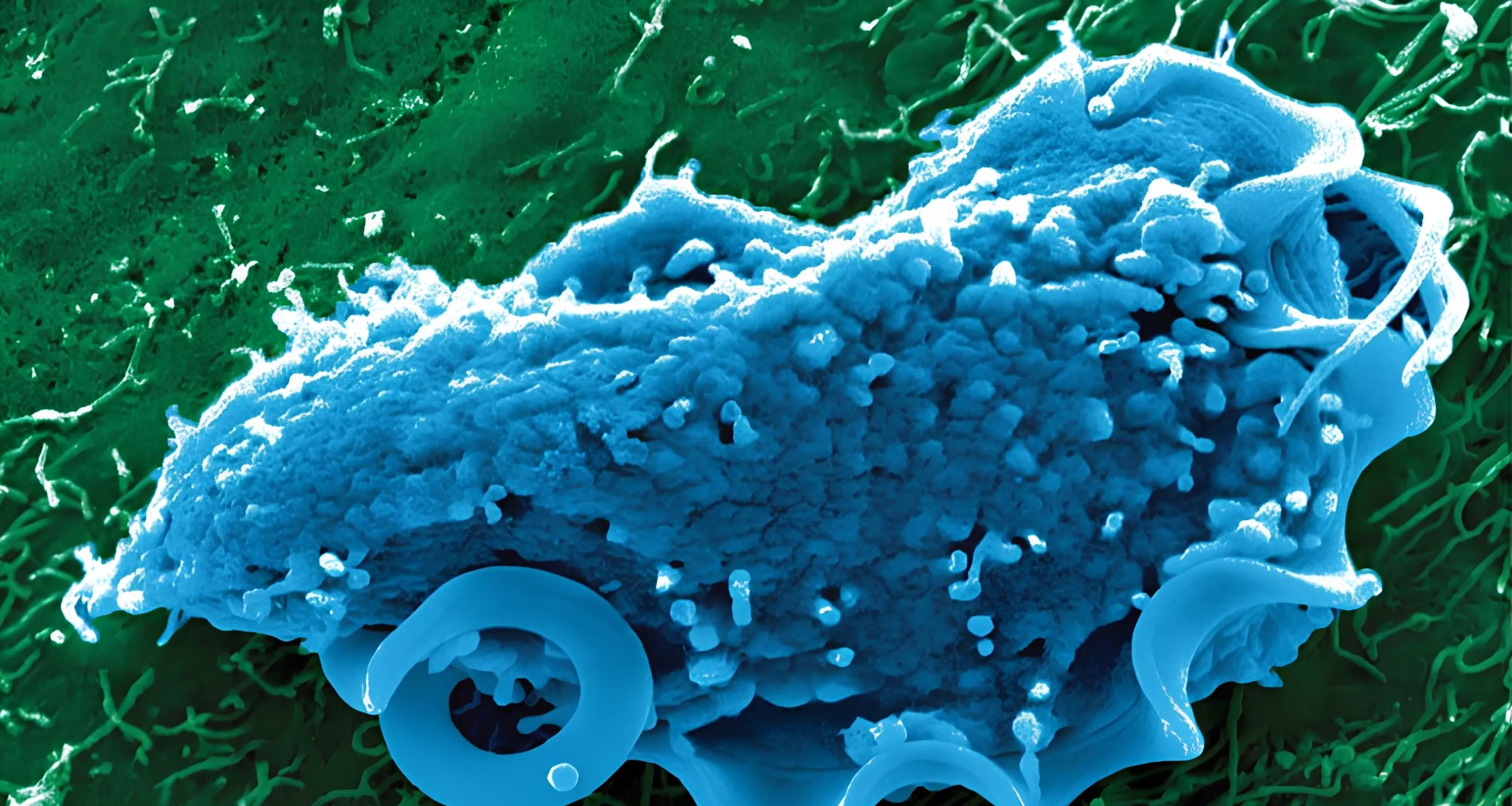
In addition to bacteria and fungi, the human gut harbors protists—a class of single-celled, nucleus-bearing microorganisms. A recent study conducted in mice, whose protists share similarities with those found in humans, delves into how the dietary preferences of these understudied protists influence competition within the microbiome and impact the immune responses of their host.
Published on December 13 in the journal Cell, the research unveils distinctions among gut-dwelling protist species, emphasizing the increasing recognition of their significant role in maintaining health.
Microbiome researcher Seth Rakoff-Nahoum at Boston Children’s Hospital in Massachusetts underscores the traditional oversight of protists, often considered as “fourth-class citizens” among microbes. He highlights the study’s role in shedding light on the importance of protists and their substantial impact on overall health.
The enigma of the gut microorganisms
Previous research has demonstrated that gut protists have the ability to activate immune responses. For instance, in mice, the single-celled organism Tritrichomonas musculis releases a molecule called succinate, initiating a type 2 immune response in the small intestine. This protist also enhances the population of T helper 1 (TH1) and T helper 17 (TH17) immune cells in the colon, which play a signaling role among other immune cells. Despite this knowledge, there remains a gap in understanding the diversity of gut protists, their metabolism, and their interactions with other microbes.
A research team, led by mucosal immunologist and microbiome researcher Michael Howitt at Stanford University in California, conducted a screening of laboratory mice to uncover the protist species residing in their guts. They identified a species closely related to T. musculis, naming it Tritrichomonas casperi. Further exploration of DNA data from human fecal samples suggested the presence of close relatives of these two species in some individuals.
Comparative experiments between the two species revealed that, akin to T. musculis, T. casperi stimulates the production of TH1 and TH17 cells in the gut. However, the newly identified species differs in that it does not release succinate. Notably, T. casperi stands out as the only mouse gut protist within the genus encountered by Howitt that does not activate type 2 immunity in the small intestine. This observation drew significant attention and emphasizes the unique characteristics of this newly described protist species.
Dietary requirements
The discovery prompted researchers to delve into additional distinctions between the two protist species. While gut microbes typically rely on the host’s diet, including plant fiber, they can also utilize other resources in the gut, such as the mucus secreted by intestinal cells. The study, involving mice fed different diets, indicated that T. musculis has a preference for dietary food sources, while T. casperi favors intestinal mucus.
Further investigation revealed that mice exclusively hosting T. musculis exhibited fewer fiber-eating bacteria in their guts compared to control mice without either protist species. Conversely, mice with only T. casperi showed low levels of mucus-consuming bacteria. This suggests a competitive relationship between protists and bacteria in each niche, with protists typically emerging as the dominant force. Moreover, the researchers observed that the availability of various food sources, including mucus, can influence some of T. musculis‘s effects on type 2 immunity.
Michael Howitt, the lead researcher, expresses hope that the study will inspire other microbiome researchers to incorporate protists into their investigations. He emphasizes a shift away from perceiving protists solely as entities releasing succinate, stating that there is a broader range of activities and influences that these microorganisms exert on the gut ecosystem and overall gut health.
Resources
- JOURNAL Prillaman, M. (2023). This group of bizarre gut microbes is unexpectedly complex. Nature. [Nature]
- JOURNAL Gerrick, E. R., Zlitni, S., West, P. T., Carter, M. M., Mechler, C. M., Olm, M. R., Caffrey, E. B., Li, J. A., Higginbottom, S. K., Severyn, C. J., Kracke, F., Spormann, A. M., Sonnenburg, J. L., Bhatt, A. S., & Howitt, M. R. (2023). Metabolic diversity in commensal protists regulates intestinal immunity and trans-kingdom competition. Cell. [Cell]
- JOURNAL Nadjsombati, M. S., McGinty, J. W., Lyons-Cohen, M. R., Jaffe, J. B., DiPeso, L., Schneider, C., Miller, C. N., Pollack, J. L., Gowda, G. a. N., Fontana, M. F., Erle, D. J., Anderson, M. S., Locksley, R. M., Raftery, D., & Von Moltke, J. (2018). Detection of succinate by intestinal tuft cells triggers a type 2 innate immune circuit. Immunity, 49(1), 33-41.e7. [Immunity]
- JOURNAL Escalante, N. K., Lemire, P., Tleugabulova, M. C., Prescott, D., Mortha, A., Streutker, C., Girardin, S. E., & Philpott, D. J. (2016). The common mouse protozoaTritrichomonas murisalters mucosal T cell homeostasis and colitis susceptibility. Journal of Experimental Medicine, 213(13), 2841–2850. [Journal of Experimental Medicine]
- JOURNAL Chudnovskiy, A., Mortha, A., Kana, V., Kennard, A., Ramírez, J. D., Rahman, A., Remark, R., Mogno, I., Ng, R., Gnjatic, S., Amir, E. a. D., Solovyov, A., Greenbaum, B., Clemente, J. C., Faith, J. J., Belkaid, Y., Grigg, M. E., & Mérad, M. (2016). Host-Protozoan Interactions Protect from Mucosal Infections through Activation of the Inflammasome. Cell, 167(2), 444-456.e14. [Cell]
Cite this page:
APA 7: TWs Editor. (2023, December 15). The Surprising Complexity of Strange Gut Microorganisms. PerEXP Teamworks. [News Link]


