



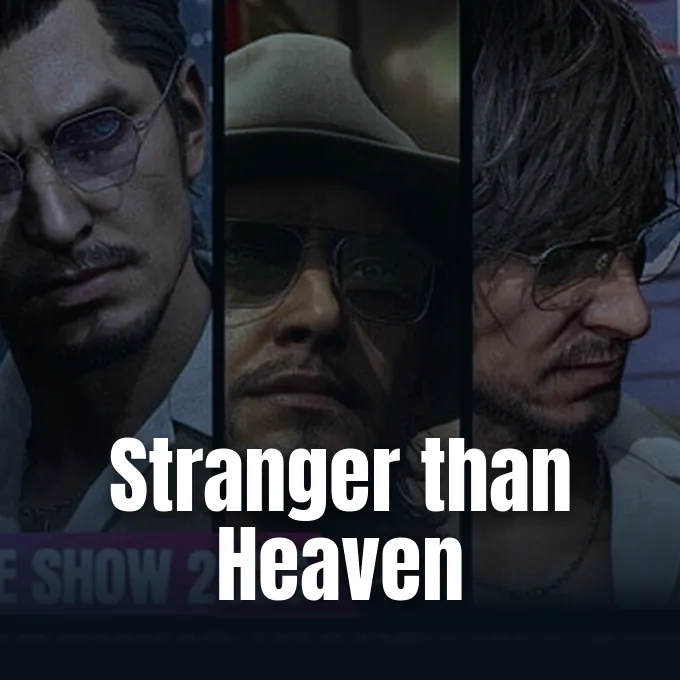
Night settles across the harbor as Sega offers audiences a substantial look at the Stranger Than Heaven game, previewing ten minutes of introductory footage during its Wednesday Tokyo Game Show broadcast. Can an ambitious historical epic connect transpacific migration with decades of modern Japanese crime? Ryu ga Gotoku Studio answers by unveiling a sprawling narrative (previously codenamed Project Century) that begins with an escape from California in 1915 and concludes fifty years later in Tokyo. [1]
Stranger Than Heaven Game Opening Footage
Sega streamed the new footage during the TGS 2026 Special Opening Night livestream, providing fans with their first in-depth look at the Stranger Than Heaven game following its initial production phase. Sega showcased ten minutes of opening footage during the broadcast, revealing the introductory credits before following the protagonist into his earliest street trials. Melee combat mechanics feature fluid hand-to-hand strikes and intense environmental weapon interactions. The presentation then shifts smoothly into social pastimes, highlighting the bustling Showbiz lounge where entertainers and criminal syndicates mingle. [1]
Musical ambition defines the creative direction of the project. Sega announced that the title track will receive an official commercial release before the year concludes. The collaborative theme song, titled “Stranger Than Heaven,” features American rap icon Snoop Dogg performing with rock vocalist Satoshi Fujihara, celebrated pop singer Ado, and American vocalist Tori Kelly. Fast-moving cuts pair the energetic song with stark transitions between high-class entertainment clubs and desolate maritime docks. The song arrives this year. [1]
The Showbiz lounge operates as a primary social retreat between dangerous missions. Players can explore lavish entertainment halls and converse with diverse urban residents. What makes this glamorous sanctuary so compelling? The Showbiz lounge provides a vibrant sanctuary between violent street clashes, allowing Makoto to unwind before stepping back into shadowy alleys where surprise brawls erupt. [1]
Five Historical Eras Across Japan
The sprawling storyline traverses modern Japanese society across a structured 50-year narrative framework that guides players through distinct chronological chapters. Five separate urban centers illustrate the nation’s cultural transformation (spanning modern transitions from early industrialization through post-war expansion). The journey visits Kokura in Fukuoka during 1915, moves to the naval shipyards of Kure in Hiroshima in 1929, explores commercial districts of Minami in Osaka in 1943, arrives in the coastal retreat of Atami in Shizuoka in 1951, and finishes amid the neon-lit nightlife of Kamurocho in Shinjuku, Tokyo in 1965. [1]
Kamurocho functions as the definitive 1965 culmination. Ryu ga Gotoku Studio constructed the fictional entertainment district (a stylized district modeled after Kabukicho) as a cornerstone of its storytelling across numerous entries in the franchise. Just as a recent trailer showcases three converging stories in Grotesqqque, Sega’s presentation uses interconnected eras to map out generational changes across Japanese society. Kamurocho anchors the final chapter. [1]
Every era showcases authentic period architecture, distinctive fashion, and acute cultural friction. Each chronological chapter mirrors the economic transformations of modern Japan, depicting marginalized citizens striving to build a lasting home amid national upheaval. By rooting every milestone in a concrete year and prefecture, the Stranger Than Heaven game interweaves intimate personal struggles with expansive historical developments. [1]


Makoto Daito and the Transpacific Voyage
The narrative originates in 1915 San Francisco, where a young boy named Makoto Daito boards an outbound maritime freighter under cover of darkness. Born to an American father and a Japanese mother, the youth faces harsh social ostracization because of his mixed heritage. Following the sudden death of both parents, Makoto chooses to cross the Pacific Ocean to seek out his mother’s ancestral homeland, where an uncertain future beckons. [1]
He embarks with few possessions. He carries nothing beyond the shirt on his back, journeying across rough waters in search of safety. [1]
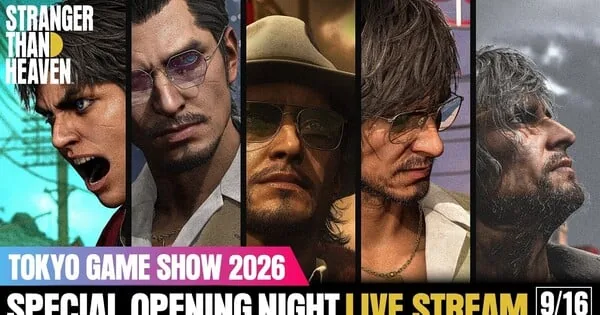
Life aboard the Pacific cargo vessel rapidly turns treacherous. Severe conditions onboard force Makoto to fight constantly for survival before ever sighting the Japanese coastline. A single daring choice permanently reshapes the young traveler’s future, pushing him into unfamiliar circles where endurance requires relentless courage and streetwise cunning. The Stranger Than Heaven game frames this voyage as the foundational crucible that shapes his adult outlook. [1]
Reaching the port of Kokura in 1915 concludes only the initial phase of his journey. Makoto must quickly adapt to a fast-changing society that treats overseas arrivals with severe skepticism. The video preview demonstrates how his search for belonging unfolds over several turbulent decades, testing his resolve as shifting political winds and rival factions reshape urban Japan. New dangers confront him immediately. [1]
Ensemble Cast and Bunta Sugawara CG Model
Yū Shirota headlines the production as the voice of Makoto Daito. Rapper Snoop Dogg lends his voice to Orpheus, while Tori Kelly portrays Suzy Day. Meanwhile, Japanese actress Moeka Hoshi voices Tae Matsumoto, and seasoned performer Akio Ōtsuka assumes the role of Heigo Yashima. Veteran actor Tokuma Nishioka plays Kiyoshi Otsuru, paired with musical artist Satoshi Fujihara voicing Takashi. The mysterious character known as The Veiled Stranger is voiced by Cordell Broadus, while Ado plays Keiko Shirai. Additional announced cast members feature the late American rapper Tupac, along with franchise favorites Takaya Kuroda, Kouhei Tsuji, and Yasukaze Motomiya. Together, this diverse international group brings tremendous vocal depth to the historical narrative. [1]
One of the most noteworthy production highlights involves the digital recreation of Genzo Iwaki. Toei Company provided historical photographs to guide the digital character model, honoring the late actor Bunta Sugawara, who serves as the visual inspiration for the character. Sega obtained formal consent from Sugawara’s family to recreate his likeness, while Toei Company Ltd.—the legendary studio behind Sugawara’s renowned film Battles Without Honor and Humanity—supplied archival footage and period photographs to facilitate the visual construction. [1]
RGG Studio reconstructed the digital likeness from archival photographic records and cinematic reels, capturing the veteran performer’s intense gaze and authoritative presence (Takashi Ukaji provides the spoken voice performance for Genzo Iwaki). Motomiya previously portrayed Kosei Shishido in Like a Dragon Gaiden: The Man Who Erased His Name and played Kazuma Kiryu in the live-action Like a Dragon Powered By Nihon Touitsu production. These experienced artists infuse the historical tale with decades of celebrated screen heritage. [1]
Platforms, Game Pass, and Media Expansions
Sega confirmed that the title will debut worldwide on January 15 for Xbox Series X|S, PlayStation 5, and PC via Steam. The Stranger Than Heaven game launches January 15 on consoles, PC, and Game Pass, allowing subscribers to jump into the campaign on launch day without extra purchases. Alex Mateo reported these announcements for Anime News Network, confirming that Ryu ga Gotoku Studio is also developing a live-action feature film adaptation for Netflix. [1, 2]
The upcoming launch follows an extraordinarily active schedule for the development team. On February 12, RGG Studio released Yakuza Kiwami 3 & Dark Ties, offering a comprehensive remake of Yakuza 3 bundled with the new standalone release Dark Ties across PlayStation 5, PlayStation 4, Nintendo Switch 2, Xbox Series X|S, and Steam. That release demonstrated the studio’s capacity to handle major concurrent projects while expanding its storytelling into new historical territory. The studio maintains rapid momentum. [1]
The Tokyo Game Show reveal offers a clear signal of Ryu ga Gotoku Studio’s creative direction. Anime News Network detailed the reveal following the Tokyo Game Show livestream, emphasizing how the Stranger Than Heaven game merges expansive period storytelling with responsive brawling mechanics. The project honors fifty years of modern Japanese history through an emotionally resonant journey. [1, 2]
Players anticipating the January arrival can immerse themselves in the collaborative theme song arriving later this year, while the full game prepares to chronicle its 50-year historical odyssey across multiple gaming platforms. Players await the transpacific epic. [1]
- ONLINE NEWS Mateo, A. (2026, September 16). Stranger Than Heaven game’s video previews opening, showbiz, combat. Anime News Network. [Article Link]
- ONLINE NEWS Anime News Network Newsroom. (2026, September 16). Stranger Than Heaven game’s video previews opening, showbiz, combat. Anime News Network. [Article Link]


