



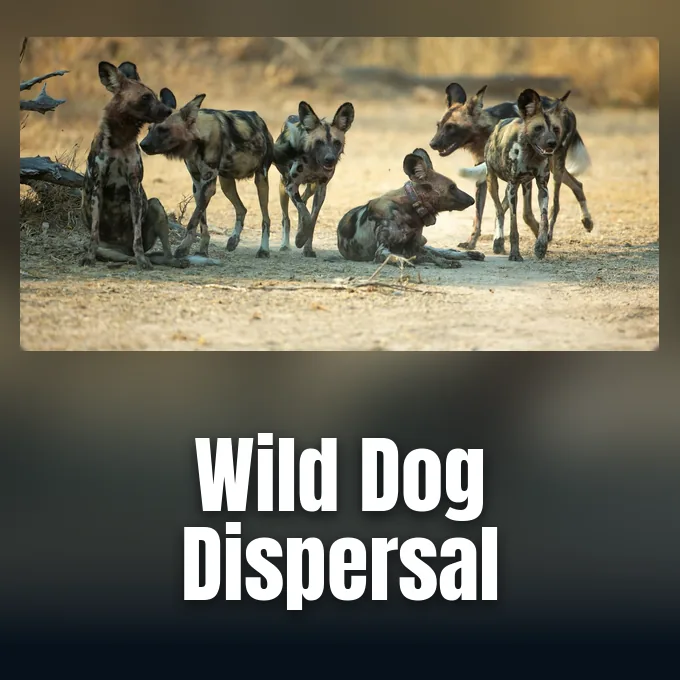
How far can an endangered carnivore run across human settlements before its luck runs out? African wild dogs (Lycaon pictus) represent one of Earth’s rarest large predators, having split from thirty-four other canid species more than three million years ago. Fewer than 6,000 individuals survive across Africa today [3]. In an unprecedented movement documented by Montana State University ecologist Scott Creel, three young males traversed 4,126 kilometers across Zambia to find unrelated mates [1, 2].
African Wild Dogs and the Dispersal Dilemma
In typical packs, reproduction remains strictly confined to an alpha male and an alpha female, leaving most pack members unable to breed in their natal territory [3]. Young African wild dogs face an unforgiving evolutionary dilemma once they reach three years of age [1, 2]. As Scott Creel observed, leaving the natal pack presents a high risk of death, yet remaining guarantees genetic failure [2]. Dispersal (one-way movements by young animals leaving their natal pack to find unrelated mates) serves as the primary mechanism that prevents inbreeding and links scattered populations across southern Africa [1, 3]. Mating requires unrelated partners [2]. Without these journeys, small isolated populations rapidly collapse [3].
Over the past sixteen years, Scott Creel and Matt Becker of the Zambian Carnivore Programme have monitored more than 500 African wild dogs across fifty separate packs every year. Satellite-linked collars fitted by researchers reveal the precise routes animals choose when crossing unfamiliar terrain. Working with Zambia’s Department of National Parks and Wildlife, the field team recorded position fixes every few hours to construct spatial histories of where packs thrive, hunt, and encounter mortal hazards [1, 3]. Recent tracking showed that small isolated groups in Liuwa Plain, the Serengeti, and Lower Zambezi National Park suffered local extirpations when landscape connections broke down [3]. Corridors offer vital connections. Maintaining physical routes between disparate parks represents an indispensable biological lifeline for regional species survival [1].
Dispersal is not migration. It is an unmapped, one-way quest across hostile terrain where young predators must locate unrelated partners or perish [1, 3].
The 4,126-Kilometer Trek Across Zambia
In mid-2025, seven young African wild dogs departed the Mayukuyuku pack within Kafue National Park in west-central Zambia [1, 2]. Four sisters headed northward into a game management area, while three brothers, known to researchers as the Mayukuyuku males, pushed east into unprotected woodlands. Kafue National Park contains extensive miombo (a type of open deciduous woodland dominated by leguminous trees), where abundant antelope herds support carnivores in the relative absence of competing lion prides. The journey continued eastward. Confronted by dense human settlements and road infrastructure near Kitwe and Ndola in the industrial Copperbelt Province, the males shifted their travel dynamics [1, 2].
GPS tracking showed that the Mayukuyuku males switched immediately into a rapid, linear travel mode characteristic of wild dogs navigating hazardous competitor territories [2, 3]. When crossing unprotected lands, African wild dogs travel swiftly and seek shelter in rocky outcrops or thickets to avoid human detection. Finding no intact savanna or resident females in the industrial Copperbelt, the brothers retraced their steps across hundreds of kilometers. Remarkably, having logged more than 1,200 kilometers, they crossed paths with their three surviving sisters in an unprotected landscape near Kitwe and Ndola [2, 3]. Their sisters had already travelled over 1,400 kilometers. Because they were close siblings, mating was impossible, prompting both groups to part company after a single day [2, 3]. The Mayukuyuku males then turned east toward the Luangwa River Valley, completing a record 4,126-kilometer trek across nine grueling months [1, 2].
By April 2026, the three Mayukuyuku males settled in a game management area between South Luangwa National Park and Lower Zambezi National Park [1, 2].
Why Do Dispersing Groups Face Snare Peril?
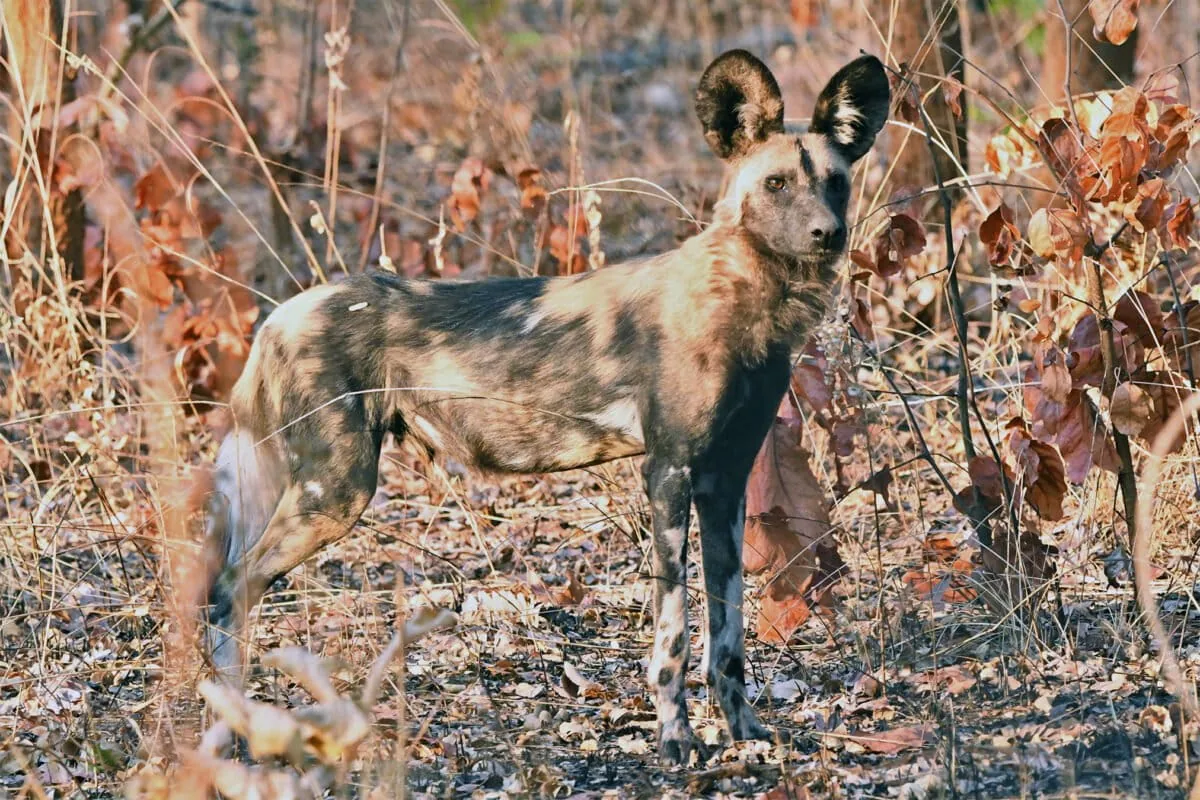
Why do dispersing African wild dogs face such catastrophic mortality beyond park borders? Dispersal remains perilous. Scott Creel and Matt Becker found that more than half of the tracked dispersing wild dogs failed to survive their journeys [2, 3]. The primary hazard across southern Africa stems from illegal wire snares set by poachers targeting bushmeat [1, 2]. Wild dogs cannot detect concealed wire loops. Because pack members exhibit intense social fidelity and refuse to abandon trapped companions, an entire group often succumbs when visiting an immobilized animal [2, 3].
The fate of the Mayukuyuku sisters underscores the lethal severity of wire snares. Following their brief reunion outside Kitwe, the sisters travelled south into an unprotected forest near Kabwe in Central Province. Wire snares kill indiscriminately. GPS coordinates soon revealed repeated movements back and forth to a single coordinate, an abnormal pattern for non-denning dispersing animals. A collared female was returning repeatedly to a trapped sibling held fast in a poacher’s wire snare. When a field investigator from the Zambian Carnivore Programme reached the fenced private property after a three-day delay, she recovered only the cut collar, confirming the animal’s death. Half of the nineteen dispersing groups monitored over fifteen years suffered similar snare fatalities [2].
Earlier tracking documented a parallel tragedy with a three-year-old female designated EWD-1355 from South Luangwa National Park. In 2021, she completed an extraordinary journey exceeding 2,300 kilometers across the rugged Rift Valley, swimming wide rivers and traversing international borders into Mozambique and Zimbabwe. She reached Lower Zambezi National Park but failed to recruit an unrelated male partner from resident packs. Driven to resume wandering, she died in a wire snare in June 2022 [3].


Comparing Mammalian Migrations and Dispersal Journeys
Wildlife biologists distinguish dispersal from seasonal migration by its purpose and trajectory [1, 3]. Dispersal represents an exploratory quest. According to comparative observations compiled by the UN Convention on Migratory Species, Africa’s longest recorded mammalian return migrations include blue wildebeest, Burchell’s zebra, and white-eared kob, which travel up to 400 kilometers. The 4,126-kilometer trek accomplished by the Mayukuyuku males dwarfs these seasonal migration distances by a wide margin. Yet migration involves a cyclical return to seasonal forage grounds, whereas dispersal represents an irreversible journey undertaken exclusively to establish new breeding packs [1, 3].
A 2022 study published in the African Journal of Ecology by Sandoval-Seres and colleagues examined long-distance dispersal within the Kavango-Zambezi Transfrontier Conservation Area [4]. Dispersing carnivores maintain functional connectivity across vast transboundary landscapes despite agricultural encroachment. While historical ecological analyses indicate that prehistoric giant mammals declined due to human impact rather than climate shifts, contemporary African wild dogs contend with acute fragmentation caused by expanding farmland and infrastructure [1, 2].
Understanding these long-distance movements clarifies how predators interact with natural ecosystems, reflecting broader research into the legacy of Earth’s giants across human-dominated landscapes [1, 3].
Connecting Fragmented Habitats Across Southern Africa
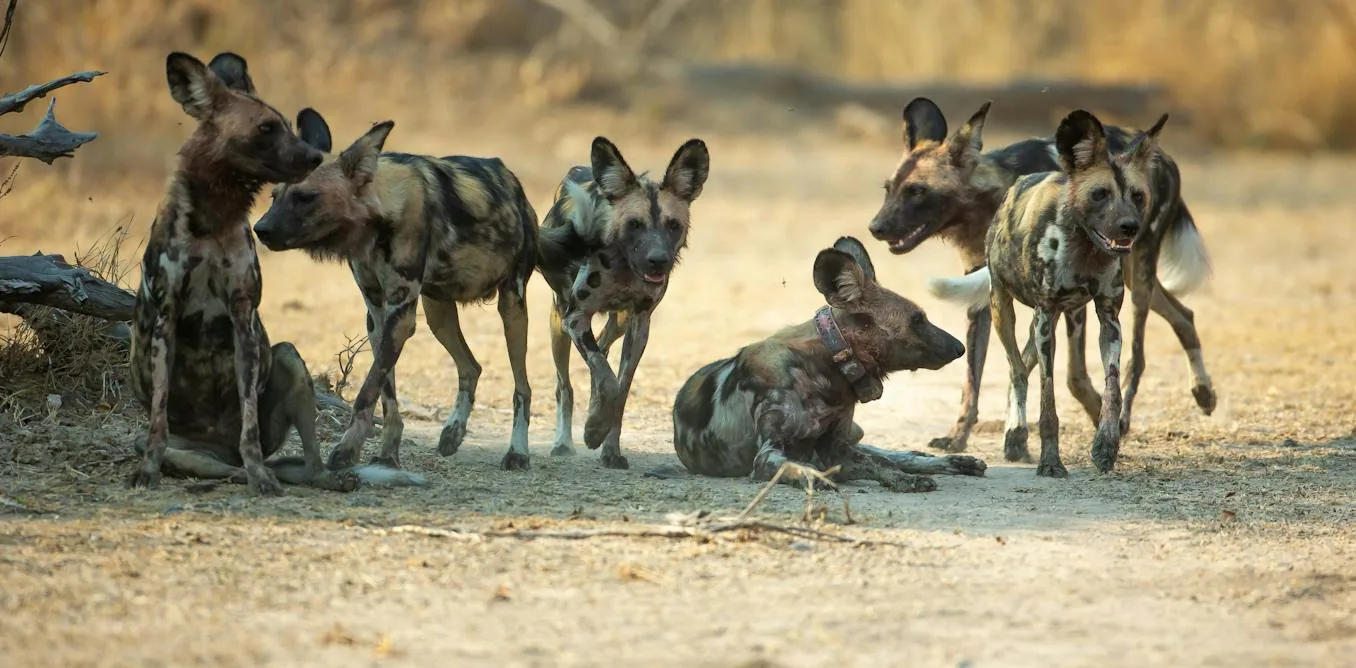
The movements documented in Zambia provide physical verification for long-standing genetic hypotheses [1, 3]. Population geneticists had previously detected gene flow connecting wild dog packs across southern Africa, but empirical pathways remained largely unmapped. The GPS collars monitored by Scott Creel demonstrated that dispersing dogs have physically linked every major wild dog population in Zambia. Zambian packs have crossed frontiers into Mozambique and Malawi, approaching within a few kilometers of Zimbabwe, Angola, and the Democratic Republic of Congo. Similar long-distance dispersal movements persist across Kenya, Tanzania, and Botswana [3].
The formal scientific findings appeared in the peer-reviewed journal Ecology, co-authored by Scott Creel, Stephani Matsushima, Henry Mwape, Bridget Mayani-Nkhoma, and Bruce Ellender [1]. Two related summary papers circulating as preprints authored by Scott Creel and R. Truscott have not yet undergone formal peer review [5, 6]. Rigorous GPS telemetry confirms that distant national parks remain functionally linked through active carnivore dispersals. Satellite transmissions confirm that the Mayukuyuku brothers eventually ceased their wandering, indicating they successfully formed a pack with local females in the Luangwa Valley [1, 2].
Meeting unfamiliar packs does not guarantee peaceful integration. Wild dogs frequently engage in vicious, sometimes fatal territorial battles when confronting resident packs in unfamiliar valleys [3].
Securing Wildlife Corridors for Lasting Coexistence
Approximately 40% of Zambia’s total land area currently falls under some form of legal wildlife protection, comprising national parks, nature reserves, and game management buffer areas [1, 2]. However, Bruce Ellender, conservation director for The Nature Conservancy in Zambia, warned that half of the game management lands surrounding Kafue National Park have been converted into farmland. Habitat fragmentation accelerates extinction. Ellender cautioned that without targeted interventions, vital landscape corridors connecting Zambia’s premier wilderness areas could be permanently lost within the next decade. Mapping exact dispersal corridors allows conservation bodies to concentrate limited protective resources where animals actually travel [1, 2].
Stephen Ngoma, a field ecologist with Conservation Lower Zambezi who was not involved in the study, emphasized that pure human exclusion models rarely succeed across mixed-use landscapes. Ngoma and Matt Becker advocate for improved conservation frameworks that offer tangible economic benefits to local communities through sustainable wildlife tourism and legal game ranching. Coexistence strategies must reduce local dependency on bushmeat hunting to effectively eliminate wire snares from dispersal pathways. Collaborative initiatives involving African Parks, the Frankfurt Zoological Society, Musekese Conservation, Conservation South Luangwa, and the Zambia Department of National Parks and Wildlife are now deploying dedicated anti-snaring patrols across buffer zones [2, 3].
As protected carnivore populations gradually recover, more young African wild dogs will venture into the unknown to seek mates [2, 3]. Ensuring their pathways remain free from wire snares will determine whether these journeys foster species survival or lead to silent extinctions [1, 2].
- ACADEMIC JOURNAL Creel, S., Matsushima, S., Mwape, H., Mayani‐Nkhoma, B., Banda, K., Goodheart, B., de Merkle, J. R., Kusler, A., Smit, D., Njobvu, J., Muwowo, M., Kabungo, R., Mungolo, M., Sichande, M., Sun, C., Sanguinetti, C. A., Krag, C., Chama, L., Chisanga, M., & Ellender, B. (2026). Extraordinary movements connecting distant ecosystems by African wild dogs (Lycaon pictus). Ecology, 107(9), e70504. [Article Link]
- ONLINE NEWS Gyuse, T. (2026, September 16). ‘A good way to die’: triumph and tragedy among dispersing African wild dogs. Mongabay Environmental News. [Article Link]
- ONLINE NEWS Creel, S. (2026, September 16). 3 African wild dogs travelled over 4,000km to find mates – why that’s good news for the endangered species. The Conversation. [Article Link]
- ACADEMIC JOURNAL Sandoval‐Seres, E., Moyo, W., Madhlamoto, D., Madzikanda, H., Blinston, P., Kotze, R., van der Meer, E., & Loveridge, A. (2022). Long‐distance African wild dog dispersal within the Kavango‐Zambezi transfrontier conservation area. African Journal of Ecology, 60(4), 1262-1266. [Article Link]
- PREPRINT Creel, S. (2026). 3 African wild dogs travelled over 4,000km to find mates – why that’s good news for the endangered species [Preprint]. [Article Link]
- PREPRINT Truscott, R. (2026). ‘A good way to die’: triumph and tragedy among dispersing African wild dogs [Preprint]. [Article Link]
APA 7: PerEXP Teamworks. (2026, September 16). How African wild dogs walked 4,000 kilometers to find mates. https://perexpteamworks.com/en/african-wild-dogs-record-dispersal/


