





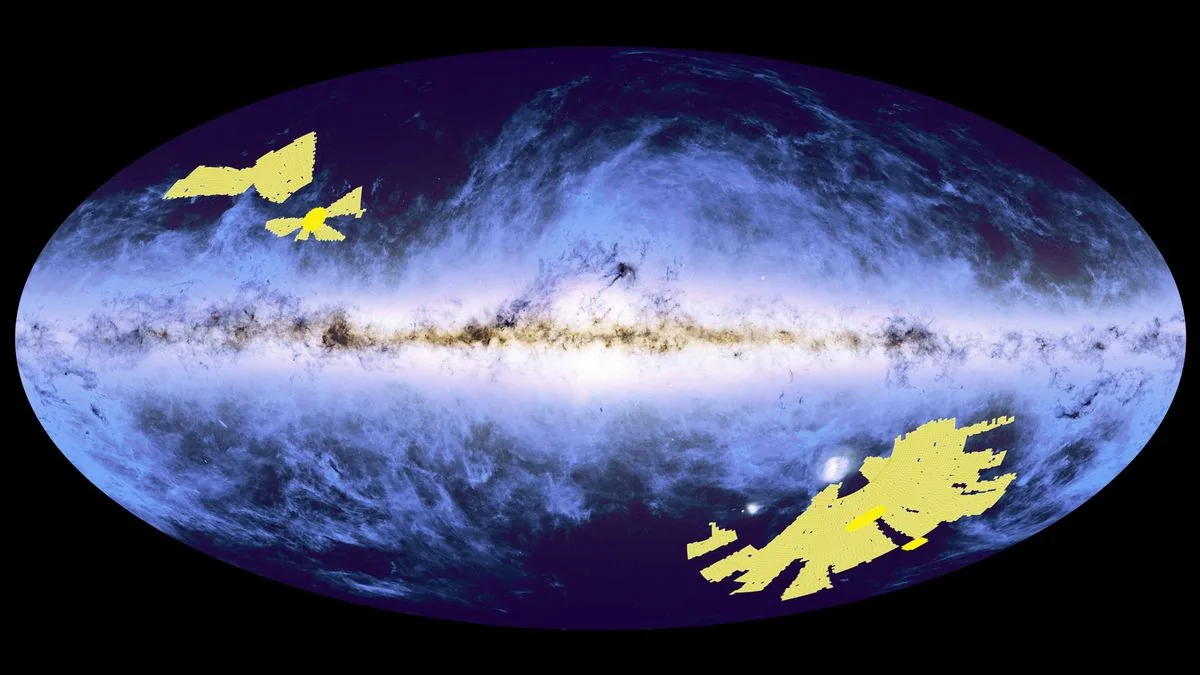
On Thursday, November 12, the European Space Agency released the first major batch of science data from the Euclid space telescope. It gives astronomers an expansive wide-field view into what researchers call the dark universe. Designated DR1-Foundation, this initial release compiles 13 months of sky observations into large cosmic mosaics. The observations document over a billion celestial objects across a region of sky as big as 9,500 full moons [2]. Researchers will use these observations to build the largest three-dimensional cosmic map ever created, tracing how unseen matter shapes the growth of galaxies over billions of years [1].
Euclid Space Telescope Survey Scope
The European Space Agency launched Euclid on July 1, 2023. The spacecraft carries a wide-field instrument designed to survey cosmic history from an orbital post far from Earth. Leiden astronomer Koen Kuijken compared the wide-field capability of Euclid to existing space observatories. “Euclid is a wide-field telescope. It sees more than 100 times as much of the sky in one image as the Hubble or James Webb Space Telescope,” Kuijken said [1].
Euclid gathers 20 new images every day. Over its planned six-year mission, the observatory will survey one third of the entire sky to record how cosmic structures grow across billions of years of cosmic history [1]. Operating in deep space avoids atmospheric blurring from Earth [2]. This clear vantage point allows sensitive sensors to record the shapes of faint background light sources, matching goals pursued by the NASA PRIMA space telescope mission in deep space.
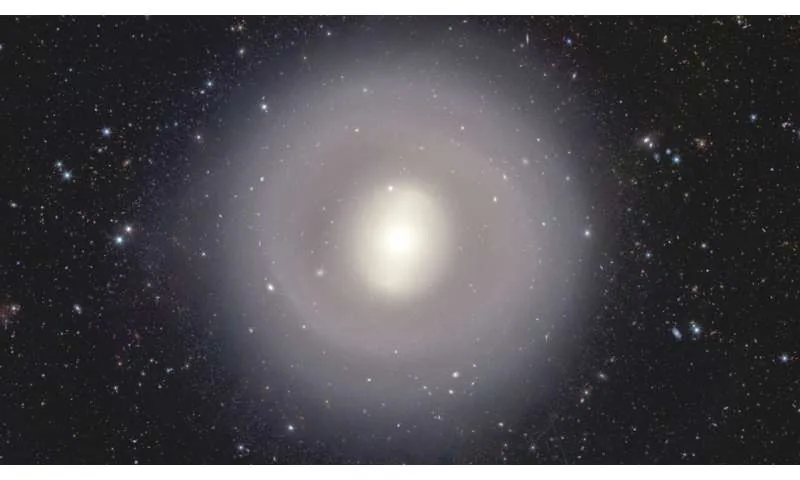
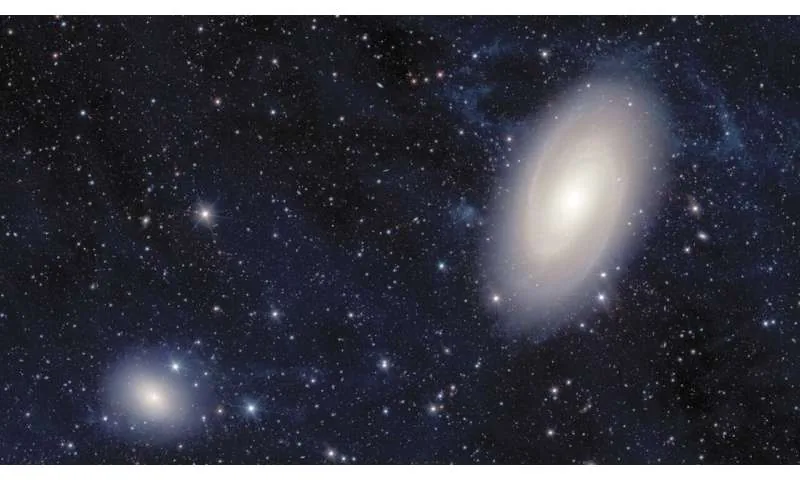
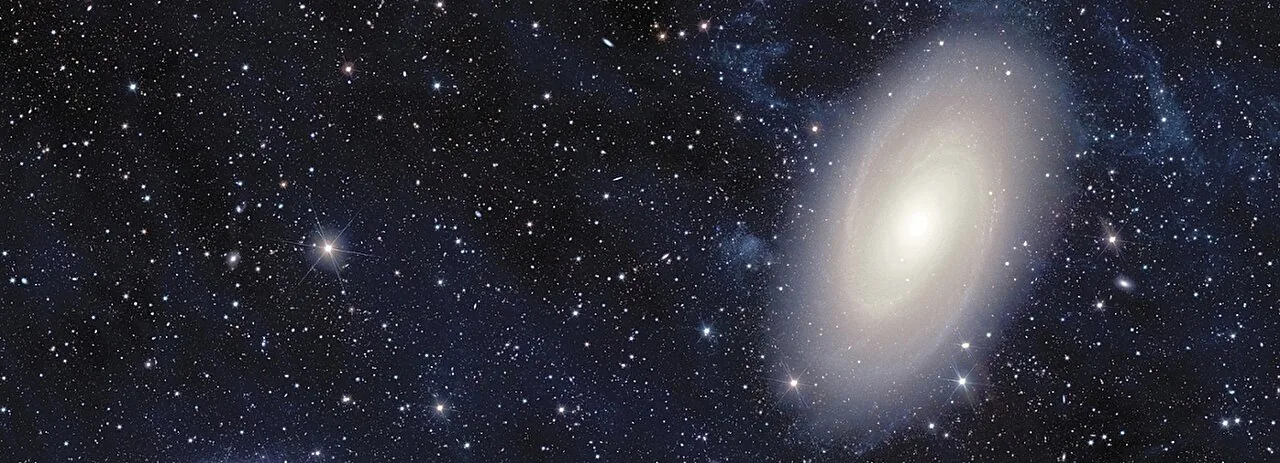
The physical scale of this foundation release is vast. The dataset contains approximately 2.5 trillion pixels and occupies 1.7 million gigabytes of digital storage. In total sky area, these observations cover an expanse almost 10,000 times the size of the full moon. Early images released by the mission include detailed views of the NGC 1291 ring galaxy alongside the core of the Messier 81 galaxy group [1]. ESA Director of Science Carole Mundell said the release forms the largest space-based survey of its kind, laying the groundwork for future discovery in astronomy and international collaboration [2].
Galaxies in the Cosmic Web
DR1-Foundation provides a detailed catalog of celestial targets observed during the first year of the mission. The dataset measures spectra across 160 million astronomical targets, while cataloging 60 million quasar candidates alongside over 900 million galaxies. Quasars are bright regions powered by feeding supermassive black holes at the centers of distant galaxies. ESA Euclid project scientist Valeria Pettorino said this release marks a fundamental change in scale from earlier test runs that covered roughly 60 square degrees of sky [2].
These galaxy counts allow cosmologists to look far back into cosmic history to see how matter gathered into clusters during early epochs. Some cataloged galaxies existed when the universe was only 700 million years old, which amounts to just 5% of its current age [1]. Euclid Consortium member Barbara Sartoris of JL Lagrange Laboratory in Nice said the instrument provides access to ancient galaxy clusters that were previously impossible to study in large numbers. “Euclid doesn’t just look far back in time — it does so across huge areas of sky,” Sartoris said. Research teams will explore these clusters in coming months to learn how they grew. Carole Mundell said the survey demonstrates the strength of European science [2].
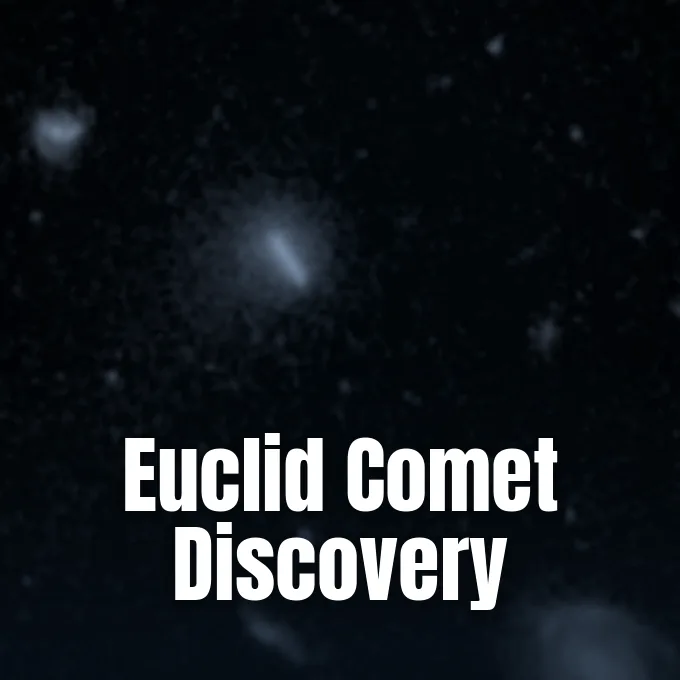
Cosmic gas, dust, and dark matter together form the cosmic web. Mapping galaxy clusters reveals how matter assembled along those filaments [2]. Euclid earlier proved its tracking precision when the Euclid space telescope identified its first comet during commissioning trials. Capturing millions of background galaxies provides the observational data needed to reconstruct that network [1].
Gravitational Lensing Candidates
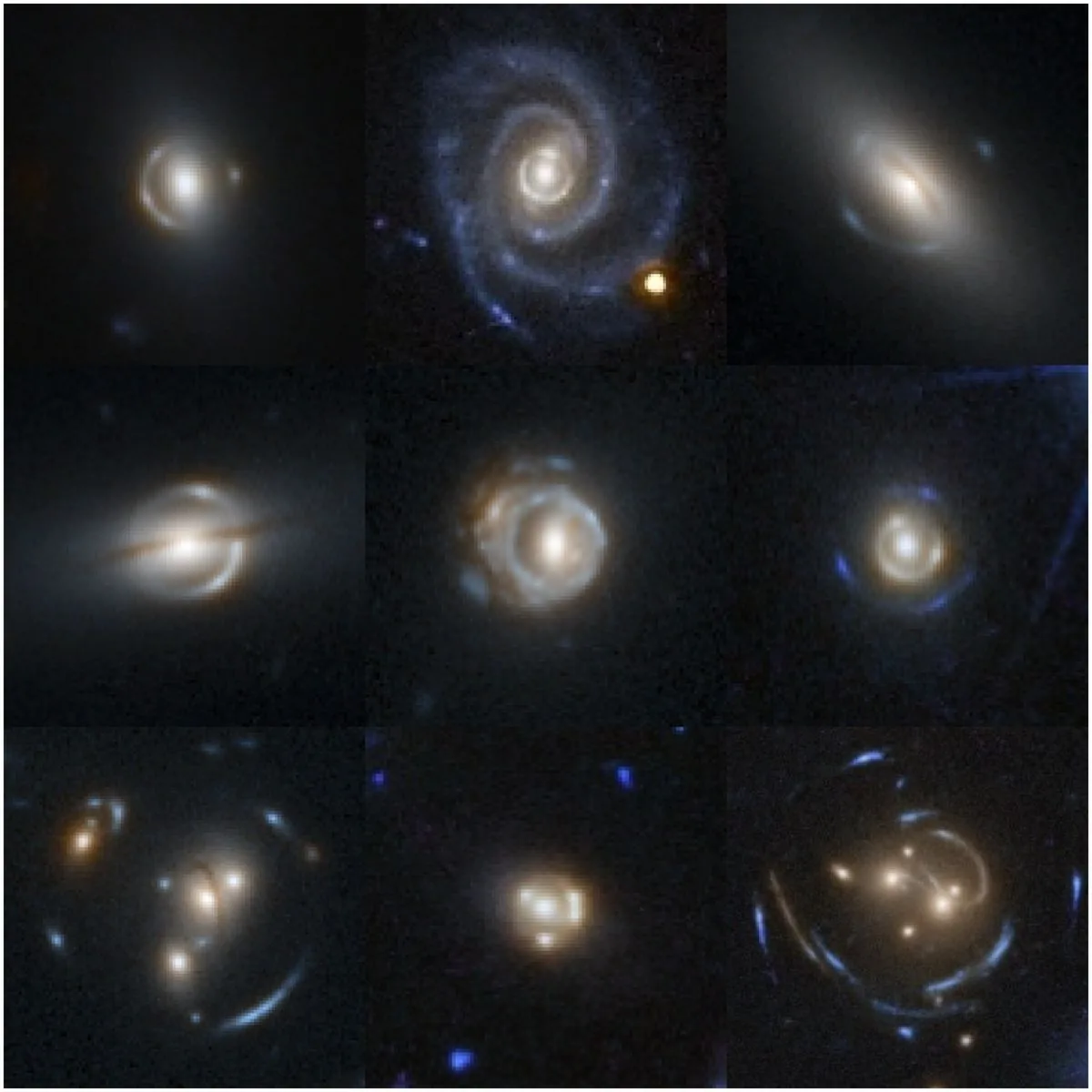
A central scientific asset in DR1-Foundation is the catalog of 15,000 strong gravitational lensing candidates. Gravitational lensing occurs when a massive foreground cosmic structure, such as a galaxy cluster, warps surrounding space and bends light traveling from distant background galaxies. Albert Einstein first described this warping in his general theory of relativity in 1915. Because light travels along curved paths through distorted space, background sources can appear stretched, magnified, or split into multiple arcs [2].
Astronomers have used the James Webb Space Telescope to study individual gravitational lenses, but Euclid supplies a far larger statistical sample. Natalie Lines of the University of Portsmouth and a member of the Euclid Consortium said strong lensing provides unique insight into the dark universe by helping astronomers weigh individual galaxies, including their invisible dark matter, while measuring cosmic expansion rates. Lines said that over 10 years ago the consortium forecast Euclid would revolutionize lens discovery. That day has arrived [2].
The survey also measures weak gravitational lensing on millions of galaxies. Unseen mass creates subtle distortions in the observed shapes of background systems. By analyzing these small shape changes, researchers can map invisible matter lying between those galaxies and our telescopes. This unseen mass holds cosmic structures together [1].

Composition of the Dark Universe
Modern cosmology faces an uncomfortable reality: ordinary matter constitutes only a tiny fraction of the cosmos. Everything humans can observe directly, from stars and planets to gas clouds and galaxies, accounts for only about 5% of the total universe. The remaining 95% consists of dark matter and dark energy, two components whose physical nature remains unknown. Leiden professor Alessandra Silvestri said solving these two cosmic puzzles was the main goal behind building Euclid [1].
“We can describe the history of the universe remarkably well, but on the other hand we still do not understand what 95% of it is made of,” Silvestri said. Dark matter forms roughly 27%. Although researchers cannot see it directly with optical instruments, its gravitational pull helps galaxies form and keeps cosmic structures from flying apart into space. Meanwhile, dark energy accounts for about 68% of cosmic contents and drives accelerated expansion [1]. How these two mysterious dark forces interact over time will determine whether the cosmos continues expanding forever or eventually changes its rate of growth [2]. Euclid provides observations to test both components [1].
Earlier orbital observatories mapped other parts of this cosmic framework, as when the eROSITA telescope mapped the large-scale dark matter network by tracking X-ray emissions from hot galaxy cluster gas. Ground and orbital X-ray instruments detect gas settled inside dark matter wells, but Euclid observes optical light from billions of distant galaxies. Combining optical surveys with X-ray maps helps cosmologists cross-check how matter clumps throughout cosmic history [1].
Euclid Space Telescope Gravity Tests
Can general relativity explain gravity across the largest cosmic scales, or do physical laws change over billions of light-years? Silvestri said DR1-Foundation provides the data necessary to test whether Einstein’s equations function as expected when applied across the largest cosmic scales. “Is our current understanding of gravity complete, or not?” Silvestri asked. This core question guides her team’s research. If cosmic expansion diverges from theoretical predictions, physicists may need to revise their fundamental laws of gravity [1].
Testing gravity at cosmic scales requires massive statistical datasets rather than single galaxy observations. “A single galaxy cannot tell us much about dark energy or the laws of gravity. But billions of galaxies can,” Silvestri said. By evaluating patterns in galaxy positions and shapes, cosmologists can reconstruct how cosmic structures evolved and test the physics driving them. Postdoctoral researcher Guadalupe Cañas Herrera at Leiden Observatory has started developing statistical tools to analyze these vast catalogs [1].
The first results of these cosmic gravity tests will appear in June 2027 [1]. The Euclid space telescope provides the uniform observational data needed to evaluate whether dark energy behaves as a cosmological constant or represents a dynamic field [2]. Cosmologists also want to test whether gravitational pull weakens across distances spanning hundreds of millions of light-years. Any measurable departure from general relativity would spark new theories in fundamental physics [1].
Milestones for the 2027 Analyses
DR1-Foundation is just the start. The sky area surveyed by Euclid between spring 2024 and spring 2025 covers just 14% of the mission’s final survey target for its planned six-year cosmological run [2]. Initial research papers have appeared [1]. Researchers have completed roughly 20 scientific papers evaluating these initial datasets, and the Euclid Consortium plans larger public releases as coverage widens across the sky [2].
Cosmologists are preparing for June 2027, when researchers will combine these observational batches into detailed cosmological analyses [1]. Pettorino said DR1-Foundation includes raw data, calibrated images, source catalogs, and spectra covering a vast sky region. This statistical depth lets astronomers uncover rare celestial objects that smaller previous surveys failed to detect. “DR1-Foundation includes raw data, calibrated images, catalogues, and spectra over a huge sky area, with enough statistics to uncover even rare objects,” Pettorino said [2]. These rich observational catalogs will help researchers map the large-scale structure of the universe in detail. The work establishes a new scientific benchmark for space cosmology [1].
Euclid produces roughly 20 new sky images each day from its orbital post. The observations steadily expand its three-dimensional map of the cosmos [1]. The observatory continues gathering light from deep space to help scientists resolve the dark universe. As Pettorino said, “So much discovery is yet to come,” as astronomers explore this first foundation data set [2].
- ONLINE NEWS Huygelen, C. (2026, November 12). Space telescope Euclid sets the new standard for cosmology. Phys.org. [Article Link]
- ONLINE NEWS Lea, R. (2026, November 12). Dark matter breakthrough coming? Euclid space telescope unveils its 1st look into the dark universe. Space.com. [Article Link]
APA 7: PerEXP Teamworks. (2026, November 13). ESA Euclid Space Telescope Unveils First Dark Universe Map. PerEXP Teamworks. https://perexpteamworks.com/en/euclid-space-telescope-dark-universe-data/


