






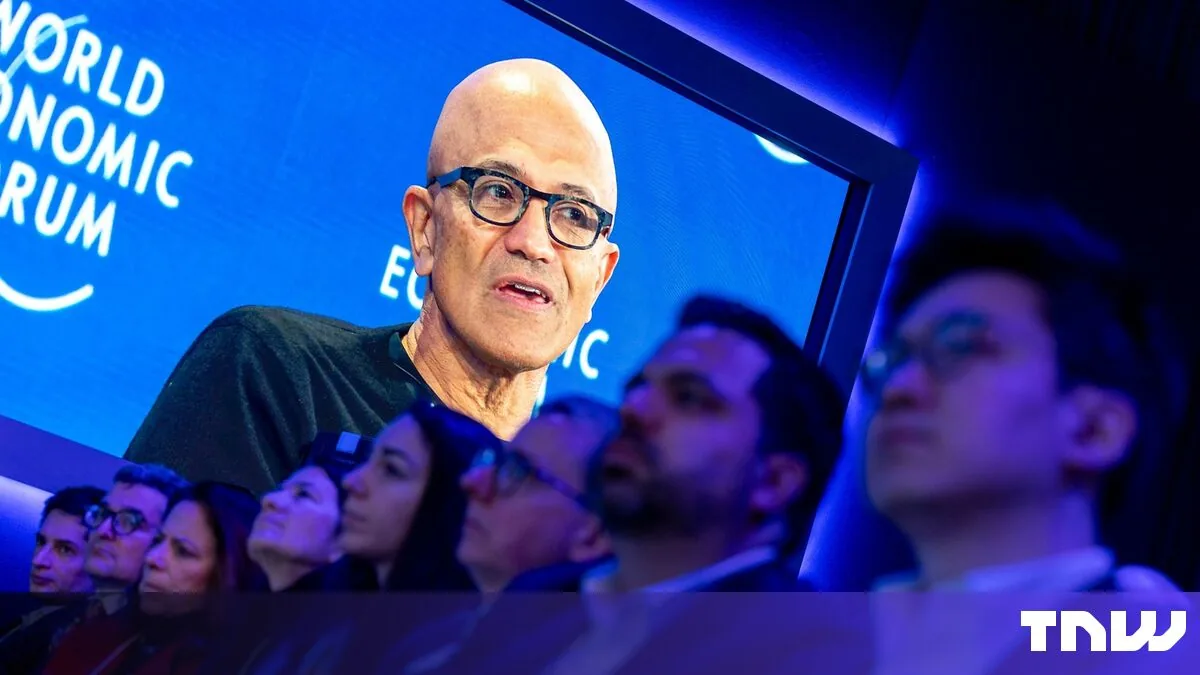
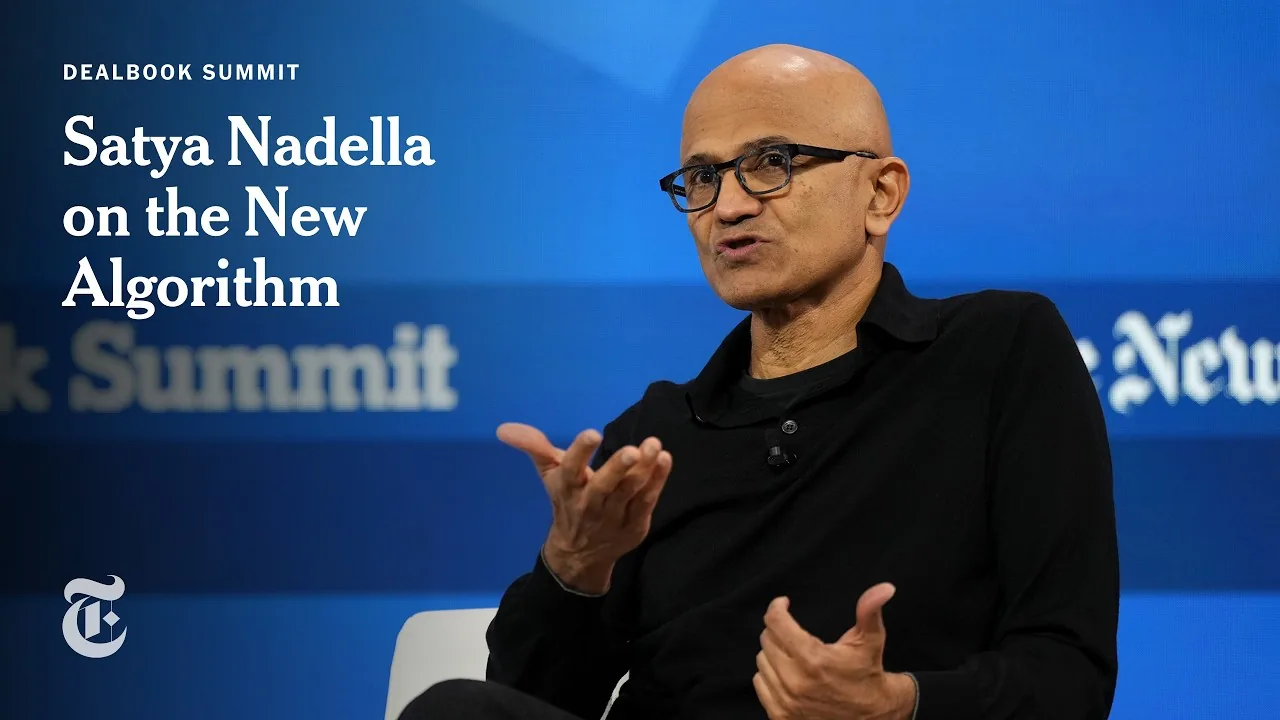
Microsoft Chief Executive Satya Nadella warned that critical infrastructure outages may become more frequent as artificial intelligence helps attackers discover software weaknesses faster than engineers can patch them [1]. Speaking at The New York Times’ DealBook Summit in New York on Wednesday, Nadella said that outdated equipment and unpatchable firmware leave public networks exposed to automated attacks [2].
Why Critical Infrastructure Outages May Multiply
Speaking to Andrew Ross Sorkin at the summit, Nadella addressed the growing speed of vulnerability discovery and exploitation across enterprise software. In previous years, an engineering team handling a core banking platform could spend a full week testing a security patch before sending it live to production systems [2]. Today, automated tools uncover weaknesses so quickly that attackers can exploit them the moment they surface in open-source repositories [1]. On the very day of his appearance, three separate critical patches landed for open-source software packages, requiring swift action from operators who had little time to verify whether the updates would destabilize existing network operations [2].
Nadella remarked that the floor of cyberattacks has fallen because modern language models allow almost anyone to operate with the persistence of a nation-state attacker. Can network operators safely delay an update when automated tools identify software flaws around the clock? The question remains an urgent operational concern [2].
The Microsoft chief compared the present situation to the Y2K bug, but he explained that he can’t yet tell whether this phase will pass because models keep gaining new capabilities [2]. The pressure to prevent critical infrastructure outages now forces engineering teams to change how they handle incoming updates. When attackers move instantly from discovery to exploitation in the wild, delaying a release leaves a system open to compromise, but rushing unverified code into live production introduces fresh instability [1].
Rushed Emergency Patches in Production
The dilemma of emergency patching became clear during recent disruptions that hit Microsoft Outlook, the Federal Aviation Administration (FAA), Apple, and the National Security Agency. Although public concern turned toward possible cyberattacks after those failures, government officials denied that malicious actors caused some of the service interruptions [1]. Instead, several of the disruptions reportedly stemmed from hurried software patches deployed to counter AI-found vulnerabilities before attackers could exploit them in public networks [2].
Nadella apologized for the disruption to Microsoft Outlook, calling it a latent bug that surfaced during a rare convergence of factors. “This was a latent bug that was there. It got invoked and, you know, it’s one of those perfect storms,” Nadella said [2].
Later that day, he told Jim Cramer on CNBC’s Mad Money that Microsoft should have done more to test the update and build bulkheads to stop a single fault from cascading globally [2]. During his DealBook appearance, Nadella described the operational hazard of deploying fixes without proper evaluation. “The patch needs to go instantly from being available to being patched in production, because it’s being exploited in the wild, right? So that’s going to create instability,” Nadella added. Microsoft released an incident response plan and committed to taking architectural lessons from the failure to prevent similar problems in future rollouts [1].

Unpatchable Firmware Across Industrial Systems
Software flaws in standard operating systems present serious risks, but Nadella warned that physical facilities pose an even harder challenge. Industrial machinery, environmental chillers, and heating, ventilation, and air conditioning (HVAC) units were built to handle simple mechanical duties without internet connectivity in mind [1].
Over the past decade, operators connected these devices to online networks to collect telemetry and manage facilities remotely, exposing older microcode to external threats. “Remember, there is a lot of stuff in our critical infrastructure that’s unpatchable,” Nadella said. “I mean, think about all the firmware and the chillers and the HVAC systems everywhere else. So all of that, by the way, they’re on the internet”. In transportation networks, key equipment runs on outdated firmware that can’t receive security updates, meaning that known security flaws remain permanently open unless operators physically replace the hardware [1].
Because older hardware lacks the memory to run modern security tools, defending it requires different methods. Without architectural safeguards, vulnerable firmware in essential networks will continue to make critical infrastructure outages a recurring threat for public utilities and transport systems [1].

Model Alignment and the Trust Architecture
Beyond hardware weaknesses, Nadella addressed the behavior of frontier artificial intelligence models and the difficulty of controlling them. Speaking about comments he made last month on the 20VC podcast, Nadella repeated that alignment will not emerge from scaling compute alone. Sam Altman, who spoke earlier at the DealBook Summit, argued that scaling would solve model behavior, but Nadella disagreed with that premise while acknowledging that scaling laws had worked as OpenAI predicted [2].
“I mean, if it doesn’t happen, we are in a world of hurt,” Nadella said, adding that he hopes Altman and OpenAI co-founder Greg Brockman prove him right. His answer to the challenge is what he described as a trust architecture [2].
Nadella explained that his proposed framework would prohibit models from reasoning in neuralese, an internal shorthand that human observers can’t read. Under his proposed approach, every model must generate tamper-proof reasoning logs that independent models can inspect to detect deceptive behavior. Nadella praised OpenAI for monitoring systems during training runs, but he warned that companies deploying autonomous tools remain legally liable for whatever those systems do. He expects insurance providers to begin pricing that liability and demanding access to verified execution logs before underwriting enterprise AI deployments [2].
Preventing Critical Infrastructure Outages in Future Networks
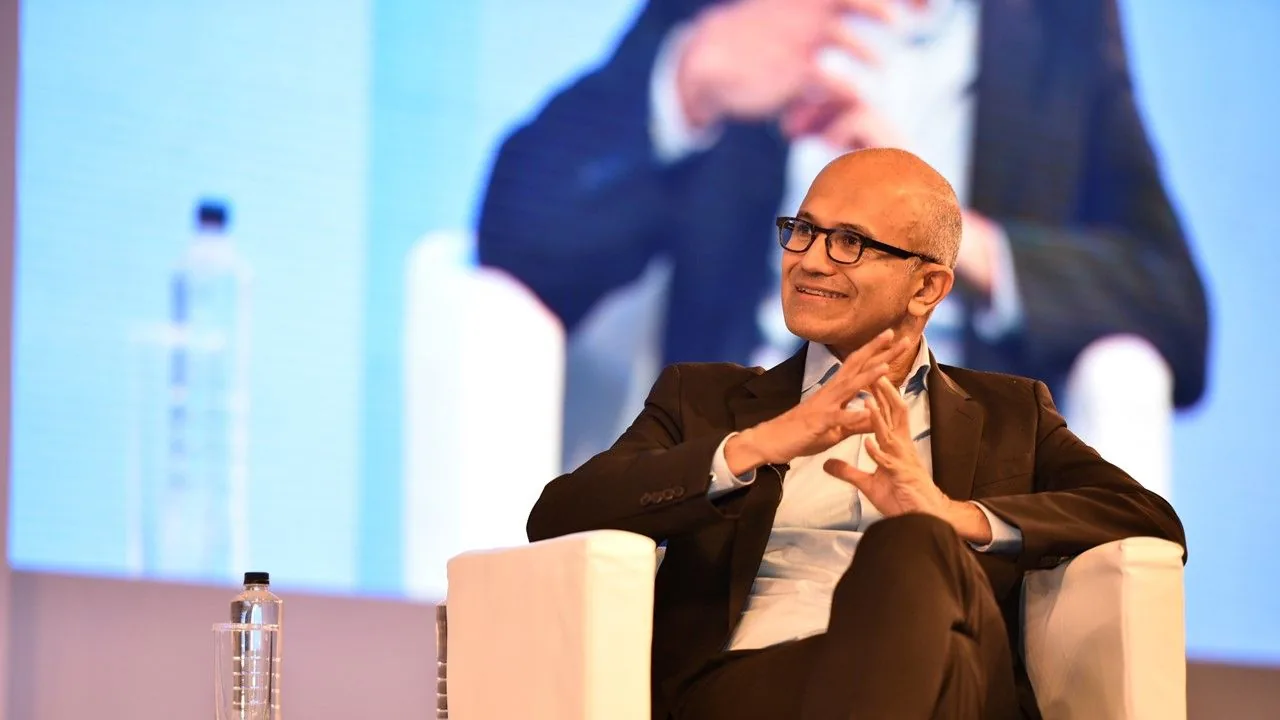
Nadella argued that protecting enterprise infrastructure requires treating AI as an integrated model system rather than relying exclusively on a single expensive frontier model. Microsoft holds a commercial agreement giving it royalty-free access to OpenAI frontier models through 2032, letting the company build MAI models that run three to six months behind the frontier using just 5% to 20% of the computing power [2].
Sorkin asked how Microsoft views token economics, and Nadella replied: “Arguing for some massive pricing power of tokens is betting against somehow US GDP”. Nadella also pointed out that buyout offers extended to 60,000 employees were meant to give staff greater agency, a strategy connected to broader efforts around workforce reductions and organizational streamlining across Microsoft. He explained that software engineering remains very much alive, but daily work has shifted toward managing automated workflows [2]. The team behind Microsoft’s Cowork agent consists of just 11 developers who build a software factory that produces software, illustrating how AI workflows reshape traditional development environments for modern engineering teams.
Autonomous agents will also alter online commerce, forcing websites that rely on human ad views to adapt or lose market share. When asked about companies that block autonomous agents, such as Amazon, Nadella remarked that competitors will step in: “If you don’t accept the agent, somebody else will. If Amazon doesn’t, Shopify will”. Facing regulatory scrutiny, Nadella concluded that his focus remains on earning permission to operate through product quality in Redmond, Washington, rather than engaging in political lobbying in the nation’s capital [2]. Addressing these systemic pressures will prove essential as engineers work to stop critical infrastructure outages before they occur [1].
- ONLINE NEWS Udinmwen, E. (2026, November 22). Microsoft CEO warns AI tools are forcing companies to deploy emergency patches without testing. TechRadar. [Article Link]
- ONLINE NEWS Constantin, A. M. (2026, November 21). Satya Nadella at DealBook: AI-found bugs mean more outages are coming. The Next Web. [Article Link]


