



Apple is launching its Apple Pay India service after years on the sidelines of the country’s booming payments ecosystem, according to sources familiar with the matter reported by TechCrunch [2]. The initial rollout pairs the Cupertino company with Axis Bank as its primary launch partner, bringing contactless transactions to credit cardholders on Visa and Mastercard networks. Commercial operations begin Wednesday local time [1].
Axis Bank Leads the Apple Pay India Debut
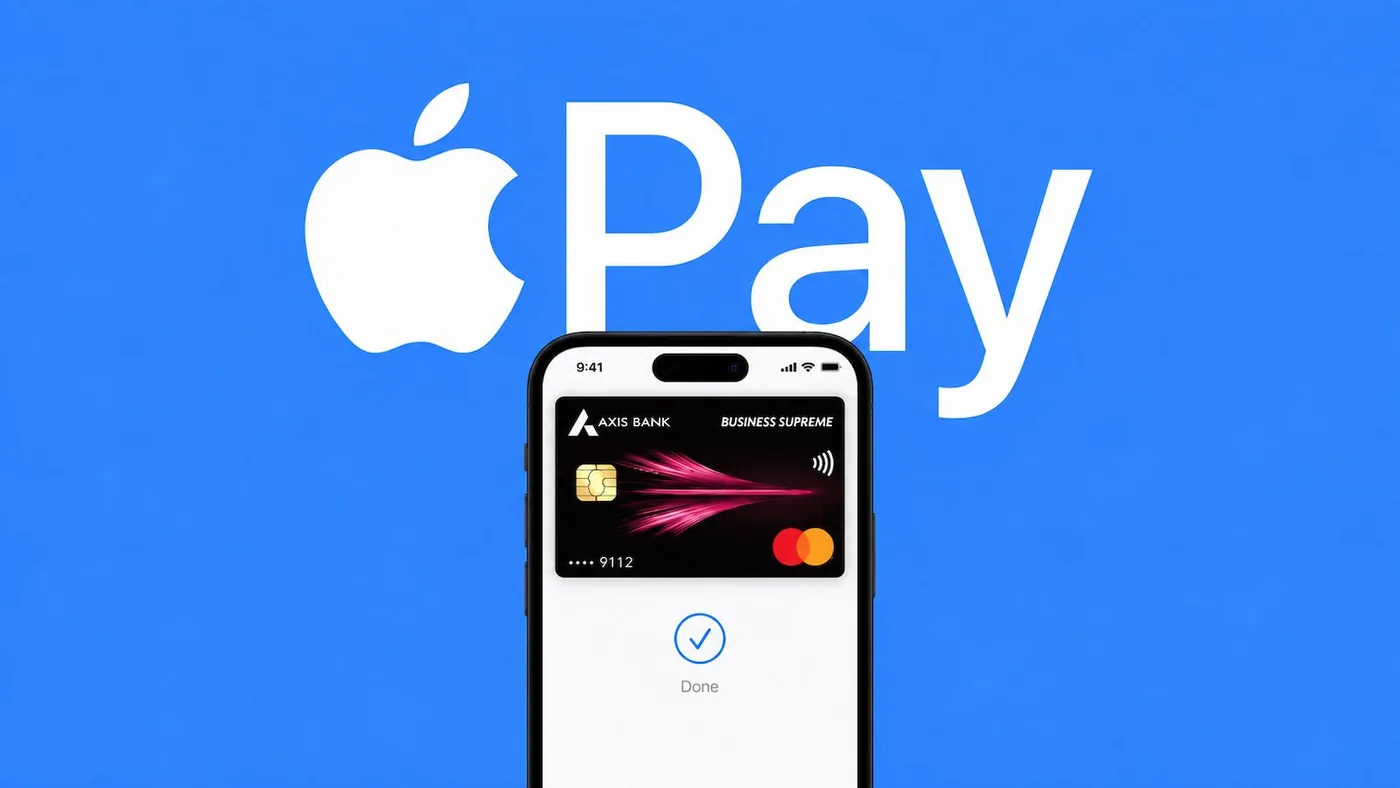
Axis Bank secured initial exclusivity. Under this launch arrangement, eligible Axis Bank customers can add their credit cards to the Apple Wallet application for online checkout and in-store tap-to-pay transactions across supported retail terminals. The partnership focuses exclusively on credit products routed through Visa and Mastercard, leaving debit accounts and alternative domestic cards out of the initial integration. Earlier this month, Reuters reported that Apple was preparing an October debut with Axis Bank, though formal activation accelerated ahead of that initial timeline [2].
India’s homegrown RuPay network is not supported during this opening phase, narrowing immediate cardholder eligibility across the country. While international payment networks maintain robust technical integrations with Apple Pay worldwide, local domestic clearing protocols require separate infrastructure agreements that remain unresolved between participating entities. RuPay cards remain excluded. Neither Apple nor Axis Bank responded to formal inquiries regarding the omission of domestic card schemes from this week’s deployment [2]. Reporting by Joe Rossignol for MacRumors confirmed that account provisioning remains strictly limited to qualifying credit products issued by the private lender [1].
The rollout represents Apple’s first direct consumer transactional footprint in the world’s most populous nation after years of observation on the sidelines of the digital economy. Customers holding qualifying Axis Bank credit accounts can initiate contactless point-of-sale transactions or complete web purchases through Apple’s native software ecosystem. Visa and Mastercard provide clearing. Initial acceptance remains restricted strictly to retail merchants whose terminal providers and acquiring institutions have explicitly activated software support for the Apple Pay India deployment [2].
Commercial Fee Disputes Stall Major Lenders
The absence of India’s largest consumer lenders highlights persistent friction surrounding Apple’s global monetization model [2]. Industry sources confirmed that HDFC Bank, ICICI Bank, and SBI Card are not participating in the initial launch [1]. At the center of the dispute is Apple’s insistence on securing a transaction fee of about 20 basis points on every purchase processed through the digital wallet. In the Indian payments ecosystem, total processing margins across the payments layer typically hover between 40 and 50 basis points (0.40 to 0.50 percent), making Apple’s demand a significant cut into existing bank earnings [2].
HDFC Bank paused partner discussions. Representatives from ICICI Bank and SBI Card also declined to comment publicly on commercial fee negotiations with Apple [2].
Apple has consistently maintained this commercial fee model across international territories, arguing that the security of its wallet infrastructure justifies collecting a platform cut on card transactions. However, Indian banking executives contend that thin domestic payment margins cannot comfortably absorb an additional levy of 20 basis points without reducing underlying cardholder rewards or existing commercial incentives [2]. Similar fee models have triggered formal legal resistance in Western markets; in the United States, U.S. District Judge Jeffrey White recently certified a class action lawsuit permitting banks and credit unions that paid Apple transaction fees to challenge tap-to-pay practices under federal antitrust laws [1]. Until commercial negotiations produce acceptable economic concessions, the country’s three largest retail card issuers intend to remain outside the Apple Pay India ecosystem [2].


UPI Ecosystem Contrasts with Card Infrastructure
The Apple Pay India rollout enters a digital payments market fundamentally unlike Western card-heavy economies. India’s digital payments boom has been driven almost entirely by the Unified Payments Interface (UPI), a state-backed public infrastructure system that enables real-time, bank-to-bank capital transfers without credit or debit card rails. Consumers across the country routinely scan interoperable QR codes on street corners, grocery counters, and retail storefronts to settle immediate transactions directly from personal bank balances. UPI handles direct bank transfers [2].
Because UPI eliminates traditional card intermediaries, merchants avoid interchange fees that typically accompany credit card processing networks. By contrast, Apple Pay operates entirely on card-based architecture, requiring participating banks, card clearing networks, and terminal acquirers to maintain complex digital integrations. Why does Apple pursue an infrastructure so sharply divided from prevailing consumer habits? The answer lies in demographic spending power: India’s expanding population of iPhone owners represents an affluent consumer segment that disproportionately uses premium credit cards for high-value retail purchases [2].
Even if the service captures only a fractional share of overall transaction volume, charging fees on high-ticket credit purchases generates meaningful service revenue in an expanding market. Apple seeks twenty basis points. Those affluent customer card balances provide the technology company with an additional channel to monetize its growing hardware user base across the subcontinent [2].
Terminal Acceptance and the Apple Pay in India Setup
For consumers on the ground, using Apple Pay in India requires navigating inconsistent merchant hardware readiness during the opening weeks of availability. A tap-to-pay purchase might execute flawlessly at a checkout counter operated by an independent point-of-sale terminal provider that has activated Apple’s specifications, yet fail at an adjacent counter whose acquiring bank has not updated its processing software. Jagmeet Singh reported for TechCrunch that acquiring bank fragmentation could lead to uneven acceptance across physical retail stores [2].
Setting up eligible Axis Bank credit cards involves adding card details directly within Apple’s Wallet application and completing verification required by the issuing lender. Once configured, shoppers can tap supported mobile devices at contactless terminals (a contactless point-of-sale system) or authorize transactions across participating online retail checkouts. Reuters noted the October timeframe [2]. Account provisioning remains strictly limited to qualifying Axis Bank credit products on Visa and Mastercard [1].

The Apple Pay India user experience depends heavily on whether retailers actively encourage contactless card taps over ubiquitous static QR codes. While urban supermarkets and international retail chains routinely support contactless card readers, neighborhood vendors remain firmly anchored to UPI payment stands that carry zero interchange overhead [2]. Consumer appetite across the region also mirrored international demand documented during iPhone 18 Pro pre-orders, showing sustained customer engagement with premium hardware.
Expanding Device Manufacturing Bolsters Apple Pay India
The introduction of mobile payment capabilities arrives as Apple rapidly accelerates its broader commercial investments throughout India. According to research published by Counterpoint Research, Apple captured 28% of India’s smartphone market by value in 2025, climbing sharply from 23% recorded the previous year. Apple captured twenty-eight percent. That market share momentum reflects growing consumer willingness to purchase premium smartphone tiers across major metropolitan centers [2].
Manufacturing investments have expanded in parallel with retail sales across the subcontinent. India already accounts for approximately 25% of total global iPhone manufacturing, transforming the country into an essential production hub for Apple’s worldwide device supply chain. India produces twenty-five percent. That domestic manufacturing share could rise to between 30% and 35% over the next five years, according to an Indian government official cited by the Business Standard [2].
Expanding local manufacturing while simultaneously building direct consumer service channels establishes a dual strategy for long-term regional growth. By coupling high-end hardware assembly with software offerings like Apple Pay India, the company aims to embed its closed ecosystem deeper into the daily routines of India’s most affluent shoppers. Whether major holdout lenders eventually concede to Apple’s fee demands or remain committed to domestic UPI networks will determine if the payment service remains a boutique luxury or evolves into a mainstream financial tool [2].
- ONLINE NEWS Rossignol, J. (2026, September 29). Apple Pay Reportedly Launching in India Today. MacRumors. [Article Link]
- ONLINE NEWS Singh, J. (2026, September 29). Apple Pay set to launch in India with Axis Bank today, sources say. TechCrunch. [Article Link]


