





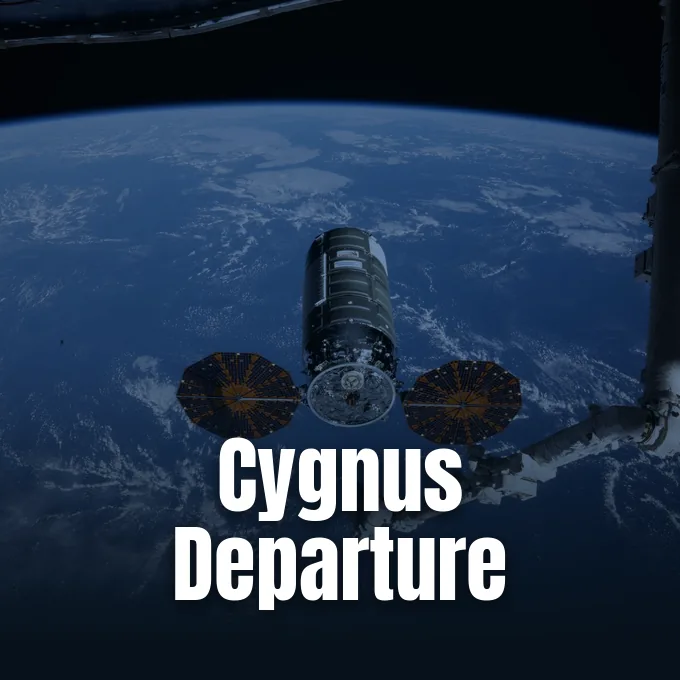
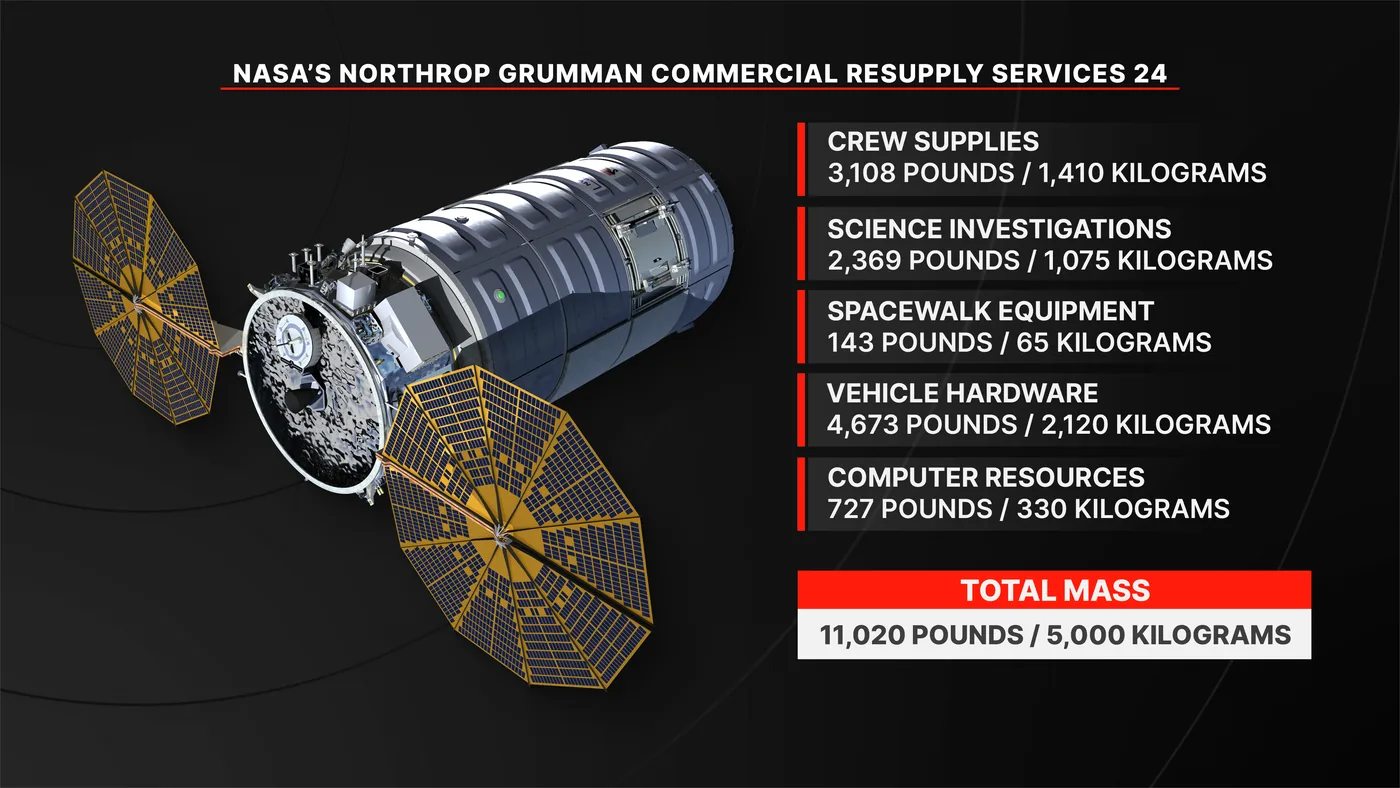
How does the space station send months of orbital research and crew waste back toward Earth? NASA coverage will track the process on Friday, Oct. 9, 2026, as flight controllers command the Canadarm2 robotic arm to detach Northrop Grumman’s Cygnus XL cargo spacecraft from the Unity module [1, 2]. After delivering more than 11,000 pounds of science experiments and equipment in April, the uncrewed vessel will maneuver into position for release at 12:45 p.m. EDT [1, 3].
What Time Does NASA Coverage Start?
NASA coverage starts at 12:30 p.m. EDT on Friday, Oct. 9, 2026, as ground teams prepare for the departure of Northrop Grumman’s Cygnus XL cargo spacecraft. Flight controllers in Houston will send detachment commands to unbolt the uncrewed vessel from the Earth-facing port of the Unity module [1, 5]. The station’s Canadarm2 robotic arm will maneuver the freighter into position for release at 12:45 p.m. EDT [1, 6]. Astronaut Luke Delaney will monitor separation telemetry from inside the orbital laboratory during the maneuver [1].
The departure marks the conclusion of Northrop Grumman’s Commercial Resupply Services-24 mission, known as CRS-24 [1, 5]. When the vessel arrived in April, it carried more than 11,000 pounds of supplies, spare parts, and research equipment to support long-duration science operations on the station [1, 3]. It spent nearly six months attached to the orbital outpost before ground teams began preparing the spacecraft for release [1, 4]. Delaney will track telemetry during the maneuver to confirm clean separation [1].
Ground teams will direct the spacecraft into a planned sequence of engine burns over the weekend [1, 5]. Cygnus XL will deorbit on Sunday, Oct. 11, 2026, entering Earth’s atmosphere where friction will safely burn up the vessel and its cargo [1, 6]. NASA coverage will not follow the Sunday deorbit phase because the disposable spacecraft breaks apart far from tracking cameras over open ocean [1, 5]. The mission ends after atmospheric destruction [1].
How to Watch NASA Coverage Online?
Viewers can watch NASA coverage through the agency’s NASA+ streaming service, Amazon Prime, and the official NASA YouTube channel beginning fifteen minutes before robotic arm operations get underway. Agency websites will also provide blog updates and live streaming feeds directly from mission control [1, 3]. NASA coverage provides continuous live video from cameras mounted outside the orbital laboratory as Canadarm2 maneuvers the cargo vessel away from the station [1, 2]. Anyone with internet access can watch the unberthing without subscription fees [1, 3].
Social media followers on X, Facebook, and Instagram can track departure updates from the official accounts of @NASA, @Space_Station, and the ISS National Lab throughout Friday afternoon. Public affairs officers Jimi Russell and Josh Finch coordinated media queries in Washington, while Sandra Jones handled science questions from Johnson Space Center in Houston [1, 3]. Countdown questions for agency newsroom staff in Florida went to Kennedy Space Center at 321-867-2468. Live posts offer immediate context for orbital maneuvers [3].
Members of the public can also register for NASA’s virtual guest program to access curated mission resources online. The program offers digital passport stamps for major flight milestones, while on-demand streaming video and still photos will appear on NASA+ shortly after Delaney monitors the release [1, 3]. These archives let students and educators review orbital mechanics and robotic operations after the broadcast ends [3].
Flight Controllers Prepare the Canadarm2 Release
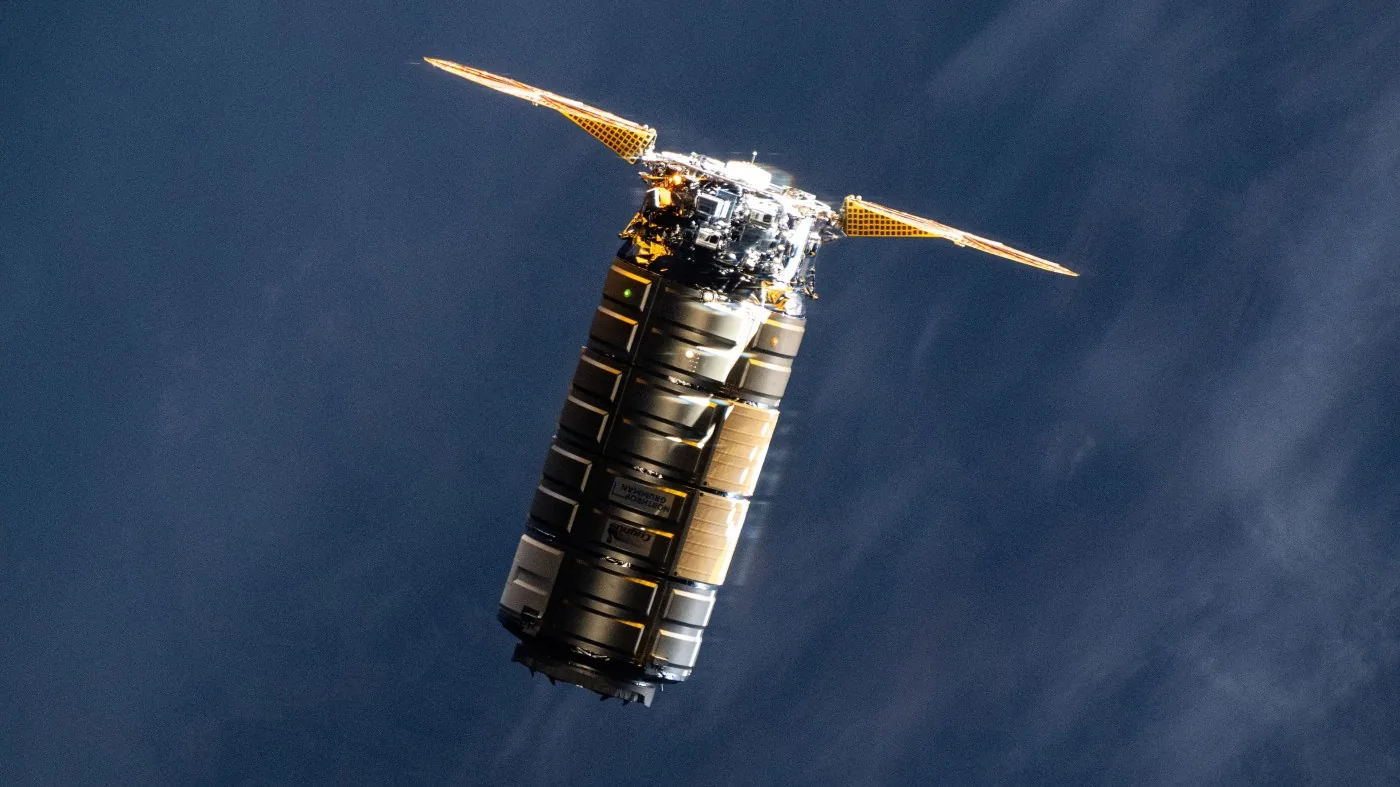
Robotic ground controllers will send digital commands to unbolt Cygnus XL from the Unity module. The station’s Canadarm2 robotic arm will grapple the cargo ship’s fixture before opening latches on the Earth-facing port and pivoting the hull away from nearby solar arrays. Luke Delaney will monitor computer displays from inside the station cupola to ensure separation proceeds smoothly without thruster plume contact [1, 5]. The maneuver clears the station for future visiting vehicles [1].
When Cygnus XL first arrived at the station on April 13, 2026, astronauts Jack Hathaway and Chris Williams monitored the rendezvous from inside the orbital laboratory. Hathaway operated the Canadarm2 robotic arm to capture the approaching cargo craft, while Williams tracked guidance data until ground controllers bolted the vessel to the Earth-facing port of the Unity module for unloading [3, 4]. Friday’s departure reverses that arrival sequence: ground controllers guide the robotic arm to the release position, open mechanical latches, and allow Cygnus XL to maneuver into a drift trajectory where small thruster firings slowly increase its distance from the complex [1, 5]. Cygnus XL will slowly fire its thrusters to open distance from the outpost [1].
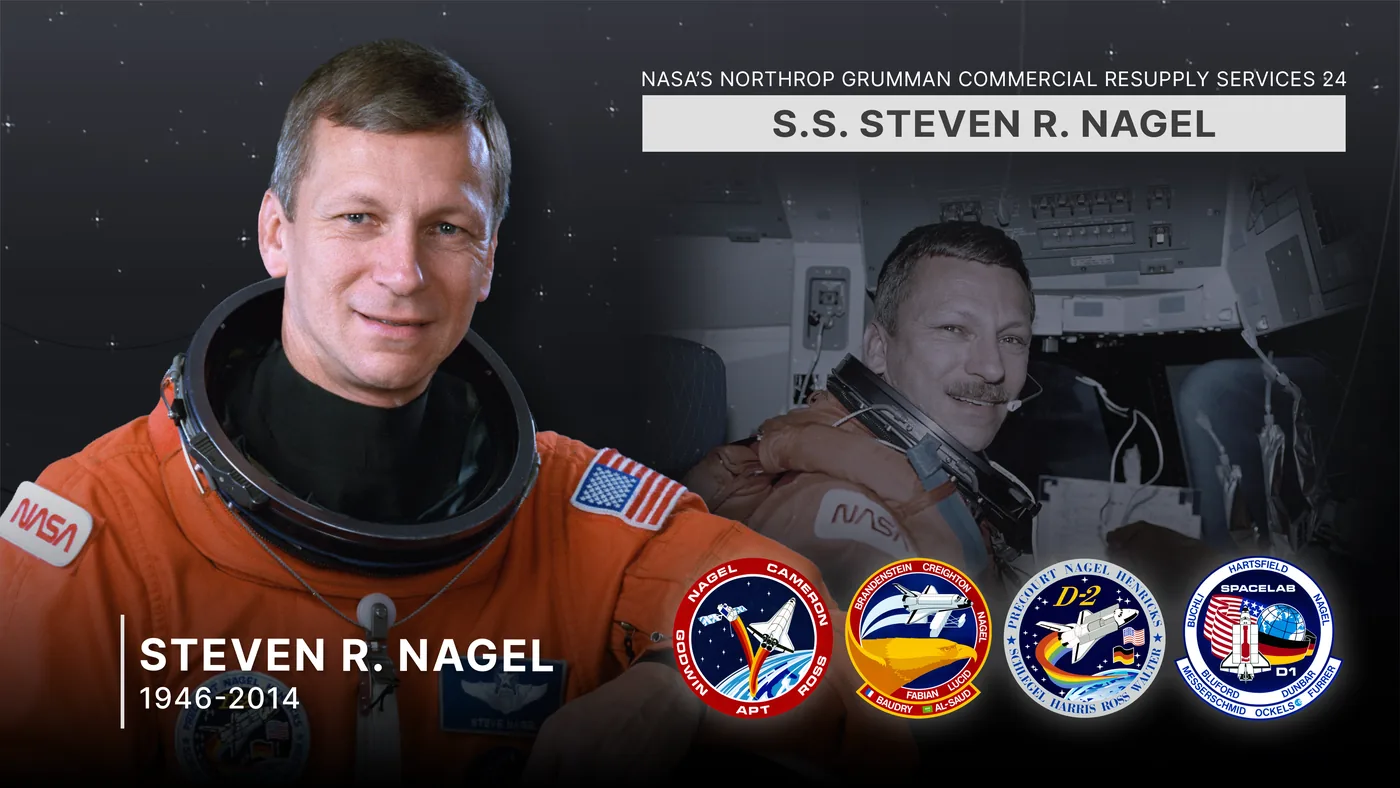
The spacecraft departing on Friday is the S.S. Steven R. Nagel, named in honor of the former NASA astronaut. Selected by NASA in 1979, Steven Nagel flew four space shuttle missions and logged more than 720 hours in space during his distinguished career in orbit. Northrop Grumman names each Cygnus freighter after an individual who advanced human space exploration. The dedication honors his shuttle flight legacy [3].

What Scientific Cargo Flew Aboard Cygnus XL?
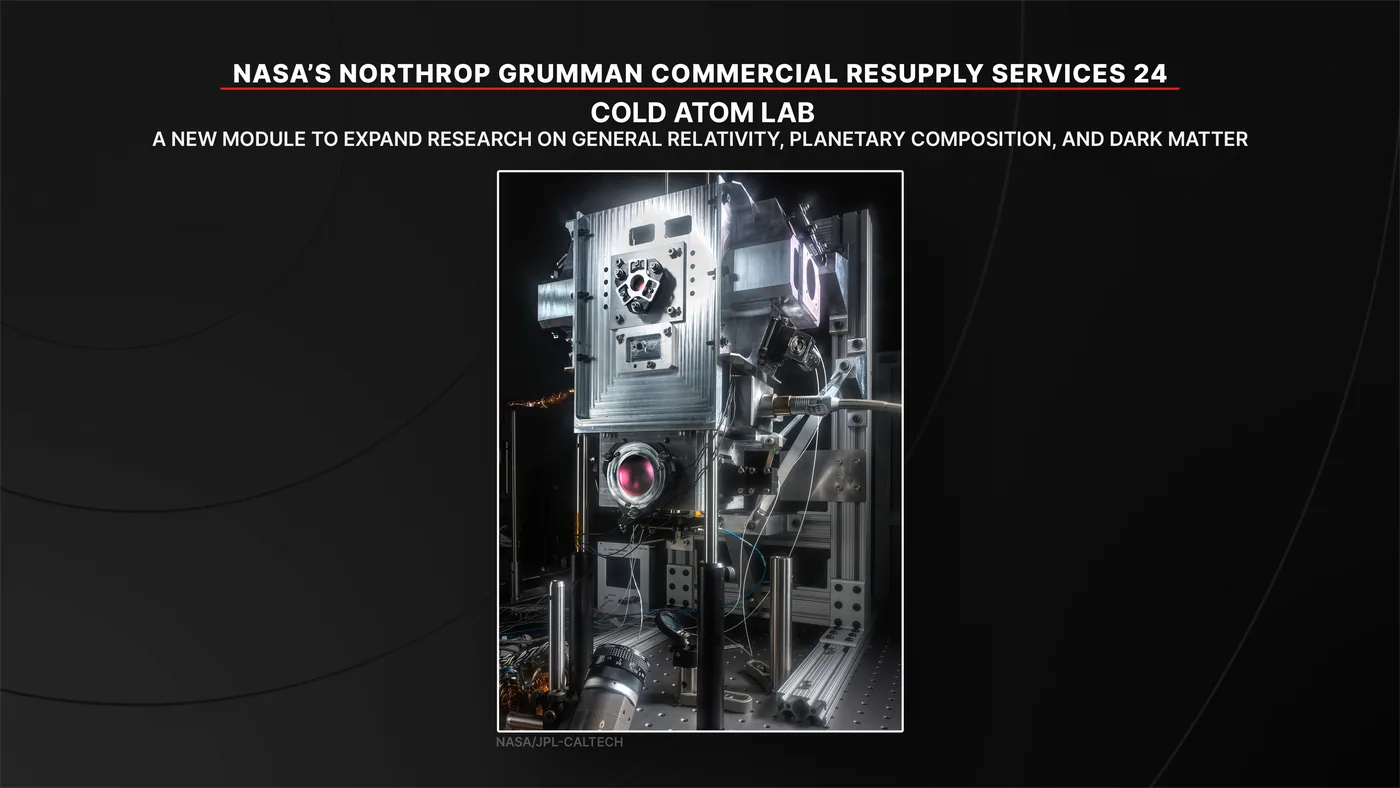
Cygnus XL delivered a broad array of research investigations designed to advance space medicine, quantum mechanics, and space weather forecasting when it arrived at the station. Among the delivered payloads was an upgrade module for the Cold Atom Lab, a facility that chills atoms to near absolute zero to study quantum physics in microgravity [3, 4]. These tests explore general relativity and dark matter, while supporting technology for improved computer chips and medical scanners [4]. NASA live coverage highlighted these physics instruments during the spring launch [3].
Biological research aboard CRS-24 focused on health studies that directly support NASA’s long-term Artemis exploration plans. The InSPA-StemCellEX-H2 investigation evaluated stem cell production in weightlessness to produce larger batches of therapeutic cells, which could advance treatments for patients on Earth suffering from blood diseases and certain cancers [3, 4]. A study called CBIOMES examined how spaceflight affects the gut microbiome in roundworms to help flight surgeons protect astronaut health on future lunar missions. These biological tests observe cell behaviors that gravity masks on Earth [4].
Space environment monitoring also received new flight hardware through the Nanoracks-ITSI investigation, which tracks shifts in radio signals beamed from Earth as they pass through the upper atmosphere. These measurements help scientists improve models that predict solar activity and space weather disturbances, which can otherwise disrupt GPS navigation networks and military radar tracking systems [3, 4]. Live NASA coverage of orbital science highlighted these applications during the spring launch [3].
Space Station Hardware Upgrades and Waste Disposal
Beyond science payloads, CRS-24 delivered hundreds of pounds of critical station maintenance equipment for daily crew operations. Astronauts installed the European Enhanced Exploration Exercise Device, a compact workout unit jointly developed by NASA and ESA that combines cycling, rowing, and resistance training to preserve bone and muscle health. Crew members also unpacked eight hatch seal covers and two storage batteries to support ongoing operations on the Russian Zarya module. These additions maintain structural integrity across orbital modules [4].
Environmental systems received three resupply water tanks, a nitrogen tank, and an oxygen tank to recharge spacewalk suits and maintain a pressurized atmosphere inside the orbital complex. Engineers also delivered a Supplemental Heat Rejection Evaporative Cooler, which evaporates water through hollow fiber membranes to reject heat if station cooling loops experience problems. A noncontact Ocular Coherence Tomography scanner replaced a degraded eye imaging tool in orbit, using dual-beam light to map crew retina health [4].
Once scientific payloads and spare parts were unpacked, astronauts loaded the empty pressurized compartment with thousands of pounds of trash [1, 3]. Discarded experiment hardware, packing materials, and a spare dispenser for the station Waste and Hygiene Compartment now fill the hold for disposal during destructive re-entry [1, 4]. The spacecraft will burn up safely over the ocean on Oct. 11 [1, 5]. Uncrewed disposal clears valuable station volume [1].
Commercial Resupply Operations and NASA Mission Coverage
The CRS-24 mission represents the second flight of the expanded Cygnus XL spacecraft, built with greater cargo volume than earlier models developed by Northrop Grumman [4, 7]. The enlarged freighter first flew on an earlier resupply flight that departed the station in March 2026 under the monitoring of ESA astronaut Sophie Adenot [7]. For CRS-24, the vehicle launched on April 11 aboard a SpaceX Falcon 9 rocket from Florida [1, 3]. NASA mission coverage followed the 7:41 a.m. EDT launch as the rocket lifted off from Cape Canaveral Space Force Station [3].
While NASA manages cargo logistics, recent decisions on commercial station flight awards show how the agency balances multiple private partners across low Earth orbit [1, 4]. Launching Cygnus on a Falcon 9 reflects practical cooperation between commercial aerospace contractors supporting the International Space Station [1, 3]. Similar contracting strategies guided agency efforts when launch catalog expansions introduced alternative commercial rockets for future agency science payloads [4, 7]. Northrop Grumman plans continued resupply flights through the end of the decade [3, 4].
Live coverage of Friday’s departure gives the public a clear look at orbital operations as flight controllers in Houston coordinate with astronaut Luke Delaney. Once Canadarm2 releases the spacecraft at 12:45 p.m. EDT, Cygnus will maneuver into its solo descent path and conclude its mission in orbit [1, 5]. NASA coverage closes with the freighter safely clear of the orbiting laboratory [1, 3]. Space exploration advances through repeatable logistical steps [1, 4].
- PRESS RELEASE Taveau, J. (2026). NASA to cover Northrop Grumman CRS-24 spacecraft departure. NASA. [Article Link]
- WEBSITE Garcia, J. (2026). NASA’s Northrop Grumman Commercial Resupply Services 24 departure. NASA+. [Article Link]
- PRESS RELEASE Taveau, J. (2026). NASA sets coverage for Northrop Grumman’s CRS-24 resupply launch. NASA. [Article Link]
- WEBSITE Garcia, M. A. (2026). NASA’s Northrop Grumman CRS-24 mission overview. NASA. [Article Link]
- ONLINE NEWS Mirage News. (2026). NASA to cover Northrop Grumman CRS-24 departure. Mirage News. [Article Link]
- ONLINE NEWS Independent Space News. (2026). NASA to cover Northrop Grumman CRS-24 spacecraft departure. Independent Space News. [Article Link]
- ONLINE NEWS IMPRINT. (2026). NASA to cover Northrop Grumman cargo spacecraft departure. IMPRINT. [Article Link]
APA 7: PerEXP Teamworks. (2026). How NASA Coverage Follows Northrop Grumman CRS-24 Departure. PerEXP Teamworks. https://perexpteamworks.com/en/nasa-coverage-crs-24-departure/


