





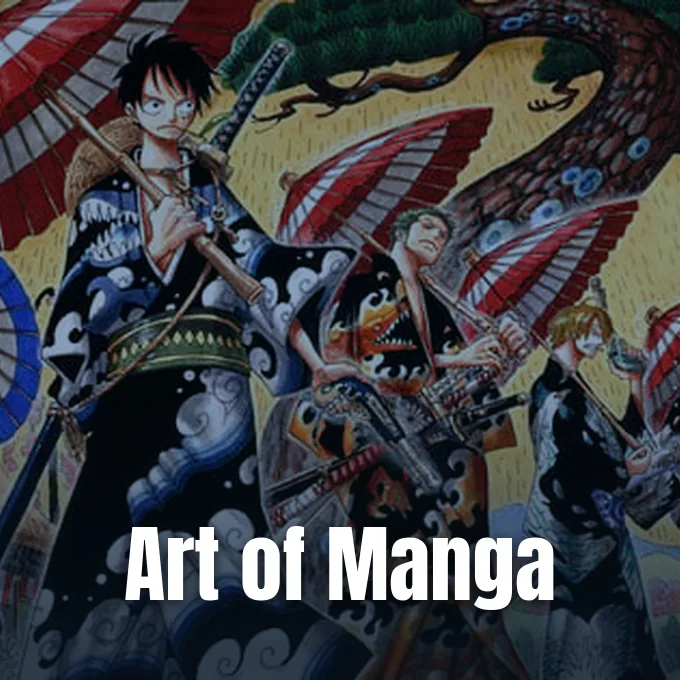
The Brooklyn Museum opened Art of Manga on October 3, 2026, marking its East Coast debut and gathering 658 original artworks inside its Great Hall galleries [1]. Featuring more than 600 drawings with historic artifacts, the exhibition is the first large-scale museum survey in the Americas dedicated to Japanese graphic novels as an independent art form, traveling to New York after an initial presentation at the de Young Museum in San Francisco. Organized with the Fine Arts Museums of San Francisco and overseen by curators Joan Cummins and Pauline Vermare, the presentation gives New York audiences their first look at rare draft manuscripts before the loan collection departs in late January [2].
The Great Hall Installation
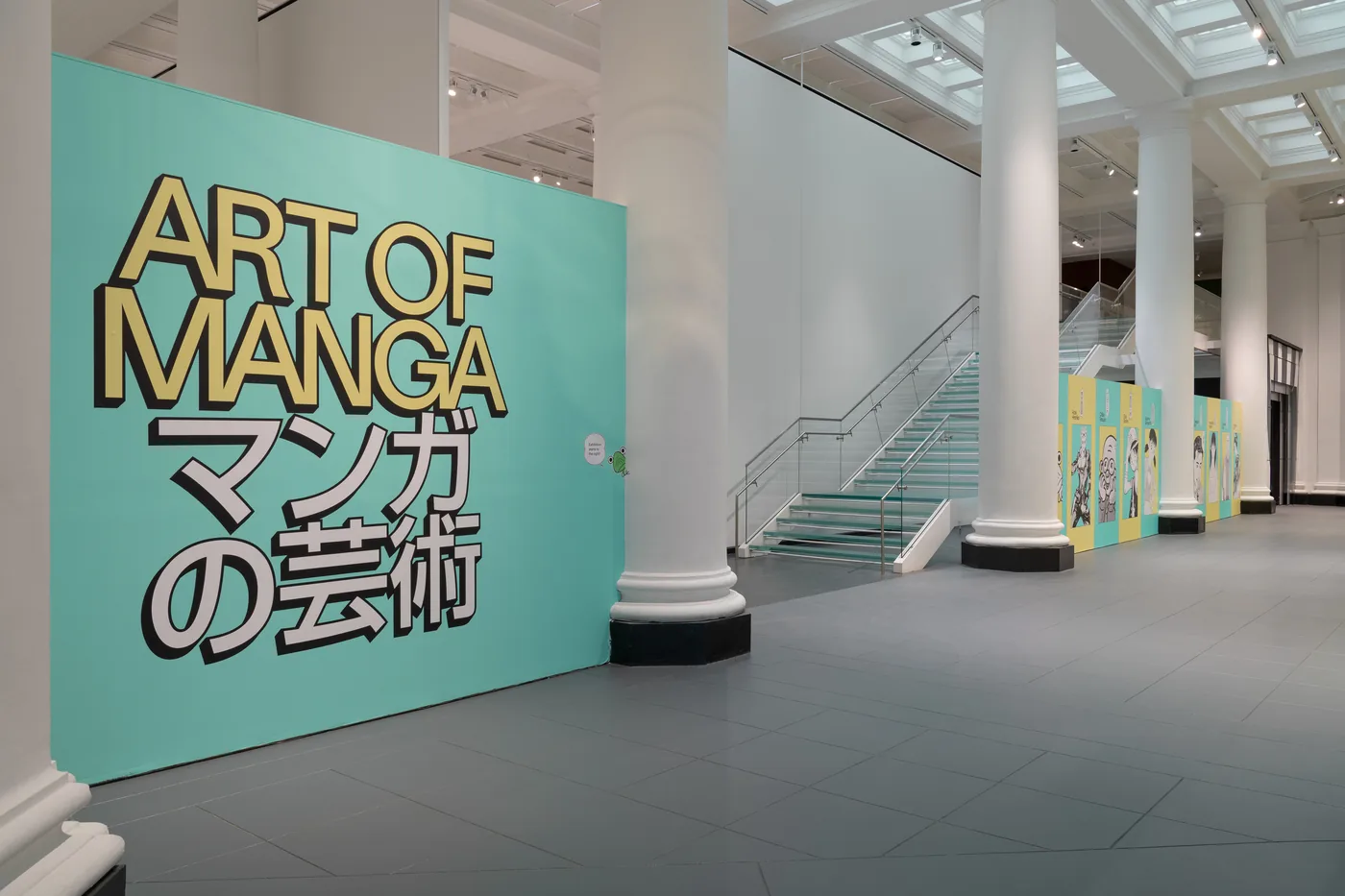
Moving the loan collection into Brooklyn forced curators to rethink how drawings interact with monumental architecture. The museum installed the show inside a circa 1900 Beaux-Arts space with massive stone pillars and two separate ceiling heights. Joan Cummins, the museum’s curatorial chair and Selz senior curator of Asian art, said fitting 658 individual items into that irregular room created spatial puzzles for the installation crew. Nicole Coolidge Rousmaniere, who curated the project for both institutions, said Brooklyn gave each creator an individual gallery pocket that lets visitors examine ink strokes without feeling crowded [1].
Visitors follow a pathway built around the mechanics of reading Japanese books, entering galleries from right to left instead of standard Western museum flow. Wall labels feature Beshi, a green frog mascot created by foundational gag artist Fujio Akatsuka (1935–2008), who offers visual directions for newcomers learning to follow paneled narrative sequences [3]. Japanese publishers also placed conditions on gallery layouts before handing over paper drawings. Cummins said editors told curators that rival manga authors couldn’t share adjacent wall space, forcing staff to alternate between male and female artists to keep competing editorial stables separate in the Great Hall [1].
Certain showpieces from California didn’t travel to New York. The de Young Museum displayed an industrial printing press inside its gallery, but Brooklyn replaced that heavy machinery with a video installation detailing book printing runs. It’s a quiet display focused on paper [1].
Inside the Art of Manga Galleries
The Art of Manga exhibition centers on eight influential comic authors whose careers shaped magazine culture in Tokyo [2]. Individual rooms showcase drawings by Rumiko Takahashi (born 1957), Jiro Taniguchi (1947–2017), Mari Yamazaki (born 1967), Hirohiko Araki (born 1960), Fumi Yoshinaga (born 1971), Gengoroh Tagame (born 1964), Kazumi Yamashita (born 1959), and Eiichiro Oda (born 1975). Cummins said museum board members initially didn’t know what manga was, often confusing serialized comic books with animated television broadcasts. She read at least one book from every featured series to understand their literary appeal, developing an affinity for stories like Yoshinaga’s Ōoku: The Inner Chambers and Yamashita’s Land [1].
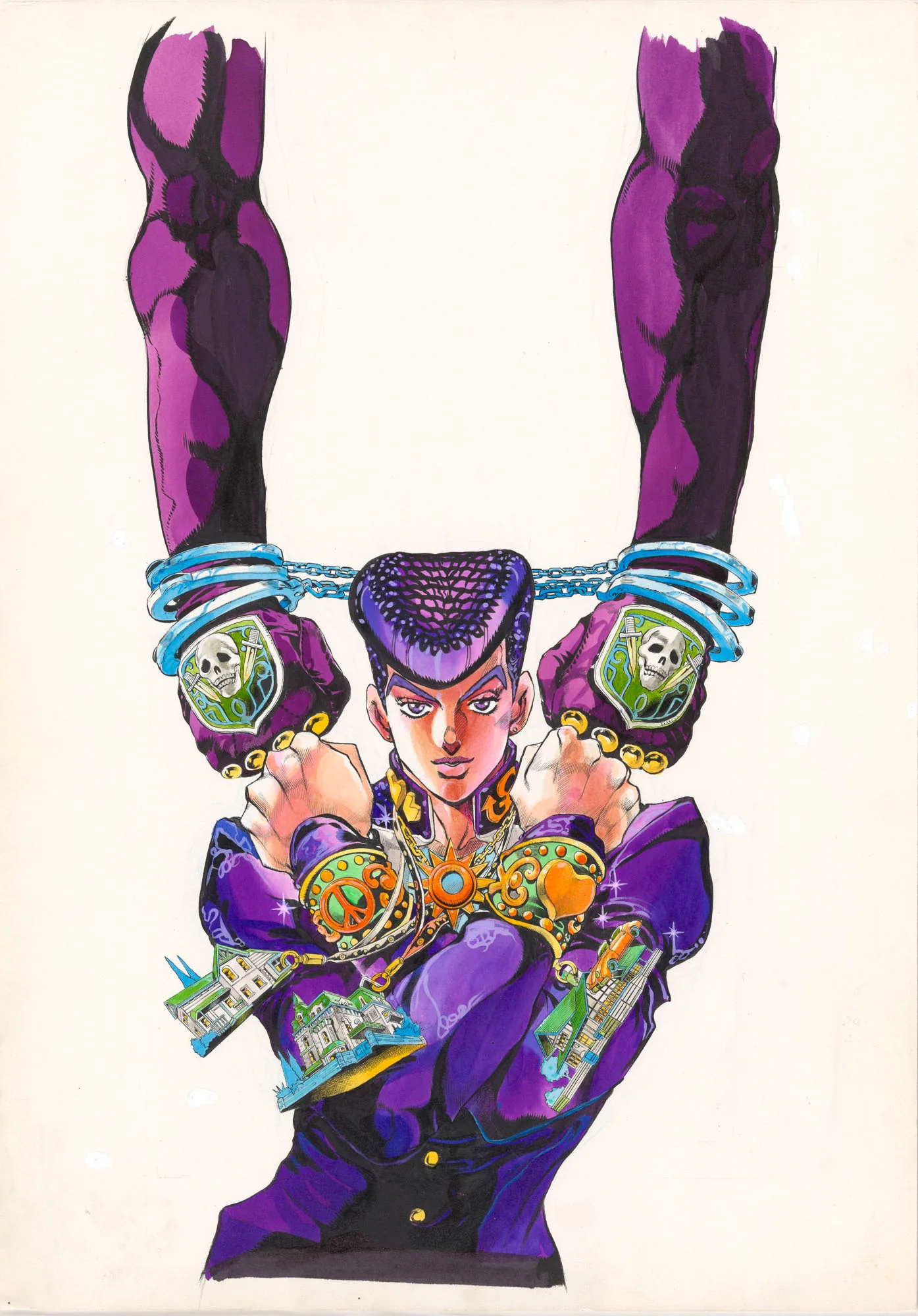
Brooklyn secured rare loans from private collections. Curators added original manuscript pages from Taniguchi’s wartime drama Hundred Year Lineage (from the anthology To Own a Dog and Also a Cat), where a young girl must surrender her starving pet during wartime food rationing before finding it alive years later. The exhibition also displays color illustrations from Araki’s JoJo’s Bizarre Adventure: Part 4 Diamond is Unbreakable and ink spreads from Oda’s pirate saga One Piece [1].
Introductory galleries introduce foundational manga pioneer Chiba Tetsuya (born 1939), while later rooms show pages from horror master Junji Ito and the culinary mystery Drops of God by Tadashi Agi and Shu Okimoto. A collaborative wall features Mari Yamazaki and Miki Tori’s Roman comic PLINIVS. The final gallery presents archival fine prints produced by Shueisha Manga-Art Heritage, contrasting Tite Kubo’s Bleach lithographs with pop art experiments by Keiichi Tanaami [2].


Manga Before Manga Previews
Before stepping into the comic galleries, ticket holders walk through a prologue space titled “Manga Before Manga” [1]. This gallery pulls painted scrolls and woodblock prints from the Brooklyn Museum’s permanent Asian art archives, which hold more than 140,000 objects collected over two centuries [2]. Rousmaniere arranged these centuries-old items to show how visual storytelling devices like speech balloons, exaggerated physical expressions, and motion lines emerged in Edo-period Japanese printmaking long before contemporary magazines arrived [1].
Direct visual parallels connect ancient scrolls to modern magazine panels on nearby walls. A 19th-century satirical ink painting of wrestling frogs by Kawanabe Kyosai anticipates Akatsuka’s frog mascot Beshi, while Utagawa Kuniyoshi’s woodblock print of folk hero Kaidomaru displays the same dynamic musculature seen in boys’ adventure comics. Curators even included a woodblock print by Sekino Junichiro (dating to 1976), using its intricate textile patterns to complement Yoshinaga’s costume drawings in Ōoku [1].
Pairing older woodblock prints with contemporary graphic culture matches the Brooklyn Museum’s curatorial approach, following its 2024 exhibition that placed Hiroshige’s 100 Famous Views of Edo in dialogue with paintings by Takashi Murakami [2]. That focus on drawing traditions resonates with visitors. Allison Thornton, a 56-year-old art enthusiast from Jersey City, said she wanted to see ink drawings instead of digital prints because hand-drawn pages preserve cultural history. “I didn’t want to see a whole lot of digital drawings, I wanted to see hand drawings,” Thornton said. Independent publishers also promote hand-drawn manga craft, much like Glacier Bay Books bringing indie manga to Sweet Shop Comics [3].
Visiting the Art of Manga Reading Lounge
The museum set straightforward rules to handle expected crowds while protecting light-sensitive ink drawings from environmental damage. Ticket holders can take close-up photos in the preliminary “Manga Before Manga” space, but photography inside Art of Manga is restricted to wide-angle views taken from a distance, and guards prohibit video recording in the galleries. The institution also encourages patrons to dress in costume during their visit, even though it doesn’t host scheduled cosplay days outside its annual Halloween gathering [1].
To give visitors a quiet place to read between exhibition sections, Japanese bookstore chain Kinokuniya set up a reading lounge with wooden benches and translated volumes. Alasdair Scevning, a 19-year-old illustration student at Pratt Institute, said examining unfinished pencil drafts and ink corrections helped him appreciate the labor required by serialized publishing. Draft pages proved instructive for young illustrators [3].

Mika Furuya, a 43-year-old pass holder from Manhattan, said displaying comic pages in gold frames gives the medium overdue artistic validation. Rousmaniere said participating mangaka received final authority over how their artwork hung under gallery lighting, giving creators direct control over their retrospective presentation [3]. That artistic autonomy helped persuade living authors to lend original draft pages that rarely leave private studio vaults in Japan [1].
Tickets and Hours
The exhibition welcomes visitors at the museum’s 200 Eastern Parkway building in Brooklyn through January 31, 2027. General admission costs $30 for adults, while tickets for seniors, students, and visitors with disabilities cost $21. Admission for children between ages 4 and 12 costs $12, and museum members enter free of charge [4].
For regular attendees, the institution introduced a $75 Manga Fan Pass that provides unlimited gallery admission for one cardholder and a guest during the four-month schedule. Pass holders receive invitations to private evening receptions, advance ticket access for curatorial lectures, and a 10% discount at the museum shop and cafe. Members also receive an enamel badge that lets them collect different pins on return visits [4].
Visitors can reach the building via the 2 and 3 subway trains, which stop directly at Eastern Parkway-Brooklyn Museum. Galleries remain open Wednesday through Sunday until evening [4].
- ONLINE NEWS Baron, R. (2026, October 17). Bringing the ‘Art of Manga’ to the Brooklyn Museum. Anime News Network. [Article Link]
- PRESS RELEASE Brooklyn Museum. (2026, April 29). The Brooklyn Museum presents Art of Manga. Anime News Network. [Article Link]
- ONLINE NEWS Dragos, M. (2026, October 7). “Art of Manga” exhibit opens at Brooklyn Museum. The Vanguard. [Article Link]
- WEBSITE McCormac, S. (2026, October 7). Brooklyn Museum presents large-scale manga exhibition. JapanCultureNYC. [Article Link]


