





Global epidemiological evaluations demonstrate that cancer causing infections accounted for approximately 12 percent of all newly diagnosed malignancies worldwide in 2024 [3]. Published in The Lancet Oncology by lead author Harriet Rumgay and researchers affiliated with the World Health Organization, the international study examined oncology registries to identify pathogenic drivers across more than 20 cancer types [1]. While related preliminary findings also circulated in an unreviewed preprint format, the peer-reviewed assessment links 2.3 million new cancer diagnoses directly to infectious microorganisms [2]. Most of these cases stem from five preventable pathogens [3].
How Do Cancer Causing Infections Trigger Malignancies?
Viruses trigger oncogenesis by altering host cellular genetics, systematically disabling natural biological safeguards that restrict excessive proliferation and sustain tissue architecture [1]. Understanding how cancer causing infections destabilize host cellular mechanisms begins with the disruption of programmed cell death, which normally halts corrupted cellular growth [2]. Certain oncogenic viral agents systematically neutralize this defensive apparatus by inactivating the TP53 protein, an indispensable tumor suppressor, or by inactivating the retinoblastoma (RB) regulatory protein [1]. Without these vital enzymatic checkpoints, mutated cells reproduce without standard physiological restraint.
A second pathway involves the direct insertion of viral genetic material into host chromosomal sequences, which can accidentally disrupt genetic pathways that dictate orderly division or cellular self-destruction [1]. When integrating fragments interrupt vital regulatory regions, cellular growth factors become hyperactive, accelerating cellular transformation across vulnerable mucosal linings [2]. In a third distinct mechanism, the infectious virus carries a functional oncogene that was inadvertently incorporated from previous cellular hosts during long-term evolutionary history [1]. These genetic interruptions represent foundational concepts in modern cancer biology, confirming that microbial agents directly participate in mutational transitions [2].
Extensive laboratory investigations conducted over thirty years have clarified these molecular sequences, transforming clinical understanding of how pathogen exposure triggers persistent cellular damage [1]. Gary Clifford, an epidemiologist at the International Agency for Research on Cancer and senior author of the global study, highlighted the direct clinical relevance of these biological discoveries: “These are very actionable risk factors. We can test for them. We can vaccinate against them”. Five pathogens drove these numbers [3].
Five Pathogens Behind Global Diagnoses
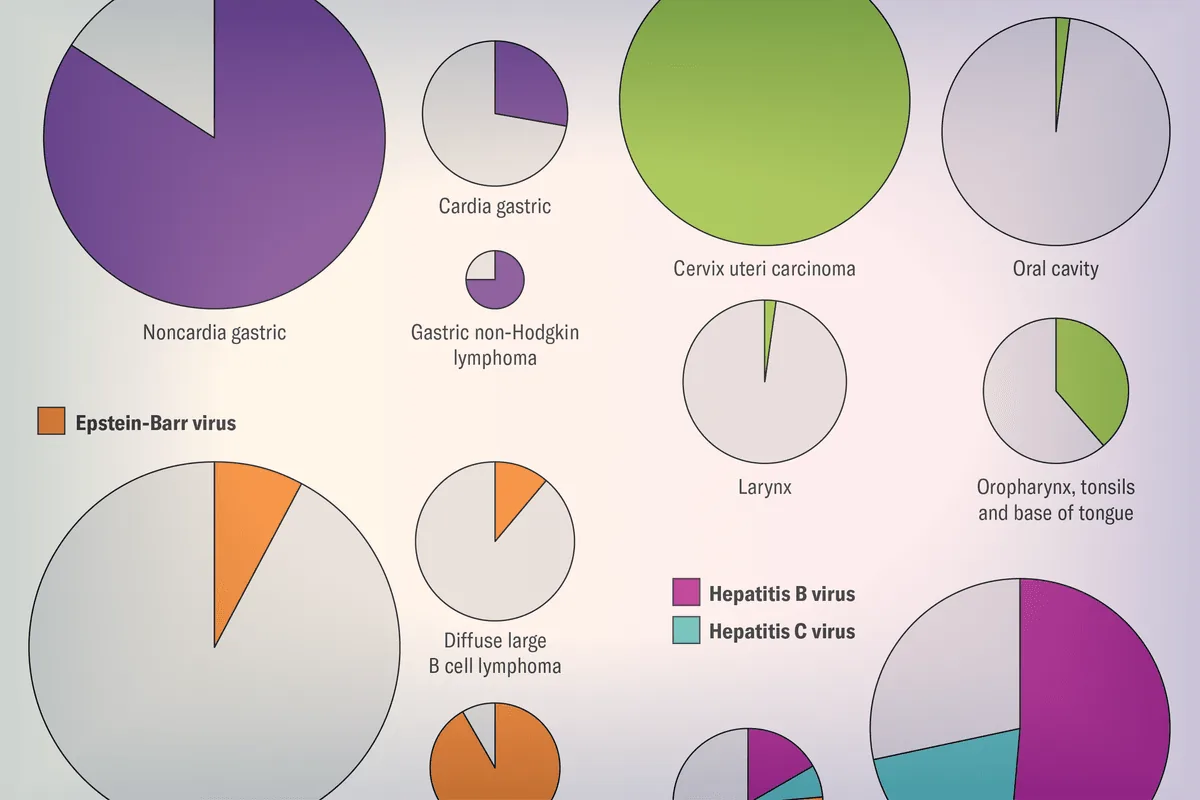
Evaluating the incidence of cancer causing infections highlights five dominant biological agents that drive the vast majority of global diagnoses [1]. Helicobacter pylori, a spiral bacterium commonly linked to chronic gastritis and peptic ulcers, was responsible for 4 percent of all worldwide cancer cases in 2024, matching the 4 percent caused by human papillomavirus (HPV) [2]. Together, H. pylori and HPV accounted for more than 1.5 million newly diagnosed cancer cases across international registries. Hepatitis B accounted for approximately 360,000 cases, representing roughly 2 percent of the global total, while Epstein-Barr virus was responsible for 260,000 cases, or 1 percent [3]. Hepatitis C drove under 1 percent [1].
These five agents provoke more than 20 distinct cancer varieties [1]. Stomach, liver, cervical, and hematologic malignancies dominate the documented clinical burden [2].
Epidemiologists have monitored these microbial threats across multiple global surveys dating back to 1990, with subsequent evaluations published for 2002, 2008, 2012, and 2018 [1]. Although earlier compilations suggested an infection-related cancer proportion as high as 18 percent in 2002, researchers emphasize that evolving diagnostic metrics and changing registry standards preclude direct historical comparisons [2]. Rather than demonstrating a straightforward statistical decline, the latest data reveal how localized screening and intervention alter regional pathogen burdens [1].
Improved diagnostics have simultaneously expanded the known clinical scope of established oncogenic viruses. Gary Clifford noted that while Epstein-Barr virus has long been recognized as a driver of nasopharyngeal cancers and various aggressive lymphomas, contemporary investigations now link the pathogen to distinct subsets of gastric carcinomas and rarer lymphoma variants [3].

Why Do Infection-Linked Cancers Threaten Developing Nations?
Infection-linked cancers disproportionately threaten developing nations because severe healthcare disparities frequently limit routine childhood vaccination, early diagnostic testing, and persistent antimicrobial treatment programs [3]. Approximately 75 percent of all infection-attributable cancer cases recorded in the 2024 global analysis occurred within low- and middle-income nations [1]. In areas such as sub-Saharan Africa, incidence rates remain exceptionally elevated due to historical underinvestment in screening programs and specialized medical centers. American clinics deploy standardized screening, whereas developing nations frequently lack basic clinical infrastructure [3].
Managing persistent pathogens that induce malignancies—including hepatitis B, hepatitis C, Helicobacter pylori, and human immunodeficiency virus (HIV)—requires uninterrupted pharmaceutical distribution and accessible clinical supervision [1]. Preventative resources such as sterile medical equipment, barrier contraception, and curative antiviral treatments remain unevenly distributed across rural populations [2]. Gary Clifford described this disparity as a profound public health contradiction, noting that highly effective preventative tools exist yet fail to reach individuals who carry the highest chronic infection risks [3].
Addressing these regional discrepancies requires dedicated international cooperation and targeted resource allocation across vulnerable communities [1]. Without subsidized vaccine procurement and widespread point-of-care diagnostics, poorer populations will continue to shoulder an overwhelming proportion of preventable oncological disease [2]. Most cases emerged in poorer nations [1].


Chronic Inflammation and Bacterial Mutagenesis
Bacterial and parasitic pathogens provoke malignant transformation through indirect biological mechanisms governed by long-term tissue stress and excessive inflammation [1]. When bacteria like Helicobacter pylori or parasitic helminths like Opisthorchis viverrini (a parasitic liver fluke) establish chronic infections, the immune system mounts a continuous inflammatory reaction [2]. While physiological inflammation normally neutralizes localized injury, chronic activation inundates tissues with reactive oxygen species that inflict recurring oxidative damage on cellular DNA [1]. The human body rapidly generates replacement cells to mend structural damage, drastically increasing the likelihood of random replication mistakes during continuous mitotic division [2].
Over years of unremitting tissue injury, proliferating cells accumulate genetic alterations that progressively push normal tissue toward invasive neoplasia [1]. While emerging non-invasive methods, such as the controversy over using tiny nematode worms for cancer testing, focus on odor-based diagnostic detection of existing tumors, pathogen-driven oncology addresses cancer causing infections decades before cellular transformation occurs. Amali Cooray from the Olivia Newton-John Cancer Research Institute contributed valuable insights to evaluating these intricate cellular damage patterns [2].

Understanding how chronic irritation drives mutagenesis demonstrates that bacterial eradication can halt oncogenesis before irreversible cellular damage occurs [1]. Prescribing straightforward antimicrobial regimens eradicates H. pylori colonies from gastric mucosa, halting persistent epithelial injury [2]. Gary Clifford highlighted this actionable reality [3].
Can Infections Causing Cancer Be Prevented?
Infections causing cancer can be prevented through widely available public health interventions, notably routine adolescent immunization, regular pathogen diagnostic screening, and standard antimicrobial therapeutics [3]. Because the biological link between specific microbes and cellular malignancy is well established, targeting the causative organism directly eliminates downstream cancer risks [1]. Anna Giuliano, founding director of the Center for Immunization and Infection Research in Cancer at the Moffitt Cancer Center, affirmed the undeniable efficacy of targeted prevention: “There is no question that this vaccine does what it was intended to do” [3].
Introduced in the United States in 2006, the human papillomavirus vaccine protects recipients against six separate malignancies, including cervical, throat, and anal cancers. The vaccine prevents six distinct cancers. Over the past twenty years, cervical cancer diagnoses dropped by more than 50 percent in multiple American states among women aged 20 to 31, who constituted the first cohort eligible for adolescent vaccination. Nancy Lee, an oncologist at Memorial Sloan Kettering Cancer Center, emphasized the necessity of widespread uptake: “HPV vaccination is critical to preventing infection and reducing the burden of HPV-related cancers”. Lee noted that HPV-associated throat cancers represent a rapidly growing clinical concern [3].
Beyond viral vaccines, pharmacological therapies eliminate bacterial and viral loads before malignant cellular changes take root. Standard antibiotic combinations eliminate Helicobacter pylori to mitigate stomach cancer development, while curative direct-acting antiviral medications clear hepatitis C to halt cirrhotic liver damage [3]. Furthermore, broader epidemiological findings regarding vaccination prior to infection reinforce how proactive immunological priming prevents severe chronic physiological sequelae across diverse organ systems [2].
Global Vaccination Gaps and Cervical Cancer Targets
Australia presents a premier real-world case study for eliminating oncogenic pathogens through structured national vaccination initiatives [1]. Following the launch of its adolescent immunization campaign in 2007, circulating HPV infections dropped by 90 percent among eligible individuals [2]. Australia launched this program in 2007. Bolstered by robust diagnostic screening, Australia is projected to achieve the complete clinical elimination of cervical cancer by 2035 [1]. Maintaining comprehensive coverage remains vital because widespread community immunity shields vulnerable individuals who cannot receive vaccines due to complex clinical contraindications [2].
Despite these substantial historical gains, recent demographic data reveal concerning vulnerabilities in adolescent vaccination rates [1]. In Australia, HPV vaccination coverage among 15-year-olds slipped from 85.7 percent in 2020 down to 79.5 percent in 2024. Coverage dropped to 79.5 percent [2]. To counteract these downward shifts, the World Health Organization and Australian health agencies have established a definitive target: vaccinating 90 percent of 15-year-old girls globally by 2030 [1]. Achieving this milestone requires reinforcing school-based vaccination delivery, deploying mobile outreach clinics, and countering circulating vaccine misinformation across digital platforms [2].
Securing equitable global production and sustainable delivery of prophylactic vaccines represents the most decisive pathway for diminishing future burdens associated with cancer causing infections worldwide. As Gary Clifford emphasized, “serious mortal diseases can be prevented with a simple population-based equality-driven jab in the arm” [3]. National healthcare systems and international aid organizations must prioritize sustained funding to supply low-income regions with affordable HPV and hepatitis B vaccines and accessible diagnostic testing for Helicobacter pylori [1].
- ONLINE NEWS La Marca, J., & Diepstraten, S. (2026). One in eight cancers are likely caused by an infection worldwide, new study finds. Medical Xpress. [Article Link]
- ONLINE NEWS La Marca, J., & Diepstraten, S. (2026). One in eight cancers are likely caused by an infection worldwide – new study. The Conversation. [Article Link]
- ONLINE NEWS Mogensen, J. F. (2026). One in eight new cancers are likely caused by infections—there’s an easy way to protect yourself. Scientific American. [Article Link]
APA 7: PerEXP Teamworks. (2026). WHO Study Links One in Eight Cases to Cancer Causing Infections. PerEXP Teamworks.


