





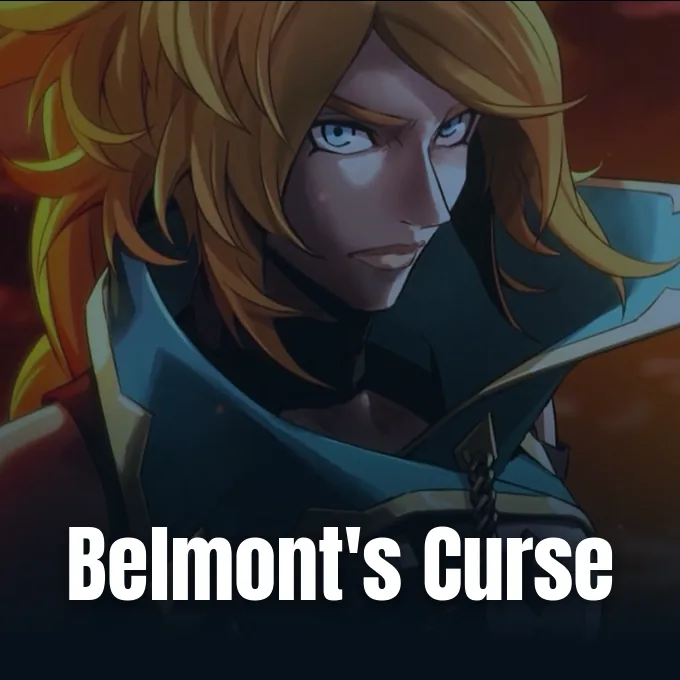
Konami launched Castlevania: Belmont’s Curse on October 15. The game brings the vampire hunting series back to 2D action on consoles and PC. Motion Twin and Evil Empire handled development, dropping players into a plague-ridden Paris in the year 1499 rather than familiar Transylvanian countryside [1]. Trevor Belmont joins his daughter Rose to fight demonic hordes that terrorize the city streets. Her mother Sypha Belnades died during childbirth from Dracula’s curse. That loss leaves Rose determined to forge her own path as a capable hunter [3].
Castlevania: Belmont’s Curse Shifts the Franchise to 1499 Paris
The story opens 23 years after the events of Castlevania III: Dracula’s Curse. Trevor Belmont joins the hunt. A summons arrives from the Bishop of Paris, calling for urgent aid against dark forces. Trevor and Rose arrive by boat to find the French capital burning, with demonic hordes harvesting human souls in flaming avenues, ruined churchyards, and waterlogged tunnels. The two hunters split up on arrival so Trevor can confer with church authorities while Rose tackles threats in the streets. Trevor hands his daughter a deck of enchanted Tarot cards that belonged to her late mother Sypha Belnades. A dark curse visibly marks Rose’s arm. She must master her inherited magic before evil consumes the city [4].
Dracula’s castle soon materializes in central Paris. Scottish actor Graham McTavish returns to voice Vlad Tepes, reprising his role from the Netflix animated series. This version of the vampire lord acts far more malicious than television depictions. Playthrough lengths vary. Depending on which optional bosses players hunt down and how thoroughly they chart out the map, a full run lasts between 5 and 25 hours over three separate story endings. Reaching the true ending demands backtracking through sewers, where Tarot abilities unlock secret crypts behind crumbling stone walls. Players who charge straight toward the clocktower will miss crucial relics, but taking time to explore rewards Rose with powers needed for the ultimate confrontation [3].
Rose fights to prove herself. As Ashley Schofield wrote for Rock Paper Shotgun, “Rose Belmont is not her father,” and confronting monsters reveals their shock at facing a young woman instead of Trevor. She refuses to lean on family fame, carving her own reputation through swift blade combat [1].
Whip Mechanics and Mobility Define Rose Belmont’s Combat
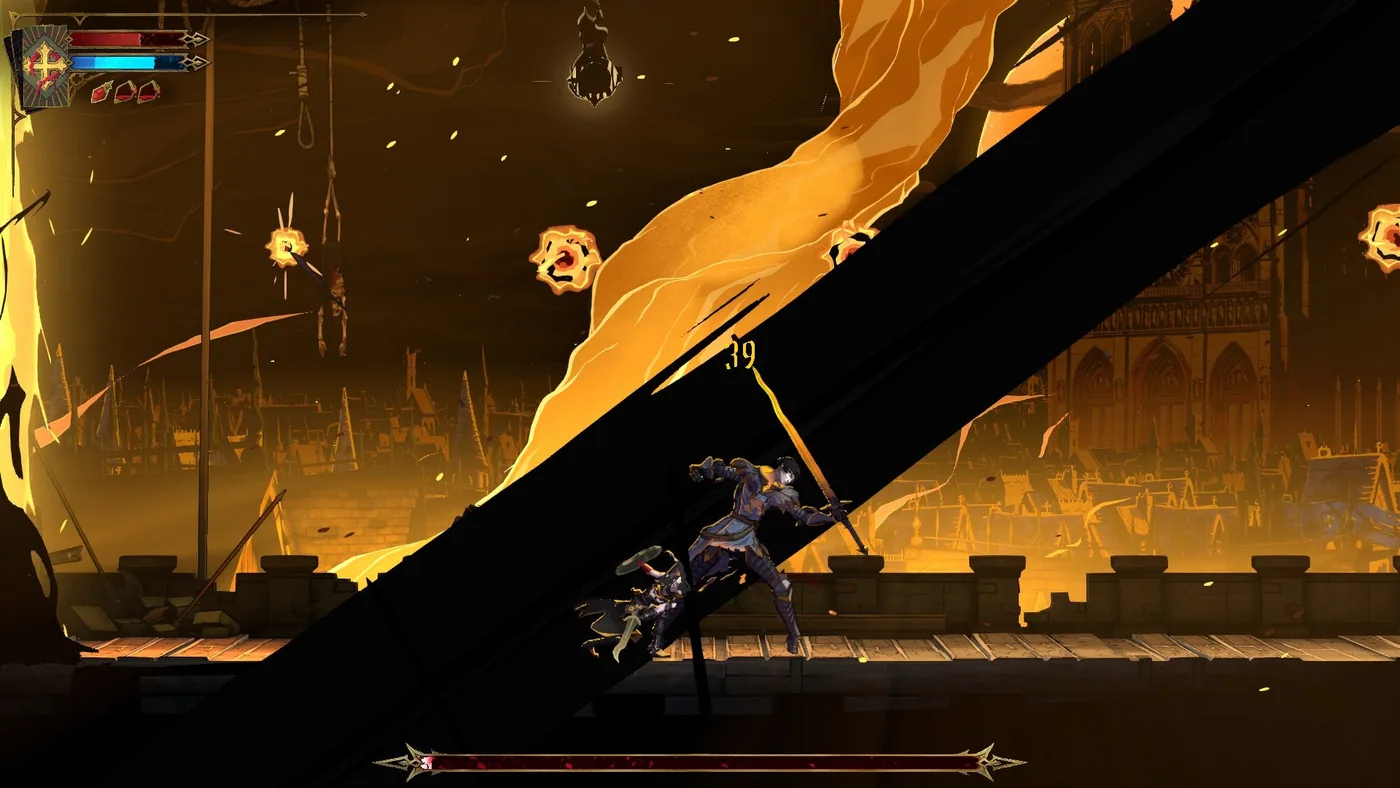
Combat moves at a brisk pace. Movement feels swift. The design borrows responsive movement cues from Dead Cells without turning the game into a randomized roguelike experience. Rose starts her quest wielding a basic longsword, but she soon gains an arcane whip that doubles as a grappling hook. That whip changes level navigation and aerial combat. She can latch onto suspended metal pinions, swing over wide chasms, and pull herself to flying enemies to deliver quick midair sword slashes before landing on solid ground [1].
Chests hidden in Paris reward players with several weapon types. Rose can switch from her starting sword to a thrusting lance, heavy metal gauntlets, or a greatsword. Heavy weapons hit hard. The greatsword deals heavy damage, but its slow attack animation leaves Rose vulnerable to fast counterattacks. That delay makes the agile lance and sword much safer choices in swarms [1].
Defensive mechanics depart from familiar action conventions in ways that reward patience over reckless aggression. Positioning is paramount. Rose’s dodge roll offers no invincibility frames (meaning she can’t simply tumble through enemy weapons unharmed), so players must read enemy windups carefully to stay out of range. Monsters don’t inflict damage simply by touching Rose’s sprite. Taking damage requires an enemy’s physical weapon strike or projectile to connect [3]. That separation between weapon strikes and passive contact turns close encounters into a clean dance of timed parries, quick slides, and calculated counterstrikes [4].

Tarot Arcana and RPG Progression Expand Belmont’s Curse
Magic draws power from Sypha’s Tarot deck, which absorbs boss spirits to grant Rose versatile Arcana spells. Defeating The Fallen unlocks long-range projectile magic alongside the ability to speak telepathically with the freed spirit [4]. Besting living armour Talos rewards an empowered stomp that shatters cracked floor blocks. Defeating Joan of Arc yields holy light that dispels glowing barriers [1].
Defeated bosses don’t disappear after combat. Instead, their souls reside inside Rose’s thoughts like a talkative Greek chorus during the adventure. They debate among themselves and offer unprompted advice during dangerous situations. Their chatter adds personality to quieter moments as Rose journeys through Paris catacombs and burning palaces [1]. Jesse Norris of PlayDayOne praised this supernatural banter as an entertaining narrative element, but Brendan Bailey of Noisy Pixel felt the frequent conversations interrupted tense story moments and diluted the gothic atmosphere. Even with differing critical opinions on dialogue frequency, conversing with historical and legendary figures gives the narrative a fresh identity within the franchise [3].
Felled monsters release yellow experience orbs and blue magic orbs, raising Rose’s attack and defense attributes upon level-up. Players collect red and blue seeds in optional rooms, needing four of each color to expand health and magic meters [3]. Four seeds boost each bar. Rose can equip up to three relics, gaining companions like a hovering combat bat [4].

Platforming Gauntlets and Boss Encounters Test Player Reflexes
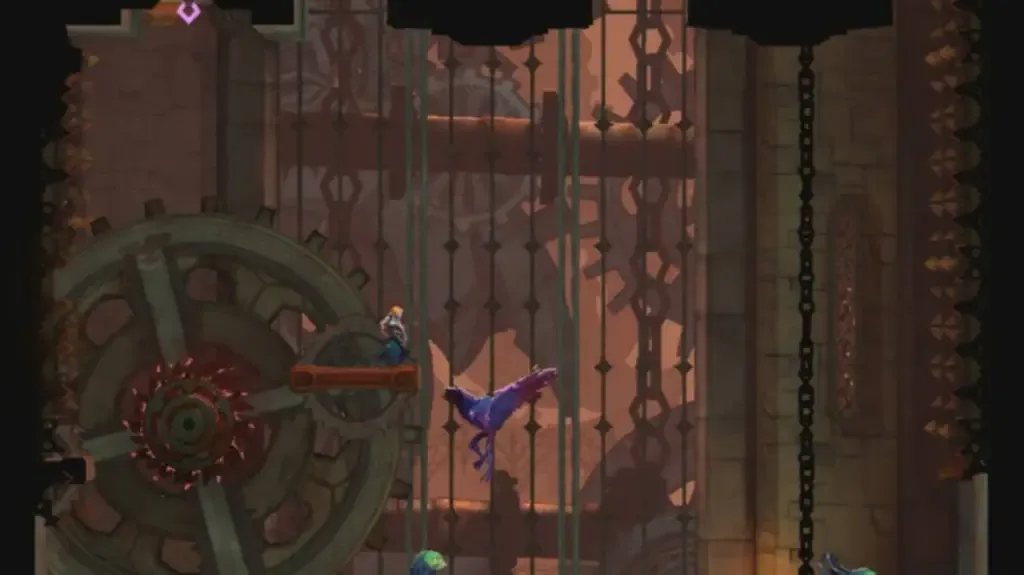
While combat remains engaging throughout the campaign, platforming gauntlets introduce harsh environmental challenges that test precision. In the gearworks tower, players track down a boss known as The Builder in vertical shafts lined with firing pistons, collapsing floors, and instant-reset spike pits. Ash Parrish of Kotaku described the encounter as demoralizing when the boss flees after reaching half health. Players must suddenly race backward through the identical piston corridor under an unforgiving 90-second countdown, where mistimed jumps trigger an explosion that resets the entire sequence [5].
Belmont’s Curse skips difficulty presets. The game offers granular sliders to adjust incoming damage, attack strength, and carried potion capacity [1]. Players can even turn off player death, but that toggle doesn’t stop platforming countdown timers or automatically complete tricky jumping sequences during boss chases. Danger arrives early. Entering Dracula’s clocktower chamber prematurely triggers an immediate bad ending, demonstrating that the world map allows daring players to stumble into endgame areas [5].
Following initial impressions from our coverage of the Belmont’s Curse demo launch, the full release retains classic checkpoint friction. Save rooms sit far apart. Deaths in locked combat chambers force players to retrace lengthy paths past rooms filled with respawned skeleton warriors [1]. Shaun Musgrave of Siliconera pointed out that fast travel unlocks late, making early navigation in Paris frustrating whenever players wander off the intended golden path [2].
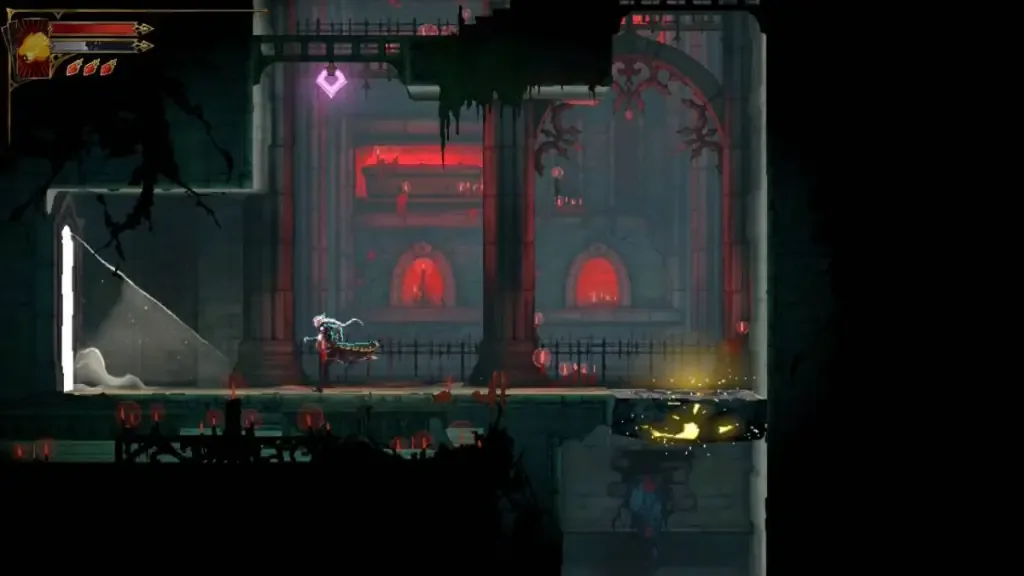
Launch Platforms and Technical Performance on Modern Hardware
Castlevania: Belmont’s Curse launched on October 15 across Nintendo Switch, PlayStation 5, Xbox Series X/S, and PC through Steam [2]. Performance varies between platforms. Norris confirmed smooth performance on Xbox Series X and PC, whereas reviewers testing the Switch edition reported input delay and visual hiccups during hectic screen-clearing fights [3].
Opinions on music differed. The audio presentation divided critics who reviewed the complete release. Norris praised the energetic orchestral soundtrack on PlayDayOne. He called the score an impressive blend of instrumental tracks and classic series melodies [3]. Bailey on Noisy Pixel found the background music largely forgettable, writing that the arrangement of Bloody Tears lacked the inspiration of previous games [4]. Despite differing opinions on music, reviewers agreed that the saturated color palette and detailed character animations give Paris a striking gothic visual identity [3].
As the first original 2D Castlevania in over a decade, this French adventure shows that the franchise can thrive under new stewardship [1]. With whip-hook mobility, Tarot magic, and three endings, Rose Belmont provides a fresh perspective on a forty-year vampire hunting tradition [4].
- ONLINE NEWS Schofield, A. (2026, October 13). Castlevania: Belmont’s Curse review – a fantastic action game, a less than stellar Metroidvania. Rock Paper Shotgun. [Article Link]
- ONLINE NEWS Musgrave, S. (2026, October 13). Review: Castlevania: Belmont’s Curse Is an Uneven Return. Siliconera. [Article Link]
- ONLINE NEWS Norris, J. (2026, October 13). Castlevania: Belmont’s Curse | Review. PlayDayOne. [Article Link]
- ONLINE NEWS Bailey, B. (2026, October 13). Castlevania: Belmont’s Curse Review: A Great Game That Plays It Safe. Noisy Pixel. [Article Link]
- ONLINE NEWS Parrish, A. (2026, October 13). Castlevania: Belmont’s Curse Is Kicking My Ass In The Worst Way. Kotaku. [Article Link]


