




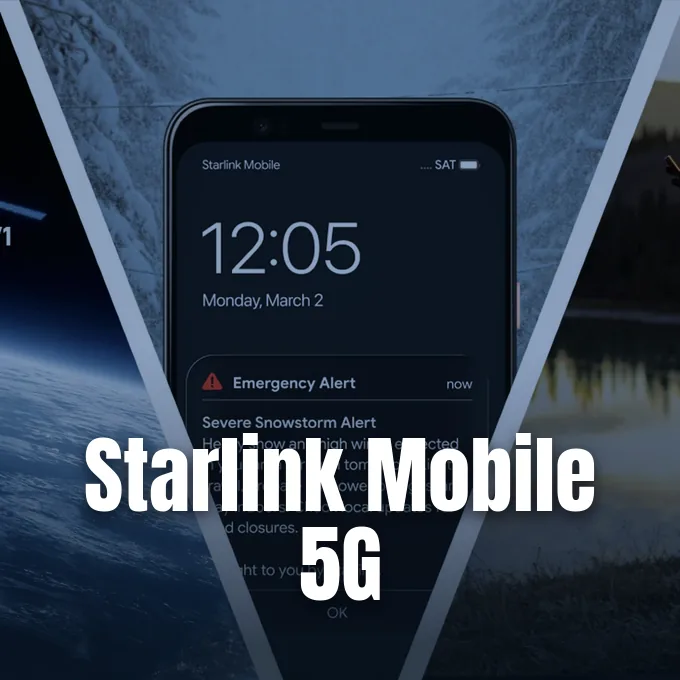
SpaceX has signed an equipment agreement with Qualcomm to supply ground base stations for its planned Starlink Mobile 5G network, targeting a commercial debut in the United States in 2027 [1]. The rollout focuses on deploying terrestrial hardware at tens of thousands of sites to manage mobile data traffic that satellites cannot easily carry on their own. By installing physical radio units together with its orbital constellation, SpaceX aims to build a fourth nationwide carrier capable of competing directly with AT&T, T-Mobile, and Verizon [2]. Qualcomm described the multi-year arrangement to Reuters as its biggest 5G deal yet, pointing out that terrestrial base stations will provide the high-capacity foundation required for commercial phone service [1].
Qualcomm Dragonwing Hardware for Terrestrial Sites
SpaceX selected Qualcomm’s Dragonwing Cellular Infrastructure platforms to power its ground-based cell installations. The hardware selection centers on the Dragonwing QRU100 radio platform and the Dragonwing QDU100 digital baseband unit, paired with Qualcomm’s Layer 1 processing software. Massive MIMO radio units will expand antenna capabilities and manage heavy data volumes in local wireless cells [1].
Qualcomm executives framed the partnership as a major step for American cellular infrastructure that could lay the groundwork for future network standards. Durga Malladi, executive vice president and general manager at Qualcomm Technologies Inc., said: “Together with SpaceX, we are building world-leading cellular infrastructure in the United States, advancing 5G today, with an opportunity to lay the foundation for AI-native 6G in the years ahead.” The chipmaker previously supplied cellular network equipment overseas in Japan and Vietnam, but this agreement marks its most extensive push into American network hardware. Qualcomm views this contract as a direct opportunity to construct high-capacity cellular infrastructure built for scale with SpaceX’s satellite system [1].
Elon Musk praised the technology choice in public statements following the announcement, expressing confidence that the equipment will resolve dead zones. Musk posted on X that “Qualcomm’s technology is excellent,” adding in a follow-up statement that “at last there will be one network with good signal everywhere!” The base stations are designed to improve coverage, capacity, and spectral efficiency across the terrestrial footprint [2].

How Starlink Mobile 5G Works on the Ground
The technical design of the network links standard terrestrial towers with low Earth orbit satellites to prevent service dropouts in both crowded cities and remote rural regions. While direct satellite connections can deliver emergency text messages to regular consumer smartphones in deep wilderness, orbital links lack the bandwidth needed for high-speed mobile data or video streaming. Terrestrial base stations equipped with Qualcomm hardware will handle the bulk of urban data demand, routing routine phone calls and web traffic through fiber-fed ground towers [2]. Qualcomm explained that this antenna equipment is necessary to improve coverage and efficiency for handling heavy network traffic on the ground [1].
Recent performance evaluations highlight why ground infrastructure is essential for Starlink Mobile 5G to operate as a practical consumer carrier. Independent testing conducted by Ookla revealed that one out of every seven text messages sent via satellite direct-to-device service failed to deliver, compared to only one in fifty on ground cellular networks [2].
Mike Dano, lead industry analyst at Ookla, observed that closing this gap requires deploying physical hardware on towers rather than relying solely on orbital spacecraft. “This is the kind of performance gap that Starlink Mobile will need to address with its terrestrial network buildout,” Dano said. Dano explained that launching satellites is only part of the challenge, noting that SpaceX must build ground radios, secure tower space, and activate customer billing before service begins [2].



T-Mobile Rejected an Earlier Partnership Proposal
SpaceX explored a different path into the wireless industry just one week before announcing the Qualcomm deal, seeking a partnership with T-Mobile. The satellite company asked T-Mobile to establish a mobile virtual network operator (MVNO) agreement, which would have let Starlink offer wireless phone plans running on top of T-Mobile’s existing nationwide tower network. Such an arrangement would have allowed SpaceX to provide commercial wireless services to consumers without building its own physical base stations, paving an easier route into the American mobile market. T-Mobile executives turned SpaceX away, informing the satellite provider that there was “no room” for an MVNO partnership on their cellular grid [1].
In remarks reported by Android Central, T-Mobile CEO Srini Gopalan explained that the carrier evaluates potential wireless partnerships based on distribution channels, market expansion, and commercial viability. In Gopalan’s view, partnering with SpaceX would have aided a direct competitor on T-Mobile’s own cellular infrastructure without offering substantial commercial benefits to the carrier [1].
Being rejected by T-Mobile left SpaceX with no choice but to construct its own ground infrastructure from scratch [1, 2]. While relying on an established network would have sped up commercial launch timelines, owning its ground hardware grants SpaceX complete independence over network operations. That approach demands massive capital investments in hardware purchases and tower leases before signing up paying phone subscribers [2].

EchoStar Spectrum and Tower Access Hurdles
Buying base station hardware from Qualcomm addresses only one element of a cellular network, leaving SpaceX with the urgent challenge of securing transmission frequencies and tower locations. Tim Farrar, president at TMF Associates, told TechRadar that radio equipment cannot function without authorized spectrum. “This deal is an important part of building a new mobile network in the US,” Farrar said, adding that securing spectrum and tower leases will prove decisive [2].
Industry reporting indicates that SpaceX may pursue an acquisition of Boost Mobile from EchoStar to secure needed spectrum holdings. The Washington Post reported that SpaceX has looked into buying Boost Mobile, an asset that controls valuable wireless frequency licenses. Securing transmission frequencies remains a parallel challenge, following earlier moves where SpaceX pursued an 800MHz spectrum purchase for Starlink Mobile expansion to support direct handset connectivity. Farrar argued that purchasing remaining EchoStar spectrum assets and reaching settlements with tower leasing firms is the fastest method for SpaceX to deploy its Qualcomm gear in 2027. Without those spectrum assets, Starlink Mobile 5G base stations would lack the legal rights to transmit on key regional bands [2].
Acquiring Boost Mobile would still leave significant operational obstacles for SpaceX to resolve. A research note from MoffettNathanson, reported by TeleCompetitor, concluded that Boost Mobile’s existing MVNO agreements with AT&T and T-Mobile would almost certainly not transfer to Starlink Mobile. That restriction means SpaceX cannot rely on wholesale roaming and must instead negotiate individual leases on tens of thousands of cell towers to mount its hardware [2].
Long-Term Goals for Starlink Mobile 5G
The partnership with Qualcomm signals an ambition by SpaceX to establish itself as a credible fourth nationwide mobile carrier in the United States. Ookla analyst Mike Dano said the agreement reinforces that possibility alongside AT&T, Verizon, and T-Mobile. However, Dano stressed that building the network and launching necessary satellites will take several years before commercial service can launch [2].
Other industry executives suggest that Elon Musk is pursuing a broader strategy aimed at altering the financial landscape of the telecommunications market. Peter Adderton, chief executive of MobileX and founder of Boost Mobile, posted on X that SpaceX wants to alter the basic economics of the wireless industry. “It’s about getting enough network coverage to fundamentally disrupt the economics of the entire industry,” Adderton wrote, explaining that the ultimate goal extends beyond winning retail subscribers. Adderton added: “I think the endgame isn’t simply competing with the MNOs, but weakening their economics and valuations to a point where SpaceX can eventually acquire one at a fraction of today’s valuation? This isn’t necessarily just about winning wireless customers. It’s about changing the economics of wireless itself.” [2]
Deploying Qualcomm base stations across tens of thousands of ground sites by 2027 will test SpaceX’s financial resources and engineering execution [1, 2]. If the company manages to secure tower leases and transmission rights, the Starlink Mobile 5G network could bring fresh competition to an American mobile market dominated by three entrenched providers. For now, the multi-year deal with Qualcomm provides the terrestrial hardware needed to turn Starlink Mobile from an orbital experiment into a grounded cellular reality [1, 2].
- ONLINE NEWS Diaz, N. (2026, November 4). It’s a deal: Qualcomm, SpaceX find common ground for a 5G Starlink network. Android Central. [Article Link]
- ONLINE NEWS Rogerson, J. (2026, November 4). Qualcomm hails ‘biggest 5G deal yet’ in SpaceX agreement to build Starlink Mobile network — as Elon Musk makes bold ‘good signal everywhere’ claim. TechRadar. [Article Link]


