



APA 7: TWs Editor & ChatGPT. (2023, October 17). Rising Temperatures Due to Climate Change Could Render Some Areas Uninhabitable for Humans. PerEXP Teamworks. [Article Link]
Findings presented in a recent article, published on October 9 in the Proceedings of the National Academy of Sciences, emphasize that the consequences for global human health will be progressively more severe as the planet surpasses a 1.5-degree Celsius increase above preindustrial levels.
The human body can endure specific blends of heat and humidity, but once these thresholds are exceeded, the risk of heat-related health issues like heat stroke and heart attacks escalates. With global climate change driving temperatures to new heights across the planet, there’s a growing concern that billions may surpass these critical limits.
From the inception of the industrial revolution, where the combustion of fossil fuels in machinery and factories commenced, global temperatures have surged by approximately 1 degree Celsius, equivalent to 1.8 degrees Fahrenheit. In a pivotal move, 196 nations united in 2015 by signing the Paris Agreement, which is dedicated to curbing global temperature elevations to no more than 1.5 degrees Celsius above pre-industrial levels.
The research team embarked on a comprehensive modeling endeavor, exploring potential global temperature increments spanning from 1.5 degrees Celsius to 4 degrees Celsius. This span includes the most dire scenarios where warming is anticipated to intensify. Their goal was to pinpoint regions across the globe where such warming could culminate in heat and humidity levels surpassing human tolerance thresholds.
To understand how complex, real-world problems like climate change will affect human health, you need expertise both about the planet and the human body
I am not a climate scientist, and my collaborators are not physiologists. Collaboration is the only way to understand the complex ways that the environment will affect people’s lives and begin to develop solutions to the problems that we all must face together.
W. Larry Kenney
Professor of physiology and kinesiology, the Marie Underhill Noll Chair in Human Performance at Penn State and co-author of this new study.
An imminent peril to billions
Young and healthy individuals generally possess an upper limit for tolerable ambient wet-bulb temperatures, estimated at around 31 degrees Celsius, equivalent to 87.8 degrees Fahrenheit at full humidity. This insight, derived from research conducted by Penn State scientists last year, underscores that personal tolerance thresholds are not solely dictated by temperature and humidity but also hinge on individual factors like physical exertion. Additionally, environmental variables such as wind speed and solar radiation play a role in this equation.
Throughout human history, instances of temperature and humidity surpassing these limits have been exceptionally rare, occurring primarily for short durations. These extreme conditions have been observed in specific regions, notably in the Middle East and Southeast Asia.
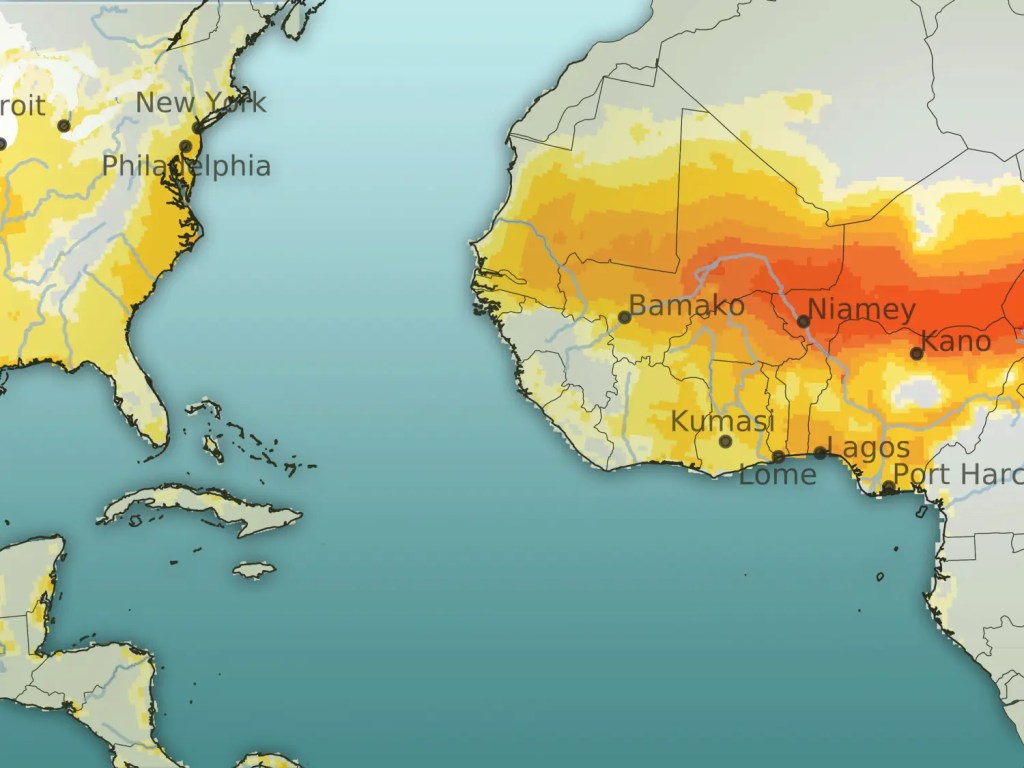
Findings from the study suggest that a 2-degree Celsius increase in global temperatures above pre-industrial levels would lead to an annual exposure of numerous hours of intolerable heat for the 2.2 billion inhabitants of Pakistan and India’s Indus River Valley, as well as the one billion individuals residing in eastern China and the 800 million people in sub-Saharan Africa.
In these areas, the predominant heatwaves would be characterized by elevated humidity levels. Heatwaves with increased humidity pose heightened risks due to the limited capacity of the air to absorb excess moisture. This, in turn, restricts the body’s ability to cool through sweat evaporation and hampers the effectiveness of certain cooling systems, such as evaporative coolers.
What’s particularly concerning, as highlighted by researchers, is that these regions predominantly fall within lower-to-middle income countries. Consequently, a significant portion of the affected populations may lack access to essential amenities like air conditioning or effective means to mitigate the adverse health impacts of prolonged exposure to extreme heat.
Should global temperatures persist in rising to 3 degrees Celsius above pre-industrial levels, the study’s findings indicate that regions such as the Eastern Seaboard and the central United States, spanning from Florida to New York and from Houston to Chicago, would start facing heat and humidity levels that exceed human tolerance. Additionally, South America and Australia would similarly contend with extreme heat under these circumstances.

As things stand, the United States is poised to encounter an uptick in heatwaves, although the researchers assert that these events are not anticipated to breach human tolerance thresholds as frequently as in other global regions. Nevertheless, it’s worth noting the researchers’ caution that such models may not comprehensively factor in the most extreme and atypical weather occurrences.
Models like these are good at predicting trends, but they do not predict specific events like the 2021 heatwave in Oregon that killed more than 700 people or London reaching 40 C last summer.
And remember, heat levels then were all below the limits of human tolerance that we identified. So, even though the United States will escape some of the worst direct effects of this warming, we will see deadly and unbearable heat more often. And — if temperatures continue to rise — we will live in a world where crops are failing and millions or billions of people are trying to migrate because their native regions are uninhabitable.
Daniel Vecellio
Lead author
A bioclimatologist who completed a postdoctoral fellowship at Penn State with Kenney
Gaining insights into human thresholds amidst future warming
In recent years, Kenney and his fellow researchers have undertaken a total of 462 distinct experiments. Their goal has been to meticulously record the thresholds at which a blend of heat, humidity, and physical exertion becomes intolerable for the human body, leading to the inability to sustain a stable core temperature.
As people get warmer, they sweat, and more blood is pumped to their skin so that they can maintain their core temperatures by losing heat to the environment.
At certain levels of heat and humidity, these adjustments are no longer sufficient, and body core temperature begins to rise. This is not an immediate threat, but it does require some form of relief. If people do not find a way to cool down within hours, it can lead to heat exhaustion, heat stroke and strain on the cardiovascular system that can lead to heart attacks in vulnerable people.
W. Larry Kenney
Professor of physiology and kinesiology, the Marie Underhill Noll Chair in Human Performance at Penn State and co-author of this new study.
In 2022, Kenney, Vecellio, and their research partners unveiled a groundbreaking revelation: the boundaries of heat and humidity tolerance in individuals are notably lower than previously conjectured.
The data collected by Kenney’s team at Penn State provided much needed empirical evidence about the human body’s ability to tolerate heat. Those studies were the foundation of these new predictions about where climate change will create conditions that humans cannot tolerate for long
Matthew Huber
Co-author
Professor of earth, atmospheric and planetary sciences at Purdue University
Following the publication of this study, Huber, who was already immersed in charting the implications of climate change, initiated discussions with Vecellio regarding a prospective collaboration. Notably, Huber had gained recognition for his widely referenced research that postulated a theoretical ceiling for human tolerance levels concerning heat and humidity.
Teaming up with Huber’s graduate student, Qinqin Kong, the research group embarked on an investigation to assess the potential impacts on populations across various global regions under different warming scenarios, ranging from a 1.5-degree Celsius increase to a 4-degree Celsius rise. The researchers emphasized that a 3-degree Celsius increase is the most likely estimate for the planet’s temperature by the year 2100 if no mitigating measures are implemented.
Around the world, official strategies for adapting to the weather focus on temperature only.
But this research shows that humid heat is going to be a much bigger threat than dry heat. Governments and policymakers need to re-evaluate the effectiveness of heat-mitigation strategies to invest in programs that will address the greatest dangers people will face.
Qinqin Kong
Ensuring safety during hot weather
The researchers underscore that irrespective of the extent of planetary warming, vigilance regarding extreme heat and humidity is paramount. Even if conditions stay within the established human tolerance thresholds, the scientists emphasize the importance of ongoing concern. In preliminary examinations of older demographic groups, Kenney observed that older adults are susceptible to heat stress and its related health effects at comparatively lower levels of heat and humidity compared to their younger counterparts.
Heat is already the weather phenomenon that kills the most people in the United States.
People should care for themselves and their neighbors — especially the elderly and sick — when heatwaves hit.
Daniel J. Vecellio
Now a postdoctoral researcher at George Mason University’s Virginia Climate Center
While the data analyzed in this study focused on the body’s core temperature, the researchers noted that during heatwaves, individuals can encounter health issues stemming from various other factors. For instance, Kenney pointed out that a significant proportion of the 739 individuals who succumbed during Chicago’s 1995 heatwave were aged over 65. They faced a multifaceted array of challenges, including elevated body temperature, cardiovascular issues, and the subsequent onset of heart attacks and other cardiovascular-related causes of death.
Anticipating what lies ahead
In order to curb the rise in temperatures, the researchers emphasize the imperative need for humans to curtail the release of greenhouse gases, with a particular focus on reducing carbon dioxide emissions stemming from the combustion of fossil fuels. Failure to implement such changes, Vecellio cautioned, will disproportionately impact middle-income and low-income nations.
To illustrate, the researchers highlighted the case of Al Hudaydah, Yemen, a bustling port city home to over 700,000 residents on the shores of the Red Sea. The study’s findings painted a stark picture: if global temperatures surge by 4 degrees Celsius, this city could confront a harrowing reality where more than 300 days annually surpass the boundaries of human tolerance. Such conditions would render it nearly uninhabitable.
The worst heat stress will occur in regions that are not wealthy and that are expected to experience rapid population growth in the coming decades.
This is true despite the fact that these nations generate far fewer greenhouse gas emissions than wealthy nations. As a result, billions of poor people will suffer, and many could die. But wealthy nations will suffer from this heat as well, and in this interconnected world, everyone can expect to be negatively affected in some way.
Matthew Huber
Co-author
Professor of earth, atmospheric and planetary sciences at Purdue University
Resources
- NEWSPAPER Wagner, A. (2023, October 9). Climate-driven extreme heat may make parts of Earth too hot for humans. Penn State University News. [Penn State University News]
- JOURNAL Vecellio, D. J., Kong, Q., Kenney, W. L., & Huber, M. (2023). Greatly enhanced risk to humans as a consequence of empirically determined lower moist heat stress tolerance. Proceedings of the National Academy of Sciences of the United States of America, 120(42). [Proceedings of the National Academy of Sciences of the United States of America]


