



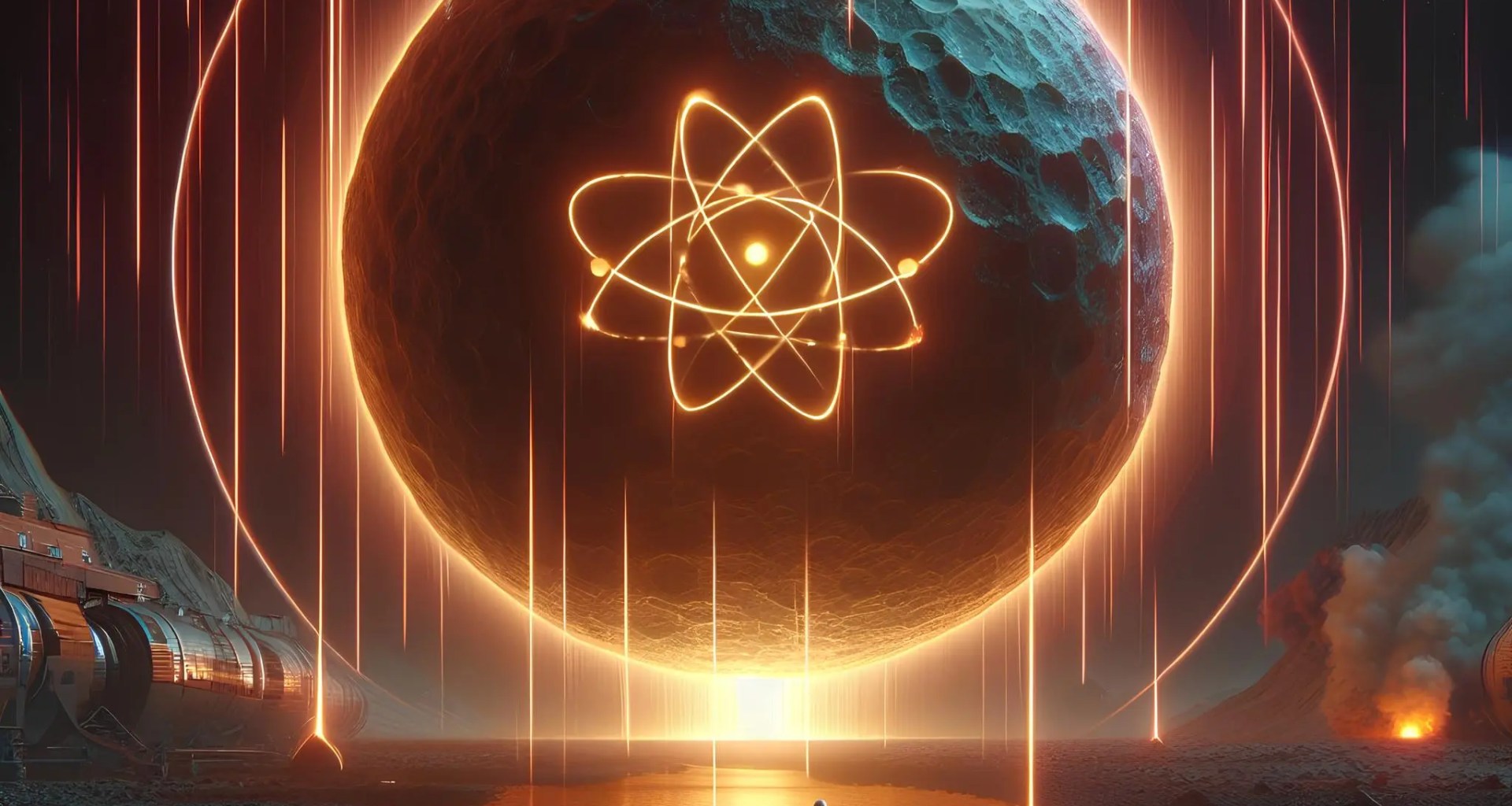
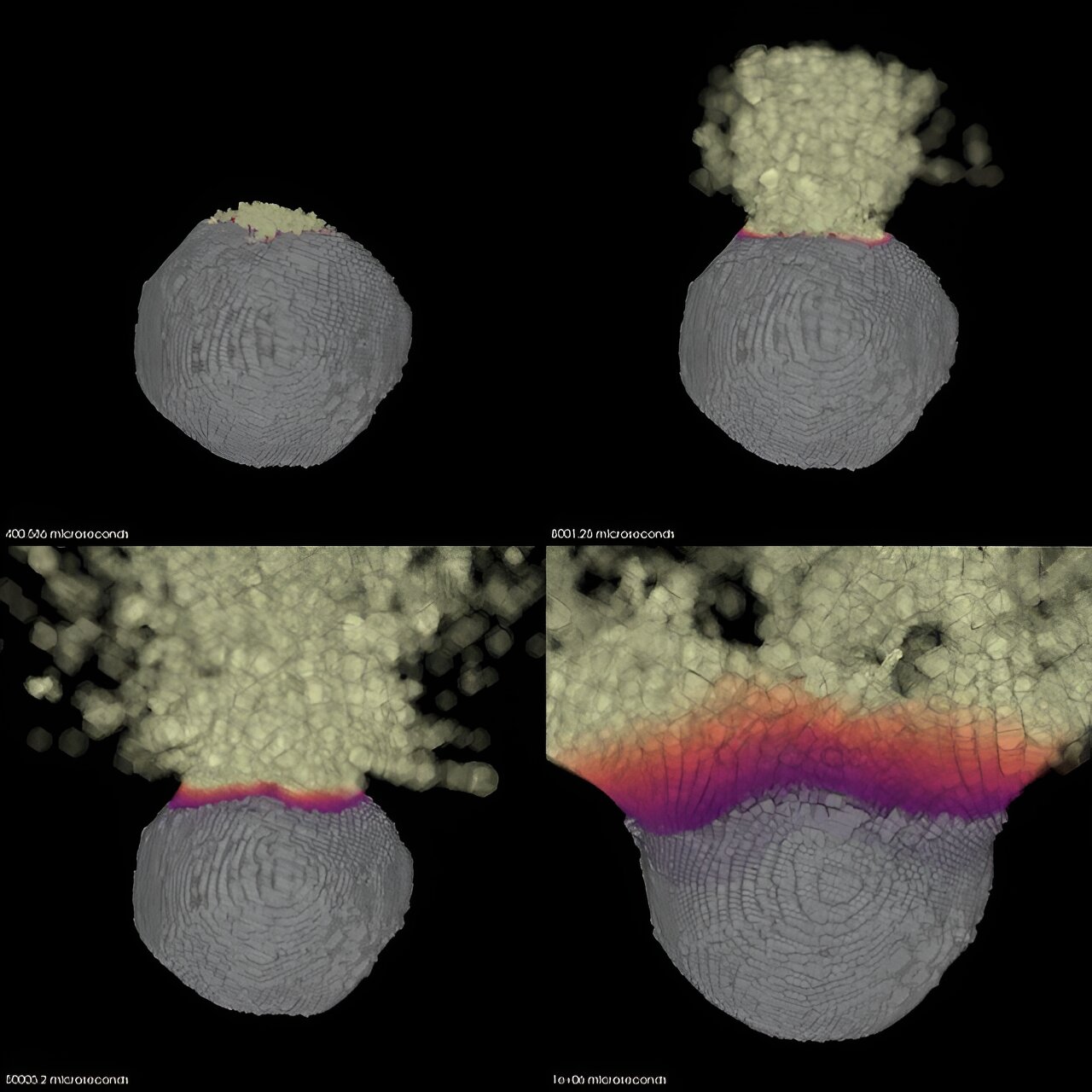
The recently published study in the Planetary Science Journal introduces a groundbreaking approach to modeling the energy deposition resulting from the impact of a nuclear device on an asteroid’s surface. This sophisticated modeling tool enhances our understanding of the intricate radiation interactions involved in nuclear deflection, shedding light on its effects on the asteroid’s surface. Additionally, it opens up new avenues for investigating the shockwave dynamics within the inner structure of the asteroid.
The significance of this model lies in its potential to build upon the insights gained from NASA’s recent Double Asteroid Redirection Test (DART) mission, conducted in September 2022. During the DART mission, a kinetic impactor was deliberately crashed into an asteroid to deliberately alter its trajectory. While kinetic impact missions have proven effective, they face limitations in terms of the mass that can be lifted to space. Consequently, scientists are actively exploring nuclear deflection as a promising alternative.
The lead researcher, LLNL physicist Mary Burkey, emphasizes the invaluable role of nuclear devices in mitigating asteroid threats. Due to their unmatched energy density per unit of mass among human technologies, nuclear devices offer a unique capability in altering the course of an asteroid. Burkey envisions a scenario where, with sufficient warning time, a nuclear device could be launched millions of miles away to intercept an approaching asteroid. Upon reaching the asteroid, the device could be strategically detonated, resulting in one of two potential outcomes: deflecting the asteroid, providing a controlled push away from Earth while keeping it intact, or disrupting the asteroid into smaller, fast-moving fragments that pose no threat to our planet.
In essence, the research underscores the potential of nuclear deflection as a sophisticated and powerful strategy to safeguard Earth from catastrophic asteroid impacts, offering a nuanced and comprehensive understanding of its dynamics and implications.

Accurately predicting the effectiveness of nuclear deflection missions is contingent on intricate multiphysics simulations, according to Burkey. These simulations, developed by LLNL, encompass a broad spectrum of physical factors, rendering them both complex and computationally intensive.
The research paper introduces a precise and efficient library of X-ray energy deposition functions, crafted using the Kull radiation-hydrodynamics code. The simulations conducted involved high-fidelity tracking of photons penetrating surfaces composed of asteroid-like materials, such as rock, iron, and ice. The model accounted for intricacies like reradiation and considered a diverse array of initial conditions, including different porosities, source spectra, radiation fluences, source durations, and angles of incidence. This comprehensive approach ensures the model’s applicability to a wide range of potential asteroid scenarios.
In the event of a real planetary defense emergency, high-fidelity simulation modeling becomes crucial in furnishing decision-makers with actionable, risk-informed information. Megan Bruck Syal, LLNL’s planetary defense project lead, underscores the importance of such modeling in preventing asteroid impacts, safeguarding essential infrastructure, and ultimately saving lives. While acknowledging the low probability of a large asteroid impact during our lifetime, Bruck Syal emphasizes that the potential consequences could be devastating, underscoring the urgency of preparedness and advanced simulation capabilities in planetary defense efforts.
Resources
- ONLINE NEWS Lawrence Livermore National Laboratory. (2023, December 19). New nuclear deflection simulations advance planetary defense against asteroid threats. Phys.org. [Phys.org]
- JOURNAL Burkey, M. T., Managan, R. A., Gentile, N. A., Bruck Syal, M., Howley, K. M., & Wasem, J. V. (2023). X-Ray Energy Deposition Model for Simulating Asteroid Response to a Nuclear Planetary Defense Mitigation Mission. The Planetary Science Journal, 4(12), 243. [The Planetary Science Journal]
Cite this page:
APA 7: TWs Editor. (2023, December 20). Simulating Nuclear Deflection: A New Advancement in Planetary Defense from Asteroid Risks. PerEXP Teamworks. [News Link]


