




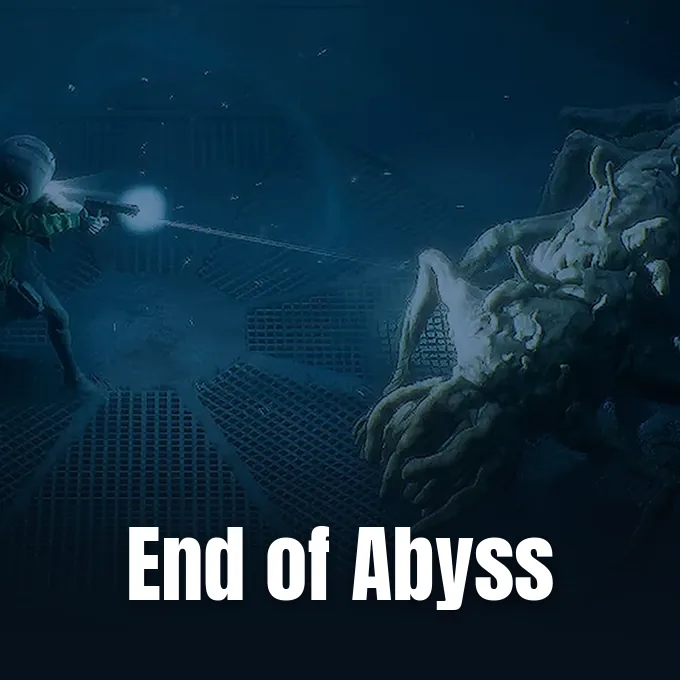
Industrial sirens echo through blue-shadowed hallways as combat technician Cel steps onto the rusted grating of an abandoned subterranean installation. Section 9 Interactive, a studio formed by former Tarsier Studios developers who built Little Nightmares, officially launched End of Abyss on October 1, 2026, published by Epic Games Publishing across PC, PlayStation 5, and Xbox Series X [3]. The release marks a gritty shift toward survival horror Metroidvania gameplay with twin-stick mechanics. Early critical reception reveals a polarizing journey where suffocating atmosphere clashes directly with punishing navigation and mechanical friction in this critical End of Abyss review roundup [1].
End of Abyss Review Unpacks Section 9 Atmosphere
Atmospheric immersion forms the undisputed foundation of the adventure from the moment players enter the eerie complex. Cel descends into the decaying facility alongside a seasoned military squad and her commanding officer, only to watch systemic catastrophe unravel across the dark corridors as violent monstrosities ambush the investigation team [4]. Concrete tunnels drip with parasitic fungal rot, while disfigured corpses of facility personnel litter the Habitation Sector [1]. Reviewers across major outlets note that the narrative relies entirely on sparse environmental clues and cryptic radio transmissions rather than traditional expository cutscenes. Section 9 lets the architecture speak for itself [2].
The storytelling approach deliberately mirrors the minimalist ambiguity seen in Little Nightmares. Robotic consoles known as Security Control Units occasionally flicker to life, transmitting synthetic instructions from an enigmatic entity that urges Cel to eradicate infected monstrosities [1]. Christian Bognar of DualShockers pointed out that while audio logs and facility notes flesh out procedural background lore, surviving non-player characters merely reiterate current objectives rather than offering answers [2]. Environmental dread anchors the narrative, yet the deliberate withholding of concrete plot stakes leaves Cel feeling like a detached observer throughout the ten-hour trek [1].
Sound design heightens this pervasive isolation. Audio engineer work fills the headphones with wet squelching, distant metallic groans, and echoing footsteps that make the underground compound feel dangerously vast [1]. Push Square noted how heavy footsteps in blue-hued darkness hint at the enormous scale of the abandoned ruins [5]. The studio delivered genuine dread.

Twin-Stick Gunplay Demands Precision and Bullet Crafting
Combat diverges sharply from traditional side-scrolling Metroidvania conventions by adopting an isometric, 360-degree twin-stick shooting model. Aiming requires absolute focus with the right analog stick as erratic Husks lurch forward unpredictably [4]. Capcom’s influence looms large over these tight confrontations. DualShockers observed that the absence of enemy health bars forces players to gauge damage through staggered animations, creating the nerve-wracking bullet economy of classic Resident Evil [2]. Cel carries infinite pistol ammo. Her base Pulse Gun fires indefinitely, but its modest stopping power cannot easily halt aggressive mobs [1].
Survival hinges on scouring the dark for heavy armaments. Cel gradually acquires the close-range Riot Breaker shotgun, an armor-piercing Security Rifle, and incendiary flamethrowers to incinerate fungal swarms [1]. In a departure from games where Final Fantasy Revelation added level boosts to eliminate grinding, Section 9 strictly demands manual resource harvesting. Players must salvage blue-glowing Fragments from metal lockers and fallen foes, hauling them back to workbench safe rooms to forge specialized munitions and craft weapon mods [4]. Workbench crafting dictates survival because high-tier ammunition remains severely restricted during major excursions [3].
Safe rooms offer shelter through pressurized pod stations that restore health, yet saving activates a severe survival tax. Every rest cycle respawns ordinary enemies throughout adjacent sectors [4]. Unlocked doors, extended bridges, and inventory upgrades stay intact, but expended shotgun shells and rifle cartridges do not return [3]. Ammo does not replenish. This loop keeps tension remarkably sharp during early hours, though repeatedly clearing identical mobs eventually grinds down patience [1].


End of Abyss Game Review Traces Metroidvania Backtracking
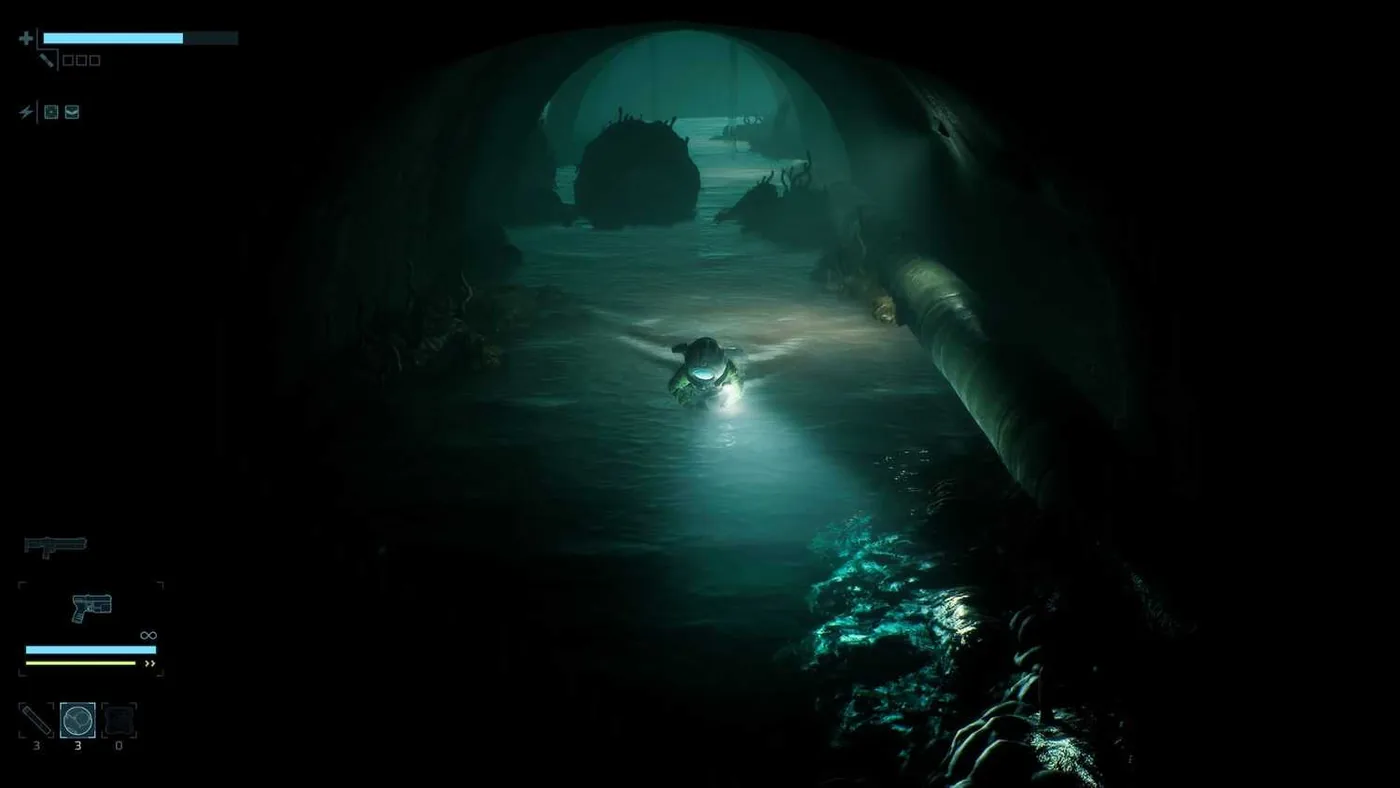
Progression follows a strict ability-gating framework embedded within a labyrinth of industrial steel and forgotten laboratories. Locked bulkheads, broken ladders, and cracked concrete partitions constantly obstruct forward movement until Cel discovers specialized tools. Explosive Charge breaches structural barricades, revealing suit modules, health canisters, and universal keys that open multiple interconnected doors across different wings [2]. Traversal expands further once Cel acquires a high-tension grappling hook, enabling swift vertical access to suspended catwalks and elevated maintenance platforms that previously loomed tantalizingly out of reach [4].
Cel relies heavily on an environmental scanner that projects luminous laser grids across dark chambers to inspect conduits and trace hidden power lines through concrete walls [4]. While the scanner locates hidden terminal nodes and concealed door switches, critics found its implementation inconsistently communicated. DualShockers reported spending three agonizing hours searching for an objective waypoint before stumbling across a tiny, unscanned ventilation shaft tucked into a shadowed wall [2]. GamesRadar+ reviewer Luke Kemp similarly missed a pale, destructible section of flooring because its subtle coloring blended invisibly into the surrounding gloom [3].
Navigation fatigue intensifies because the transit network lacks granular fast-travel points. Shuttles link broad sectors, but reaching a designated train car often requires lengthy treks through previously cleared corridors [2]. Why does exploration stumble? The map displays confusing door states and uniform gray-and-blue architecture that blurs distinctive landmarks into an indistinguishable maze [1].
Brutal Boss Arenas and Radiation Create Severe Spikes
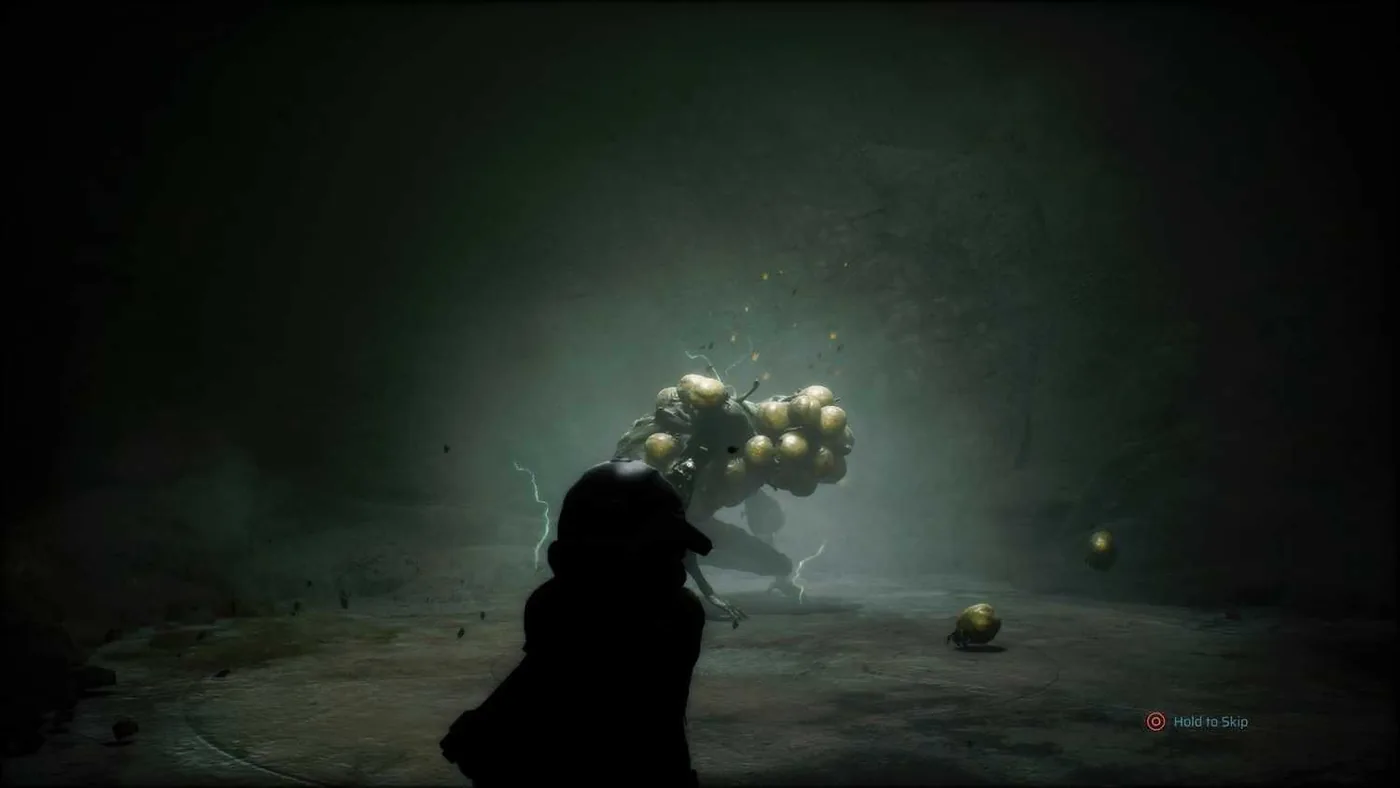
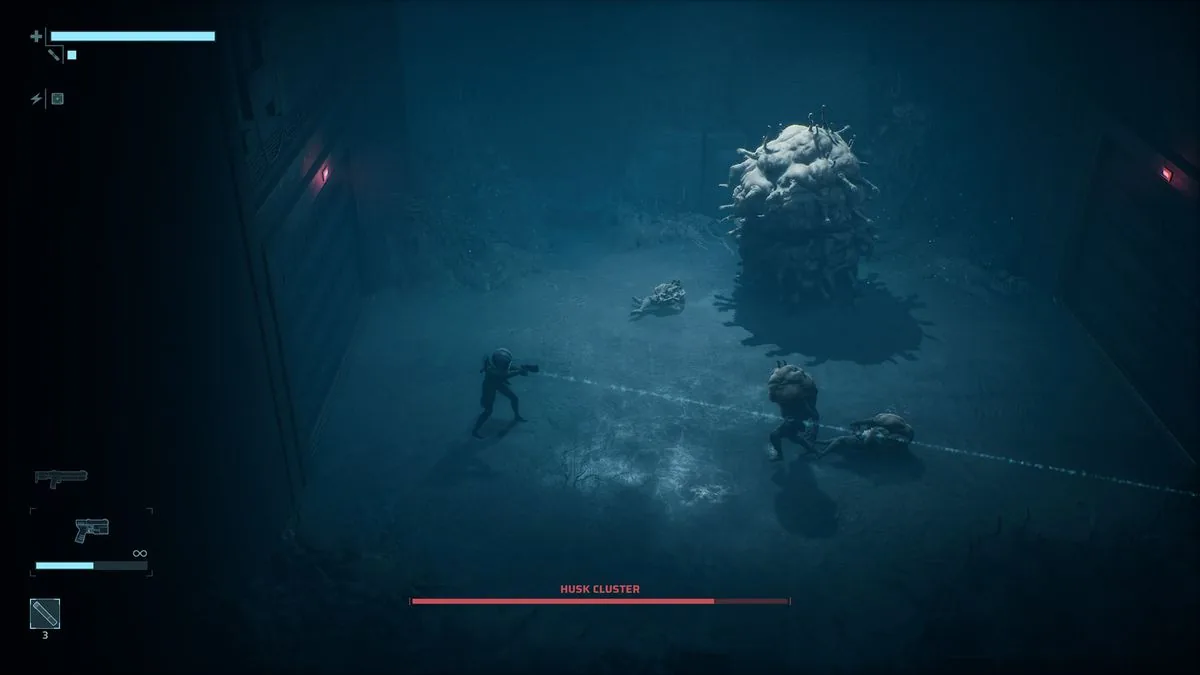
Boss encounters represent the most contentious design choice across launch assessments. Rather than focusing on one-on-one mechanical mastery, Section 9 repeatedly locks Cel into confined circular chambers filled with swarming enemy reinforcements [2]. Confrontations against the multi-limbed Husk Cluster deteriorate into chaotic skirmishes where players must constantly dodge peripheral mobs while firing potshots at the central leviathan. Kemp characterized these cramped shootouts as an exercise where “Little Nightmares meets Resident Evil, but they meet at Frustration Station” [3].
The difficulty peaks sharply when environmental hazards compound combat pressure inside the radioactive Containment Sector. Atmospheric radiation continuously depletes Cel’s health bar unless she installs a protective suit mod, yet acquiring and activating the defensive equipment involves severe procedural friction [1]. Kemp discovered that the protective modification demanded four energy points to function when his suit possessed only three, triggering hours of aimless wandering through lethal zones until finding a vital power pickup [3]. Radiation proves relentless. Meanwhile, aggressive apex predators like the long-necked Husk Latcher relentlessly rush Cel with wide-reaching claw attacks, and the burrowing Centipede Husk ambushes players from concealed arena corners [1]. Environmental hazards magnify combat chaos, forcing explorers into exhausting cycles of trial and error [3].
Failed boss attempts penalize players heavily. Losing valuable ammunition during consecutive defeats forces technicians to backtrack across previous sectors to harvest crafting fragments from respawned monsters [3].
End of Abyss PS5 Review Verdicts Balance Grit and Glitches
Technical performance presents an uneven picture across hardware platforms. Testing conducted on PlayStation 5, PC, and the handheld Xbox Ally X demonstrated stable frame rates and responsive twin-stick input responsiveness, but software stability suffered from noticeable geometry glitches. Jon Clarke of PlayDayOne reported falling completely out of world boundaries into an endless void below the map geometry, coupled with collision bugs that pinned Cel inside room assets [4]. Jesse Vitelli of IGN similarly encountered invisible barriers on maintenance ladders and elevator soft locks that erased up to fifteen minutes of progress per incident [1].
Hardware investment and campaign length also divide critical appraisal. Luke Kemp logged 18 hours. While a streamlined speedrun to the final boss takes roughly eight to ten hours, thorough completionists willing to uncover secret bosses and optional weaponry invest nearly double that time on PlayStation 5. Tarsier Studios released their own competing horror adventure Reanimal earlier in 2026, creating immediate artistic comparisons with Section 9’s debut project [3]. Technical polish requires incoming patches, yet the atmospheric craftsmanship shows remarkable creative promise for the fledgling studio [4].
The ultimate consensus balances authentic atmospheric brilliance against rough mechanical execution. Players seeking an uncompromising survival horror Metroidvania with dark industrial aesthetics will discover an unforgettable descent, provided they possess the patience to overcome brutal navigation spikes and punishing arena encounters [2]. End of Abyss establishes a haunting world that demands cautious footing and sharp marksmanship from start to finish [4].
- ONLINE NEWS Vitelli, J. (2026, September 30). End of Abyss Review. IGN. [Article Link]
- ONLINE NEWS Bognar, C. (2026, September 30). End of Abyss Review: A Memorable Metroidvania That Sometimes Gets in Its Own Way. DualShockers. [Article Link]
- ONLINE NEWS Kemp, L. (2026, September 30). End of Abyss review: “Little Nightmares meets Resident Evil, but they meet at Frustration Station”. GamesRadar+. [Article Link]
- WEBSITE Clarke, J. (2026, September 30). End of Abyss | Review. PlayDayOne. [Article Link]
- ONLINE NEWS Push Square. (2026, September 30). Review: End of Abyss (PS5) – This Delectably Dark Metroidvania Forces You to Look Closer. Push Square. [Article Link]


