



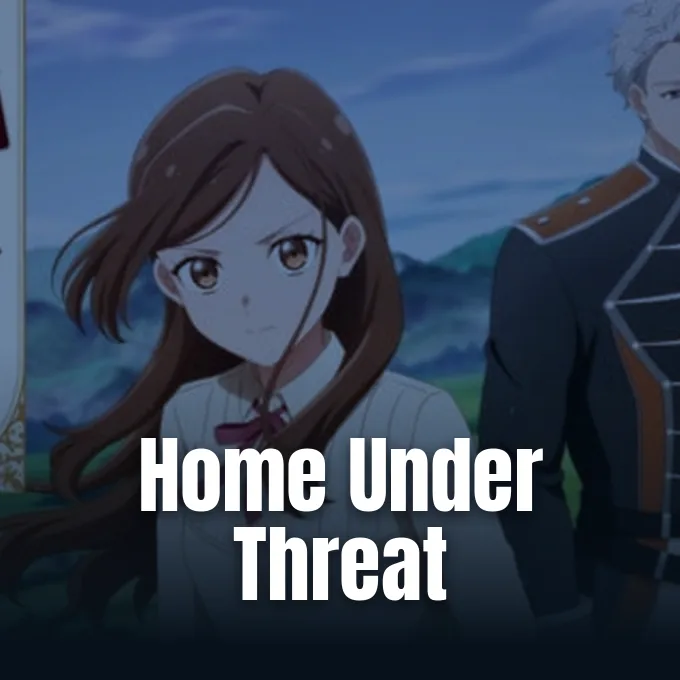
Victoria sets traps for intruders even as she tries to build a home in Victoria of Many Faces. Caitlin Moore’s September 11 review for Anime News Network follows that uneasy transition from secret agent to adoptive mother, awarding the subtitled anime a B+ overall. Moore praises its treatment of trauma and Chika Anzai’s lead performance, while finding that Studio DEEN’s action animation struggles to keep pace with the character writing. [1]
Victoria of Many Faces Earns B+
Moore gives the story a B+, too. Animation receives C+; music takes B. Her review describes a series whose strongest material emerges when its characters try to trust one another. Victoria’s former life threatens their attempts at domestic comfort. The recommendation comes with reservations about inconsistent visuals, some overly sweet writing and a score that repeats itself. These are one critic’s assessments, rather than an aggregate verdict. [1] PerEXP Teamworks’ coverage of divided reactions to Marvel’s Wolverine concerns a game. Here, the focus is Caitlin Moore’s assessment of a spy’s difficult transition into family life.
Chloe crosses into the Kingdom of Ashbury and begins calling herself Victoria Sellers. She hopes ordinary work and a new identity will give her room to settle down. Nonna needs a home. Victoria takes in the abandoned girl, then attracts the attention of Jeffrey Asher, a guard captain of noble birth. Each relationship gives her another reason to stay, even as her training keeps her ready to disappear. Moore finds the resulting family bond convincing after nine episodes, despite reservations about the early pacing and some plot threads that fail to develop. Her account places the appeal in that gradual attachment, rather than in a succession of espionage victories. MyAnimeList lists the adaptation as Tefuda ga Oome no Victoria and classifies its genre as romance, with childcare as its theme. [3]
Moore praises “good storytelling and strong character writing.” Her B+ recommendation comes with sharper reservations about the animation. [1]

Chloe’s Habits Survive the Escape
Victoria’s new name cannot erase her reflexes. Moore describes her preparations to detect intruders and her secret encounter with an assassin. Victoria walks off her bloodlust before returning home. Her neighbors notice her unusual skills. A modest maid should not possess that training. In Ashbury, the people around her recognize when her abilities exceed the ordinary work she takes on. Anonymity becomes harder to sustain.
Moore initially worries about the pacing. By the second episode, Victoria’s effortless competence and the kindly aristocrats around her give Caitlin Moore pause. She wonders how much the story will actually move. Once the plot develops, however, Victoria’s desire for stability collides with her readiness to flee, giving the gentler scenes a risk that the opening episodes had not fully established. The old intelligence agency remains a threat: Victoria knows enough to make a clean departure difficult.
Nonna could lose her new home if Victoria has to run again. Moore identifies that pressure as a source of the show’s intrigue, with affection growing while the possibility of flight persists. Syuu’s story keeps both demands active in her reading. Victoria wants the child and Jeff close, yet the protective habits that helped her survive also keep her watching for the next threat.


Romance Grows Around Old Wounds
Jeffrey Asher brings romance into Victoria of Many Faces. The anime develops his attraction to Victoria. Moore highlights key scenes in their relationship while tracing the insecurity that complicates his feelings for her. He doubts his own dependability. Her independence appeals to him partly for that reason, giving their courtship an emotional obstacle even as they become closer. The official character profiles also describe Jeffrey Asher’s attraction to Victoria and the wounded past shared by the central trio. [1][2]
Nonna has her own recovery to make. Moore describes Nonna slowly recovering the freedom to enjoy childhood. She credits original creator Syuu and the adaptation’s team for remembering that history. Jeff’s affection and Victoria’s care do not instantly resolve what the three have experienced. Their gradual closeness supplies much of the emotional payoff that leads Moore to recommend the series despite its uneven execution. Syuu wrote the light novels, which Media Factory publishes under MF Books; Nanna Fujimi illustrated the early volumes. Komo Ushino draws the manga adaptation for Kadokawa’s ComicWalker. [4]

Moore still finds some scenes too sweet. A few story threads also lead nowhere, tempering her praise for the writing without undoing her response to the family the characters build. Her comparison is Snow White with the Red Hair: she recalls frustration with how readily Shirayuki settled into a new life there. Victoria’s difficulty making the same kind of transition gives this story a different appeal for the critic. The voice performances make the characters’ hesitation audible.
Anzai Carries Victoria’s Uneasy Calm
Chika Anzai earns Moore’s strongest acting praise. As Victoria, she conveys an adult woman’s wish for peace together with the difficulty of accepting it. Anzai lends detail to emotions the script sometimes handles less subtly. Moore highlights Anzai among the production’s strengths. Yōhei Azakami voices Jeff (Jeffrey Asher), combining his attraction to Victoria with sadness and self-directed anger rooted in his past. Moore credits the actors with sustaining scenes when the writing falters. [1][2]
Shion Wakayama voices Nonna. Moore rates her work lowest among the central trio, while acknowledging that the child role gives her less material to use. Moore praises the actors’ effort even where Naohiro Fukushima’s screenplay offers them uneven opportunities. Her examples of successful acting concentrate on Anzai and Azakami, whose characters’ conflicting desires demand more emotional variation.
Naohiro Fukushima handles series composition (the adaptation’s overall script structure). Nobukage Kimura directs. The official Victoria of Many Faces website confirms their credits and names Studio DEEN as the animation studio. [2] Production roles also shape PerEXP Teamworks’ coverage of the studios and staff behind the Doukyo Shiteiru Kensei anime. Here, Moore finds that Kimura’s staging can support emotional exchanges even when the animation gives him less room to work. Fights expose the limitations. [1]
Action Exposes the Production’s Limits
Kimura’s relationship scenes fare better than the fights. Moore praises his arrangement of light, characters and space, noting his previous work on Showa Genroku Rakugo Shinjuu and Mushi-Shi. When movement accelerates, she reports quick cuts that sidestep difficult animation, impacts without convincing weight and characters drifting off-model (away from their established designs). The action exposes weaknesses that quieter staging can accommodate. Her review describes variation between episodes, rather than a production that fails consistently.
Moe Hyūga supplies the music. Gentle strings and piano support moments of emotional release, Moore writes. Repetition reduces their effect, and the score struggles to match the characters’ darker feelings. Mina Ōsawa handles character design. Satoshi Yano directs sound. The official credits confirm all three roles. [2] Moore’s B music grade and C+ animation grade reflect distinct reservations about how the production supports a story she otherwise values, especially when it moves from reassurance into danger. [1] Animemanga also credits Si Man Wei as art director and Ren Zhou Li as director of photography. [5]
Moore’s verdict on Victoria of Many Faces is a qualified recommendation: the family drama and performances earn her praise, while the action and repetitive score draw criticism. Her account covers nine episodes. The Season 1 label does not establish whether the entire anime has finished, and the review supplies neither a complete episode count nor a finale date. Her assessment reaches the point where Victoria’s attachment to Nonna and Jeff feels earned. Moore’s account does not assess subsequent material. [1]
- ONLINE NEWS Moore, C. (2026, September 11). Victoria of Many Faces season 1 anime series review. Anime News Network. [Article Link]
- WEBSITE Victoria of Many Faces. (n.d.). TV anime official website: Introduction, characters, staff & cast. [Article Link]
- WEBSITE MyAnimeList. (n.d.). Tefuda ga Oome no Victoria. Retrieved September 12, 2026. [Article Link]
- WEBSITE Wikipedia contributors. (n.d.). Victoria of Many Faces. Wikipedia. Retrieved September 12, 2026. [Article Link]
- WEBSITE Animemanga. (n.d.). Victoria of Many Faces. Retrieved September 12, 2026. [Article Link]


