






Google Labs introduced Tabletop on November 11, 2026, opening a waitlist for an experimental Google web environment where groups build custom planning tools together in real time. Google Labs design and engineering lead Roman Nurik designed the tool so friends, families, and clubs can assemble shared planning hubs from simple text prompts and starter templates. Participants add web links, uploaded files, and raw notes into a common canvas, then call on an assistant to generate usable boards. Instead of passing around static documents or copying lists back and forth between chat windows, groups collaborate inside a single shared web interface that everyone edits live. Google Tabletop brings generative software out of solo chats and into shared group boards [1].
How Google Tabletop Works
The core setup of Google Tabletop centers on an open canvas where anyone with a link can add content and ask for adjustments. Ana Maria Constantin of The Next Web reported that Google Labs designed the workspace so groups can drop reference files, web links, and schedule ideas into one central hub before asking the assistant to organize them into interactive modules [2]. The board updates live [1].
Roman Nurik outlined the generation loop in Google’s product announcement, showing how casual prompts turn raw files into structured interactives. “Just add in your links, files and ideas, then prompt @tabletop — or pick a starter template — to generate custom interactive trip itineraries, dinner polls, expense splitters and tournament brackets,” Nurik said [1]. Starter templates offer an easy entry point for people who don’t want to write prompts from scratch. Yash Thakker of explainx.ai observed that starter templates lower the barrier for mixed-skill groups, preventing blank-page frustration when friends first open an unfamiliar canvas together [5]. Once a space is ready, organizers share a single link across WhatsApp, Discord, or Messages [1].
Anyone with the invite link enters the same live space without downloading software. Google compares this shared editing environment to working inside a collaborative Google Doc, where changes, schedule votes, and expense splits appear across every participant’s screen at the same time [4]. Edits sync live [2].
Interactive Planning Tools
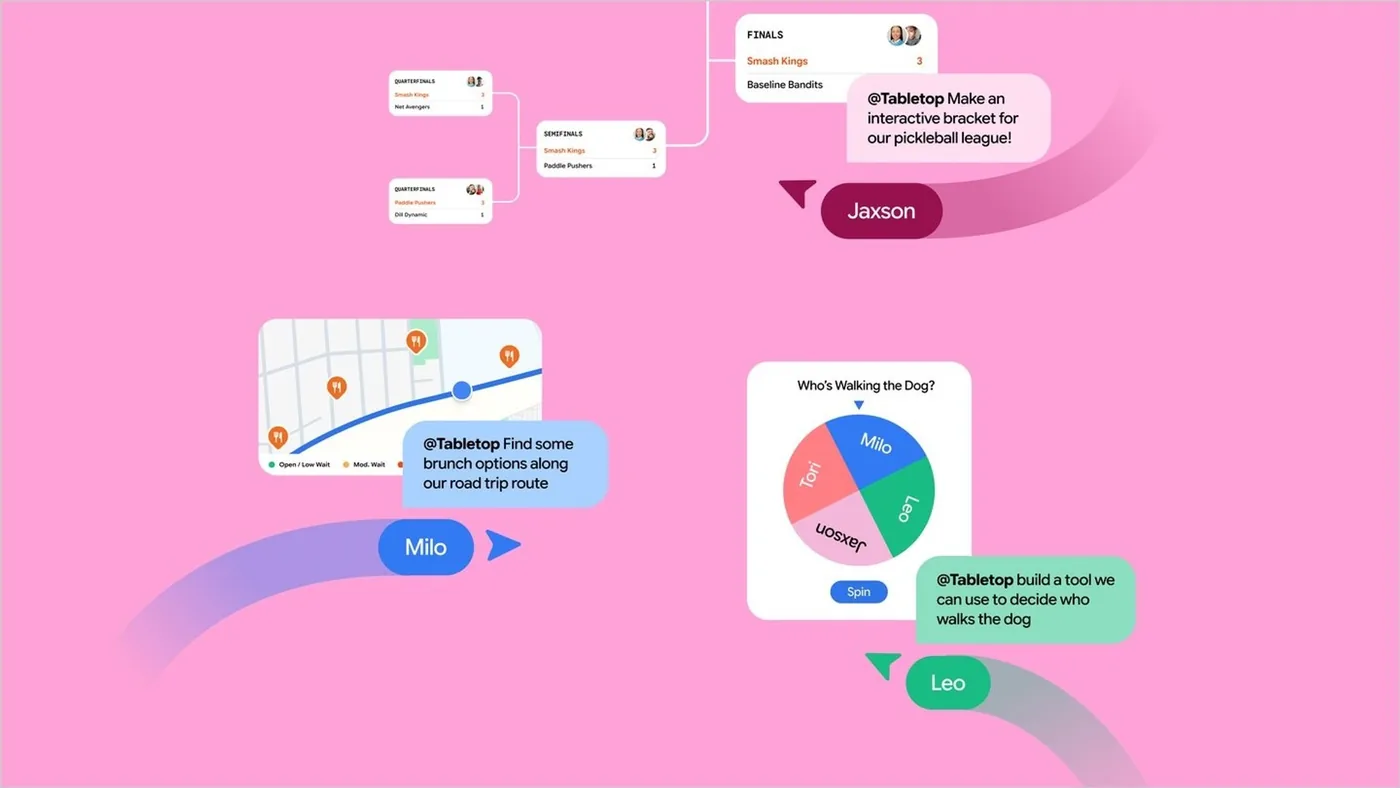
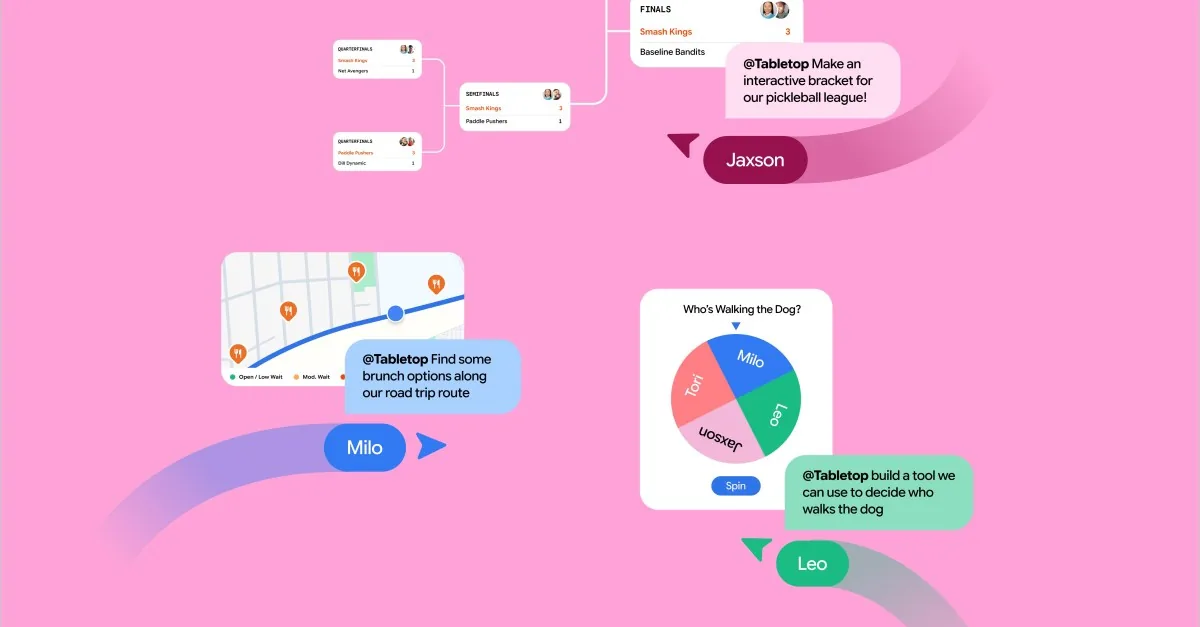
Google’s launch materials present several concrete use cases that show how Tabletop adapts to different types of outings. A road-trip board brings together route planning, member votes on roadside stops, shared budget splitting, and a spinning wheel that picks a dinner spot. Recreational sports leagues can set up live rosters, match brackets, uniform shirt polls, and simple team mini-games, while wedding organizers can build interactive seating charts where planners drag digital guest badges between tables. The layout visualizes choices instantly. Those tools turn loose suggestions into visible choices that everyone in the group can review at any moment [4].
Tabletop also handles daily home routines and playful diversions. A shared chore tracker can turn home cleaning into a game with point bounties, streak multipliers, and a common reward. In another example from Google, a standard paddle game becomes Pickle Pong, replacing the ball with a bouncing pickle [2].
Community projects and study sessions can also use the shared layout. In a volunteer beach cleanup example described by Jonas Reeve of Unite.AI, the board adds an interactive tide timeline so participants can pick shifts around changing water [4]. Students can organize exam review guides or split supply shopping for school projects. Jess Weatherbed of The Verge said the tool lets groups vibecode personalized trackers simply by describing what they need, presenting an informal alternative to rigid workplace software [3].

Live Revision Workflow
While altering a standard spreadsheet or dinner poll often forces organizers to rebuild their files from scratch, Tabletop lets participants @-mention the assistant to modify existing widgets without wiping out earlier group entries. If a rec league expands from eight teams to twelve, a single prompt redraws tournament brackets and shifts seeds. Earlier match scores remain untouched. If bad weather moves an outdoor party indoors, members can ask the assistant to replace field games with trivia while keeping guest RSVPs completely intact. This live revision workflow keeps tools aligned with changing plans [4].
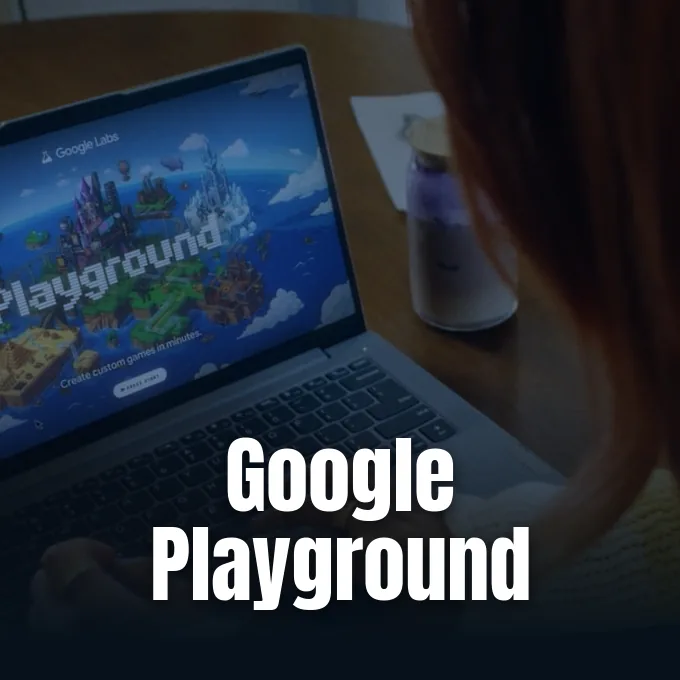
Google previously explored prompt-driven tool creation in its Playground for prompt-based game creation, which tested how models build interactive web games. While Playground centered on solo experiments, Tabletop expands that logic to multi-user environments where everyone edits widgets together [4]. The canvas keeps shared state visible to every member.
Allowing several people to edit an active layout brings up practical questions about state management. Yash Thakker pointed out that Tabletop encounters multi-user coordination issues similar to those evaluated in Anthropic’s Worse Together study, where multiple editors sharing one workspace can cause conflicting updates. When two users prompt the tool at the same instant, the system needs clear rules to decide which prompt wins. Google hasn’t published details on its conflict resolution methods, but keeping prompts visible helps participants stay coordinated [5].
Google Tabletop Access Rules
Testing is currently open only to adults in the United States. Google opened an invite-only waitlist on November 11, 2026, at labs.google/tabletop, admitting new users in weekly waves. Testers must be at least 18 years old (18+) to join the early preview [1].
Jess Weatherbed of The Verge pointed out that the age cutoff creates an interesting contradiction, since many demonstrated activities involve family life and youth recreation. Because chore tracking, sports carpools, and school schedules center on children, keeping minors off the preview restricts its most compelling family uses, prompting Weatherbed to suggest that the age gate may simply serve as a temporary safeguard while Google tests link moderation. Anyone with a link can prompt the assistant. Moderation controls must handle varied inputs from casual members. Google hasn’t said when people outside the United States or younger users will get access to the preview [3].
Google has not disclosed which underlying AI model powers Google Tabletop, nor has it published details on data retention or enterprise admin controls. Yash Thakker advised early testers to treat boards as experimental consumer surfaces rather than hubs for private files [5]. Google Labs projects sometimes graduate into broader products, just as NotebookLM became Gemini Notebook this year [2]. Successful concepts may eventually merge into Google Workspace [5].

Shared Spaces Versus Work Apps
While Tabletop shares visual design cues with project management platforms (such as Asana and Monday), its structure focuses squarely on casual personal gatherings rather than business hierarchies [3]. Standard office tools rely on rigid tables, formal permissions, and assigned tasks that can feel heavy for weekend trips. Tabletop strips away administrative bloat. Meanwhile, competing technology companies are building multi-user artificial intelligence environments, with OpenAI introducing collaborative site editing for ChatGPT and Slack letting teams run AI agents inside chat channels [2, 5]. Google also opened Google Play to AI-built applications [2].
Meta is testing similar concepts. The company piloted Muse Spaces for in-app mini-apps, examining how small groups interact with focused artificial intelligence assistants in real time. By grounding Tabletop in user-supplied links, flight confirmations, and notes, Google Labs prevents generative models from hallucinating false venue locations or inaccurate travel schedules [5].
Newsroom America reported that Google will use the waitlist period to evaluate whether prompt-driven canvases can solve messy group coordination troubles [6]. When travel plans shift without warning, chaotic message threads and static spreadsheets leave people confused. Google Labs offers a flexible middle ground between disorganized group texts and rigid corporate trackers [1]. Early feedback from US participants will indicate whether this collaborative format becomes a standard part of personal planning [6].
- PRESS RELEASE Nurik, R. (2026, November 11). Try Tabletop: Customizable, collaborative spaces for groups to plan, play and do more together. Google. [Article Link]
- ONLINE NEWS Constantin, A. M. (2026, November 11). Google’s Tabletop lets groups build AI planning tools together. The Next Web. [Article Link]
- ONLINE NEWS Weatherbed, J. (2026, November 11). Google’s Tabletop AI experiment lets you build custom collaboration apps. The Verge. [Article Link]
- ONLINE NEWS Reeve, J. (2026, November 11). Google Introduces Tabletop for Building Collaborative AI Spaces. Unite.AI. [Article Link]
- WEBSITE Thakker, Y. (2026, November 11). Google Tabletop: Gemini Group Spaces (Waitlist). explainx.ai Blog. [Article Link]
- ONLINE NEWS Newsroom America. (2026, November 11). Google Labs Launches Tabletop, a Real-Time Collaborative Space for Group Planning. Newsroom America. [Article Link]


