





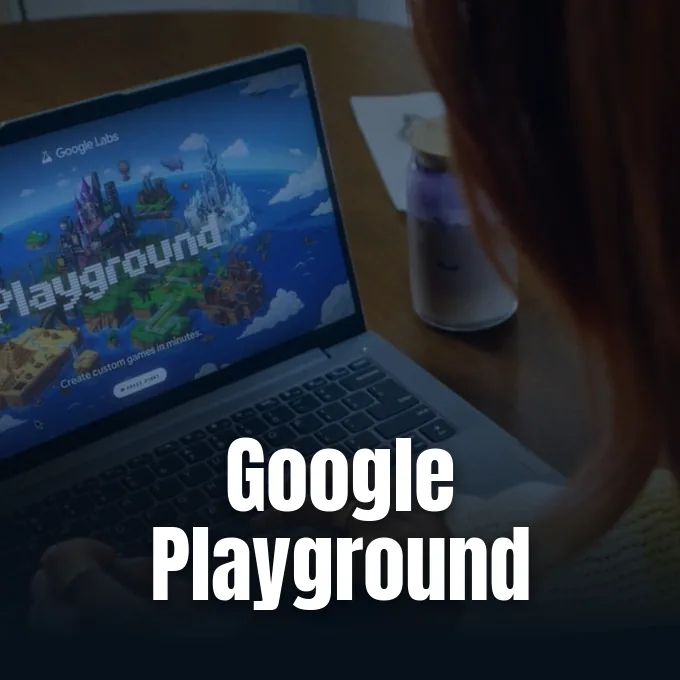
Google launched Google Playground on Tuesday, an experimental browser-based gaming platform that lets people make, test, and share custom games by typing simple text prompts [1, 3]. The software runs directly in web browsers on laptops and mobile phones. While US players aged 18 and older can try the creation tools today, Google plans to add Unity Spark later this year for creators who want deeper 3D features [1, 2].
How Google Playground Builds Games from Text
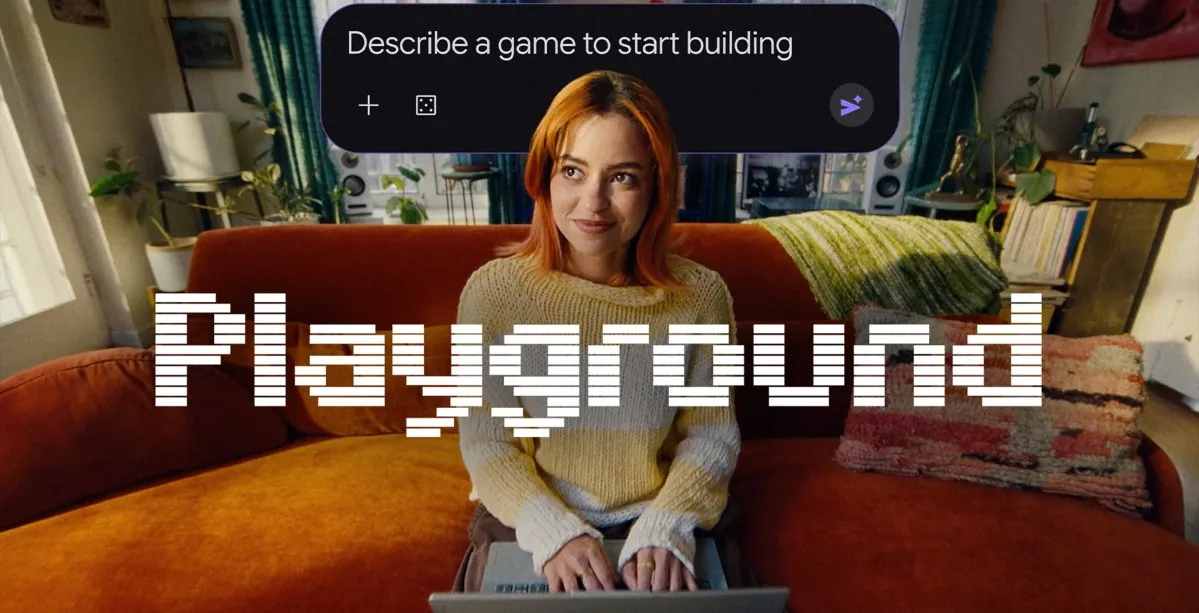
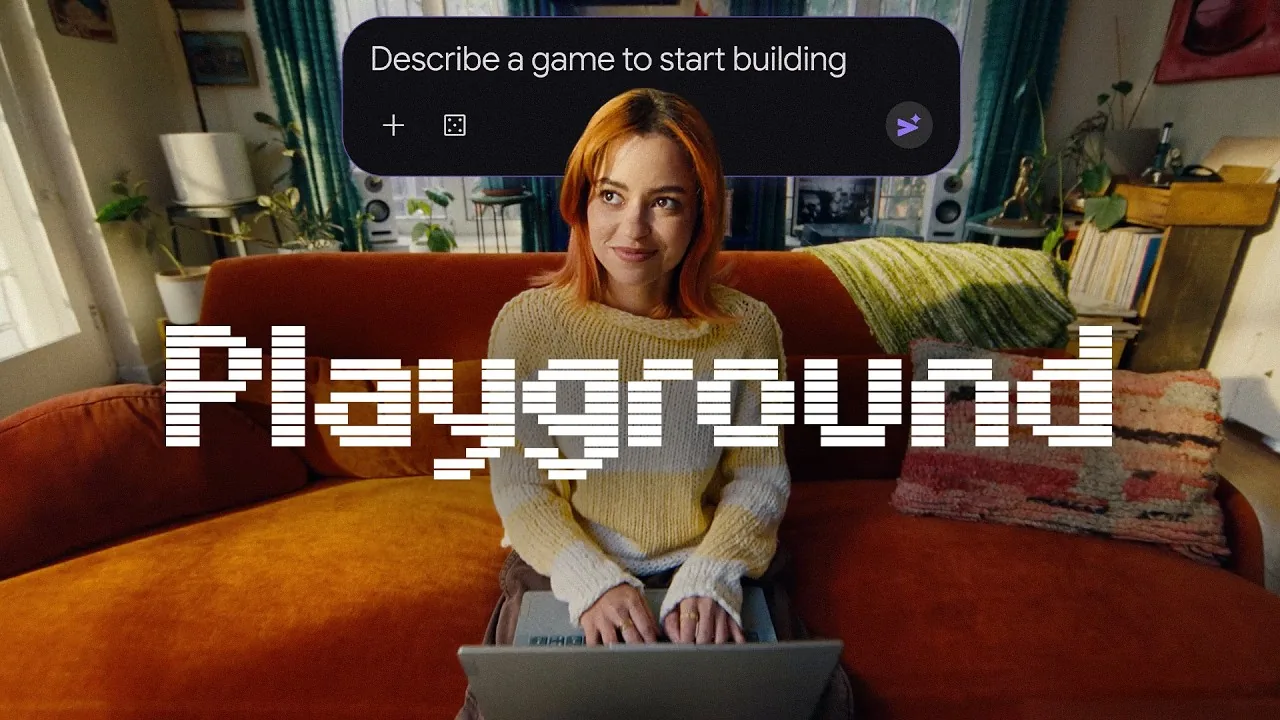
The system operates in web browsers. Creators can start a project from a blank screen, remix starter templates provided by Google, or use guided prompts to shape basic movement mechanics, world physics, and visual aesthetics directly within the chat window [1]. Because it’s built on generative AI tools, the platform acts like an assistant taking creative instructions [3].
The system updates the game world immediately inside the active chat window. If a creator wants to change gravity, rewrite winning conditions, swap character skins, or alter terrain textures, they just ask the software to apply those edits [1]. In an announcement statement, the company explained, “With Playground’s conversational interface, users can create custom games by typing what they want, remixing starter prompts or getting guided support to help them share their creativity with the world” [3]. That hands-on feedback loop means users don’t have to pause their game [1]. A spokesperson for Google described Playground as an “experimental gaming platform” designed so anyone can build games without coding experience [3].
Google also puts players in charge of creative direction during development. As the company stated, “Essentially acting as a director, users can refine the rules with prompts, customize characters and tweak the environment until it’s what they envision. And since Playground is browser-based, games are playable across phones and laptops”. Both Bryant Francis at Game Developer and Isa Muhammad at PocketGamer.biz covered the Tuesday announcement [1, 3].
Browser Access and Community Gallery Features
Because Google Playground runs inside web browsers, players don’t need local installations. Once someone finishes a prototype, they can keep the game private, share it with friends through a direct web link, or publish it to the Playground Explore gallery [1, 2]. Neil Long of Mobilegamer.biz reported that games shared to the gallery run on phones and computers [2].
Players can log into the service with an existing Google Play Games profile. Selected genres on the service support multiplayer gameplay and real-time scoreboards, giving players a way to compete against friends online while tracking their favorite creators in the community gallery [1, 2]. Google uses player ratings and session activity to surface titles, leaning on recommendation algorithms to pick projects that feel “fresh, creative, and fun”. Published games undergo safety screening aligned with official Google community rules. Players can submit direct reports if they spot inappropriate content, and users can’t upload projects that break community guidelines without facing review or removal from the gallery [1, 2].
Rollout access remains limited in the US. The creation tools launched on Wednesday exclusively for US residents who are 18 and above, with creation access tiers tied to Google One subscription packages [1, 2]. Google hasn’t shared a launch calendar for regions outside the United States yet. The company confirmed that Google One subscribers will soon get access as server capacity grows [2].



What Is the Google Playground Game Interface?
The Google Playground game interface relies on a prompt-first workflow [1, 3]. Instead of dragging physics nodes across a visual editor or writing scripts in C#, creators simply describe gameplay rules and object behaviors in normal conversational English. If a creator wants bouncy floors or low gravity on a moon level, they type that exact request [1].
Can text prompts completely replace standard game coding for complex titles? Industry creators don’t think so, and many developers still harbor serious concerns about generative AI in gaming. Bryant Francis at Game Developer noted that while veteran developers and curious newcomers are both testing Google Playground, many in the community question the long-term impact on job security, studio budgets, and the broader creative craft. Google positions the platform as a lightweight playground for quick prototypes and casual experiments. Because the technology is in its early stages, developers view it as an experimental tool rather than a practical substitute for full-scale commercial game development pipelines [3].
Google’s prompt-based gaming tools connect to a wider software strategy [1, 3]. That design pattern also appeared in developer tools like the Google Home MCP server for automated AI agent control, showing how conversational models handle complex commands. In Playground, that same philosophy lets players test interactive game mechanics without writing code, giving everyday web users an approachable way to experiment with software creation [1, 3].
Unity Spark Expands Google Playground AI Capabilities
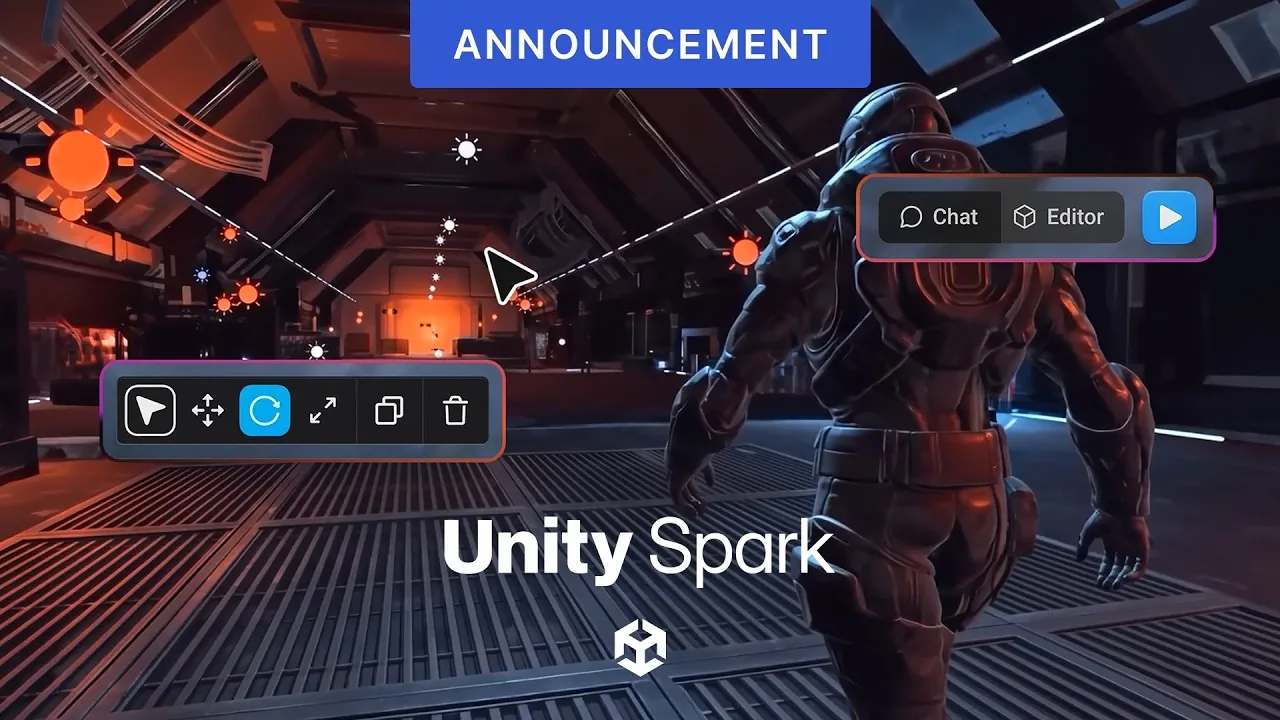
Unity announced a major collaboration [1, 2]. Together with the Playground debut, Unity introduced Unity Spark, a brand-new creation tool built specifically to connect with Google Playground AI workflows [1, 3]. Video Games Chronicle reported that this advanced setup will let creators generate far more complex games than standard browser prompts allow on their own [4].
Google explained that the collaboration with Unity unlocks advanced physics, richer visual assets, and “the flexibility of the Unity runtime”. Creators can start a project by typing a simple idea into Google Playground, and then migrate their work into Unity Spark to fine-tune lighting and camera behavior. Unity Spark is currently in testing across private developer groups. PocketGamer.biz reported that a closed beta opens soon, with a broader commercial launch scheduled to arrive later this year. That setup means creators who outgrow basic prompt generation won’t hit an immediate wall when they decide to build more immersive experiences with Unity [1, 2].
By linking web prompts to the Unity engine, Google bridges two distinct ecosystems [2, 3]. Novice creators can test ideas in their browser, while experienced developers can use text prompts to speed up early prototyping [3]. Shacknews noted that prompt-based generation could change how small teams build interactive demos, though adoption will depend on how cleanly the Unity runtime handles user inputs [5]. It’s a hybrid model that blends conversational prompts with established game tech [2, 3].
Market Competition and Broader Tech Industry Reactions
Google Playground follows the foundation Google laid with Project Genie. Released back in January, Project Genie showed that generative models could create interactive, playable game worlds directly from image and text prompts. When Google first revealed that project in January, the demo caused shares of major gaming companies like Roblox, Unity, and Take-Two to tumble [2].
Other technology giants are pursuing similar browser and social gaming experiments. Meta recently announced Horizon Create under its Horizon brand, designing a system that lets users build custom games using text prompts and publish them across Facebook and Instagram. Horizon Create lacks a release date. Meanwhile, Google-owned YouTube has also been expanding its web game footprint, bringing its YouTube Playables library of simple browser games to over 50 markets worldwide. These competing projects show that major web platforms view prompt-assisted game creation as an active testing ground for engaging mobile and desktop players without requiring app downloads [2].
These parallel moves show how major platforms view prompt-assisted game creation as a new battleground. For Google, Google Playground offers an experimental testbed where it can gather feedback on how players interact with prompt-generated games while testing server loads under thousands of browser sessions [2, 3]. Whether casual players embrace browser-based AI games over established social platforms will become clearer as Google expands access beyond its US launch group. American players with a Google account can jump into the browser sandbox to test their ideas today [1, 2].
- ONLINE NEWS Muhammad, I. (2026, October 7). Google launches Playground for prompt-based game creation. PocketGamer.biz. [Article Link]
- ONLINE NEWS Long, N. (2026, October 7). Google reveals Playground, its AI-powered game-making platform. Mobilegamer.biz. [Article Link]
- ONLINE NEWS Francis, B. (2026, October 6). Google Playground is an ‘experimental’ AI game platform. Game Developer. [Article Link]
- ONLINE NEWS Video Games Chronicle. (2026, October 7). Google officially reveals AI game-creation platform, Playground. Video Games Chronicle. [Article Link]
- ONLINE NEWS Shacknews. (2026, October 7). Google announces Playground, an AI game generation platform. Shacknews. [Article Link]


