





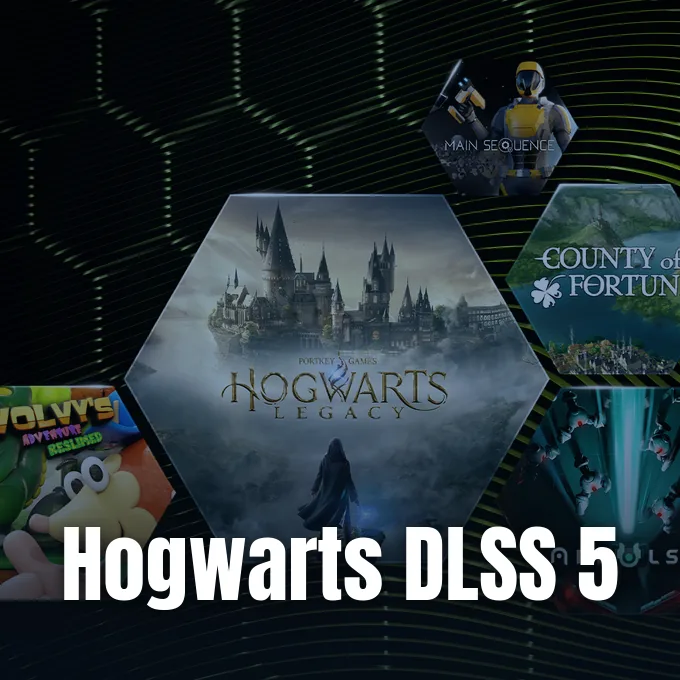
Warner Bros. Games and Avalanche Software rolled out the Hogwarts Legacy DLSS 5 update under the Portkey Games label, introducing generative neural rendering to PC and GeForce NOW [2]. The release follows months of debate after Nvidia first demonstrated DLSS 5 at a controversial tech showcase in March. Rather than altering familiar facial geometry, the new integration refines ambient lighting and dark shadow contrast throughout the Scottish highlands surrounding Hogwarts School of Witchcraft and Wizardry [1].
Hogwarts Legacy DLSS 5 Brings Restrained Visuals
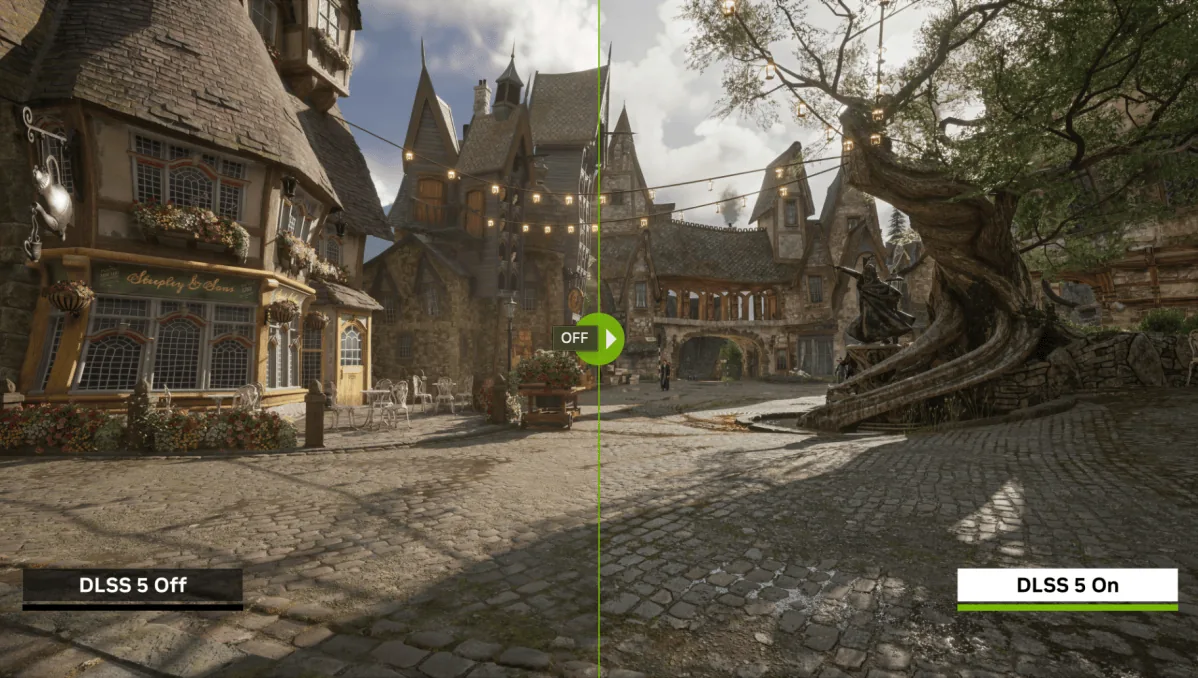
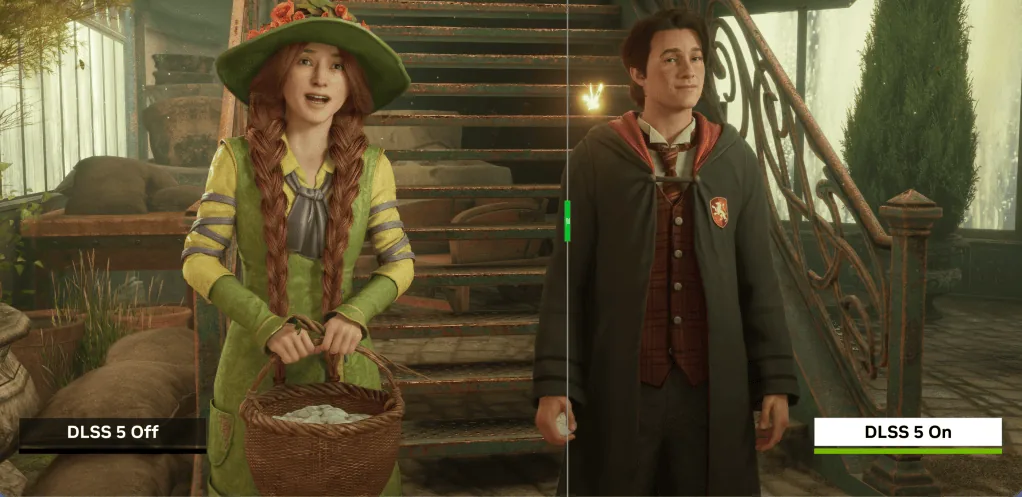
Nvidia released official comparison screenshots focusing on the village of Hogsmeade. Weathered roof tiles show green moss patches, while roadside shrubs cast convincing shadows across cobbled stone pathways. Stonework gains tangible visual depth [1]. The neural network reconstructs these surface textures without altering the underlying 3D geometry created by Avalanche Software for the original console and PC release [2].
Character models avoid the heavy alterations that caused player pushback during the March preview. Early demonstrations drew sharp criticism because AI faces appeared slick and unnatural. As Brad Chacos reported for PCWorld, critics complained that characters in that March video looked “like they’ve been passed through a yassification filter”. Avalanche tuned the new build to keep student faces natural [1].
Avalanche adjusted the graphics pipeline to preserve the original visual style of the 1800s wizarding world, ensuring that ancient Hogwarts classrooms and stone corridors retain their recognizable atmosphere [2]. Instead of letting generative algorithms redesign whole rooms, Avalanche restricts neural rendering to subtle light bounces and ambient occlusion. Surface stonework retains its original geometry [1]. Exploration through the castle reveals sharper highlights on damp dungeon walls alongside clearer fabric weaves on student cloaks, allowing Avalanche to deliver realistic light without replacing its established art direction [2].
Developer Masking Controls Prevent AI Artifacts
To avoid unwanted visual glitches, DLSS 5 equips developers with granular controls that govern how generative neural models interact with individual environmental scenes and architectural surfaces. Studios can tune lighting calculations and structural detail on independent sliders, making sure one parameter does not overpower another. Teams can also assign different neural models to separate game areas. Fast action scenes can use lighter processing models [1].
Built-in masking tools allow artists to shield specific faces, magical beasts, and key items from generative alterations. Avalanche masked sensitive character meshes [1]. By fine-tuning lighting, environments, and skin details through these masking tools, Avalanche prevented the strange facial distortions that drew player backlash during earlier public demonstrations [2].
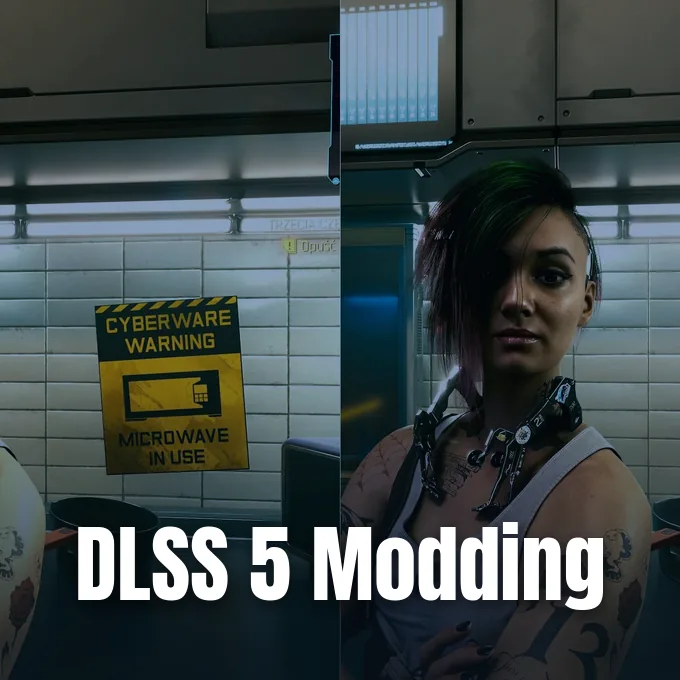
Official studio guardrails differ sharply from third-party experiments where PC hobbyists force neural features into unsupported software. Curious readers can examine how PC modders inject DLSS 5 into unsupported games to understand how community tools behave when games lack native masking controls, often causing blurred text menus and distorted character eyes. Official integration avoids those defects. Hand-tuned masking proves that the Hogwarts Legacy DLSS 5 release keeps artistic design intact when engineers retain direct control over rendering pipelines [1].


Animation Quirks in Fast Motion Scenes
When Nvidia introduced DLSS 5 in NBA 2K27 during its September rollout, player faces looked startlingly lifelike in static close-up screenshots and pre-game showcases. But trouble surfaced as soon as athletes started sprinting across the hardwood basketball court. Standard video game animations looked noticeably stiff next to hyper-detailed skin textures. The visible contrast between photorealistic player faces and standard mechanical running cycles became distracting during fast transitions across the court [1].
Hogwarts Legacy may avoid that uncanny mismatch because stylized spellcasters do not have real-life counterparts walking the street. Flowing wizard robes and floating capes help conceal minor animation hitches during fast broom flight or wand duels. Yet rapid camera pans could still show slight timing mismatches between neural frames and character skeleton physics. Fast motion presents unique rendering challenges [1].
To keep high frame rates smooth, the software combines neural rendering with DLSS Multi Frame Generation and Ray Reconstruction. Players who want to understand multi-frame synthesis can read about how DLSS frame generation inserts extra frames to see how neural algorithms interpolate motion between game updates. In Hogwarts classrooms, ray reconstruction cleans up water reflections and sharpens light beams slicing through stained glass windows [2]. Generating multiple frames between engine ticks allows high-end systems to reach 300fps during chaotic duels [1]. High frame rates keep the picture responsive even when heavy spell particles fill the room [2]. Extra frames reduce input latency during dueling [1].
Running Hogwarts Legacy DLSS 5 on RTX Hardware
Hardware efficiency has jumped forward considerably since Nvidia first demonstrated neural rendering to the gaming industry during its presentation in March. During that March showcase, Nvidia needed two RTX 5090 graphics cards running side by side inside a high-end chassis just to power a single tech demo. Today, the technology runs on a single consumer GPU. Engineering progress opened neural rendering to home PCs [1].
Nvidia claims a tenfold performance gain compared to that initial March showcase. The neural rendering pipeline runs twice as fast as the build shipped for NBA 2K27 in September, cutting frame delivery times in half across complex high-resolution scenes. At the same time, the optimized model uses 20 percent less VRAM at 4K resolution. Lower memory usage prevents stuttering during extended play [1].
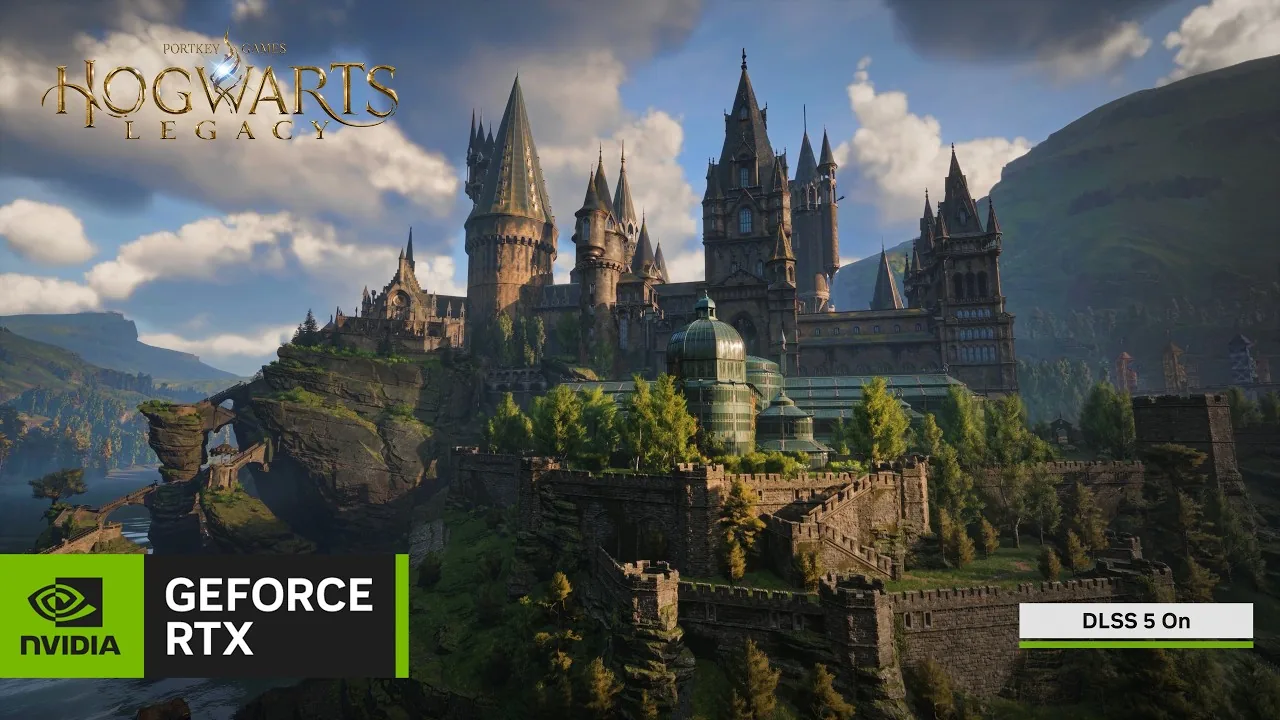
The technology supports GeForce RTX 50-series desktop and laptop GPUs as well as pre-built RTX Spark computing systems. On a flagship desktop RTX 5090 running at 4K resolution with ray tracing and maximum settings, Nvidia recorded frame rates reaching 300fps through 6X Multi Frame Generation. Native rasterization produces only one out of every six displayed frames. PC owners must install the latest Nvidia Game Ready driver and download the Hogwarts Legacy patch before turning on Neural Rendering in the game menu. The toggle sits inside display options. GeForce RTX 50-series owners get the full neural package [1].
GeForce Now Cloud Access and November Additions
Players who lack high-end desktop gaming rigs can still experience the visual upgrades through Nvidia’s GeForce NOW cloud gaming network across personal computers and portable hardware. Subscribers on the GeForce NOW Ultimate tier stream with GeForce RTX 5080-class performance without purchasing new hardware. The service delivers cloud gameplay to PCs, Macs, handheld consoles, mobile phones, and compatible smart televisions, removing bulky game downloads [2].
GeForce NOW connects directly to existing digital game libraries across Steam, the Epic Games Store, and Xbox with full Play Anywhere support on all compatible systems. Cloud members also get DLSS 4.5 controls inside the streaming interface to adjust image scaling presets. A single-day pass lets members test streaming responsiveness before committing to a full monthly subscription, with the pass cost applicable toward full monthly plans [2].
The launch of DLSS 5 in Hogwarts is part of a larger November rollout across GeForce NOW. Blizzard Entertainment brought World of Warcraft: Forever to the cloud on Nov. 4, offering CurseForge add-on support and a trial reward through Nov. 11 at 11:59 p.m. PT. Ubisoft added expansions for Tom Clancy’s The Division 2 in Central Park and Anno 117: Pax Romana in Aegyptus this week [2]. Meanwhile, local PC support for DLSS 5 expands soon: War Thunder gets the feature later this month, followed by Where Winds Meet on November 23 [1]. Blizzard and Ubisoft continue expanding their cloud catalog [2].
- ONLINE NEWS Chacos, B. (2026, November 5). Nvidia’s DLSS 5 learned a new spell for Hogwarts Legacy: restraint. PCWorld. [Article Link]
- PRESS RELEASE GeForce NOW Community. (2026, November 5). ‘Hogwarts Legacy’ Gets a Magical NVIDIA DLSS 5 Upgrade on GeForce NOW. NVIDIA Blog. [Article Link]


