






Planning human exploration to the Moon and Mars demands anticipating clinical emergencies before launch. How can mission planners prepare for catastrophic medical events millions of miles from Earth? NASA developed the NASA integrated medical model (IMM, an advanced computational decision-support tool) to forecast clinical risks and quantify medical capability requirements prior to flight. By synthesizing flight records and medical literature into stochastic simulations, the system establishes evidence-based risk baselines for crewed spaceflight. [1]
Predicting Astronaut Health in Deep Space
Interplanetary exploration subjects the human body to extreme physiological stressors unlike anything experienced on Earth. Microgravity disrupts fluid balance and induces progressive musculoskeletal deconditioning. While terrestrial emergency medicine relies on immediate clinical examination and specialized laboratory equipment, spaceflight medical officers must plan for extreme environments where diagnostic and surgical capabilities remain strictly constrained. Deep-space voyages expose crews to high-energy galactic cosmic radiation and solar particle events, accelerating tissue damage and elevating lifetime oncological risks. Prolonged confinement and environmental stressors compound these physical threats, creating complex health hazards that require systematic quantitative assessment prior to flight assignment. [1]
Distance amplifies every operational vulnerability. Flight crews cannot rely on rapid Earth return when medical crises strike interplanetary transport vehicles. [1]
Low Earth orbit missions aboard the International Space Station operate within a protective operational umbrella where emergency medical evacuation to advanced terrestrial hospitals can take place within a few hours. When an astronaut experiences an acute clinical emergency aboard the orbiting laboratory, ground medical teams coordinate rapid return trajectories. Lunar and Martian expeditions eliminate this abort option entirely. At planetary distances, round-trip radio transmission delays can exceed twenty minutes, preventing real-time guidance from terrestrial flight surgeons during life-threatening medical events. Spacecraft engineers must package every required pharmaceutical, diagnostic instrument, and therapeutic device into strict volumetric boundaries. Without quantitative forecasting models that predict which conditions are most likely to occur, mission planners risk either leaving astronauts unprotected or overburdening payloads with unneeded medical mass. [1]
How the NASA Integrated Medical Model Operates
NASA science writer Kim Lowe reported that the Integrated Medical Model functions as a comprehensive computational decision-support tool specifically engineered for exploration architecture. At its analytical foundation sits NASA’s Integrated Medical Evidence Database (iMED, an extensive repository compiling decades of astronaut flight logs, space shuttle medical incident records, and terrestrial clinical research). Rather than relying on static checklists, the model synthesizes epidemiological incident rates with physiological mission parameters. The software establishes an empirical baseline from historical spaceflight events while integrating clinical research from analogous operational settings. Flight surgeons utilize these evidence streams to estimate the probability that specific clinical conditions will manifest under microgravity conditions. [1, 2]
Every simulated mission requires concrete operational parameters to tailor risk projections. The computational engine accepts detailed inputs detailing crew size, planned mission duration, scheduled extravehicular activities, and the physical spacecraft atmosphere. Flight profiles dictate medical susceptibility. A four-person lunar surface expedition spanning thirty days presents vastly different clinical risks than a three-year transit to Mars with six crew members. By modulating these variables, the NASA integrated medical model allows mission planners to analyze future mission profiles that possess no direct historical precedents. [1]
Translating clinical evidence into probabilistic forecasts bridges medicine and spacecraft engineering. Medical researchers continuously update the database to reflect findings from ongoing orbital research, including studies on how spaceflight accelerates physiological ageing in astronauts through vascular stiffening and cellular oxidative stress. As space biology identifies new physiological degradation pathways, biostatisticians incorporate updated risk probabilities into the database algorithms. Evidence drives preparation. [1]
Simulating Risks With Monte Carlo Algorithms
Space exploration involves stochastic uncertainty that deterministic equations cannot adequately capture. To quantify the unpredictable timing and severity of potential medical emergencies, the model uses Monte Carlo simulations (computational algorithms that rely on repeated random sampling to model the probability of different outcomes). The algorithm runs thousands of simulated flights across an identical mission profile. In one simulation run, a crew member might suffer an acute kidney stone during an orbital insertion burn; in another run, the entire crew might experience an uneventful transit. By aggregating results across tens of thousands of simulated iterations, the platform generates a robust statistical distribution of potential medical scenarios. [1]
Mathematical epidemiology provides important theoretical parallels to spaceflight risk modeling. In an academic preprint that has not yet undergone formal peer review, researchers explored mean-field game epidemiological models characterized by partial health status observability and operational time horizon uncertainty. Their findings emphasize that when health states cannot be continuously observed with perfect fidelity, predictive systems must explicitly account for compounding stochastic variations across extended planning intervals. NASA’s modeling team applies analogous probabilistic safeguards to ensure that rare, high-consequence medical incidents receive rigorous mathematical weighting during mission simulations. [1, 4]
Simulations yield actionable probabilistic bounds. Instead of preparing for worst-case catastrophes that might never occur or underestimating compounding routine illnesses, mission directors receive data showing the most probable ranges of medical demands. Computational forecasting replaces guesswork. [1]


Tracking Over One Hundred Spaceflight Conditions
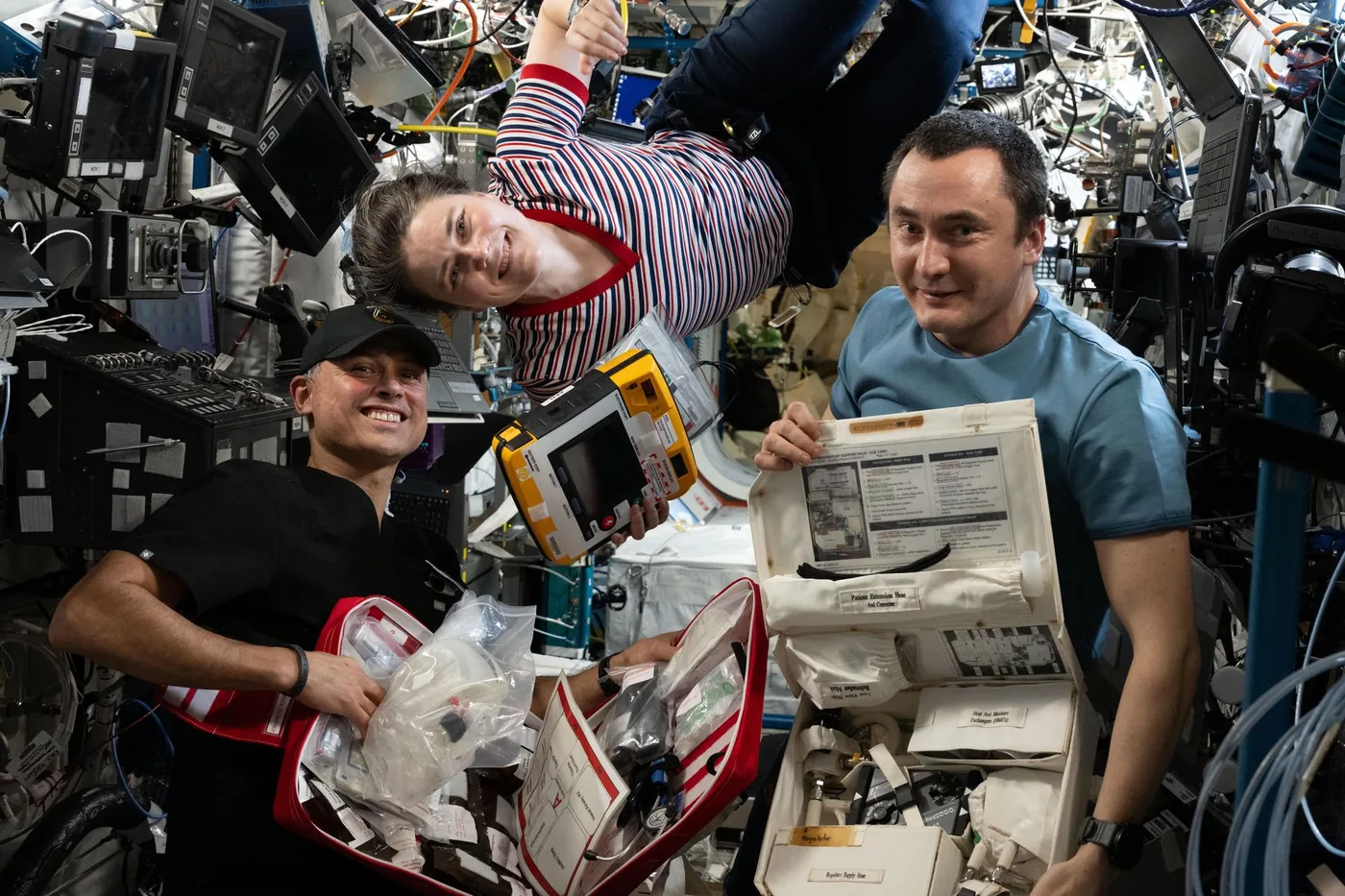
NASA engineers and flight surgeons configured the model to evaluate more than one hundred distinct medical conditions. These clinical conditions encompass both ordinary terrestrial ailments and unique physiological hazards generated by microgravity and cabin environments. What specific spaceflight hazards pose the greatest threat to astronaut health during prolonged lunar and planetary journeys? Crew members remain vulnerable to decompression sickness (nitrogen bubble formation in bodily tissues caused by ambient pressure reductions during spacewalks) and acute radiation sickness triggered by unpredictable solar storms. Cabin atmospheres also carry environmental hazards such as smoke inhalation from electrical malfunctions and barotrauma resulting from rapid vehicle pressure changes. [1]
Ordinary illnesses pose equally disruptive threats to operational schedules. The NASA integrated medical model systematically tracks routine health concerns, including dental abscesses, cutaneous lacerations, microbial infections, and nephrolithiasis (kidney stones). Microgravity alters bone mineral metabolism, causing calcium release into the bloodstream that significantly elevates the likelihood of renal calculi formation during prolonged flight. In an enclosed exploration spacecraft where sterile surgical interventions are severely constrained by microgravity, an acute obstructing renal stone can completely incapacitate a crew member and jeopardize critical mission objectives. Routine conditions carry outsized consequences. Clinical software evaluates each condition based on onset probabilities, diagnostic complexity, and required treatment timelines. [1]
Comprehensive medical monitoring also tracks acute adaptation symptoms such as space motion sickness, which frequently affects astronauts during their initial days in microgravity. While nausea and disorientation typically resolve as vestibular systems adjust, early symptoms can severely impair motor coordination during critical orbital rendezvous maneuvers. Integrating these diverse diagnostic categories ensures that medical planners understand how microgravity affects bodily systems throughout every phase of exploration. [1]
Optimizing Medical Cargo and Kit Allocations
To translate health probabilities into practical engineering specifications, the Integrated Medical Model generates five core quantitative metrics. The first metric, Total Medical Events (TME), forecasts the aggregate number of illnesses and physical injuries expected to occur across the mission lifecycle. The second output, Crew Health Index (CHI), serves as an overarching indicator of the crew’s functional physical capacity. The third metric, Quality-Adjusted Time Lost (QTL), quantifies the total person-hours consumed by medical diagnosis, clinical procedures, and patient convalescence. Quantitative metrics transform medical risk into engineering parameters. [1]
The software also computes catastrophic mission probabilities, designated as Probability of Evacuation and Loss of Crew Life (EVAC / LOCL). These numerical values represent the statistical likelihood that an intractable in-flight medical emergency will compel an immediate mission abort or culminate in the catastrophic loss of astronaut life. In tandem, the resource utilization module forecasts the exact consumption rates of sterile consumables, diagnostic reagents, surgical instruments, and medications. Spacecraft design imposes unforgiving payload limitations. Every kilogram of medical hardware launched into orbit displaces scientific equipment, propellants, or life-support consumables. [1]
Flight surgeons and payload engineers use these outputs to guide the assembly of onboard medical kits known as MedCap (medical capability kits). Rather than packing redundant clinical supplies based on subjective intuition, payload engineers use the model to optimize medical pack composition within precise mass and volume constraints. Data-driven packing optimizes limited spacecraft volume. Flight surgeons can determine whether adding a portable ultrasound device, specialized intravenous fluids, or backup antibiotics yields the greatest net reduction in mission health risks. [1]
Preparing Deep Space Expeditions Beyond Earth
On the International Space Station, orbiting astronauts maintain immediate telemedical contact with flight surgeons stationed at Mission Control in Houston. If a severe cardiovascular arrhythmia or surgical emergency develops in low Earth orbit, established emergency return protocols allow Soyuz or Crew Dragon spacecraft to return a sick crew member to terrestrial trauma centers within hours. Deep-space voyages completely sever this logistical lifeline. Deep-space transit eliminates rapid Earth evacuation. When an expedition journeys toward Mars, communication delays reach up to twenty-four minutes each way, transforming medical consultations into asynchronous exchanges. [1]
Autonomous care requires integrated preventative protocols combined with automated clinical decision support. Daily countermeasure routines help mitigate physiological degradation, as shown by NASA research on tracking astronaut exercise and physiological health aboard the space station to protect bone mineral density and cardiovascular endurance. The Integrated Medical Model provides the quantitative scaffolding required to link preventative exercise data with clinical risk management, helping medical officers monitor ongoing physical decline before acute injuries occur. Resilient systems guarantee crew autonomy. [1]
By grounding mission architecture in decades of flight data and rigorous Monte Carlo simulations, the NASA integrated medical model enables flight surgeons and aerospace engineers to design self-sufficient medical infrastructure for interplanetary journeys. Future exploration beyond the Moon hinges on this predictive foundation. As humanity prepares to establish permanent research bases on the lunar surface and embark on multi-year expeditions to Mars, quantitative risk modeling ensures that astronauts carry the exact clinical capabilities necessary to survive in deep space. [1]
- ONLINE NEWS Lowe, K. (2026, September 16). NASA’s Integrated Medical Model (IMM). NASA. [Article Link]
- REPORT National Aeronautics and Space Administration. (2026). Integrated Medical Evidence Database (iMED) mission documentation [As cited in Lowe, 2026]. NASA. [Article Link]
- WEBSITE National Aeronautics and Space Administration. (2026). International Space Station flight operations [Photograph]. NASA. [Article Link]
- PREPRINT arXiv. (2026). Partial health status observability and time horizon uncertainty in mean-field game epidemiological models. arXiv. [Article Link]
APA 7: TWs Editor. (2026, September 17). How the NASA Integrated Medical Model Forecasts Deep Space Health. PerEXP Teamworks. https://perexpteamworks.com/en/nasa-integrated-medical-model-risks/


