



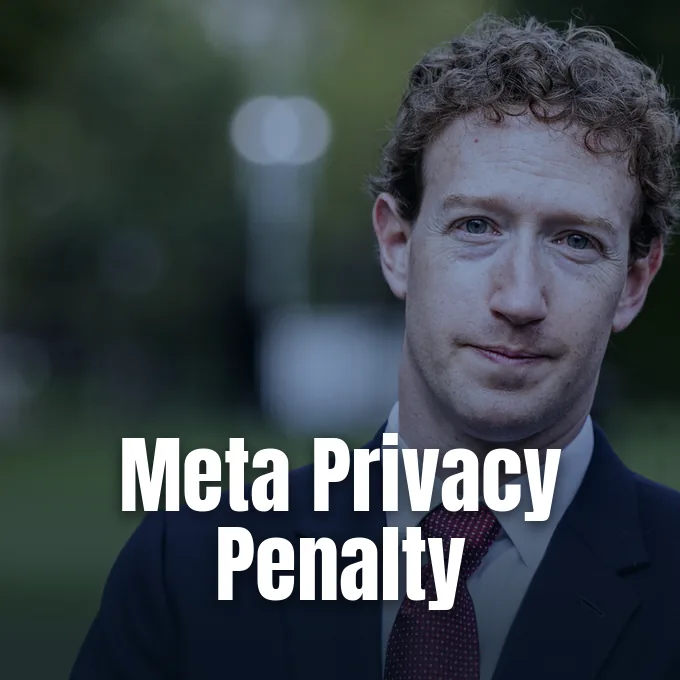
District Judge Francis Mathew ordered Meta to pay a $25 billion Meta privacy penalty on Wednesday after finding that Facebook misled consumers about their personal data safety for more than a decade [1]. The judgment follows a September jury verdict in Santa Fe that found Meta committed nearly 44 million violations of the New Mexico Unfair Practices Act [4]. While Meta lead counsel C.J. Mahoney announced plans to appeal the decision, the court order stands as the largest individual fine ever levied against the social media network [2].
Cambridge Analytica Roots
The courtroom battle began in 2021 when former New Mexico Attorney General Hector Balderas filed suit against Facebook over deceptive user practices tied to Cambridge Analytica [4]. That political consulting firm gathered private data from as many as 87 million Facebook profiles (including more than 50 million Americans) through a third-party personality quiz application without explicit permission [1, 5]. The consulting operation deployed those harvested profiles to direct campaign ads during the 2016 United States presidential race that saw Donald Trump win the White House [3]. State attorneys argued that Facebook violated the Unfair Practices Act by letting outside developers harvest personal records while assuring account holders that their profiles remained completely protected [1]. The public was kept in the dark.
New Mexico was the only state to take these privacy claims to trial after 48 other states agreed to settle [5]. Meta had resolved related disputes in August by agreeing to pay nearly $17 billion over youth safety [2, 4].
Current New Mexico Attorney General Raúl Torrez chose to take Facebook before a jury in Santa Fe instead of joining that multi-state agreement [4]. The resulting Meta privacy penalty adds to earlier penalties stemming from the Cambridge Analytica scandal. The Federal Trade Commission fined Facebook $5 billion in 2019, and Meta paid $725 million in 2022 to resolve a private class action suit [1, 4]. Santa Fe jurors heard testimony across two weeks before finding the company liable [3].

Deceptive User Assurances
In his formal court findings, District Judge Francis Mathew concluded that Facebook engaged in deceptive communications spanning an 11-year span from 2010 to 2021. The judge found that executives assured Facebook users that their personal details remained private, even as internal network systems granted outside software developers access to user profiles without clear consent [3, 5]. Judge Mathew examined public statements made by Meta leadership on Facebook pages, earnings calls with Wall Street analysts, and television interviews where company representatives claimed Facebook never sold user data [6]. The court determined that internal records directly contradicted these public promises [3].
Internal records revealed that chief executive Mark Zuckerberg understood user confusion regarding platform settings. In an internal message, Zuckerberg instructed managers to give consumers “a chance to change their privacy settings but obviously don’t encourage it” [5].
Judge Mathew also condemned Facebook’s internal audit following the Cambridge Analytica revelations, calling the effort “willfully ineffective” in his official order [2, 4]. The Santa Fe court found that cost pressures from executives, weak investigation techniques, and fear of legal precedent compromised the inquiry [4]. Furthermore, Facebook promised to notify consumers whenever apps misused their data, but deliberately skipped those warnings. Santa Fe jurors also found Meta liable for misleading residents about hate speech enforcement [3, 6]. The state proved intentional deception.

How the Meta Privacy Penalty Was Reached
The Santa Fe jury found Meta responsible for 43,899,725 violations of the New Mexico Unfair Practices Act across the state [1]. Under New Mexico law, each willful violation carries a civil fine of up to $5,000. Multiplying that statutory ceiling across the jury’s count produced a theoretical total of $219.5 billion (nearly $220 billion) [1, 4]. State attorneys told the court that roughly two million New Mexico residents had each been deceived dozens of times by Facebook statements [3]. That statutory calculation formed the baseline for the court before setting the final Meta privacy penalty [4]. The numbers were staggering.
New Mexico attorney Randi McGinn asked Judge Mathew to impose between $35 billion and $40 billion, arguing the court “should speak to Meta in the only language it understands, which is money” [2]. Judge Mathew settled on $25 billion [3].
Judge Mathew ruled that Meta must pay interest accumulating at an annual rate of 15% until the judgment is settled [2, 4]. That annual rate adds approximately $3.75 billion in interest each year during appeals. Under the New Mexico Unfair Practices Act, individual Facebook users in New Mexico will not receive personal compensation payouts. State law directs all collected civil penalties straight into New Mexico public school funding [1, 2]. Attorney General Torrez also requested court injunctions to block future platform misrepresentations [1]. The case will reshape state enforcement.
The Planned Appeal
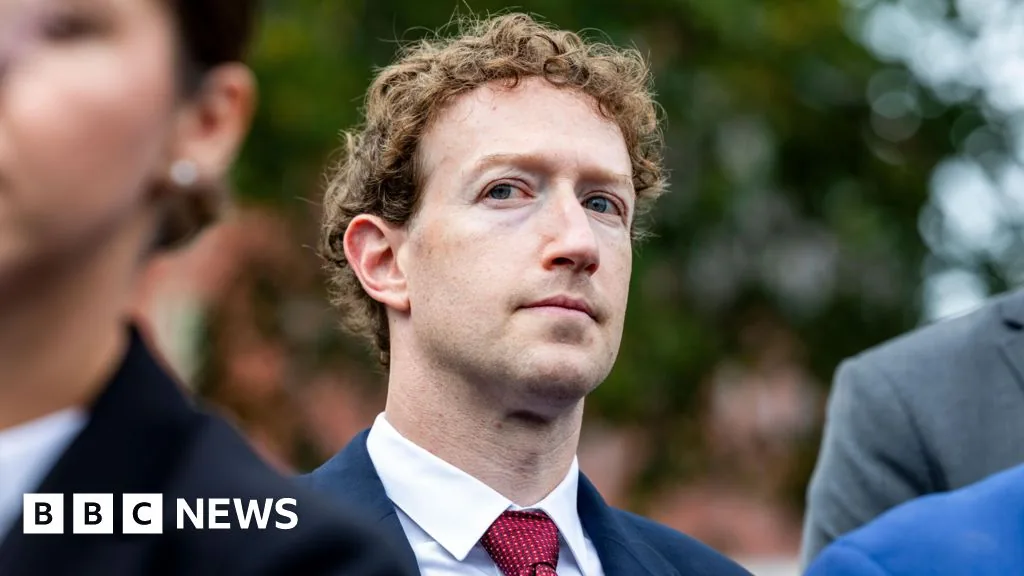
Meta legal representatives reacted swiftly to the ruling and confirmed immediate appeal plans. Meta chief legal officer C.J. Mahoney attacked the decision, calling the state lawsuit “a tax on speech” intended to regulate online speech standards. Mahoney stated that the judgment and the aggressive approach of the New Mexico Attorney General make it “all but impossible to do business in the state of New Mexico” [3, 4]. He told reporters that Meta remains confident it will overturn the verdict in the appellate courts while continuing to provide communication tools for American users and small enterprises [5]. Meta also maintains that its privacy standards have improved since 2021 [1].
During pre-verdict hearings in Santa Fe, Meta defense attorneys urged Judge Mathew to cap any penalty at $3.45 billion [1, 2]. Defense lawyers argued that any sum above $3.45 billion would violate constitutional protections against excessive fines [1, 3].
State prosecutors rejected Meta’s defense arguments and defended the $25 billion assessment. Attorney General Torrez declared on Wednesday: “For too long, powerful technology companies have operated as though their size and influence put them beyond the reach of the law” [3, 4]. Torrez told Reuters and other news organizations that the Santa Fe penalty proves tech giants face real consequences for deceptive conduct [2, 4]. New Mexico officials expect the appeals process to take months before any funds reach state accounts [1].
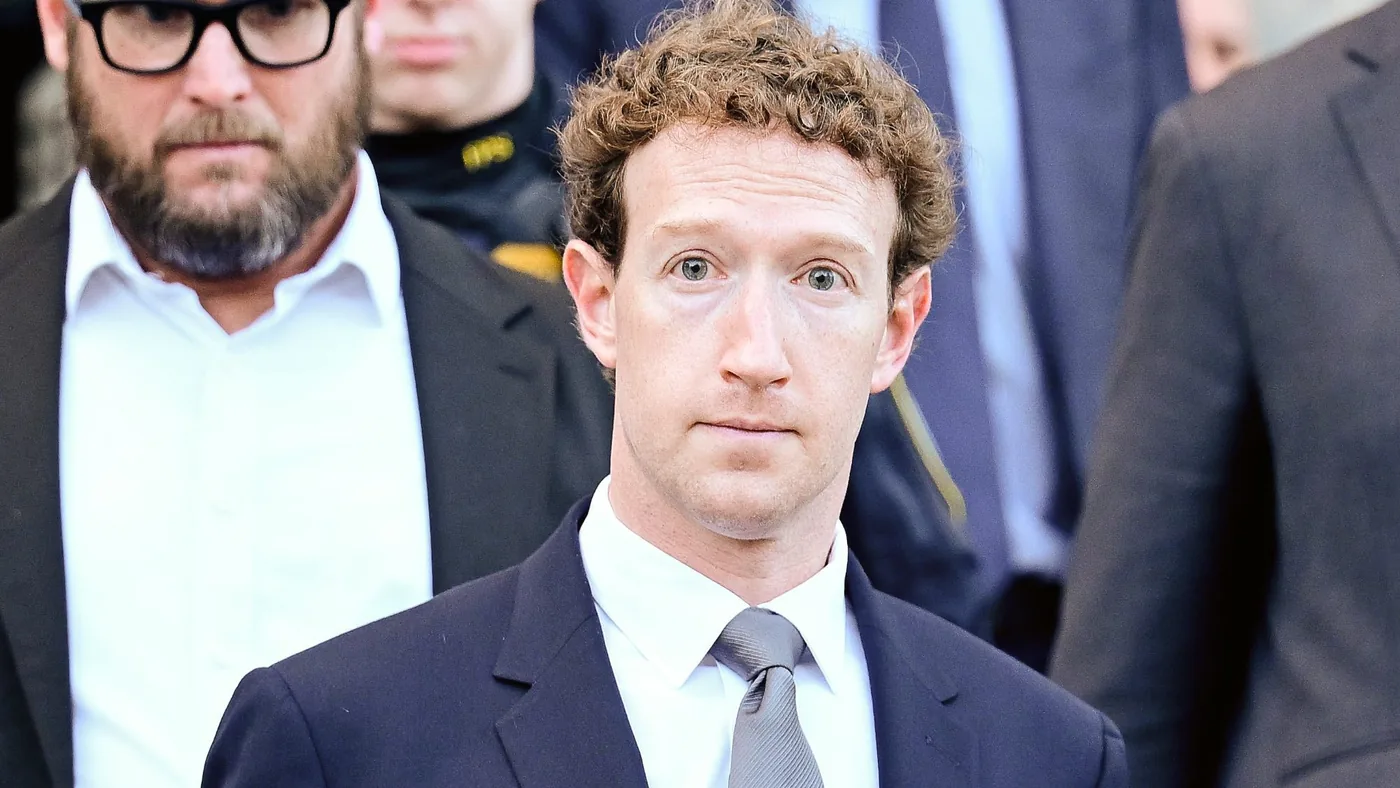
Meta Privacy Penalty and Tech Spending
The Santa Fe judgment comes as Meta confronts mounting legal exposure from multiple state regulators. In March, a Santa Fe jury found Meta liable for youth safety violations, awarding $375 million in statutory penalties before Judge Mathew ordered another $567 million paid into a public nuisance abatement fund [1, 4]. That combined $942 million child safety ruling in New Mexico compared social media harms to industrial pollution. In August, Meta agreed to an $18 billion youth protection settlement with California and partner states, though the company recently lost a related trial in Los Angeles [3, 6].
These courtroom settlements have already impacted Meta’s financial reports. On Wednesday, Meta reported third-quarter revenue of $64.5 billion (up 26%) and net income of $9.8 billion, beating Wall Street expectations [3, 6]. However, quarterly operating income dropped 37% to $13 billion after Meta recognized $10 billion in legal charges from its multi-state youth safety agreement. Tech regulators have also penalized other digital ad systems, as seen in penalties against ad broker Xandr over Grindr data. Even with the Meta privacy penalty looming, Meta generated $200 billion in total revenue and $60 billion in net earnings throughout 2025 [6].
Beyond legal payouts, Meta is pouring capital into artificial intelligence hardware. Chief executive Mark Zuckerberg expects Meta to spend between $135 billion and $145 billion this year on AI development. That heavy investment produced a negative quarterly cash flow of more than $2 billion, marking Meta’s first negative cash flow since going public 14 years ago. Zuckerberg told analysts that the consumer AI platform Muse has reached 10 million users, even after chat sharing links surfaced in DNS records. To maintain funding flexibility for AI and court liabilities, Meta chief financial officer Susan Li announced a new non-voting stock split [3].
- ONLINE NEWS Caswell, A. (2026, October 21). Meta told Facebook users their data was safe. Now it’s facing a $25 billion penalty. Tom’s Guide. [Article Link]
- ONLINE NEWS Shanklin, W. (2026, October 21). Meta ordered to cough up $25 billion in New Mexico privacy case. Engadget. [Article Link]
- ONLINE NEWS Hays, K. (2026, October 21). Meta fined $25bn for ‘lies’ over user data privacy. BBC News. [Article Link]
- ONLINE NEWS Vanian, J. (2026, October 21). Meta ordered to pay $25 billion penalty in New Mexico Cambridge Analytica case. CNBC. [Article Link]
- ONLINE NEWS Walker, J. (2026, October 21). Meta hit with $25 billion penalty for misleading Facebook users. Yahoo! Finance. [Article Link]
- ONLINE NEWS Wong, Q. (2026, October 21). Meta hit with $25-billion penalty for misleading Facebook users about data privacy. Los Angeles Times. [Article Link]


