




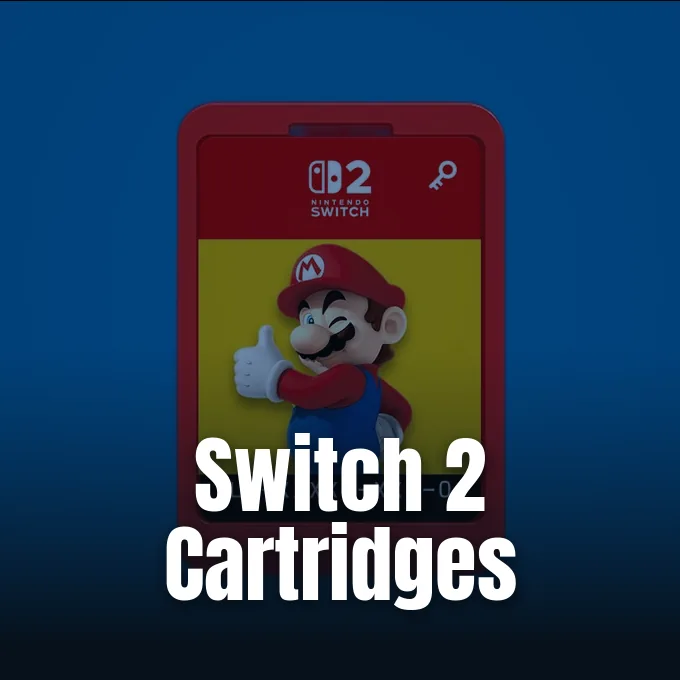
Nintendo Latin America vice president and general manager Bill van Zyll confirmed that the publisher has no plans to ditch physical games, reassuring fans that cartridges remain central to the Nintendo Switch 2 ecosystem. Speaking during an interview at Brasil Game Show in October 2026, van Zyll explained that player preferences guide the company’s retail strategy. While rival platform holders push for digital-only distribution models, Nintendo intends to support both digital downloads and boxed media for its latest hardware generation [1].
Nintendo Latin America Reaffirms Physical Media Support
The conversation took place on the show floor with Brazilian video creator Coelho no Japão during Brasil Game Show coverage (a major gaming convention held in Brazil), starting around the 11:37 mark of the interview. During his appearance representing Nintendo Latin America at the event, van Zyll addressed community worries about whether the company might slowly phase out boxed media in favor of online storefronts. “Historically, we’ve been very agnostic, right?” van Zyll said during the discussion. “We go off of what the consumer prefers and take that into account very heavily.” He said that the Nintendo Switch 2 launched in June 2025, which means the hybrid device is barely just over a year into its life cycle [2].
Because the platform arrived with dual playback capabilities, Nintendo doesn’t see any practical reason to restrict how audiences purchase new games. “We also have a platform that was just launched,” van Zyll explained during the broadcast. “It’s got both, you know, digital, but it also has physical, that capability.” When asked whether Nintendo harbored any intention of walking away from boxed cartridges, van Zyll gave an unambiguous reply. “So, there’s no plans to ditch physical,” van Zyll said. “We know how much the fans like it as well, so our position has been to be agnostic [2].”
That approach leaves room for players to choose between downloading games through the Nintendo eShop or buying boxed cartridges from local shops [1]. While van Zyll didn’t shut the door on long-term industry changes decades down the line, he made it clear that current operations won’t abandon the format [2].

Is Nintendo Popular in Latin America?
Market conditions in Brazil and neighboring countries show why boxed releases are so popular in the region. During the interview, van Zyll said that shoppers in the region show a clear appetite for boxed games compared to other parts of the world. While digital downloads saw a quick jump during COVID lockdowns when people had to stay home, retail traffic returned as soon as stores reopened. “You did see an upswing during COVID, just to use a big, easy to grasp example, where people were just staying home and digital was so simple,” van Zyll said [5].
Van Zyll stated that the tangible benefits of boxed software fit local consumer behavior especially well. “It’s a collectibility,” van Zyll said while talking about local buyers. “It’s being able to share it so easily.” Boxed cartridges can be passed between friends, traded at neighborhood stores, or resold when players finish an adventure, creating lasting secondary value that digital game licenses simply can’t offer to budget-conscious households. The appeal applies everywhere, but it applies even more strongly in South American cities where broadband access varies by neighborhood. “We certainly lean, not just in Brazil but all of Latin America, we do lean more towards physical,” van Zyll said [5].
Although the Switch 2 includes a Game Share function that lets families share digital titles across consoles, boxed cartridges still hold practical advantages. “It varies so much by game and certainly availability at times can also have a factor, and just what’s happening in general,” van Zyll said [5].


Nintendo South America and the Game-Key Card Debate
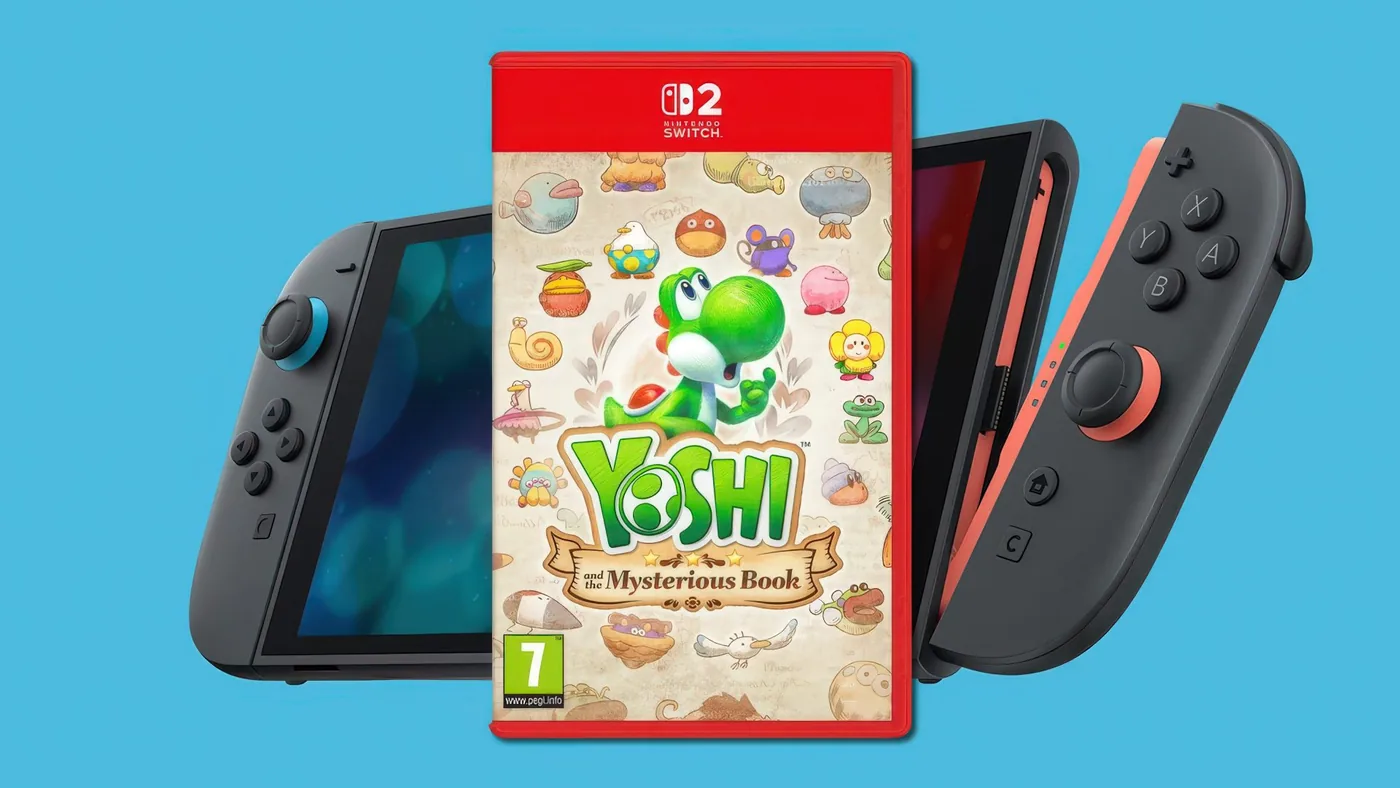
Even though Nintendo stays committed to card slots, its retail formats haven’t avoided controversy among game collectors. In addition to regular cartridges holding complete game code, the publisher introduced Game-Key Cards for the Switch 2 platform [4]. These hybrid units (cartridges needing an online download before play) don’t store game assets on memory chips. Instead, placing the card into a system prompts an online download, yet players must keep the card inserted in the slot whenever they launch the software. The card acts as a hardware license rather than an independent offline copy [2]. Many buyers were caught off guard when discovering empty plastic shells that merely initiated downloads [3].
Eurogamer reported that customer pushback often flares up whenever buyers find out that their boxed purchase is just a key card rather than full game data [3]. But unlike pure download codes, a Game-Key Card isn’t tied to one user account, meaning owners can still lend or resell the cartridge freely [5].
Despite those controversies, Nintendo rarely uses key cards for its own flagship titles. Scott McCrae of GamesRadar said that nearly every first-party release on the platform has shipped on complete cartridges, with rare exceptions limited to games like Pokemon Pokopia and Hyrule Warriors: Age of Calamity – Definitive Edition. That release pattern shows that Nintendo still treats full cartridges as its standard delivery method for major first-party projects [4].
PlayStation Disc Phaseout Sparks Industry Reactions
The debate about boxed software escalated following announcements from competing hardware manufacturers. In July 2026, Sony posted an update on the PlayStation Blog outlining plans to halt Blu-ray printing for newly launched console titles starting in January 2028. Sony attributed the decision to shifting consumer habits in favor of digital purchases [1]. The news provoked heavy pushback among console enthusiasts who fear the loss of game ownership and long-term software preservation. Disc drive owners suddenly face a landscape where future games might only exist on publisher-controlled download servers [3]. That decision prompted questions about how competitors would react to an all-digital console market [5].
Developers also expressed mixed views about Sony’s planned discless future. Developers like Hideo Kojima shared thoughts about physical media, while CD Projekt Red said that studios would be powerless if console makers stop pressing optical discs. In the current landscape, publishers must adapt to hardware manufacturers’ distribution policies [3].
Yet sales data shows that players still want boxed media. Tracking indicated that launch sales for Marvel’s Wolverine were approximately 35% physical, proving that millions of players choose discs over downloads when given the option. Meanwhile, Rockstar Games decided to release Grand Theft Auto 6 exclusively as a boxed download code without any disc inside the case. That move disappointed boxed collectors but reflected how certain large studios view retail packaging simply as marketing real estate [4].
Switch 2 Flexibility in a Digital-First Market
While Sony prepares to abandon discs and Microsoft leans into digital subscriptions with Xbox Game Pass, Nintendo’s console strategy focuses on player flexibility. Unverified rumors suggest Microsoft might evaluate keeping disc drives for its next console, known as Project Helix, to maintain good relationships with traditional gamers [5]. For Nintendo, supporting both store-bought cartridges and eShop downloads keeps gamers happy without forcing an unpopular shift. That independence mirrors previous portfolio decisions, such as Nintendo leaving the GTA 6 Switch 2 port decision to Rockstar while concentrating on its own first-party ecosystem [4].
Industry analysts say that maintaining cartridge manufacturing will likely continue over the current generation. Alessio Palumbo of Wccftech pointed out that Nintendo will probably keep producing new Game Cards for the remainder of the Switch 2 generation because its core audience values tactile game ownership [5].
Whether Nintendo can keep that agnostic position indefinitely is still an open question for the broader games industry [3]. Memory costs for high-capacity cartridges could influence publishing decisions as file sizes grow larger over time [1]. But for now, Bill van Zyll made it clear that players shouldn’t prepare for cartridges to vanish anytime soon [2]. As long as customers keep buying boxed games, Nintendo plans to keep producing them [5].
- ONLINE NEWS Blake, V. (2026, October 12). Nintendo’s Latin America VP says there are no plans to ditch physical games. GamesIndustry.biz. [Article Link]
- ONLINE NEWS Pring, J. (2026, October 12). Nintendo confirms it has no plans to stop selling physical games. Dexerto. [Article Link]
- ONLINE NEWS Peppiatt, D. (2026, October 12). Nintendo executive confirms company has “no plans to ditch physical games”. Eurogamer.net. [Article Link]
- ONLINE NEWS McCrae, S. (2026, October 12). Nintendo has “no plans to ditch physical games,” exec says amid PlayStation disc backlash: “We go off of what the consumer prefers”. GamesRadar+. [Article Link]
- ONLINE NEWS Palumbo, A. (2026, October 12). Nintendo Refuses to Follow Sony’s Disc Exit, as Switch 2 Exec Says “There’s No Plans to Ditch Physical”. Wccftech. [Article Link]


