





OpenAI filed a federal countersuit against Apple in California on Friday, claiming that the iPhone maker stole trade secrets and pressured shared hardware vendors to undercut its emerging device business [2]. The filing escalates a courtroom feud that started when Apple sued the AI developer during the summer over departed staff [3]. While the two firms once cooperated to bring ChatGPT to Apple devices, this new OpenAI countersuit claims Apple crossed legal lines to block new market rivals [5].
What the OpenAI Countersuit Alleges
The legal filing landed Friday in San Jose. First reported by the Financial Times and Bloomberg, the complaint accused Apple of “coercing and threatening” suppliers that work with both tech firms [4]. OpenAI says Apple abuses market clout [2]. The ChatGPT maker claimed Apple is trying to “compete unfairly by any means available” as OpenAI prepares consumer devices to rival the iPhone [3]. OpenAI said Apple told vendors to pull any staff assigned to OpenAI hardware off Apple production lines [4]. Apple hasn’t commented on the suit [5].
OpenAI took aim at Apple workplace management. Under the new OpenAI countersuit, OpenAI claims Apple relies on restrictive policies that lock workers in place while creating an artificial barrier against legitimate employee departures across the broader Silicon Valley tech sector. The San Jose complaint included pointed language, stating that “Apple set quite a trap for employees” who joined its offices in Cupertino [5]. It curbs normal industry hiring [3].
The complaint described a restrictive working climate for staff in California. According to the filing, “bright young minds thought they would work in Cupertino. Instead they were joining Hotel California: you can check out any time you like, but you can never leave” [5]. OpenAI alleged that Apple encourages staff to save work files on personal devices and cloud accounts, only to turn that habit against workers when they plan to leave [2]. It also hit out at Apple employment contracts that treat almost everything workers learn as secret and forbid former staff from hiring Apple colleagues for one year. OpenAI said these rules unfairly keep workers from moving between tech firms [4].
Supplier Pressure and Night Shifts
According to the complaint filed in San Jose, Apple exerted heavy leverage over shared hardware vendors. “Apple has responded to OpenAI’s anticipated entry into the hardware market by unlawfully pressuring vendors not to work with OpenAI,” the company wrote in its court papers. It said Apple actively questioned supplier staff about OpenAI projects and demanded that former Apple personnel be removed from competing hardware teams [4].
Factory interference caused real disruptions and drove up expenses for OpenAI device teams in California. In one specific case cited in the filing, a parts supplier chose to move its OpenAI production run to the night shift so that work would not overlap with Apple schedules, a change that increased OpenAI manufacturing bills. Other third-party vendors rescheduled planning meetings with OpenAI representatives so Apple personnel visiting the factories would not see them. OpenAI said this situation made shared partners wary of assigning staff to its hardware projects, giving Apple a way to slow down rival device plans without competing on product merit alone [4]. Matthias Bastian reported for The Decoder that the filing claims these vendor tactics hurt fair supply chain access [2].
The new filing reverses accusations Apple brought forward during July, as reported by Ana Maria Constantin for The Next Web. Apple’s original suit accused OpenAI of directing a shared vendor to copy an Apple metal-finishing method used on devices like the iPhone and Apple Watch [4]. With this OpenAI countersuit, OpenAI claims that Apple is the party bullying shared vendors and abusing its market weight [2].


Disputed Files and Personal Devices
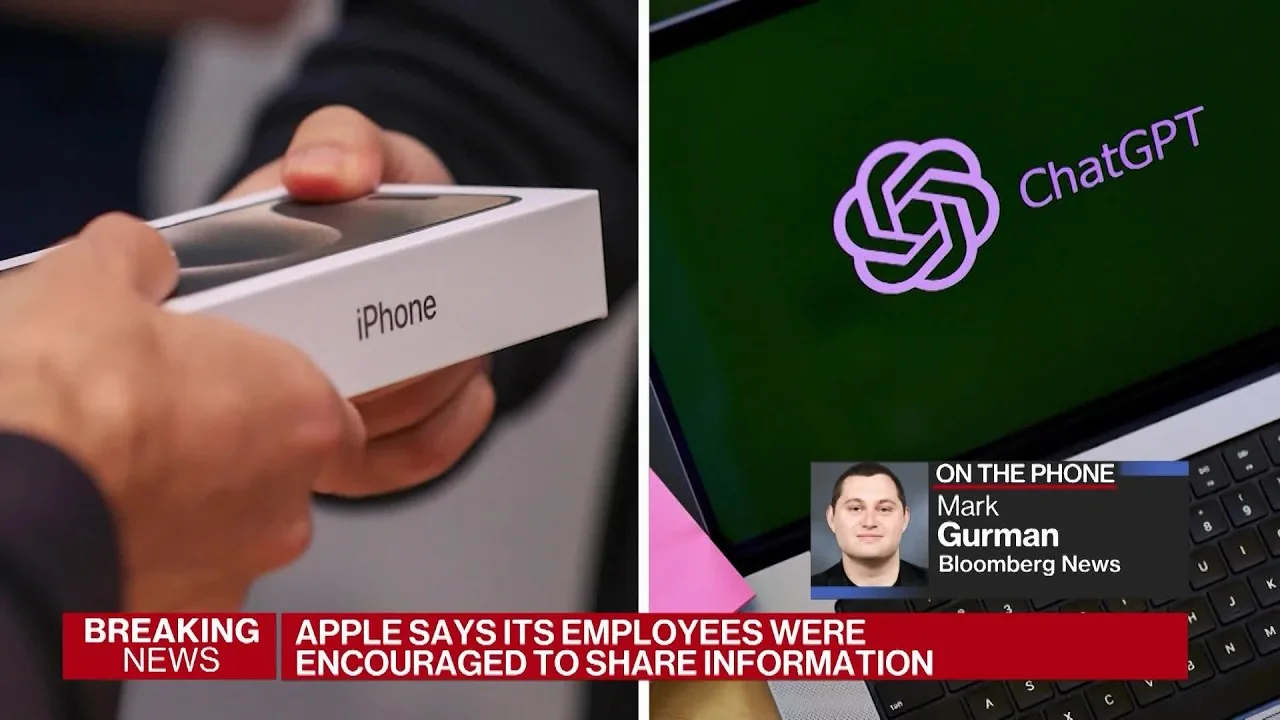
Beyond supplier ties, OpenAI leveled specific claims about stolen hardware blueprints. The filing alleged that an employee who left OpenAI to return to Apple transferred more than 100 confidential files about unreleased devices to personal cloud accounts before reporting to Cupertino. According to 9to5Mac reporter Zac Hall, the transferred records held device photos, schematics, and supplier lists. OpenAI first raised this claim in October, alleging the worker carried trade secrets back to Apple. Apple denies taking any data [3]. According to OpenAI, those stolen files gave Apple advance notice of device roadmaps developed by former Apple designers [1].
Apple pushed back against those accusations during an autumn exchange. It stated that company searches found no traces of OpenAI secret material on its systems. Apple asked OpenAI for more detailed facts to continue searching and said it remained willing to look into the claims [3]. Apple didn’t issue a new statement on Friday [4].
Apple’s original suit filed in July named OpenAI, io Products, and former Apple designers Chang Liu and Tang Tan, who previously led hardware design for the iPhone and Apple Watch before joining OpenAI [3]. Apple claimed they downloaded dozens of proprietary files. Lawrence Bonk reported for Engadget that the materials allegedly included design presentations, project data, and engineering specifications for unreleased Apple products. Data disputes have sparked repeated friction across the AI sector, as seen when OpenAI safety researchers were dismissed over sensitive data leaks during internal corporate reviews. Both tech giants now trade identical accusations [5].
Impact of the OpenAI Countersuit on Devices
The dispute unfolds as OpenAI moves into consumer electronics. OpenAI finalized a $6.4 billion acquisition of io (io Products), the design studio founded by former Apple design chief Jony Ive [2]. The startup is developing personal computing devices designed to compete with Apple, starting with a doughnut-shaped speaker [4]. Apple called ChatGPT “rotten to its core” during earlier legal filings [5].
Relations were once friendly [2]. Two years ago, Apple and OpenAI announced a partnership to weave ChatGPT into Siri and the iPhone, presenting a shared software vision during major Cupertino keynote presentations before hardware ambitions fractured the corporate alliance. The alliance soured when OpenAI began preparing standalone gadgets to challenge Apple [4]. Court scrutiny has grown around OpenAI, as seen when LASST sued OpenAI in California over unauthorized code repository access during separate intellectual property disputes. Neither side wants to yield [2].
In October, OpenAI agreed not to use the specific files Apple claimed were taken while litigation proceeds [4]. An interim stipulation kept pretrial review moving forward without halting development work on upcoming OpenAI gadgets [3]. The latest OpenAI countersuit filed on Friday shows that the AI lab will not remain on the defensive [1].

Road to the 2027 Trial
Legal fights in California move slowly. Apple sought a court order earlier in the case to prevent OpenAI from making use of alleged trade secrets during consumer hardware development. During discovery in San Jose, Apple won wider access to internal evidence from both OpenAI and io Products [3]. OpenAI then used those same California discovery channels to demand internal notes and messages exchanged between Apple staff and shared parts fabricators [2]. Both sides want trial records [3]. Attorneys now plan to inspect factory logs, design drafts, and vendor contracts before presenting the dispute to a federal jury in San Jose [4].
Apple’s original lawsuit is scheduled to head to trial on July 19, 2027. With the OpenAI countersuit now on the official San Jose docket, the federal court will examine both corporate claims together during coordinated hearings [3]. Court schedules mean both Apple and OpenAI will conduct evidence checks while rolling out new consumer devices [4].
The dispute shows how competition in AI has moved from software models into hardware parts [2]. As OpenAI prepares its first gadget lineup with Jony Ive and his design team, its reliance on shared suppliers brings it into direct contact with Apple’s vendor network [4]. Whether Apple’s vendor policies represent fair trade secret protection or illegal market coercion will be decided in California court [5]. For now, both tech firms stay locked in reciprocal lawsuits as trial preparation continues in San Jose [3].
- ONLINE NEWS AppleInsider. (2026, November 27). OpenAI counter-sues Apple over trade secret theft. [Article Link]
- ONLINE NEWS Bastian, M. (2026, November 27). OpenAI countersues Apple over trade secret theft and alleged coercion of shared suppliers. The Decoder. [Article Link]
- ONLINE NEWS Hall, Z. (2026, November 27). OpenAI countersues Apple, alleging trade secret theft and supplier threats. 9to5Mac. [Article Link]
- ONLINE NEWS Constantin, A. M. (2026, November 27). OpenAI countersues Apple, accusing it of pressuring suppliers. The Next Web. [Article Link]
- ONLINE NEWS Bonk, L. (2026, November 27). OpenAI countersues Apple and accuses it of stealing trade secrets. Engadget. [Article Link]
- WEBSITE Techmeme. (2026, November 27). OpenAI countersues Apple over trade secrets. [Article Link]


