






NASA has released a new documentary film titled The Europa Concept, tracing the long effort to send a robotic probe to Jupiter’s icy moon. The film follows the scientists who built and launched the Europa Clipper mission, sending the largest planetary craft the agency has ever flown into deep space. The orbiter began its journey from Florida in October 2024, traveling through interplanetary space as researchers seek to learn whether Europa’s hidden ocean holds the chemical ingredients for life [1].
The Europa Concept Premiere
Public streaming began on Monday, Nov. 23, 2026, on NASA+, the NASA app, and the agency’s official website, giving global audiences access to the production. Viewers will also be able to watch the film on YouTube [1]. Astrobiology Web reported on the debut of “The Europa Concept” as the culmination of a 30-year effort to send NASA’s largest orbiter to Jupiter [2].
The film shows how teams developed the flight concept through years of design reviews, building hardware capable of operating far from Earth while withstanding punishing radiation belts [1]. Deep space exploration takes patience because long interplanetary flights take years to reach outer planets [2]. Curt Niebur, program scientist in the Planetary Science Division at NASA Headquarters in Washington, shared his view on what drives the endeavor. “The things we will learn from Europa Clipper will be so sensational, so fantastic, that everyone will be screaming for the next mission,” Niebur said. “The only thing that matters is that we learn enough that we, in the broadest sense, want to do it again somewhere else — because that’s what exploration is” [1].
Niebur’s comments capture the scientific curiosity driving outer planet exploration, as researchers seek to establish whether Europa possesses the water, chemistry, and energy needed to sustain life. Scientists do not seek living organisms directly; instead, they check whether the icy world offers a viable home for biology [2]. Researchers will use this baseline knowledge to decide where to send future probes across the outer solar system [1].
Building Europa Clipper Mission Hardware
Work on the Europa Clipper mission officially began at NASA’s Jet Propulsion Laboratory in Southern California in 2013. Formal development began eleven years before liftoff, giving researchers time to construct the probe and assemble nine science instruments before planetary orbits shifted. Building the orbiter called for close collaboration among hundreds of engineers and scientists at several research centers. They had to solve unique manufacturing problems while keeping instruments safe from contamination [1].
Caltech in Pasadena manages JPL, which leads development in partnership with the Johns Hopkins Applied Physics Laboratory (APL) in Laurel, Maryland. APL designed the main spacecraft body in collaboration with JPL, NASA’s Goddard Space Flight Center in Greenbelt, Maryland, NASA’s Marshall Space Flight Center in Huntsville, Alabama, and NASA’s Langley Research Center in Hampton, Virginia [1].
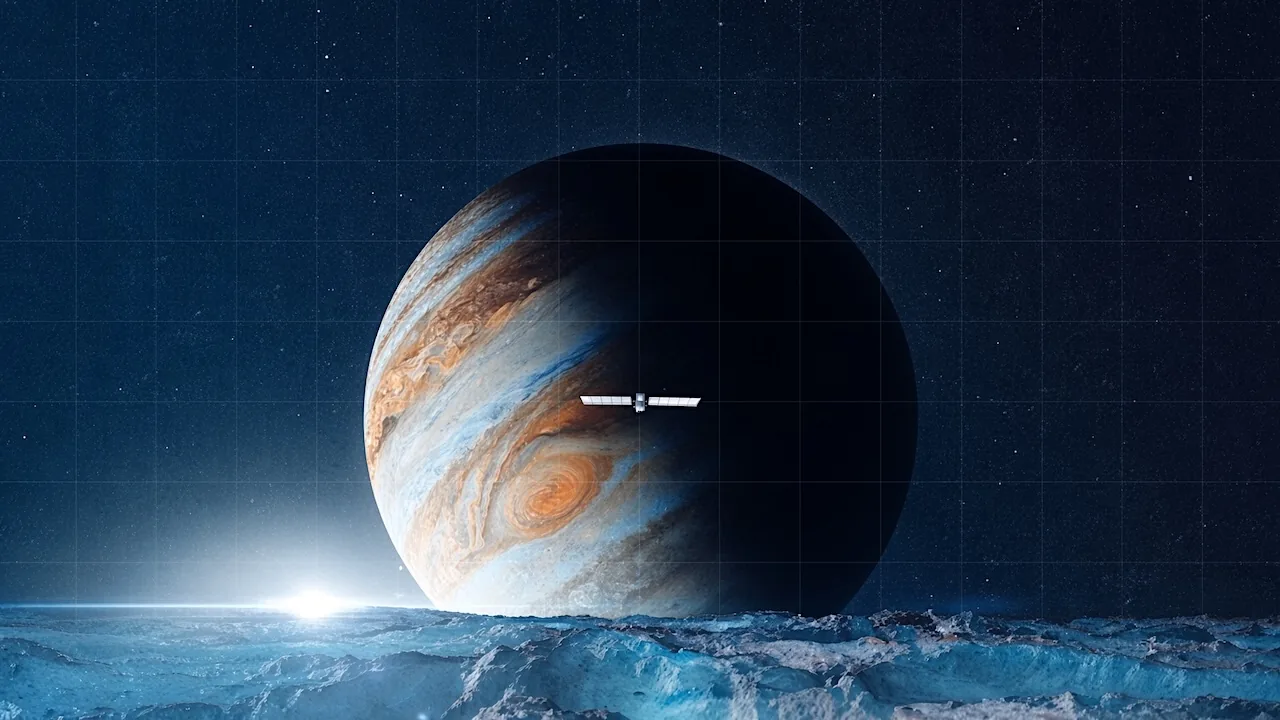
The engineering team overcame major difficulties as the launch date approached in Florida. A global pandemic disrupted laboratory schedules, while extreme weather near NASA’s Kennedy Space Center brought a Category 5 hurricane and tornadoes shortly before liftoff on Oct. 14, 2024. Ground crews secured the flight vehicle and protected sensitive hardware during the storms. Technicians kept the spacecraft safe despite the storms and completed final checks on the launch pad. NASA’s Launch Services Program, based at Kennedy, managed the launch service and sent the orbiter safely on its path. Meanwhile, the Planetary Missions Program Office at NASA Marshall executes ongoing program management for the flight [1].
Decades of Planetary Exploration
Europa has drawn interest since Italian astronomer Galileo Galilei discovered the moon in 1610 using an early telescope. For centuries, the icy world remained little more than a dim speck of light until NASA sent Pioneer 10 past Jupiter in 1973, followed the next year by Pioneer 11. Early flyby records proved that Jupiter’s moons were complex worlds shaped by gravity and intense magnetic forces [1].
Humanity gained its first detailed look at Europa when Voyager 1 flew past in 1979, followed by closer observations from Voyager 2, Galileo, Cassini, and Juno that illuminated the moon’s complex environment [1]. Images showed smooth plains crisscrossed by reddish fractures, confirming that tidal flexing from Jupiter’s gravitational pull warms the moon’s interior and keeps a vast ocean liquid below an icy crust. Planetary scientists soon treated Europa as a prime destination for researchers studying astrobiology and ocean worlds [2].

Telescopes added helpful clues before launch, including observations where NASA’s Webb identifies carbon on Europa’s surface, confirming that carbon dioxide originates from inside the subsurface ocean rather than meteor impacts. Chemical evidence gave flight teams clear targets to measure during low flybys [1].

Why Is Europa Clipper Important?
The main scientific goals guiding the Europa Clipper mission focus on habitability instead of looking for living organisms. In its scientific coverage, Astrobiology Web framed oceanography as a central framework for analyzing Europa, explaining that the moon’s liquid mantle could hold more water than all of Earth’s surface seas combined. Determining whether that hidden sea has water, biogenic elements, and energy sources will answer whether habitable conditions exist in deep space [2]. Jordan Evans, director of flight projects at JPL and previous project manager, summarized the mission’s scope. “With Europa Clipper, we’ve taken the next step in solar system exploration, which will help us uncover the mysteries of an ocean world, and ultimately, whether potentially habitable worlds beyond our own exist,” Evans said. “This documentary pays tribute to the ingenuity, teamwork, and dedication that continue to make this incredible mission possible” [1].
Europa Clipper differs from earlier outer planet missions because it conducts repeated flybys while avoiding prolonged exposure to harsh radiation [1]. By studying Europa in detail, scientists hope to learn how ocean worlds evolve over deep time. Observational data will shape models of planetary oceanography in modern astronomy [2].
The research also helps scientists compare different ocean worlds in our solar system. While previous missions studied gas plumes shooting from Saturn’s moon Enceladus, Europa Clipper examines whether an icy shell allows chemical exchange between the surface and a salty ocean. To understand how living cells might endure deep space conditions, related programs study biological survival mechanisms, including initiatives where NASA opens a digital avatar challenge for deep space biology in simulated environments. Parallel laboratory investigations offer helpful context as astrobiologists interpret findings about ocean world habitability [2].
Radiation Belts and Ocean Chemistry
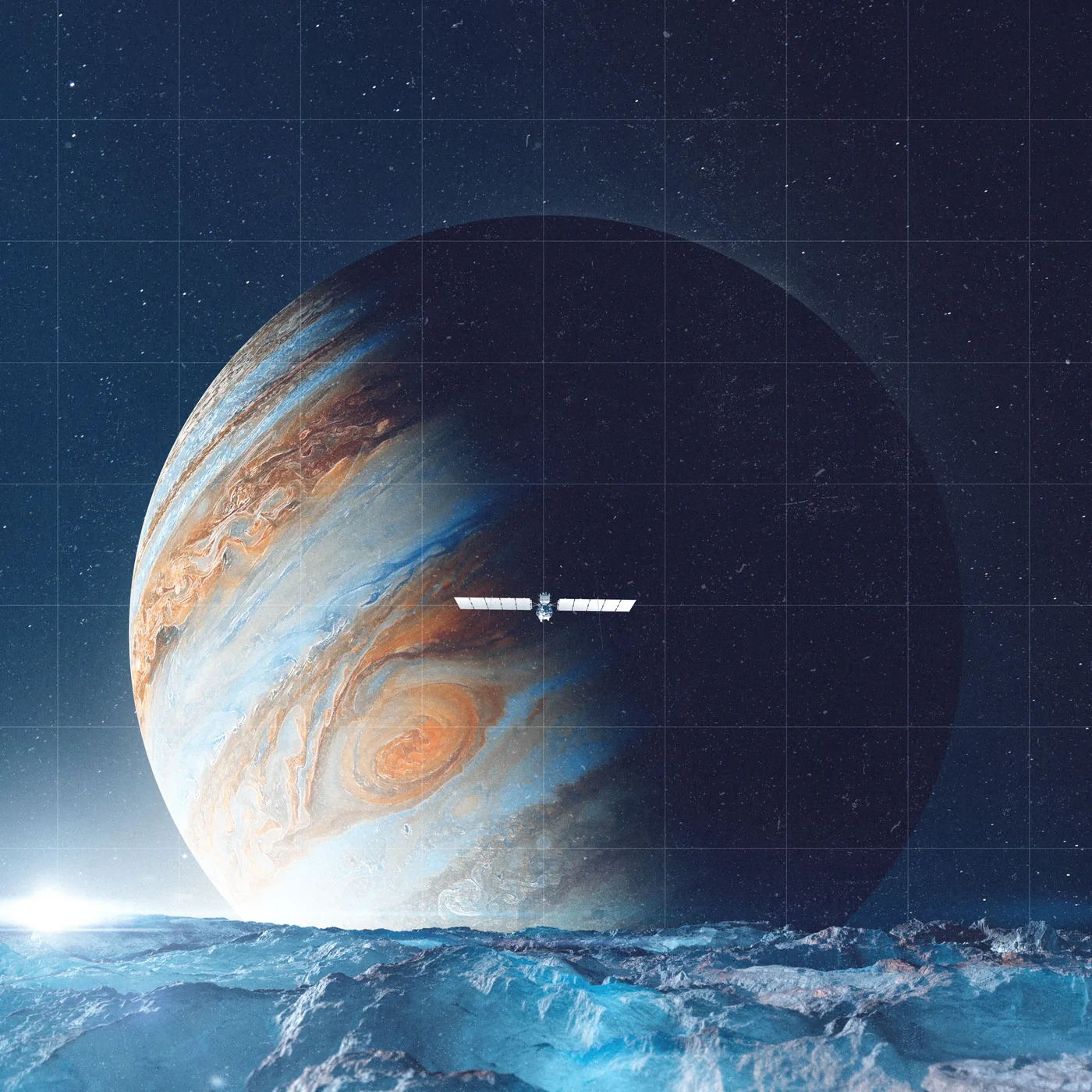
Can a robotic probe survive the harshest radiation environment in the solar system while gathering delicate science measurements? Jupiter’s giant magnetic field accelerates charged particles into high-energy belts that bombard Europa day after day. Radiation damages computer chips, clouds optical lenses, and degrades sensitive electronics over time. To protect core systems, engineers built an aluminum and titanium vault around the spacecraft’s avionics. The documentary The Europa Concept shows how engineers tested materials under extreme conditions to ensure components would survive repeated passes through the magnetosphere. Without protective armor, the orbiter could not complete its planned science campaign [1].
Radiation may also help create the very conditions needed for life. High-energy electrons break apart surface ice, releasing oxygen and hydrogen molecules. If geological churning draws that oxygen down into the ocean, chemical reactions with the rocky seafloor could power microbial metabolism, a process the Europa Clipper mission will test by measuring ice thickness and surface composition [1].
How Europa Clipper Mission Navigates to Jupiter
Europa Clipper is currently two years into its five-year journey, covering a total distance of 1.8 billion miles (2.9 billion kilometers) to reach the Jupiter system. The spacecraft uses gravity assists from Mars and Earth to gain velocity without carrying excessive fuel. Navigators on Earth track telemetry from the probe as it glides through interplanetary space [1]. Public telemetry archives support wide scientific review, following open practices where NASA publishes 800GB of Artemis II lunar flyby data for researchers studying long-range flight paths.
Upon reaching Jupiter, the orbiter will loop around the giant planet without entering Europa’s orbit, using nine science instruments during dozens of close flybys to gather data before retreating into safer space. Flying in wide loops protects sensitive detectors from long exposure to radiation [1].
NASA’s new documentary gives audiences a clear view of the teamwork behind this interplanetary voyage. Science teams behind the Europa Clipper mission prepare for years of data collection once the probe arrives in the Jovian system. Media contact Matthew Segal at the Jet Propulsion Laboratory in Pasadena noted that public curiosity about planetary oceanography and deep space exploration continues to grow [1]. Their findings will determine whether an ocean world holds the basic ingredients needed for life, showing whether biological possibilities extend far beyond Earth into the cold outer reaches of the solar system [2].
- PRESS RELEASE NASA, Jet Propulsion Laboratory, & Barnett, A. (2026, November 23). NASA+ Documentary Captures Europa Clipper’s Journey Into Deep Space. [Article Link]
- ONLINE NEWS Astrobiology Web. (2026, November 23). NASA+ Documentary Captures Europa Clipper’s Journey. [Article Link]
APA 7: PerEXP Teamworks. (2026, November 24). NASA Chronicles Europa Clipper Mission in New Documentary. PerEXP Teamworks. https://perexpteamworks.com/en/europa-clipper-mission-journey-jupiter/


