





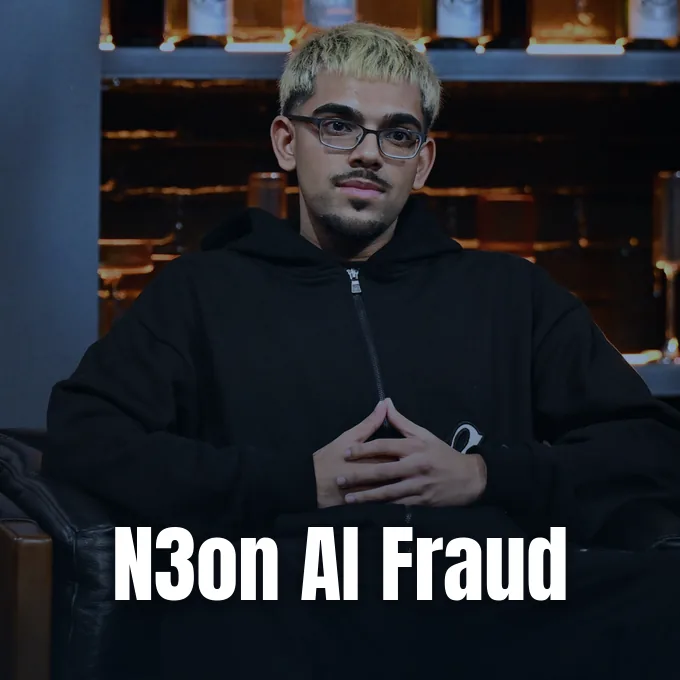
Federal authorities in the Southern District of Florida announced that David Anthony Sanchez, a 36-year-old resident of Port St. Lucie, has been sentenced to 47 months in federal prison after running a fraudulent cryptocurrency scheme that relied on synthetic voice software [5]. Sanchez, known online under the moniker Dave the Jewler, pleaded guilty to federal counts of money laundering and aggravated identity theft after stealing more than $260,000 from memecoin project founders in what prosecutors characterized as a calculated N3on AI scam [1].
Execution of the N3on AI Scam
Sanchez targeted the founders of a nascent cryptocurrency token who wanted to secure a high-profile promoter to build market interest for their project [1]. To execute the deception, Sanchez set up deceptive online accounts designed to look like official profiles belonging to Mikyle Rafiq, the popular internet personality known as N3on on Kick and YouTube [2]. Operating across multiple messaging channels, Sanchez acted simultaneously as the content creator and as his professional booking agent, leading project leaders to believe they were negotiating a genuine commercial partnership with legitimate representatives [3].
The deception went beyond text messages when Sanchez executed signed promotional agreements under the creator’s name and sent fabricated audio recordings to finalize the deal [4]. Using commercial voice cloning tools, Sanchez produced an audio clip that replicated Rafiq’s distinct speaking cadence, telling the organizers he was “excited to contract” with their memecoin venture. Reassured by the voice note and signed contracts, the business owner and his associates transferred a total of $260,083.69 in cryptocurrency to digital wallets controlled by the fraudster [3].
Unlike digital intrusions where a Twitch extension exposed account tokens for 31,000 users, Sanchez did not breach existing computer networks or hijack personal credentials. He relied instead on synthetic audio and fake profiles to manufacture consent, exploiting the organizers’ eagerness to secure an online influencer [2]. This social engineering strategy allowed him to collect the digital assets without ever interacting directly with the creator he impersonated [5].

Laundering the Stolen Cryptocurrency
After receiving the cryptocurrency deposits, Sanchez initiated a sequence of financial transactions to hide the illicit origin of the funds and prevent tracing by victims [4]. Federal court filings show that Sanchez moved the stolen assets into his personal account at Coinbase, converting the tokens into fiat currency through multiple transfers [3]. Prosecutors noted that these calculated transfers were structured specifically to disguise the true ownership, source, and control of the fraud proceeds while moving assets into conventional banking channels [4].
Sanchez subsequently routed the converted funds from his exchange account into a personal bank account before withdrawing large amounts in physical cash [3]. Instead of holding the digital currency or funding any contracted promotions, he spent the proceeds on personal expenses and private luxury acquisitions [1]. Federal investigators traced each step of the asset trail, confirming that the defendant quickly liquidated the cryptocurrency to fund his own lifestyle rather than escrowing the money for project work [2].
The structured movement of the digital funds formed the basis for the federal money laundering charge brought against Sanchez in South Florida [5]. By moving cryptocurrency through centralized exchanges into traditional bank accounts, Sanchez attempted to sever the connection between his fake social media identities and his real-world financial accounts [3]. Financial crimes investigators from federal agencies were able to reconstruct the entire transactional chain, demonstrating how the digital tokens transformed into disposable cash within days of the initial transfer [4].



Victim Impact and Luxury Spending
The loss of more than a quarter-million dollars caused severe disruption for the business owner and partners who funded the memecoin initiative. In a personal victim impact statement delivered to U.S. District Judge Melissa Damian, one project organizer stated that the massive theft wiped out critical operational reserves and damaged his financial standing. The victim noted that the financial shortfall forced him to relocate apartments and miss scheduled payments on routine living costs, resulting in lasting harm to his personal credit rating [3].
Victims described feeling deep disgust after discovering that Sanchez flaunted his newly acquired wealth on social media almost immediately after the theft took place. Just two days after receiving the stolen cryptocurrency, Sanchez posted a photograph on Instagram showing himself purchasing an expensive Rolls-Royce vehicle valued at hundreds of thousands of dollars. Seeing the defendant display a luxury car while his victims struggled to meet basic living costs became a central point in the victim’s testimony before the court [3].
The psychological strain on the victims intensified when Sanchez initiated contact following the theft to taunt them directly. Court documents indicate that Sanchez pretended he was preparing to return the stolen funds, sending deceptive messages that raised false hopes before refusing to send back any of the capital [3]. This pattern of mockery and ostentatious spending illustrated a complete disregard for the financial destruction inflicted on the victims who trusted his representations [1].

Sentencing in the N3on AI Scam
The criminal case against Sanchez moved through the federal judicial system over several months following his formal indictment on April 9. On September 1, Sanchez entered guilty pleas to one count of money laundering and one count of aggravated identity theft, as reported by television station WPBF. On November 17, U.S. District Judge Melissa Damian sentenced the 36-year-old defendant to 47 months in federal prison (one month shy of four years) and entered an order mandating full restitution payments to the defrauded victims [4].
Acting U.S. Attorney Yara Lorenzo Klukas for the Southern District of Florida underscored the seriousness of utilizing artificial intelligence for financial fraud, pointing out that emerging tech tools are increasingly deployed to deceive the public. Speaking after the sentencing hearing in federal court, Klukas emphasized that federal prosecutors will vigorously pursue individuals who weaponize synthetic media. Klukas stated: “Behind every fraud scheme are real people who suffer real financial harm. In this case, the defendant exploited artificial intelligence to manipulate the trust of unsuspecting victims and deprive them of their money. Today’s sentence reflects our commitment to protecting victims, safeguarding the integrity of our financial markets and holding accountable those who exploit emerging technologies to defraud others” [2].
The federal court judgment highlighted that synthetic voice technology cannot serve as a protective shield against criminal culpability [5]. In addition to his 47-month prison term, Sanchez faces supervised release conditions and enforceable restitution liens designed to recover the $260,083.69 owed to the victims [3]. Legal representatives from the U.S. Attorney’s Office emphasized that federal prosecutors will continue to pursue criminal penalties against scammers who deploy synthetic media tools to manipulate business negotiations [2].
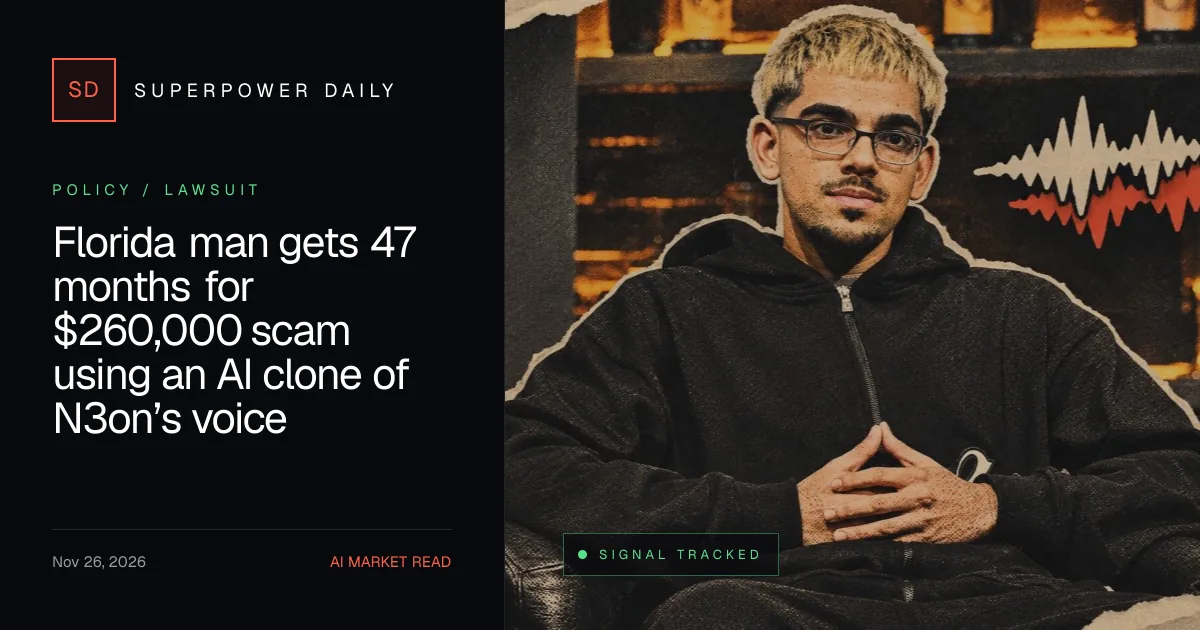
Streamer Persona and Cloned Media
The fraudulent scheme succeeded in part because of the unconventional public image that Mikyle Rafiq maintains across live streaming platforms. Broadcasting under the handle N3on, Rafiq built a large online audience on Kick and YouTube through continuous live content and promotional sponsorships with Jack (a crypto casino and sportsbook). In September 2026, Rafiq announced that he would launch an automated broadcast powered by GPT-6 Astra and Higgsfield, claiming he was creating a synthetic version of himself that would stream continuously [1].
Online publication Aftermath reported that Rafiq’s digital likeness had also been incorporated into an AI-generated feature film released earlier in the year [2]. Because the streamer had already embraced automated versions of his own likeness, the memecoin organizers found it entirely credible that his management would agree to an AI-assisted marketing campaign. Sanchez took advantage of this public perception, knowing that an AI voice clip purporting to represent N3on would raise few suspicions among cryptocurrency promoters [1].
As generative audio tools become widely accessible, digital content creators face mounting challenges in protecting their public personas from malicious exploitation [2]. The prosecution in South Florida demonstrates that while AI software makes voice duplication simple, federal law enforcement treats synthetic identity theft with the same severity as conventional financial fraud [5]. The conviction of Sanchez establishes a clear precedent that using synthetic voices of creators like N3on to extract commercial payments will result in substantial federal prison time [4].
- ONLINE NEWS Hawking, T. (2026, November 27). Florida Man Jailed for Using AI to Impersonate Streamer in Memecoin Scam. Gizmodo. [Article Link]
- ONLINE NEWS Holt, K. (2026, November 26). Man sentenced to 47 months in prison after using AI to impersonate streamer N3on. Engadget. [Article Link]
- ONLINE NEWS Phillips, P. (2026, November 27). Florida man who used AI to impersonate popular online streamer to steal $260K sentenced to prison. LiveNOW from FOX. [Article Link]
- ONLINE NEWS Superpower Daily Editorial Desk. (2026, November 27). Florida man gets 47 months for $260,000 scam using an AI clone of N3on’s voice. Superpower Daily. [Article Link]
- ONLINE NEWS Quintana, J. (2026, November 25). Man sentenced to 47 months in prison for impersonating streamer N30N in $260K crypto fraud scheme. NBC 6 South Florida. [Article Link]


