



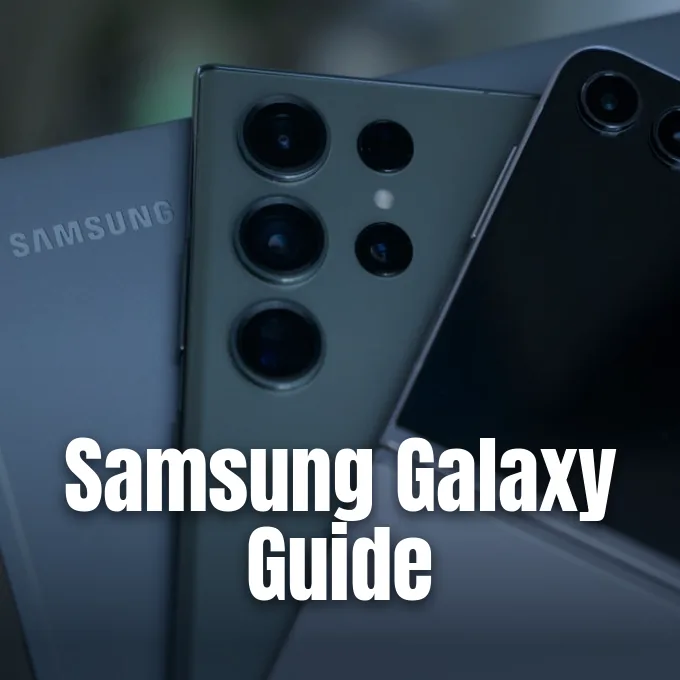
The Samsung Galaxy brand encompasses the mobile and consumer computing hardware built by Samsung Electronics, extending from pocket smartphones to laptops, tablets, and smart accessories. First introduced on a single handset running stock Google software in June 2009, the family quickly displaced older mobile efforts and helped carry the open-source Android operating system into the consumer mainstream [13]. Over the ensuing decades, it branched out into distinct hardware tiers designed to serve varying price points and practical needs. Today, connected tools and custom interface layers tie these diverse devices into an everyday hardware ecosystem.
Origins of the Samsung Galaxy Brand
Before the first Galaxy phone arrived, the premier mobile lineup at Samsung Electronics centered on the Omnia family running Windows Mobile with the TouchWiz interface. That changed in June 2009 when the company launched the original Samsung Galaxy, an experimental handset running unmodified Android. Within a year, engineers merged TouchWiz with Android on the first Galaxy S, kicking off a mobile series that quickly eclipsed older operating systems in the company catalog [13].
The second flagship release, the Galaxy S II in 2011, cemented the brand on international carrier shelves and introduced an acoustic trademark that still plays on modern hardware. Sound designer Joong-sam Yun composed a distinctive six-note melody titled Over the Horizon for the S II, which replaced older audio branding and became the default phone ringtone. Samsung later registered the precise musical notation with trademark regulators, defining it as a bell pattern moving from a dotted eighth note through sixteenth notes to a sustained half note. The memorable composition was subsequently remixed by celebrated international recording artists like Quincy Jones and Suga of BTS as new device generations reached store shelves worldwide [13].
Global distribution also prompted unique regional branding strategies. Between 2015 and 2023, Samsung dropped its corporate logo from devices, retail packaging, and customer support centers in Japan, marketing hardware purely under the Galaxy name. Retail spaces like the pop-up store at Yodobashi Camera Shinjuku swapped corporate logos for clean Galaxy lettering on cases and store counters. Matthew Benson of Android Authority observed that marketing the hardware purely as Galaxy helped distinguish the mobile lineup in a market where consumers bought few foreign appliances [4].

From TouchWiz to Modern One UI
Software identity defined how people interacted with Galaxy phones from the start. The TouchWiz skin brought vibrant color schemes and widgets to early Android builds, but it drew criticism for consuming heavy system memory and slowing down inexpensive hardware. In 2017, Samsung replaced TouchWiz with Samsung Experience, trimming visual clutter on curved screens. Two years later, the software transformed again with the launch of One UI in 2019, which grouped interactive controls in the lower screen area for easy one-handed navigation [13].
Platform support expanded steadily with user interface redesigns. Early Galaxy models received few Android updates before reaching end-of-life status. By 2024, Samsung matched Google by pledging seven years of major Android updates and security patches for flagship phones like the Galaxy S24, ensuring hardware remained usable and safe far longer [14].
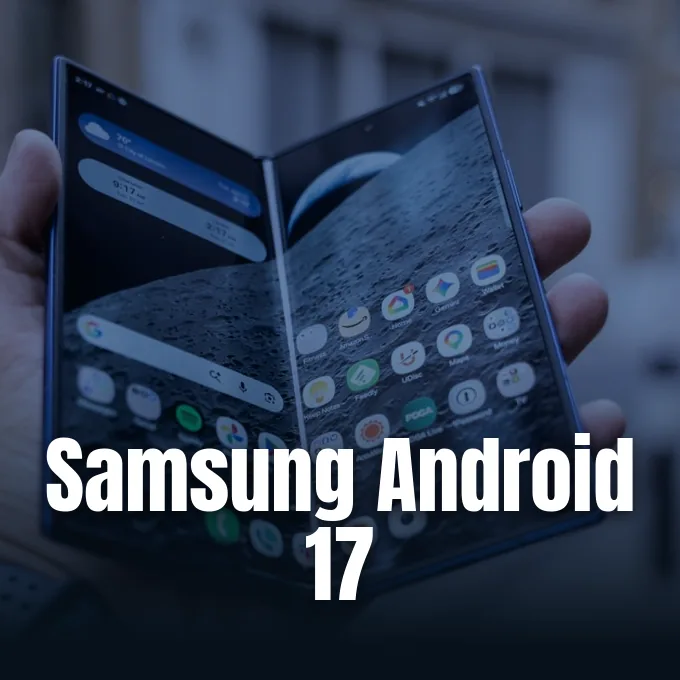
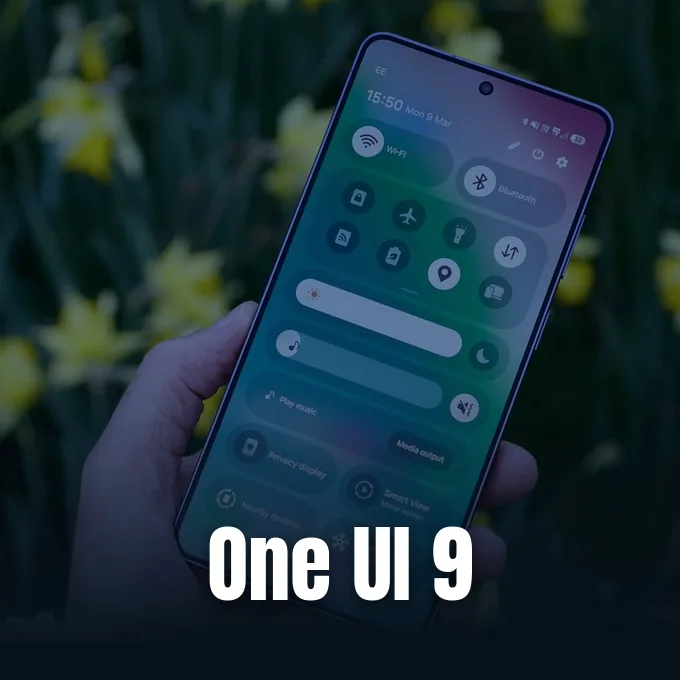
Recent software versions integrate smart home tools directly into the notification panel. The built-in Device Control menu lets users manage smart appliances connected through SmartThings or Google Home without opening separate applications [18]. Users can download specialized utilities from either Google Play or the preloaded Galaxy Store, where Samsung distributes proprietary maintenance apps and device themes [13]. In late 2026, Samsung began rolling out Android 17 with One UI 9 to flagship devices like the Galaxy S26 before bringing it to older generations. You can read about how Samsung expands Android 17 across regional carrier networks [3].
Evolution of Samsung Galaxy S Flagships
The flagship Galaxy S family has served as Samsung’s primary showcase for mobile display technology and processor silicon for more than fifteen years. Early models introduced Super AMOLED screens and compact form factors, leading to offshoots like the Galaxy S III mini in 2012 and the Galaxy S4 Mini in 2013. Both phones delivered compact 4-inch and 4.3-inch displays for buyers who wanted lighter handsets, with Simon Stanford of Samsung noting that the smaller footprint answered consumer demand for pocketable ease. These early compact variants proved that consumers welcomed flagship styling even when paired with moderate processing power [9].
Hardware engineering inside the S series advanced to keep pace with thermal demands. In 2016, a teardown of the Galaxy S7 published in Engineering & Technology revealed an internal liquid cooling heat pipe less than 0.5 millimeters wide that channeled vapor away from the processing unit [16].
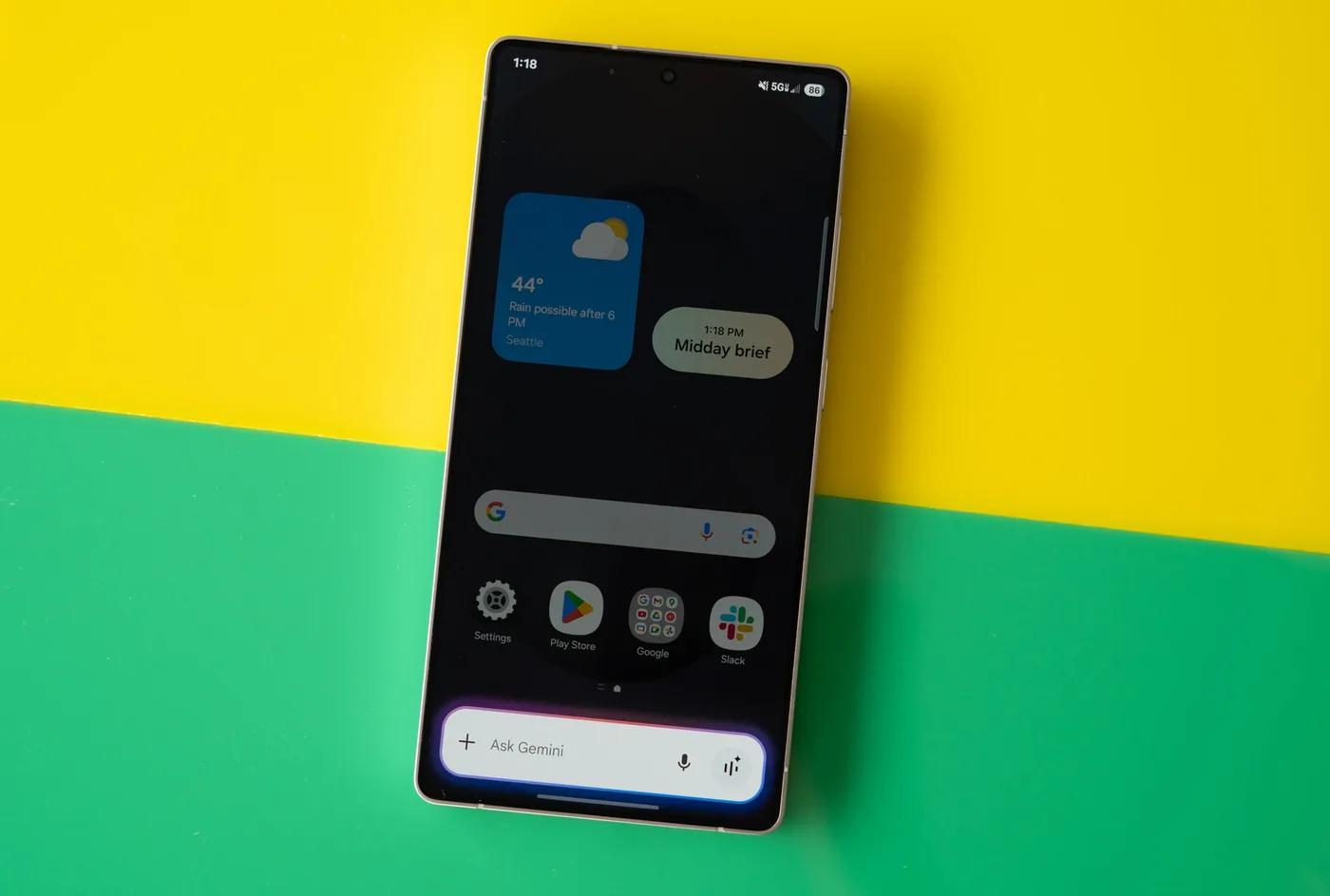
Design styling also moved away from sharp edges toward softer profiles. The Galaxy S25 Ultra switched to rounded corners and flat titanium sides, abandoning the pointed boxy aesthetic of earlier models. Reviewer Allison Johnson of The Verge remarked that the rounded edges and flatter sides made the large 6.9-inch display much more comfortable to hold during demanding daily tasks. With Gorilla Armor 2 glass protecting the front, the handset reduced reflective glare while maintaining strong scratch resistance against abrasive drops [11, 14].
Why Did Samsung Retire Note Devices?
For nearly a decade, the Galaxy Note lineup defined the large-screen smartphone category with its integrated S Pen stylus and productivity tools. When the first Note launched in 2011, many industry commentators doubted whether consumers would embrace a 5.3-inch display, yet the device became a hit and forced competitors to enlarge their own screens. The Note series also introduced security safeguards, such as regional SIM locking on the Galaxy Note 3 in 2013 to curtail gray-market reselling [13].
Over time, the size gap between standard flagship phones and the Note narrowed significantly. As standard S series devices grew past six inches, carrying two separate premium lines each year became redundant. Samsung merged the Note’s defining hardware feature into the Galaxy S22 Ultra, formally retiring the separate Note release cycle [11, 13].
A similar consolidation occurred across Samsung’s budget and mid-tier catalog. In April 2019, Samsung announced on its Malaysian YouTube channel that it would drop the budget Galaxy J series and merge it directly into the Galaxy A series. This shift streamlined production and brought premium features like multi-lens cameras, Infinity Displays, and in-screen fingerprint readers to affordable devices like the Galaxy A50 and later the Galaxy A55. Merging lines helped Samsung counter aggressive pricing from rival Chinese manufacturers like Xiaomi, Transsion, and Vivo [8, 10].
How Multi Control Links the Ecosystem
Connecting separate computing devices has become central to Samsung’s mobile strategy. Starting with Samsung Flow in 2015 and expanding through Microsoft Phone Link in 2019, users gained the ability to view phone notifications, reply to incoming messages, and transfer photos directly on desktop personal computers [13].
For people working between personal computers and mobile screens, Samsung introduced Multi Control with One UI 5.1. The feature lets an owner pair a Galaxy Book laptop, such as the Book 3 Pro 360, with a nearby Galaxy smartphone or tablet. Once enabled in the Connected Devices settings menu, the laptop keyboard and touchpad control both devices smoothly. Users can drag the cursor off the computer screen onto the phone display to drag and drop images or text directly between open windows without touching a physical cable. This seamless interaction makes moving mobile photos to a desktop editing suite quick and intuitive [17].
Software synchronization also simplifies smart home management and media streaming. Galaxy tablets and smartphones connect to Galaxy Buds with Auto Switch, routing audio immediately when an incoming phone call interrupts a movie [1]. Furthermore, examining One UI apps with advanced hardware controls reveals how Samsung organizes device controls so owners can adjust settings without opening separate management menus [18].
Smartphones, Laptops, and Wearable Gear
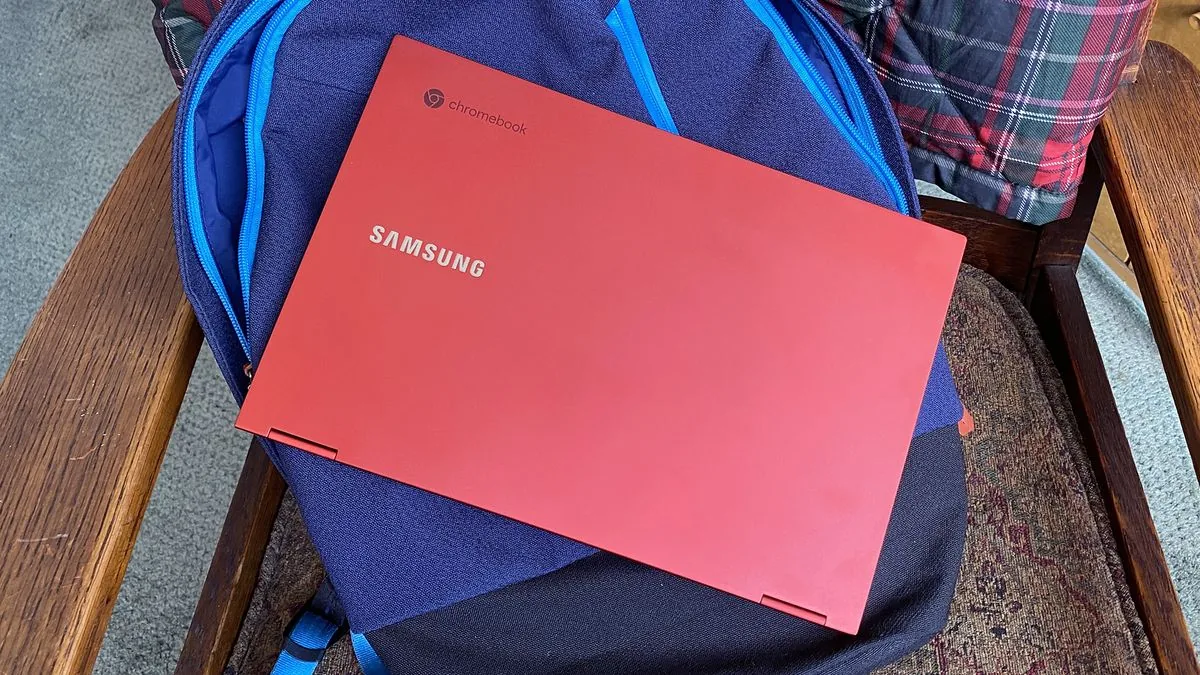
The Galaxy name stretches well beyond traditional pocket phones to encompass diverse mobile computing categories. In personal computing, Samsung introduced the Galaxy TabPro S at CES 2016 as its first Galaxy-branded Windows 10 tablet [13]. In 2020, the company launched the Galaxy Chromebook, an ultra-thin 2-in-1 laptop clad in vibrant Fiesta Red aluminum with a 13.3-inch 4K AMOLED display and an integrated S Pen stylus. Reviewer Henry T. Casey praised its vivid screen and lightweight build, noting it set an ambitious benchmark for premium ChromeOS laptops. The machine proved that Galaxy design language could translate effectively to laptop form factors [5].
Wrist wearables evolved in parallel from early Galaxy Gear accessories to modern smartwatches. At its February 2019 Unpacked showcase, Samsung launched the Galaxy Watch Active with the Galaxy Fit smart band and original Galaxy Buds, offering wireless case charging from Galaxy S10 phones using Wireless PowerShare [6].
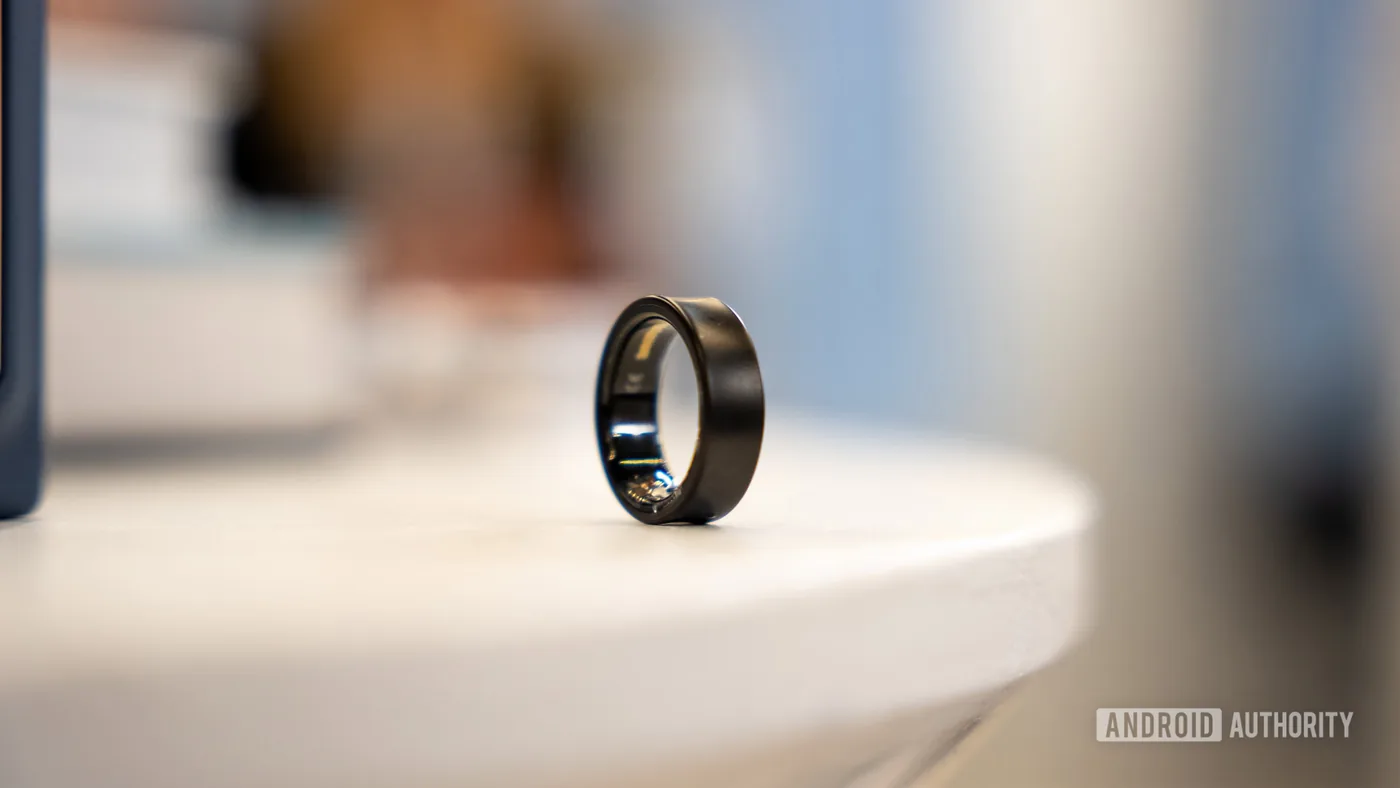
Wearable health hardware expanded further in July 2024 with the launch of the Samsung Galaxy Ring. Priced at $399.99 with no ongoing subscription fee, the lightweight titanium ring carries an IP68 rating and tracks sleep stages, skin temperature, and daily activity across nine distinct sizes. When worn with a Galaxy Watch, Samsung Health optimizes sensor readings between both devices to conserve ring battery life by up to 30 percent while maintaining continuous biometric monitoring [7]. Spatial computing followed in late 2025 with the Galaxy XR [13].
Galaxy AI and Cross-App Mobile Tasks
Artificial intelligence became the central pillar of Samsung’s flagship software marketing starting with the Galaxy S24 series and expanding on the S25 lineup [10, 14]. Branded as Galaxy AI, the software suite integrates multimodal tools for photo editing, live call translation, and conversational image searching [10, 11]. With One UI 7 on the Galaxy S25, Google Gemini became the primary virtual assistant accessed by long-pressing the power button, while Samsung’s Bixby assistant remained active in the background to handle system settings [11].
A key innovation introduced on recent flagships is cross-app task execution driven by machine learning models. Users can prompt Gemini to complete actions that bridge multiple services, such as searching for a sports team’s schedule and adding those game dates directly into Google Calendar. The system supports native Samsung tools, Google Workspace, and third-party apps like Spotify and WhatsApp [10]. Researching what Samsung One UI 9 delivers highlights how AI-powered automated routines continue to refine device interactions across upcoming phone generations [3].
Proactive software features also help organize daily schedules on the phone screen. The Now Brief feature compiles morning and evening updates featuring weather forecasts and calendar events in the Now Bar lock screen widget [11]. Analyst Ben Wood of CCS Insight noted to CNBC that AI features primarily benefit consumers upgrading older hardware [10].
What Shapes Samsung Galaxy Hardware Today?
Modern mobile manufacturing balances raw processing power against physical ergonomics and battery capacity. In May 2025, Samsung introduced the Galaxy S25 Edge as an ultra-slim variant measuring just 5.8 millimeters thick and weighing 163 grams [12, 14]. To achieve that slender titanium profile, engineers reduced battery capacity to 3,900 mAh and adopted a dual rear camera setup with a 200-megapixel main sensor and a 12-megapixel ultrawide lens. Reviewer Philip Berne of TechRadar observed that while the phone felt exceptionally light, battery endurance required noticeable compromise. Both the Edge and standard flagships maintain an IP68 rating for water and dust resistance [12, 14].
For consumers seeking flagship-grade specs at lower prices, the Fan Edition series provides an alternative balance. Earlier releases like the Galaxy S21 FE and Galaxy S23 FE set the groundwork for the modern Galaxy S26 FE. While the flagship Samsung Galaxy S26 features 12GB of RAM and the Exynos 2600 chip, the S26 FE trades some top-tier silicon speed for a larger 6.7-inch Dynamic AMOLED display and a 4,900 mAh battery. Similarly, the Galaxy Tab S10 FE+ brings a 13.1-inch screen with S Pen support to families [1].
Independent academic research confirms that ongoing hardware revisions influence practical performance in unexpected ways. In a 2019 comparative analysis published in PLoS ONE, researchers evaluated positioning accuracy across multiple Galaxy smartphone generations and found that newer models did not always produce linear gains in satellite GNSS accuracy during stationary measurements [15].
- WEBSITE Samsung UK. (2026). What is a Samsung FE smartphone? Samsung Mobile Buying Guide. [Article Link]
- WEBSITE Samsung UK. (2026). Smart Switch: Effortless and efficient data transfers. Samsung Apps & Services. [Article Link]
- ONLINE NEWS Schoon, B. (2026). Samsung confirms a list of Galaxy phones and tablets getting Android 17 updates. 9To5Google. [Article Link]
- ONLINE NEWS Benson, M. (2015). Samsung’s rebranding to Galaxy is total in Japan. Android Authority. [Article Link]
- ONLINE NEWS Casey, H. T. (2021). Samsung Galaxy Chromebook review. Tom’s Guide. [Article Link]
- ONLINE NEWS Weinbach, M. (2019). Samsung launches the Galaxy Watch Active smartwatch, Galaxy Buds earbuds, and Galaxy Fit smart band. XDA. [Article Link]
- ONLINE NEWS Cimino, K. (2024). Samsung Galaxy Ring is here: Price, size, release date, and everything else! Android Authority. [Article Link]
- ONLINE NEWS England, J. (2019). Samsung dropping its Galaxy J series and merging it with the A series. Android Central. [Article Link]
- ONLINE NEWS Trew, J. (2013). Samsung confirms Galaxy S 4 Mini: 4.3-inch display, 1.7GHz dual-core processor. Engadget. [Article Link]
- ONLINE NEWS Kharpal, A. (2025). Samsung launches S25 smartphone with boosted AI as Apple battle heats up. CNBC. [Article Link]
- ONLINE NEWS Johnson, A. (2025). The Samsung Galaxy S25 Ultra isn’t so ‘ultra’ anymore. The Verge. [Article Link]
- ONLINE NEWS Berne, P. (2025). I’ve used the Galaxy S25 Edge for two weeks, and while it fills a niche for Samsung fans, it won’t win over new ones. TechRadar. [Article Link]
- WEBSITE Wikipedia contributors. (2026). Samsung Galaxy. Wikipedia, The Free Encyclopedia. [Article Link]
- WEBSITE Wikipedia contributors. (2026). Samsung Galaxy S25. Wikipedia, The Free Encyclopedia. [Article Link]
- ACADEMIC JOURNAL Szot, T., Specht, C., Specht, M., & Dąbrowski, P. S. (2019). Comparative analysis of positioning accuracy of Samsung Galaxy smartphones in stationary measurements. PLoS ONE, 14(4), e0215562. [Article Link]
- ACADEMIC JOURNAL Dempsey, P. (2016). The Teardown: Samsung Galaxy S7. Engineering & Technology, 11(4), 82-83. [Article Link]
- ONLINE NEWS Polanco, T. (2023). How to use Samsung Multi Control. Tom’s Guide. [Article Link]
- ONLINE NEWS Romero, A. (2023). How to add Google Home devices to your device control panel on your Galaxy phone. 9To5Google. [Article Link]


