





Japanese theater producers will bring Osamu Tezuka’s classic Phoenix manga back to live audiences this winter through a stage adaptation of its futuristic storyline at Sakura Hall in Shibuya Cultural Centre Owada in Tokyo. The production, titled Hi no Tori Mirai-hen ZEROMDISTANCE, runs for three days from February 6 to 8. Ryusei Kudoh is directing, writing, and serving as executive producer, while Ryo Oguri produces and composer Nao’ymt handles the music for the sci-fi project [1].
Future Arc Brings Phoenix Manga to Tokyo Stage
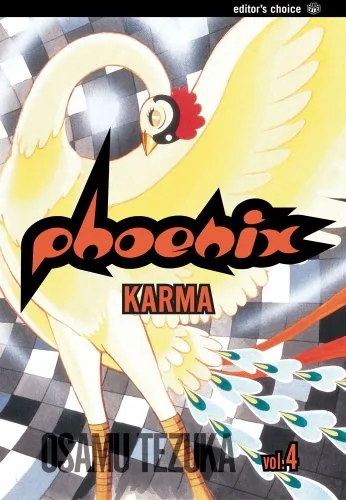
The upcoming Tokyo production adapts the second major narrative arc in the long-running Phoenix manga. Tezuka wrote that storyline between December 1967 and September 1968. Fans in Tokyo haven’t had to wait long for live interpretations of the creator’s catalog, since another theatrical project based on the series ran at Theatre West in the Tokyo Metropolitan Theater during July 2024. That earlier play adapted the historical ‘Karma’ storyline, known in Japanese as Hō-ō-hen, proving that complex philosophical manga can translate into compelling live stage drama for modern audiences [1].
Stage adaptations of Tezuka’s work have explored different presentation styles in recent months. Between April 22 and May 16, a live performance titled Mangalogue: Hi no Tori played at the Box1000 theater within MoN Takanawa: The Museum of Narratives. The show ran in Box1000. That production combined printed manga panels with live acting, showing how easily the creator’s visual pacing translates into public performance spaces as creative teams test new ways to engage theatergoers [1].
The cast for Hi no Tori Mirai-hen ZEROMDISTANCE brings several experienced stage performers together. Jutta Yuki stars as the space warrior Yamanobe Masato, while Narumi Yasuda provides the distinct vocal performance for the mystical Phoenix that observes human folly across centuries. Kaiki Ohara takes on the role of Rock. Veteran performer Moro Morooka steps in as Dr. Saruta, while the shape-shifting alien companion Tamami is portrayed by both Adone Kudō and Shiina Yuzuki. Kudoh decided to write the script, direct the cast, and serve as executive producer, giving the production a unified artistic vision as rehearsals get underway for the February run [1].
Cast and Setting of the Dystopian Narrative
The official Osamu Tezuka website outlines the dark premise behind the Future arc, which transports readers far ahead into human history. The story unfolds in A.D. 3404. At that time, an exhausted surface biosphere forces surviving human populations into subterranean city-states to escape the poisoned atmosphere above. The authorities of Megalopolis Yamato send their military forces to hunt down space warrior Yamanobe Masato, a Class 2 soldier who broke military regulations by sheltering an alien Moopie creature named Tamami after she used her shape-shifting powers to take human form [1].
Facing execution, Masato and Tamami flee across a scorched wasteland. They seek safety beyond the city borders. Guided through the ruins by the Phoenix, the two runaways eventually discover Dr. Saruta’s isolated dome habitat. Inside his shelter, Dr. Saruta spends his solitary days running experiments on artificial life, working tirelessly to bring extinct species back to the dying planet before all organic biology disappears forever [1].
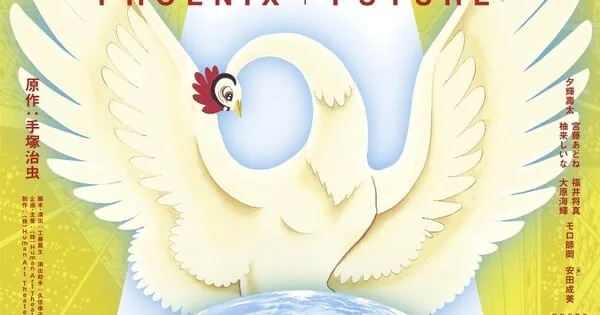
While the fugitive pair shelters inside the remote research station, political tensions inside the subterranean city boil over into total nuclear devastation. The final war begins beneath the crust. The cataclysm wipes out every remaining resident, leaving humanity completely extinct. In the original Phoenix manga, Tezuka didn’t offer an easy escape from this cataclysm, instead confronting readers with the harsh reality of civilizational collapse to emphasize that human survival remains a fragile cycle dependent on cosmic rebirth [1].

Publishing Journey of the Hi no Tori Epic
Tezuka didn’t write his sprawling masterpiece in one smooth creative stretch, and the serialization of Hi no Tori faced several major disruptions over four decades. He first began publishing the opening ‘Dawn’ arc in Manga Shonen from 1954-55, but the storyline stopped abruptly when the publication suspended operations. That run also remained unfinished. He returned to the concept during 1956 with three separate chapters set in Egypt, Greece, and Rome for Shōjo Club magazine, yet that magazine run also ended without completing the tale [1].
The saga finally found stable footing when Tezuka launched his own monthly manga publication, COM, in 1967. He rebooted the ‘Dawn’ arc in the magazine’s debut issue. That opening served as an expansive prologue for a multi-part saga that would alternate between past historical eras and distant science fiction futures. The second installment to appear was this very ‘Future’ arc, which ran between December 1967 and September 1968 [1].
Tezuka continued adding new chapters to the cycle across different decades, releasing 12 distinct parts before finishing the ‘Sun’ arc in 1988 [1]. He died of stomach cancer in February 1989 before he could pen those concluding scenes. The final chapters of Phoenix were never released. Several planned animations were also left in mid-production when he died, cutting short one of the most prolific careers in Japanese publishing history [2].
Osamu Tezuka Phoenix Roots and Early Career
Tezuka was born on November 3, 1928, in Toyonaka, Osaka, as the eldest of three children in an educated household with deep professional roots. His father Yutaka held a management job at Sumitomo Metals, while his grandfather Taro practiced law. Earlier ancestors also followed medical careers, with both Ryoan and Ryosen serving as physicians. His mother introduced him to theatrical performance early in life by taking him to the Takarazuka Grand Theater to see the all-female Takarazuka Revue. Those romantic musicals made a lasting impression on him, shaping his later costume designs and inspiring the large, sparkling eyes that became a defining trademark of his art style [2].
His father also introduced him to American animation, showing Disney films that Tezuka watched repeatedly, including viewing Bambi more than 80 times. He loved drawing from an early age. Around his fifth elementary school year, he found a passage about a ground beetle named ‘Osamushi’ in an insect book and adopted it as his lifelong pen name [2].
During high school in 1944, Tezuka was drafted into factory work to support the Japanese war effort while continuing to write manga after hours. In 1945, he entered Osaka University to study medicine. His professional debut arrived in early 1946 when the newspaper Shokokumin Shinbun serialized his short comic Diary of Ma-chan while he was 17. His 1947 release New Treasure Island sparked a widespread manga revolution, earning him titles like “the God of Manga” [2].
Screen Adaptations and Modern Reading Formats
The Phoenix manga has reached visual audiences through several animated productions over the past half-century. Between 1978 and 1987, Japanese animation studios released a sequence of anime films and original video animations that tackled individual arcs from the books. A television anime followed in 2004. In September 2023, the four-episode anime Phoenix: Eden17 debuted worldwide on Disney+, followed in November 2023 by the theatrical feature Phoenix: Reminiscence of Flower, which offered an alternate ending based on the ‘Nostalgia’ arc [1].
English readers have followed the saga through changing print licenses as overseas publishers worked to keep classic catalogs in circulation. Viz Media previously handled North American distribution for the Phoenix manga. Kodansha USA Publishing later acquired the license to release large Deluxe Edition hardcovers that bundle the ‘Dawn’ and ‘Future’ arcs together. While contemporary fans often track new digital releases, as seen with Takeshobo digital manga releases arriving on online storefronts, physical archival editions remain the primary way western readers collect classic Tezuka masterworks [1].
The February run of Hi no Tori Mirai-hen ZEROMDISTANCE at Sakura Hall shows that live theater remains an active home for Tezuka’s philosophical sci-fi. The stage play opens on February 6. Kudoh’s new staging gives modern theatergoers a rare chance to experience the apocalyptic Future arc in a physical setting. It’s an ambitious effort that keeps Tezuka’s vision alive for a new generation of stage and manga enthusiasts [1].
- ONLINE NEWS Mateo, A. (2026, October 12). Osamu Tezuka’s Phoenix Manga’s Future Arc Gets Stage Play in February. Anime News Network. [Article Link]
- WEBSITE Wikipedia contributors. (n.d.). Osamu Tezuka. Wikipedia. [Article Link]


