





Can astronauts exploring the lunar surface safely navigate the physical strains of extravehicular activity without unexpected vascular crises? Evaluating the risks of decompression sickness and venous thromboembolism has become a paramount medical priority for NASA as the Artemis campaign prepares for extended surface missions on the Moon. While ambient pressure shifts present documented operational hazards, an expert medical panel confirmed in September 2026 that routine exclusion of crew members with minor cardiac septal openings is not medically warranted [1].
- Evaluating Risks of Decompression Sickness in Lunar Exploration
- Why Is Decompression Sickness Dangerous?
- Bubble Grades and Decompression Risks During Ambulation
- Patent Foramen Ovale Impact on Venous Thromboembolism
- What Happens If Decompression Sickness Goes Untreated?
- Clinical Protocols for Decompression Sickness Risks and Analgesics
Evaluating Risks of Decompression Sickness in Lunar Exploration
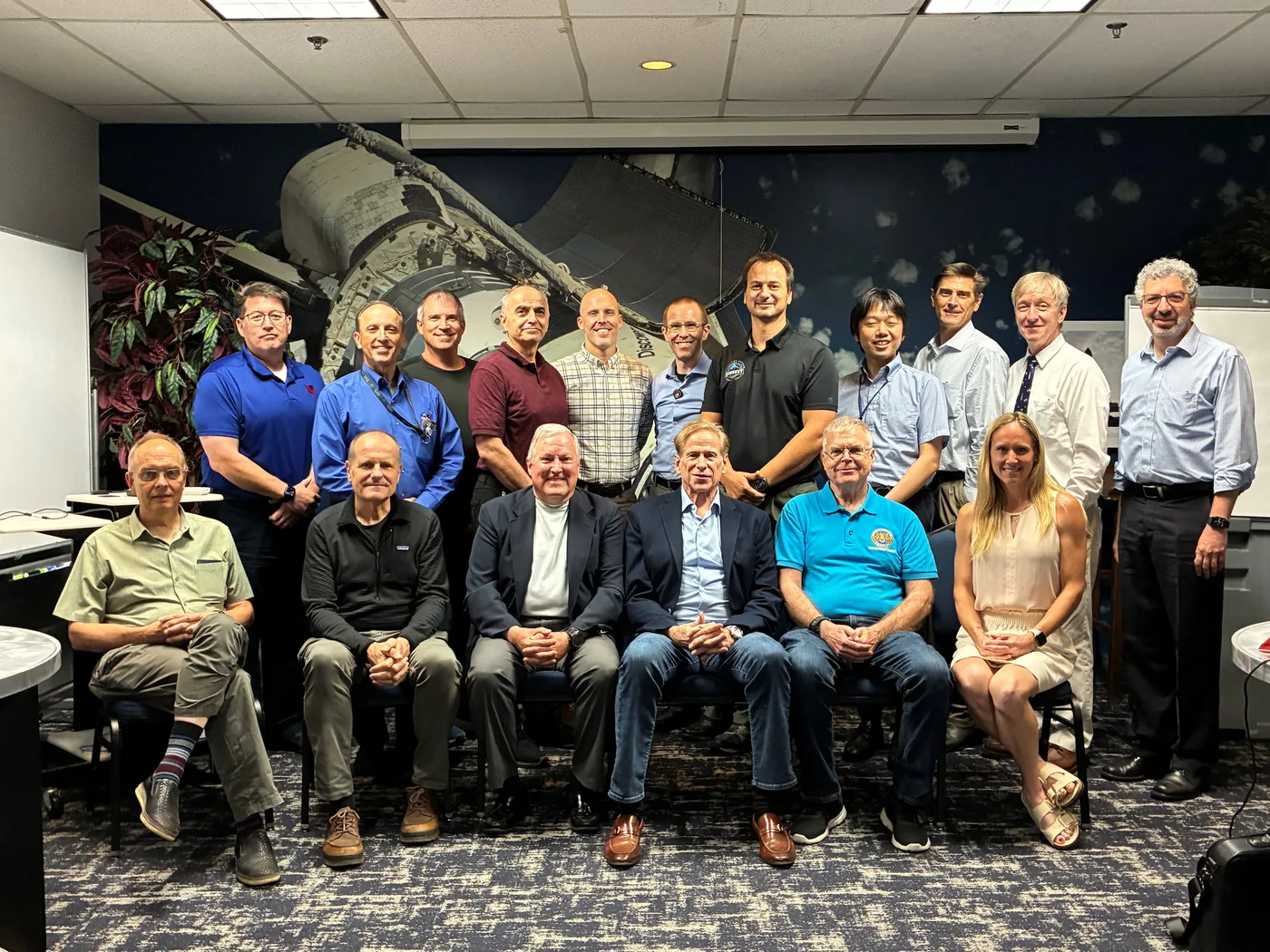
NASA medical officer Kim Lowe detailed the recommendations of an expert working group convened in September 2026 to evaluate Decompression Sickness and Venous Thromboembolism. The Chief Health and Medical Officer working group assembled aerospace clinicians to examine historical Extravehicular Activity prebreathe testing protocols and in-flight thromboembolic occurrences. Medical specialists reviewed empirical flight data to establish realistic safety baselines for the Artemis Program before astronauts depressurize their space suits on the Lunar Surface. Kim Lowe documented these criteria [1].
These updated clinical recommendations integrate critical findings from earlier space medicine assessments, including the September 2024 report on Patent Foramen Ovale dynamics during Ground Testing and space flight (NASA/SP-20240010473). The panel synthesized operational records from the April 2026 NASA Risk of Venous Thromboembolism in Spaceflight Working Group (NASA/SP-20260005258/REV1) and the updated DCS prevention standard in NASA-STD-3001 Volume 2 Human Factors, Habitability, and Environmental Health (NASA-STD-3001 Vol 2 Rev F). NASA revised Vol 2 Rev F [1]. This unified regulatory framework establishes standardized operational thresholds for long-duration Deep Space exploration.
Unlike computational forecasts developed in predictive modeling for deep space health risks, the working group directly evaluated clinical test boundaries and participant safety. The panel determined that terrestrial Ground Testing protocols should no longer dismiss human research subjects solely due to the presence of left ventricular gas emboli (LVGE). Protocols must balance participant safety with demographic representativeness, ensuring cohorts reflect operational astronaut populations while subjects receive comprehensive counseling regarding physiological risks [1].
Why Is Decompression Sickness Dangerous?
Decompression sickness threatens human physiology when inert gas bubbles precipitate inside bodily tissues and vascular channels during acute ambient pressure reductions. Understanding the risks of decompression sickness requires examining how dissolved nitrogen gas transitions out of physical solution during Extravehicular Activity suit depressurization. When ambient barometric pressure drops rapidly, expanding microbubbles can obstruct capillary beds, incite localized endothelial inflammation, and trigger acute ischemic injury across vital organ systems. Grade 1 defects remain benign [1].
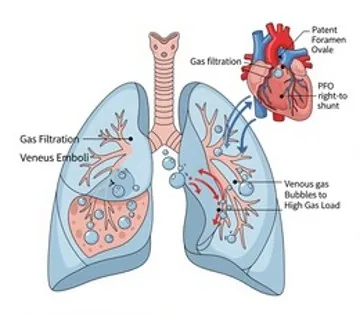
In nominal circulatory physiology, circulating Venous Gas emboli travel through systemic veins to the pulmonary vascular bed, where the lungs safely filter and exhale the microbubbles. However, if gas emboli cross an interatrial cardiac communication or overcome pulmonary capillary filtration capacity, microbubbles enter Arterial Circulation, significantly elevating the danger of focal cerebral infarction or spinal cord ischemia. Venous Gas emboli crossing into Arterial Circulation can compromise cerebral perfusion and provoke severe neurological impairment during critical Lunar Surface operations [2].
Grade 2 anomalies require no surgery. Massive emboli demand immediate hyperbaric recompression to prevent permanent neurovascular injury during Extravehicular Activity sorties on the Lunar Surface [1].
Bubble Grades and Decompression Risks During Ambulation
Astronauts complete structured oxygen prebreathe routines before extravehicular activities to wash out dissolved inert nitrogen from bloodstream reserves, yet evaluating operational decompression risks in partial gravity presents distinct biomechanical variables. Medical investigators found no definitive correlation connecting ultrasound bubble classifications with high-altitude DCS vulnerability during protocols that combine reduced gravity with active ambulation. Physical locomotion across the Lunar Surface alters regional circulatory perfusion in ways that static resting trials cannot fully replicate [1].
While flight surgeons prioritize minimizing circulating microbubble formation during training, the predictive value of ultrasonic bubble scores for clinical DCS remains deeply uncertain during active lunar operations. Biomedical teams tracking the risks of decompression sickness acknowledge that surface walking and physical exertion shift gas washout kinetics across muscular compartments. Consequently, ultrasound monitoring alone cannot serve as an absolute indicator of individual mission decompression safety during strenuous surface exploration [1].
Aerospace clinicians emphasized that ground-based decompression trials must balance rigorous subject safety with realistic population representativeness. Under updated recommendations, investigative teams must inform research participants of their Left Ventricular bubble status and related physiological implications without enforcing premature trial disqualification. Informed consent protocols ensure that Ground Testing maintains both scientific rigor and subject welfare throughout extended spaceflight simulations [2].


Patent Foramen Ovale Impact on Venous Thromboembolism
A Patent Foramen Ovale (an interatrial communication where the tissue flap between the left and right atria fails to seal after birth) has frequently raised clinical concerns regarding paradoxical embolic transmission. However, the expert Working Group concluded that the presence of a patent foramen ovale is not considered a major risk factor for Venous Thromboembolism formation during spaceflight missions [1]. NASA flight surgeons confirmed that cardiac anatomy alone does not heighten primary clot formation in microgravity.
Furthermore, panel members determined that a PFO does not exacerbate complication risks should a venous clot originate within the Left Internal Jugular vein or the cerebrum under normoxic or proposed hypoxic space habitats. The Chief Health medical panel accordingly recommended no changes to astronaut medical selection criteria regarding PFO status with respect to Venous Thromboembolism risks. NASA medical standards for the Artemis Program remain focused on active physiological monitoring rather than anatomical exclusion [1].
These clinical observations align with physiological adaptations tracked in physiological changes observed in astronaut ageing research, demonstrating that venous hemodynamics in microgravity remain manageable through standard countermeasures without necessitating structural surgical screening. Flight surgeons emphasize that vascular regulation accommodates prolonged weightlessness during Deep Space transit without triggering spontaneous thrombosis [2].
What Happens If Decompression Sickness Goes Untreated?
Untreated decompression sickness triggers progressive vascular occlusion that can lead to permanent joint necrosis, severe neurological impairment, and life-threatening systemic collapse. When nitrogen bubbles remain trapped within microvascular networks, localized tissue ischemia provokes progressive platelet aggregation and severe edema, converting manageable joint pain into debilitating functional incapacitation during lunar operations. Without timely hyperbaric recompression, microvascular blockages impair systemic perfusion and jeopardize the overall safety of the Artemis Program [1].
The ultimate clinical prognosis depends substantially on the anatomical scale of cardiac communications and total circulating bubble volume. NASA’s working group determined that a small PFO (classified clinically as Grade 1 or Grade 2) does not pose a significant operational health risk to exploration crew members during extravehicular activities. For astronauts presenting with a large PFO (designated as Grade 3 or above), panel specialists expressed mixed opinions on whether prophylactic surgical closure or operational flight disqualification substantially decreases the risk of a venous gas embolism passing into Arterial Circulation to cause a critical mission event. Grade 3 gaps present larger risks [1]. Rather than recommending universal screening or blanket exclusions, the working group highlighted the protective value of protocol design, individualized risk assessment, and continuous physiological data collection.
When comprehensive clinical evaluations identify a large PFO in an active astronaut, flight medicine guidelines advise that the crew member must be fully informed of their physiological profile and offered closure options on an elective clinical basis. Elective closure allows individualized clinical decision-making without disrupting astronaut career trajectories or mission scheduling during the Artemis Campaign [1].
Clinical Protocols for Decompression Sickness Risks and Analgesics
Mitigating decompression sickness risks during deep space operations demands precise pharmacological management before astronauts depressurize their airlocks. The expert working group concluded that clear clinical guidance is mandatory regarding all pre-EVA medication use, ensuring consistent pharmacological oversight across all lunar crew members. Clinical standards for managing the risks of decompression sickness prioritize transparent drug tracking to prevent adverse pharmacological interactions during Extravehicular Activity sorties [1].
Specifically, operational clinical standards must formalize the administration of aspirin for DCS prophylaxis and musculoskeletal pain management during surface exploration. Flight surgeons also highlighted an urgent requirement for detailed guidance governing pre-EVA and post-EVA use of common analgesics, including acetaminophen, ibuprofen, naproxen, and celecoxib, because these widely used analgesics have the potential to mask early DCS symptoms and delay necessary hyperbaric intervention [1]. Unchecked analgesic use can obscure initial joint pain, allowing bubble-induced microvascular damage to advance undetected.
As exploration architectures mature toward deep space transit, operational safety relies on disciplined prebreathe protocols and transparent clinical oversight rather than arbitrary candidate disqualification. The Chief Health and Medical Officer working group established that targeted operational guidelines best protect astronaut well-being while sustaining lunar exploration objectives. NASA continues to update human habitability standards and Environmental Health protocols to support long-duration planetary expeditions across the solar system [2].
- CONFERENCE PAPER Lowe, K. (2026, September 22). Risks of Decompression Sickness and Venous Thromboembolism during Spaceflight and Patent Foramen Ovale Implications. NASA Office of the Chief Health and Medical Officer. [Article Link]
- REPORT NASA. (2026, September 22). Risks of Decompression Sickness and Venous Thromboembolism during Spaceflight and Patent Foramen Ovale Implications. NASA Science. [Article Link]
APA 7: PerEXP Teamworks. (2026, September 22). How Risks of Decompression Sickness Shape Lunar Spaceflight.


