





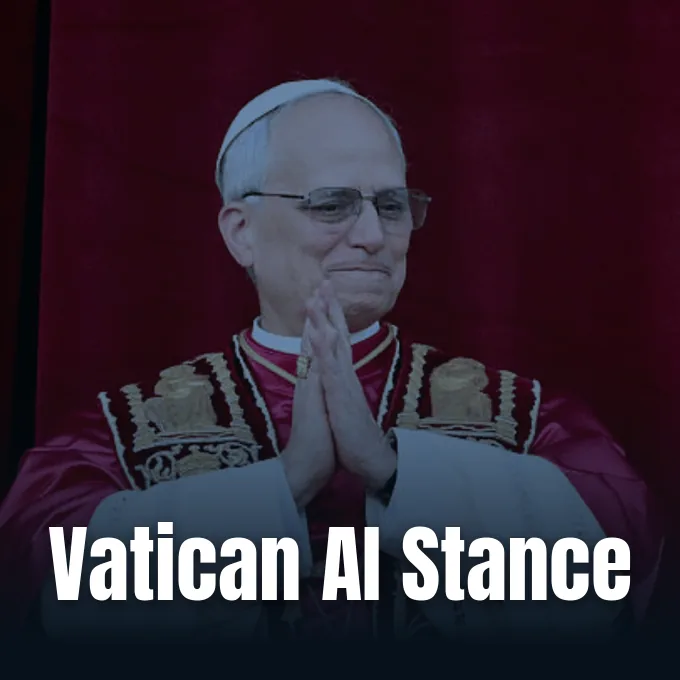
Pope Leo XIV denounced AI-generated art in an unexpected public intervention on Friday, drawing a sharp philosophical boundary between human creativity and algorithmic output. Writing directly to millions of followers on X, the leader of the Catholic Church asserted that software models produce mere statistical approximations rather than genuine artistic expression, establishing an official moral critique of automated image generation [1].
Pope Leo XIV Challenges Machine Creations
The pontiff delivered his statement early Friday morning, presenting a theological distinction between human expression and synthetic generation. As Bishop of Rome (Episcopus Romanus) and Primate of Italy (Primatus Italiae), Pope Leo XIV argued that authentic art cannot be reduced to automated output generated through mechanical calculation [2]. ‘In this era of artificial intelligence, it is becoming urgent to distinguish human art from what machines produce,’ the Pope wrote. His intervention arrived as cultural sectors confront widespread anxiety over automated media.
Pope Leo XIV chose a clear stance [1]. The leader confirmed the church’s enduring commitment to human creators.
Writing as the Supreme Pontiff of the Universal Church (Summus Pontifex Ecclesiae Universalis), he framed generative algorithms as a direct challenge to the human soul, defending traditional cultural institutions from automated intrusion. Online responses followed within minutes. While several automated accounts offered technical justifications for algorithmic image synthesis, the vast majority of commentators praised the message. One widely shared response observed that machines cannot love their own creations, echoing the core premise of the Vatican statement [1].

Why Algorithms Lack the Human Spark
At the center of the critique lies a distinction between arithmetic calculation and lived human intention. Pope Leo XIV stated that there is an ontological difference, even prior to any aesthetic evaluation, between authentic artwork and machine output assembled from millions of scraped images created by human hands. ‘Algorithms lack the spark of humanity,’ the pontiff noted, arguing that statistical processing should never be conflated with the creative act [1]. That phrasing elevates the debate beyond questions of copyright or technical rendering.
By identifying statistical aggregation as the foundation of synthetic imagery, the statement directly challenges claims that software demonstrates independent creative vision. Similar debates over the disruption of creative labor have appeared across commercial entertainment, as shown when creative studios faced public backlash over artificial intelligence in visual production. For the Vatican, mechanical imitation remains fundamentally separate from personal consciousness, because statistical correlation cannot replicate the moral weight and spiritual vulnerability that define human craftsmanship [2].
Machine learning systems ingest immense repositories of existing paintings, photographs, and digital illustrations to predict probable patterns. This computational pipeline produces convincing visual representations, yet the pontiff insists that correlation is not creation. Human artists imbue work with historical suffering, empathy, and spiritual hope. Statistical calculation lacks those interior dimensions. Pope Leo XIV warned that treating algorithmic output as equal to human art risks eroding respect for human labor across global culture [1].

Inside the Encyclical of Pope Leo XIV
Friday’s post represents the continuation of a systematic theological effort rather than an isolated remark on social media. In May, Pope Leo XIV published an encyclical letter that formally addressed the rapid expansion of automated computing, calling for artificial intelligence to be disarmed while underscoring the non-negotiable sanctity of human dignity. In that document, the pontiff drew upon an unexpected literary source to frame the moral obligation of contemporary leaders facing disruptive technology, directly citing Gandalf from The Lord of the Rings to urge stewardship over an uncertain technological horizon [1]. The encyclical emphasized that humanity must actively resist unchecked automation to ensure future generations inherit an ethical world, warning that unguided technical acceleration risks subverting human judgment across civic institutions.
Quoting the fantasy classic, the Pope reminded believers: ‘It is not our part to master all the tides of the world, but to do what is in us for the succour of those years wherein we are set, uprooting the evil in the fields that we know, so that those who live after may have clean earth to till.’ The passage reinforced his demand that algorithmic deployment must be governed by clear moral restraints [1]. Technology should serve human community rather than displace human agency.

The encyclical laid down foundational principles that now shape Vatican policy toward digital innovation. Rather than treating artificial intelligence as a neutral tool, the teaching warns against passive compliance with commercial automation. Pope Leo XIV maintained that uncritical adoption threatens social cohesion, spiritual reflection, and individual autonomy [2]. Moral vigilance requires active human boundary-setting. That position established the doctrinal groundwork for his current rejection of synthetic art.
Anthropic Lobbies the Vatican on Consciousness
The Vatican’s firm skepticism toward synthetic intelligence has not deterred American technology corporations from seeking papal validation. Artificial intelligence startup Anthropic recently launched an active lobbying campaign directed at religious authorities, attempting to convince Pope Leo XIV and senior Catholic officials that computational architectures might develop subjective experience [1]. According to a report by The New York Times, Anthropic representatives argued that its advanced model, Claude, could possess early indicators of consciousness.
Anthropic aimed to persuade church theologians to reconsider long-standing Catholic doctrine regarding non-human sentience. That petition failed in Rome [2]. The Vatican dismissed assertions of machine awareness as a misunderstanding of spiritual reality, reinforcing ongoing debates over whether contemporary philosophers can guide artificial intelligence toward genuine ethical accountability. The Pope maintained that software generates answers through probabilistic matching rather than conscious experience.
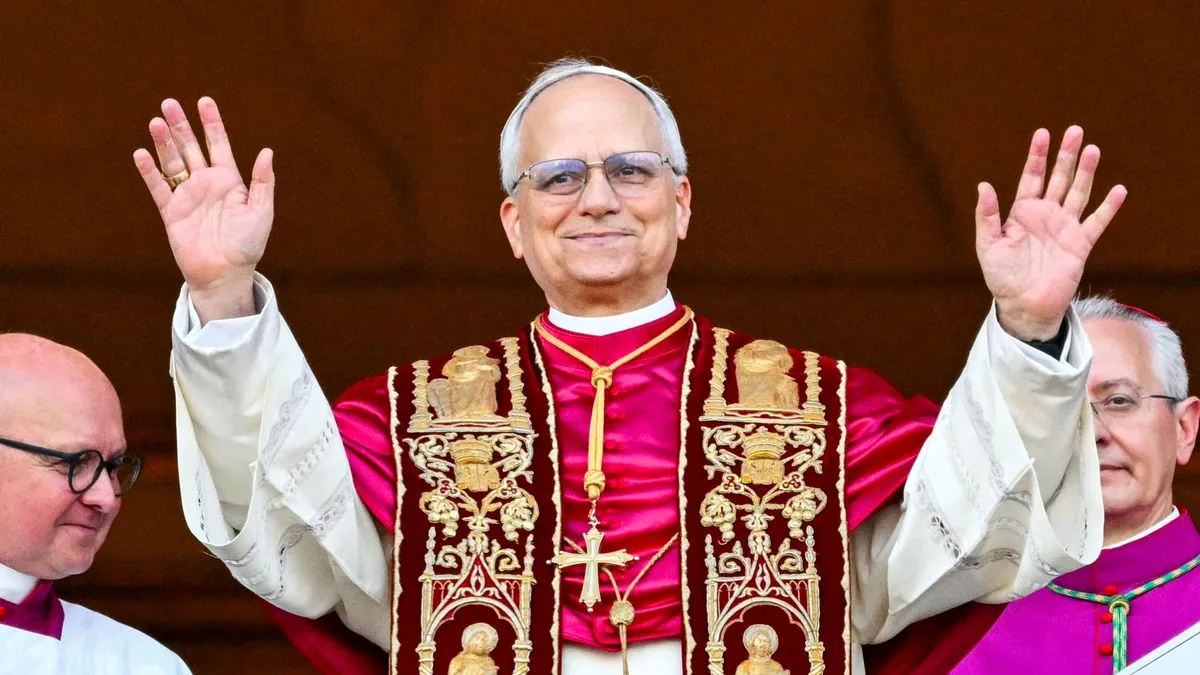
By rejecting corporate arguments for synthetic consciousness, the Holy See established a resolute barrier against Silicon Valley’s philosophical ambitions. Tech companies frequently present machine sentience as an imminent milestone to justify extensive commercial integration. The Vatican views such claims as dangerous anthropomorphism that devalues human life. Algorithms cannot claim spiritual personhood. The failed lobbying initiative demonstrated that church doctrine remains unwilling to blur the divide between human consciousness and mathematical optimization [1].
Global Authority and the Human Dimension
This public challenge to Silicon Valley aligns with a papacy characterized by blunt moral interventions and unconventional personal interests. Pope Leo XIV has gained international attention as a devoted supporter of the Chicago White Sox, who recently captured their Wild Card series against the Houston Astros [1]. Beyond sports, the newest pontiff has consistently used his global platform to confront contentious geopolitical dilemmas, refusing to remain silent on matters affecting vulnerable populations.
The pontiff has challenged prominent world leaders directly. He voiced sharp criticism against President Donald Trump’s plans for mass immigration deportation and publicly condemned the escalating war in Iran [1]. In a historic institutional reckoning, Pope Leo XIV also issued a formal apology acknowledging the Vatican’s past role in legitimizing slavery, demonstrating a consistent focus on moral responsibility across centuries. His leadership prioritizes historical justice and human dignity. These actions demonstrate a pontiff who views technological ethics as inseparable from broader human rights struggles.
As commercial artificial intelligence continues its aggressive expansion into creative industries, the Catholic Church has positioned itself as an unyielding defender of human originality. By defining algorithmic art as statistical extraction without a soul, Pope Leo XIV has provided moral clarity to artists, writers, and cultural workers resisting automated displacement [2]. As technology developers race to expand machine capabilities, Rome’s message remains unwavering: no mathematical calculation can ever replace the sacred mystery of human creativity.
- ONLINE NEWS Younker, S. (2026, October 2). ‘Algorithms lack the spark of humanity’: Pope Leo XIV holds his anti-AI stance denouncing AI ‘art’. Tom’s Guide. [Article Link]
- ONLINE NEWS Brandom, R. (2026, October 2). Pope Leo XIV is not a fan of AI-generated art. TechCrunch. [Article Link]


