






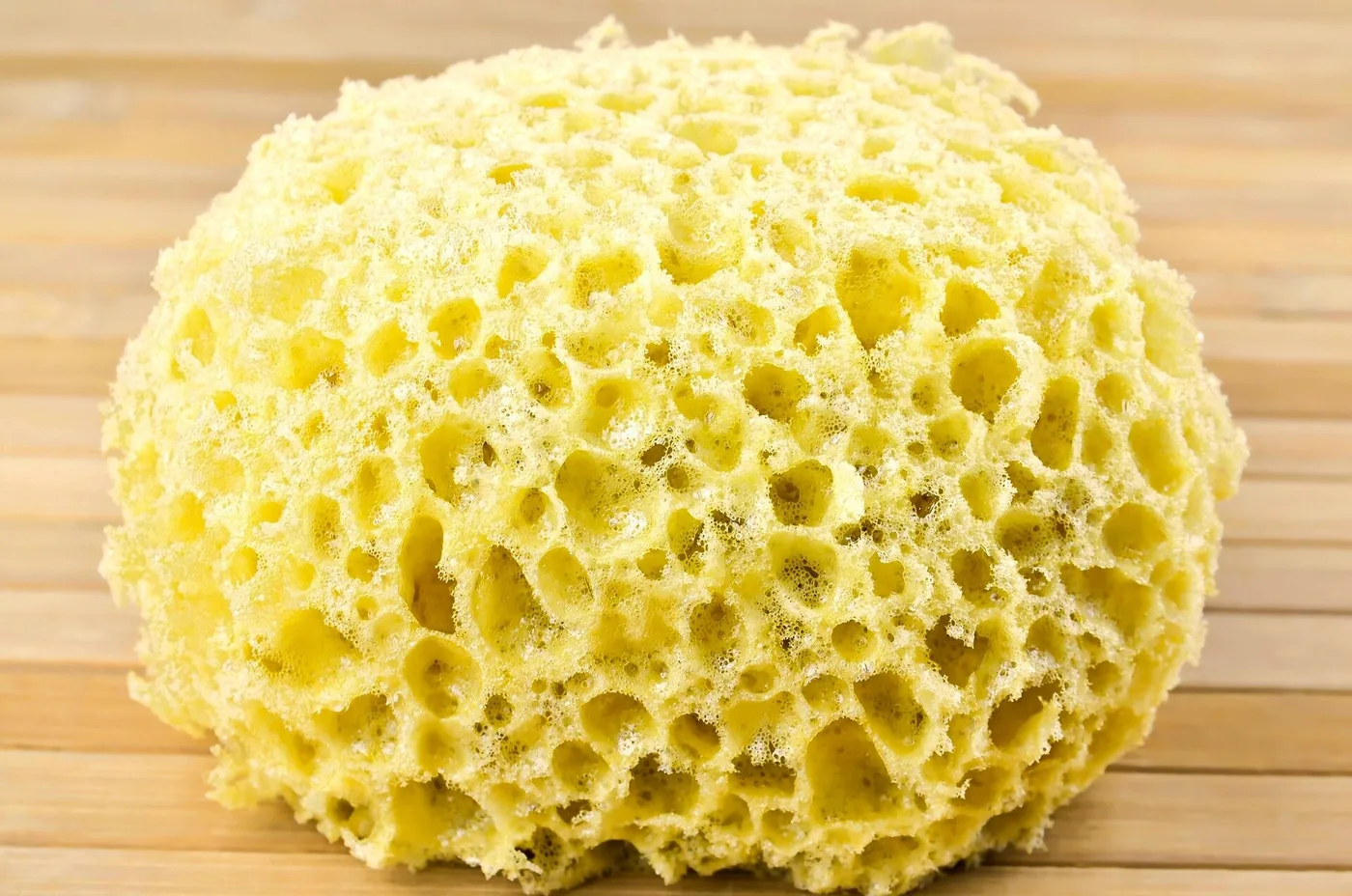
When people discover that household sponges have holes designed specifically to retain fluids, they rarely think of personal danger. Why should harmless household objects provoke nausea or genuine physical distress? For approximately one in six individuals, visual exposure to repetitive circular pores or biological cavities triggers an immediate sensation of revulsion known as trypophobia (an aversion to clusters of holes or repetitive circular patterns). Research published through The Conversation confirms that while these geometric patterns are entirely harmless, the resulting psychological discomfort can significantly disrupt daily routines [8].
Why Sponges Have Holes and What Triggers Disgust
Both manufactured kitchen tools and biological marine sponges have holes that serve essential functional roles. Natural porifera rely on microscopic cellular apertures to draw water through their central cavities, whereas modern commercial items feature engineered open-cell polyurethane matrices designed to maximize water retention and surface cleaning. When observers inspect these porous surfaces under close magnification, the structural utility is obvious. The physical objects remain safe. Yet harmless everyday items such as honeycomb, lotus seed pods, crumpets, and aerated chocolate frequently provoke unexpected psychological reactions. Observers suddenly report an intense itching sensation across their arms, stomach distress, and an urgent impulse to avert their gaze from the clustered indentations. Psychologists observe that while a porous dish sponge cannot inflict physical injury, the human nervous system frequently processes the sensory input as if encountering an immediate biological hazard [9].
Sensory triggers extend across ordinary domestic environments. Writing in scientific accounts republished under a Creative Commons license, psychologist Simone Hain explains that everyday visual prompts can provoke visceral discomfort even when someone understands that the object presents no physical danger. In domestic kitchens, food preparation often brings individuals into direct contact with textured items such as strawberries, bubbly dough, or sliced root structures. Similar discussions surrounding domestic manufacturing appear in broader examinations of toxicity levels in conventional plastic items where material properties influence consumer interactions. Disgust dominates here. Harmless textures prompt genuine revulsion. Because the visual pattern bypasses deliberate conscious evaluation, viewers experience immediate autonomic reactions that occur long before rational appraisal can reassure them [8].
The Emotional Dominance of Visceral Disgust
Despite containing the word phobia in its title, trypophobia is not classified as an independent psychiatric disorder in standardized diagnostic manuals. Most conventional specific phobias, such as arachnophobia (an extreme dread of spiders), are driven primarily by intense sympathetic nervous system fear and apprehension regarding imminent physical harm. In contrast, investigations led by G. G. Cole and A. J. Wilkins demonstrate that aversion to circular cluster patterns is characterized predominantly by revulsion and nausea rather than classic panic. Disgust represents the core affective driver behind trypophobic avoidance. People who encounter these stimuli frequently describe shivers, nausea, skin crawling, and an overwhelming desire to clean their hands [4].
For a small subset of the population, these reactions escalate from fleeting irritation into profound behavioural disruption. Research participants interviewed by Simone Hain described avoiding raw strawberries, refusing to cook or bake, throwing away patterned clothing, and dreading daily showers because clustered droplets simulated geometric triggers. Avoidance behaviors mirror clinical phobias. Daily functioning frequently suffers. When simple visual stimuli cause individuals to alter their domestic routines, the condition imposes measurable psychological burdens that extend far beyond casual online amusement. Clinical descriptions demonstrate that severe cases generate marked impairment comparable to established anxiety disorders, leaving vulnerable individuals anxious about encountering innocuous geometric arrangements during routine social outings [8].
How Social Media Amplified Hole Aversion
Trypophobia gained widespread cultural prominence largely through modern internet platforms. Viral video creators on TikTok, Reddit discussion threads, and digital art forums regularly circulate images of lotus seed heads, honeycomb structures, and synthetic sponges where sponges have holes digitally layered onto biological surfaces. Digital artists deliberately alter image contrasts to maximize sensory revulsion and provoke strong viral engagement. Sensational imagery spreads rapidly. Social media accelerated public discussion. In an empirical study conducted in 2024, nearly two-thirds of surveyed participants reported first encountering the term trypophobia through online platforms. Online algorithms frequently reward content that triggers visceral emotional engagement, ensuring that high-contrast montages of clustered apertures circulate widely among susceptible adolescent and adult audiences [4].
Prior exposure strongly influences the severity of reported symptoms. Participants in the 2024 study who were previously familiar with trypophobia reported substantially more intense disgust than peers viewing the patterns for the first time. Yet social learning does not account for the entirety of the phenomenon. Approximately one-quarter of affected respondents in the same study had never previously heard of trypophobia or seen related memes, yet they experienced spontaneous revulsion upon visual exposure. Online communities undoubtedly expanded cultural awareness, but digital exposure cannot create fundamental visceral reflexes out of nothing. The underlying susceptibility originates in biological visual processing rather than internet culture alone [4].


Evolutionary Origins in Threat and Disease Avoidance
Evolutionary psychologists propose two primary models to explain why human visual systems react negatively to cluster geometry. The threat-detection hypothesis argues that repetitive circular arrangements mimic high-contrast skin patterns observed on dangerous venomous animals, such as pit vipers, the blue-ringed octopus (Hapalochlaena lunulata, a venomous marine cephalopod), or poisonous spiders. According to this framework, early hominids who possessed rapid subconscious detection mechanisms for repetitive circular markings gained a distinct survival advantage by avoiding deadly predatory strikes. Visual cues explain much. The human visual cortex may automatically decode high spatial frequency clusters as potential signs of imminent ecological danger. [1]
A second and increasingly supported model centers on pathogen avoidance and parasite defense. Investigating disease avoidance mechanisms in Cognition and Emotion, researchers T. R. Kupfer and A. T. D. Le argue that clusters of round shapes strongly resemble cutaneous rashes, smallpox pustules, fungal infections, and ectoparasites embedded in mammalian flesh. When biological tissue deteriorates, irregular circular voids frequently appear. The human disgust response evolved as a behavioural immune system designed to prevent tactile contact with infectious pathogens. Visual resemblance alone can activate this protective machinery [2].
Contamination concerns intensify when individuals encounter food textures that resemble biological decay. Visual associations between clustered pores and decaying organic material can disrupt appetite during culinary experiences, much like the sensory complexities explored in cultural foods such as traditional ramen noodle dishes with layered toppings. Laboratory studies by Simone Hain and R. J. Stevenson confirm that individuals displaying high disgust sensitivity report stronger physiological aversion to geometric cluster prompts. The human brain does not react to the object itself, but rather to the biological threat the visual pattern subconsciously suggests. [5]
Clinical Interventions and Exposure Therapy Methods
Clinical treatment is not required for the vast majority of people who experience mild aversion. Recognizing that circular indentations provoke a common, shared human reaction often provides adequate reassurance. Simple psychoeducation reassures many. Support is readily accessible. When symptoms produce disabling dread or disrupt occupational duties, structured psychological support becomes beneficial. Understanding that clusters of circular openings activate deeply rooted evolutionary protective reflexes helps patients contextualize their discomfort without feeling isolated or pathologized by sudden somatic reactions [8].
Exposure therapy represents the standard clinical intervention for specific phobic avoidance. Developed extensively through inhibitory learning frameworks by M. G. Craske and colleagues, exposure protocols involve safely and systematically guiding individuals to confront uncomfortable sensory cues while actively resisting avoidance compulsions. Over repeated controlled trials, patients learn that their acute physiological distress naturally attenuates without causing actual physical harm. By gradually tolerating uncomfortable sensations, individuals weaken automatic conditioned associations between cluster patterns and catastrophic contamination. [6]
Targeted single-session interventions can successfully reduce avoidance. Clinical psychologists observe that addressing fear and revulsion simultaneously allows patients to resume daily responsibilities without acute emotional distress [6].
Until recently, therapeutic interventions had rarely been evaluated specifically for trypophobic distress. In a controlled multiple baseline trial published in Cognitive Behaviour Therapy, researchers Simone Hain, E. L. Oar, A. Mruk, and R. J. Stevenson tested an intensive single-session treatment addressing fear and revulsion. Participants engaged in structured exposure exercises involving real and photographic stimuli over several hours. The intervention achieved substantial symptom reductions, enabling participants to tolerate previously intolerable triggers such as perforated cooking items and textured foods [6].
Evaluating Preprints and Ongoing Research in Hole Aversion
Scientific understanding of hole aversion continues to evolve through contemporary investigations. Simone Hain’s 2026 research summary on sponge hole aversion is currently archived as a preprint and has not yet undergone formal peer review [7]. Scientific editors Swati Mestri and Robert Egan helped oversee the dissemination of the work through Phys.org under republication agreements with The Conversation [9]. In unreviewed manuscripts, preliminary clinical findings provide valuable observational hypotheses, yet independent replication remains essential before conclusions become established medical orthodoxy. Research communities continue to test how visual spatial frequencies interact with human disgust mechanisms [7].
Epidemiological studies demonstrate that hole aversion intersects with broader psychological variables. In a large investigation published in BJPsych Open, researcher S. M. Y. Wong and colleagues surveyed young people in Hong Kong to examine how excessive fear of hole clusters interacts with stressful life events and general affective symptoms. Their analysis revealed that individuals reporting severe trypophobic reactions frequently exhibited elevated baseline anxiety and depressive symptoms (psychological markers associated with heightened emotional vulnerability). Wong and colleagues demonstrated that visual aversion often correlates with underlying sensory sensitivity rather than existing as an isolated curiosity. When life stressors accumulate, sensory reactivity can intensify perceived discomfort [3].
Educational outreach efforts, such as the Curious Kids series produced by The Conversation, demonstrate that public interest in the origin of phobias remains substantial. Inquiries about why sponges have holes reflect a broader curiosity about how biological evolution shapes everyday perception. Could heightened disgust toward harmless household pores represent an evolutionary relic of ancestral disease defense? The evidence indicates that unconscious neural systems continually scan visual environments for pathogenic threats, even when people look at ordinary household sponges. Individuals whose daily routines are disrupted by persistent distress can seek guidance from a general practitioner or licensed clinical psychologist [8].
- ACADEMIC JOURNAL Cole, G. G., & Wilkins, A. J. (2013). Fear of holes. Psychological Science, 24(10), 1980–1985. [Article Link]
- ACADEMIC JOURNAL Kupfer, T. R., & Le, A. T. D. (2018). Disgusting clusters: Trypophobia as an overgeneralised disease avoidance response. Cognition and Emotion, 32(4), 729–741. [Article Link]
- ACADEMIC JOURNAL Wong, S. M. Y., Tang, E. Y. H., Hui, C. L. M., Suen, Y. N., Chan, S. K. W., Lee, E. H. M., Chan, K. T., Wong, M. T. H., Wilkins, A. J., & Chen, E. Y. H. (2023). Excessive fear of clusters of holes, its interaction with stressful life events and the association with anxiety and depressive symptoms: Large epidemiological study of young people in Hong Kong. BJPsych Open, 9(5). [Article Link]
- ACADEMIC JOURNAL Cole, G. G., Millett, A. C., & Juanchich, M. (2024). The social learning account of trypophobia. Quarterly Journal of Experimental Psychology, 77(10), 2076–2083. [Article Link]
- ACADEMIC JOURNAL Hain, S., & Stevenson, R. J. (2025). Contamination in trypophobia: Investigating the role of disgust. Cognition and Emotion, 39(3), 635–648. [Article Link]
- ACADEMIC JOURNAL Hain, S., Oar, E. L., Mruk, A., & Stevenson, R. J. (2026). One-session treatment for trypophobia: A controlled multiple baseline trial. Cognitive Behaviour Therapy, 1–18. [Article Link]
- PREPRINT Hain, S. (2026). This sponge has holes. Some find that truly disgusting [Preprint – not peer reviewed]. [Article Link]
- ONLINE NEWS Hain, S. (2026, September 17). This sponge has holes. Some find that truly disgusting. The Conversation. [Article Link]
- ONLINE NEWS Phys.org. (2026, September 17). This sponge has holes. Some find that truly disgusting. Phys.org. [Article Link]
APA 7: TWs Editor. (2026, September 18). Sponges Have Holes: Why Clustered Patterns Trigger Real Disgust. PerEXP Teamworks. https://perexpteamworks.com/en/sponges-have-holes-cluster-disgust/


