





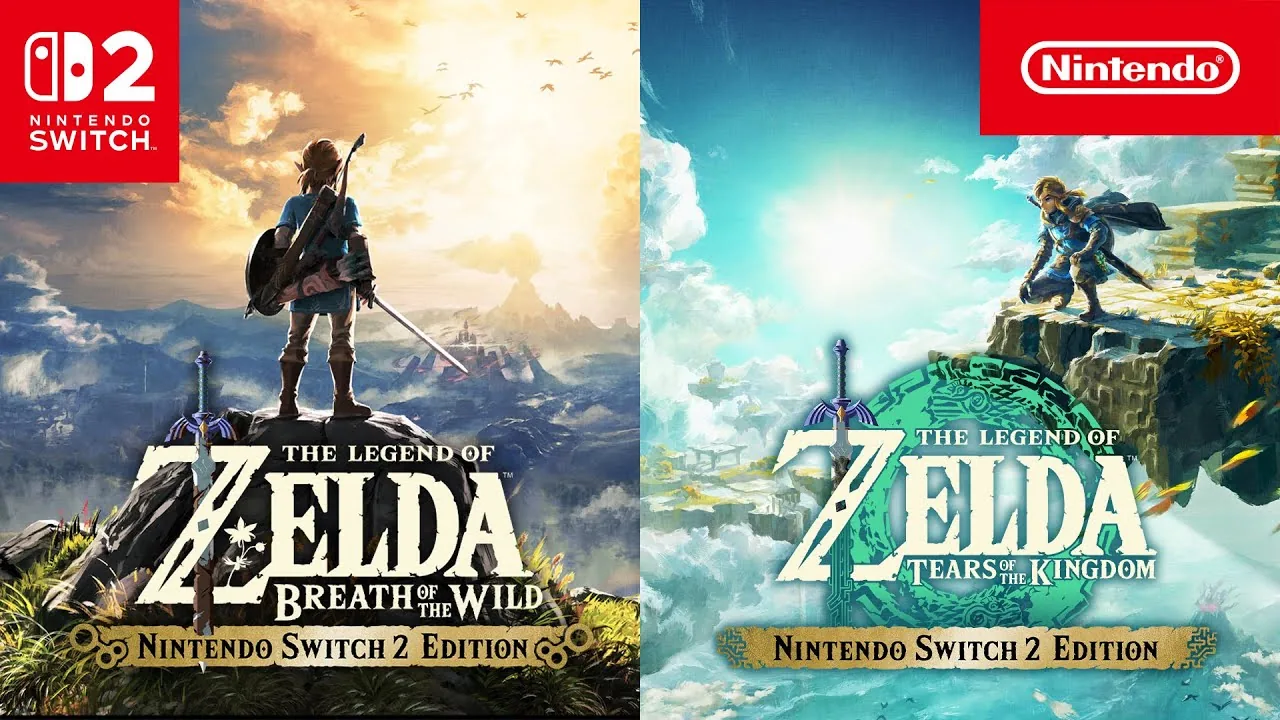
Nintendo celebrated the 40th anniversary of its flagship fantasy franchise by expanding companion services, making weekly mobile games a focal point for handheld players seeking Hyrule adventures. While the Japanese gaming giant recently unveiled updated Switch 2 editions for Breath of the Wild and Tears of the Kingdom during a comprehensive broadcast, smartphones and tablets continue to occupy a distinct secondary perimeter around console hardware [1]. Takara Tomy complemented this digital strategy by announcing a twelve-piece capsule charm collection honoring four decades of legendary questing [2]. Smartphones still lack an official standalone adventure, yet portable ecosystems have developed rich alternative libraries to satisfy wandering heroes [1].
Weekly Mobile Games Follow Zelda Companion Apps
The 40th anniversary of The Legend of Zelda arrived with significant fanfare during the latest Nintendo Direct presentation, yet dedicated players monitoring weekly mobile games discovered familiar boundaries. Industry analyst Josh Tolentino of Anime News Network highlighted that Nintendo has never published an official standalone entry in the franchise for iOS or Android devices. Nintendo confirmed no standalone mobile adventure. Instead, the company restricts smartphone interactions to promotional bulletins on the Nintendo Today application, archival soundtrack streams through Nintendo Music, and tactical inventory coordination on the newly released Zelda Notes service [1].
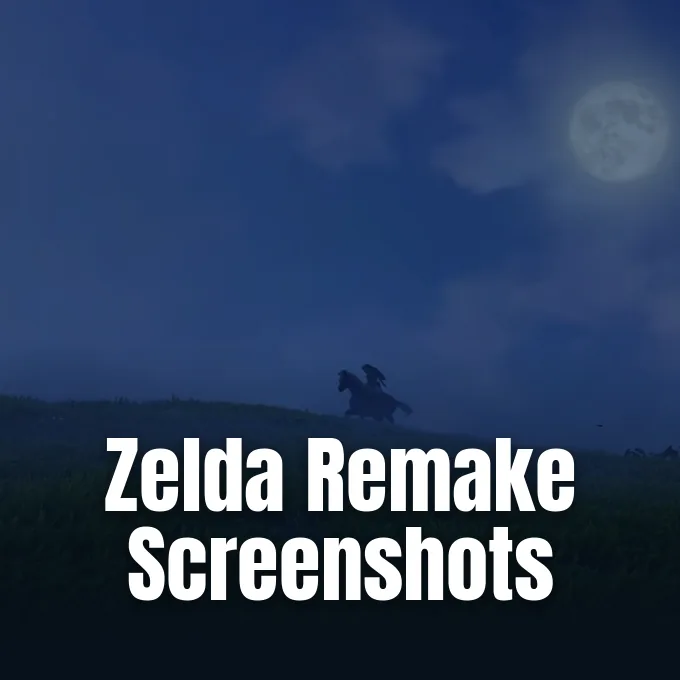
The Zelda Notes application serves as a dedicated digital assistant for updated Switch 2 editions of Breath of the Wild, Tears of the Kingdom, and the forthcoming Ocarina of Time project. Fans examining recent Ocarina of Time remake screenshots noticed how companion interfaces streamline map tracking without cluttering high-definition television screens. Smartphones and tablets remain accessories to the main games on consoles at best, functioning as marketing conduits rather than independent gaming destinations [1].
A 2017 Wall Street Journal report once indicated that internal development teams were preparing a direct smartphone release following the launch of Fire Emblem Heroes and Super Mario Run. Kyoto workbenches produced no handheld cartridge. Nintendo treats mobile platforms as accessible on-ramps designed to drive hardware sales, similar to film adaptations and theme park attractions [1].
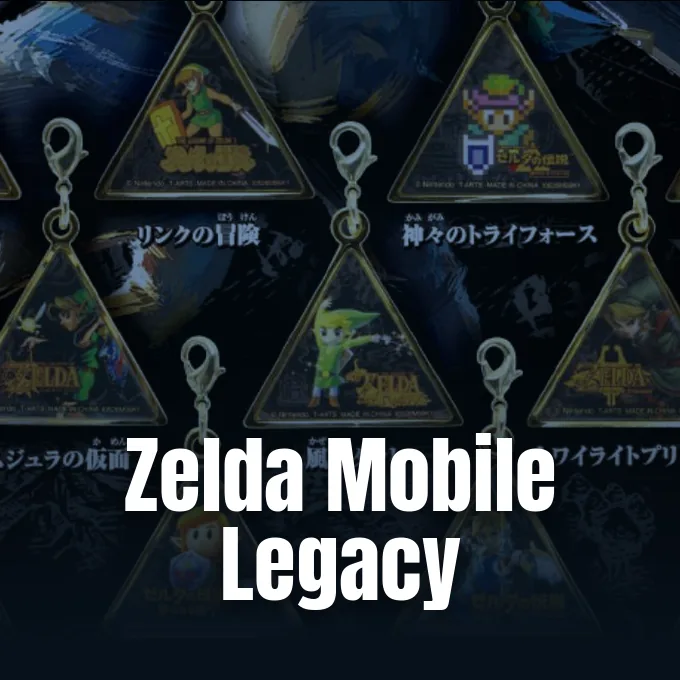
Takara Tomy Crafts 12 Historical Charms
Takara Tomy Arts introduced a tangible celebration for franchise enthusiasts by officially announcing The Legend of Zelda Historical Charms+ collection. The Japanese merchandise manufacturer designed the accessories as heavy metal Triforce replicas measuring approximately 3.5 centimeters in length. The charm measures 3.5 centimeters [2, 3]. Players can affix the ornate pieces to backpacks as personal markers or connect them to keychains. Each capsule costs 300 yen [2].
The miniature metal emblems will launch across Japanese gachapon (capsule vending machine) locations in October 2026 [2, 3]. This autumn release doubles the scope of an earlier May 2017 collection, which featured only six titles and retailed for 200 yen. The 2026 lineup spans twelve mainline adventures in strict chronological order, starting from the original The Legend of Zelda, Zelda II: The Adventure of Link, and A Link to the Past before advancing through Ocarina of Time, Majora’s Mask, The Wind Waker, Twilight Princess, and Skyward Sword [2, 3].

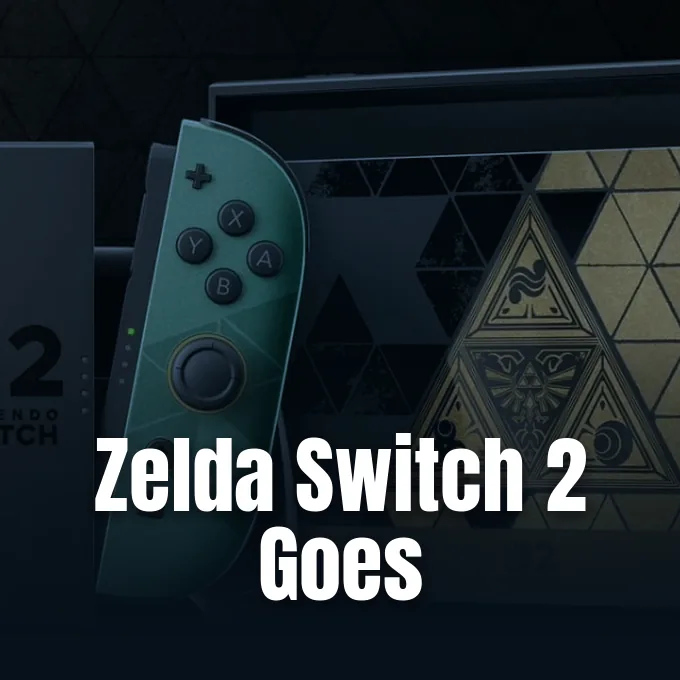
Modern entries complete the capsule roster, incorporating Breath of the Wild, the Switch remake version of Link’s Awakening, Tears of the Kingdom, and the recent Echoes of Wisdom [2, 3]. This merchandise rollout aligns with broader licensed initiatives, including upcoming Hasbro toys based on Tears of the Kingdom and the commemorative Zelda Switch 2 40th anniversary console. Takara Tomy has not confirmed international retail distribution for the capsule series outside Japan [2].
Week Mobile Game Releases Replaced Missing Ports
Because official smartphone adventures never materialized, third-party developers utilized week mobile game releases to satisfy immense consumer demand for dungeon exploration. Finnish studio Cornfox & Bros seized this opportunity in 2013 by launching Oceanhorn: Monster of the Uncharted Seas as an exclusive iOS experience. The oceanfaring adventure cast players as a courageous youth investigating his father’s disappearance, combining isometric perspectives with vibrant nautical travel heavily inspired by The Wind Waker [1].
Nintendo lacked home console releases. Franchise followers were experiencing a prolonged home console drought following the 2011 Wii debut of Skyward Sword, with only A Link Between Worlds on Nintendo 3DS providing respite before Breath of the Wild launched four years later. Mobile players embraced Oceanhorn as an affectionate tribute rather than an unwelcome clone, prompting Cornfox & Bros to port the title across PlayStation, Xbox, PC, and Nintendo Switch [1].
Cornfox & Bros maintained mobile roots across three successive installments. Each release expanded the nautical sailing formula first introduced on touchscreens [1].
The Helsinki developer subsequently published Oceanhorn 2: Knights of the Lost Realm as a launch title on Apple Arcade in 2019, introducing party members and expansive three-dimensional environments. In March 2026, the studio released Oceanhorn 3: Legend of the Shadow Sea exclusively across Apple devices, incorporating spatial first-person virtual reality modes tailored specifically for Apple Vision Pro headsets. The trilogy demonstrates how weekly mobile games can match console production values when platform holders invest in ambitious adventure design [1].
Oceanhorn and Zenonia Forged Independent Paths
South Korean publisher Com2Us, previously known as Gamevil, established an influential handheld pedigree years before Western studios tackled maritime 3D adventuring. The company published the original Zenonia across iOS and Android between 2009 and 2010, delivering fast-paced 2D action role-playing combat characterized by anime aesthetics, intricate manhwa character illustrations, and dramatic special attacks. Zenonia achieved widespread distribution across PlayStation Portable, Nintendo DSiWare, Windows Mobile, personal computers, and the Brazilian Zeebo microconsole [1].
While high-budget mobile productions attempted to mirror three-dimensional console spectacles, independent creators looked toward the top-down perspective of 16-bit classics like A Link to the Past. Analgesic Productions released Anodyne in 2013, presenting screen-by-screen dungeon puzzles, surreal non-player characters, and an atmospheric dreamscape reminiscent of Super Famicom and Game Boy Advance adventures. Its non-mobile sequel Anodyne 2 later placed world exploration into low-fi 3D environments reminiscent of the Nintendo 64 and PlayStation eras while preserving pixel art dungeons [1].
Other independent titles embraced similar historical affection, with Evoland and Evoland 2 shifting fluidly between turn-based combat, side-scrolling platforming, bullet-hell shooting, and top-down slash mechanics. Swordigo adopted another structural direction, pairing three-dimensional character assets with side-scrolling platform exploration inspired directly by Zelda II: The Adventure of Link. These diverse experiments proved that classic handheld gameplay loops could flourish across touchscreens without direct corporate supervision from Nintendo [1].

Analgesic Productions prioritized retro pixel art for tactile atmospheric depth. The minimalist aesthetic allowed independent developers to construct intricate dungeon labyrinths without managing costly multiplatform animation budgets [1].
Weekly Mobile Report Maps Next Wave
Recent entries in the weekly mobile report reflect a dramatic structural transition away from vintage 16-bit puzzles toward systemic open-world simulation. When Genshin Impact initially debuted, early player impressions criticized its environmental gliding, stamina gauges, and rock-climbing mechanics as direct imitations of Breath of the Wild. Subsequent updates transformed the title into an intricate live-service role-playing ecosystem, successfully shedding copycat designations [1].
Chinese developer Zealory Games rekindled genre discourse by unveiling Sleepless Wild (未眠野), a mobile title that replicates open-air physics and pastel wilderness vistas so faithfully that observers instinctively look for Sheikah Slate controls. Sleepless Wild mimics those exact mechanics. As smartphone hardware bridges visual gaps with portable consoles, handheld players frequently ask when will mobile game of the year be announced. Major industry ceremonies and digital mobile showcase events typically reveal annual award recipients during December galas, evaluating whether standalone epics like Oceanhorn 3 can outshine licensed gacha blockbusters [1].
Nintendo maintains an unmistakable aura of exclusivity around Hyrule, ensuring that official mainline adventures remain anchored to dedicated Switch family hardware. While digital enthusiasts enjoy companion features in Zelda Notes and collectors line up for Takara Tomy capsule charms in October 2026, the broader handheld landscape continues to thrive on ingenuity [1, 2, 3]. Community interest in weekly mobile games proved that players embrace exploratory fantasy worlds regardless of corporate publishing constraints [1].
- ONLINE NEWS Tolentino, J. (2026, September 21). This Week in Mobile Games – The Legend of the Zelda-likes. Anime News Network. [Article Link]
- ONLINE NEWS Lada, J. (2026, September 22). Legend of Zelda Historical Charms Reference 12 Games. Siliconera. [Article Link]
- PRESS RELEASE Takara Tomy Arts. (2026). The Legend of Zelda Historical Charms+ [ゼルダの伝説 ヒストリカルチャーム+]. Takara Tomy Arts. [Article Link]


