





Japan’s 11-year-old esports prodigy Yuki Kurihara captured the gold medal in the Puyo Puyo Champions tournament at the Asian Games on Saturday, outlasting older competitors across a grueling tournament bracket in Aichi-Nagoya [1]. The bespectacled primary school student entered the tournament as the youngest athlete in host nation Japan’s Asian Games history. Overturning an early deficit against South Korea’s Kang Dong-shin in the grand final, he closed the contest with a decisive 10-2 victory [2]. Kurihara was just 11. The triumph established him as the youngest competitor at the entire continental gathering [1].
Yuki Kurihara Overcomes Early Deficit
The grand final at the Aichi Sky Expo venue in Tokoname brought together the bracket’s two most dominant players in an eagerly anticipated championship race to ten points. South Korea’s Kang Dong-shin seized the opening point after an aggressive opening setup, putting the 24-year-old challenger ahead 1-0 [1]. Rather than rushing to match his opponent’s speed, Kurihara remained patient and rebuilt his board carefully. In Puyo Puyo Champions, competitors battle to clear their screens of falling colored blobs by chaining sequences together, sending disruptive nuisance blocks onto their opponent’s board to prevent counter-attacks and force costly placement errors [2].
Spectators inside the Tokoname arena watched Yuki Kurihara maintain unbroken concentration as the mechanical tempo of falling pieces accelerated across each subsequent game of the championship final [1]. His rapid pattern recognition allowed him to construct massive simultaneous clearings that buried Kang’s board under grey nuisance puyo (garbage blocks that drop when rivals score chain combos) [2]. Kurihara took complete control. He secured ten straight rounds. The final score settled at 10-2 [1].
Kang Dong-shin was 24 [2]. The South Korean silver medallist entered the match with years of elite international competitive experience behind him [1]. Even with that deep international tournament background, Kang could not contain the relentless barrage of multi-color chains orchestrated with stunning precision by his eleven-year-old Japanese challenger [2]. Kurihara showed zero panic after dropping the opening game [1].

Dominating Older Veterans Across Bracket Play
Before reaching the title decider on Saturday, Kurihara tore through an elimination bracket filled with seasoned adult competitors from across the continent [1]. Thailand’s Tanarak Wongkitkun, an experienced 28-year-old competitor considered a relative veteran on the international circuit, was unable to halt the youngster’s ferocious momentum during a lopsided 10-1 semifinal rout on Saturday afternoon. That lopsided margin guaranteed Japan at least a silver medal and sent shockwaves through the tournament floor in Tokoname. Tanarak struggled to establish defensive blocks against Kurihara’s rapid stacking patterns [2].
Throughout bracket play, Yuki Kurihara demonstrated an uncanny ability to read several piece drops ahead of his rivals [1]. Where adult competitors hesitated during split-second decision windows, the Japanese prodigy triggered lethal chain reactions without a pause. Rather than relying strictly on reckless dropping speed, his tactical approach prioritized sustained multi-color chains that steadily overwhelmed opponent defenses before effective counter-measures could be organized [2].
Opponents who faced him found themselves confronting a competitor three times younger than themselves [1]. Online esports reporting from Dot Esports labeled him a Puyo Puyo prodigy as tournament clips spread across international communities [3]. Kurihara treated each veteran opponent with the same detached, methodical precision [1]. Veteran nerves unraveled under pressure [2].


Yuki Kurihara Reflects on Gold Medal Podium
Kurihara did not even smile. When the final puyo popped to secure his 10-2 triumph over Kang, the bespectacled sixth-grade champion sat quietly inside his tournament booth and simply set aside his headphones with remarkable emotional poise [2]. Standing atop the medal rostrum moments later, Yuki Kurihara bowed slightly before offering a modest wave to the cheering spectators and assembled photographers in the Aichi-Nagoya arena. His subdued demeanor stood in striking contrast to the exuberant celebrations typical of esports title matches [1].
Eel remains his primary tournament meal. Kurihara confirmed that eating traditional freshwater eel helped him maintain stamina throughout long days of intense mental competition [1].
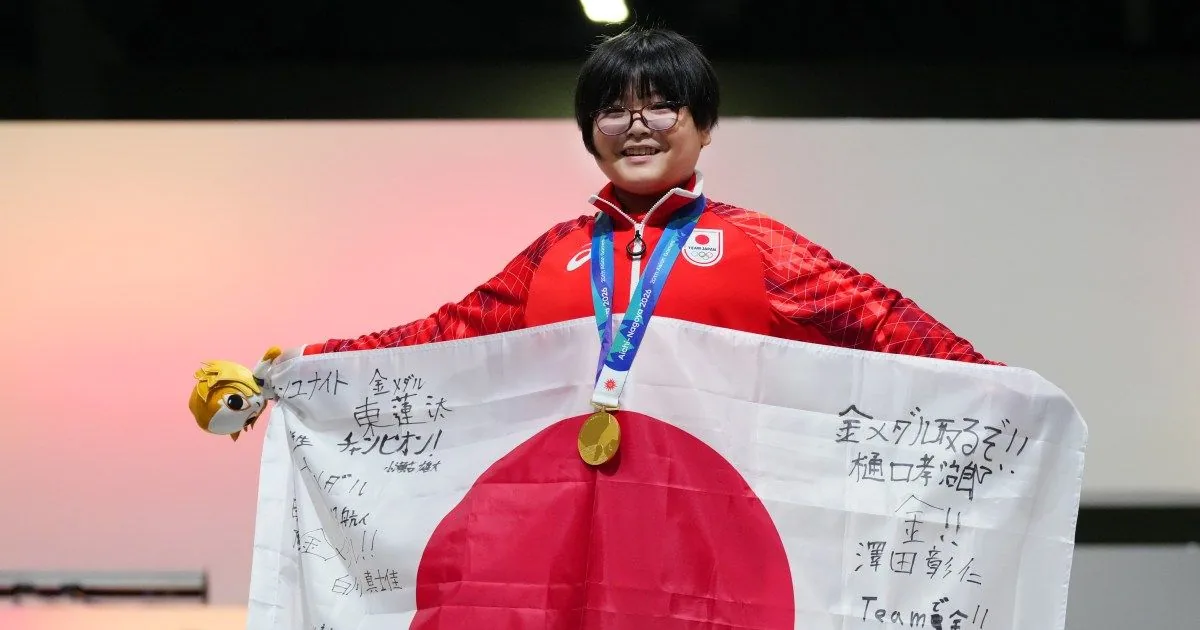
Speaking with reporters after stepping down from the awards stage, Kurihara explained the quiet reserve that defined his on-camera presence throughout the high-stakes final in Tokoname [1]. ‘To be completely honest, I felt a bit embarrassed, so I couldn’t really show my expressions or change my face much,’ he explained [2]. The boy was quick to marvel at the physical prize hanging from his ribbon once the initial tension dissipated. ‘I’m really happy. The gold medal is really beautiful, shiny and heavy,’ he stated, beaming as he inspected the hardware [1]. ‘Also, the plush toy is super cute, and it’s cool that it is gold-coloured too’ [2].
Training Routine and Academic Balance
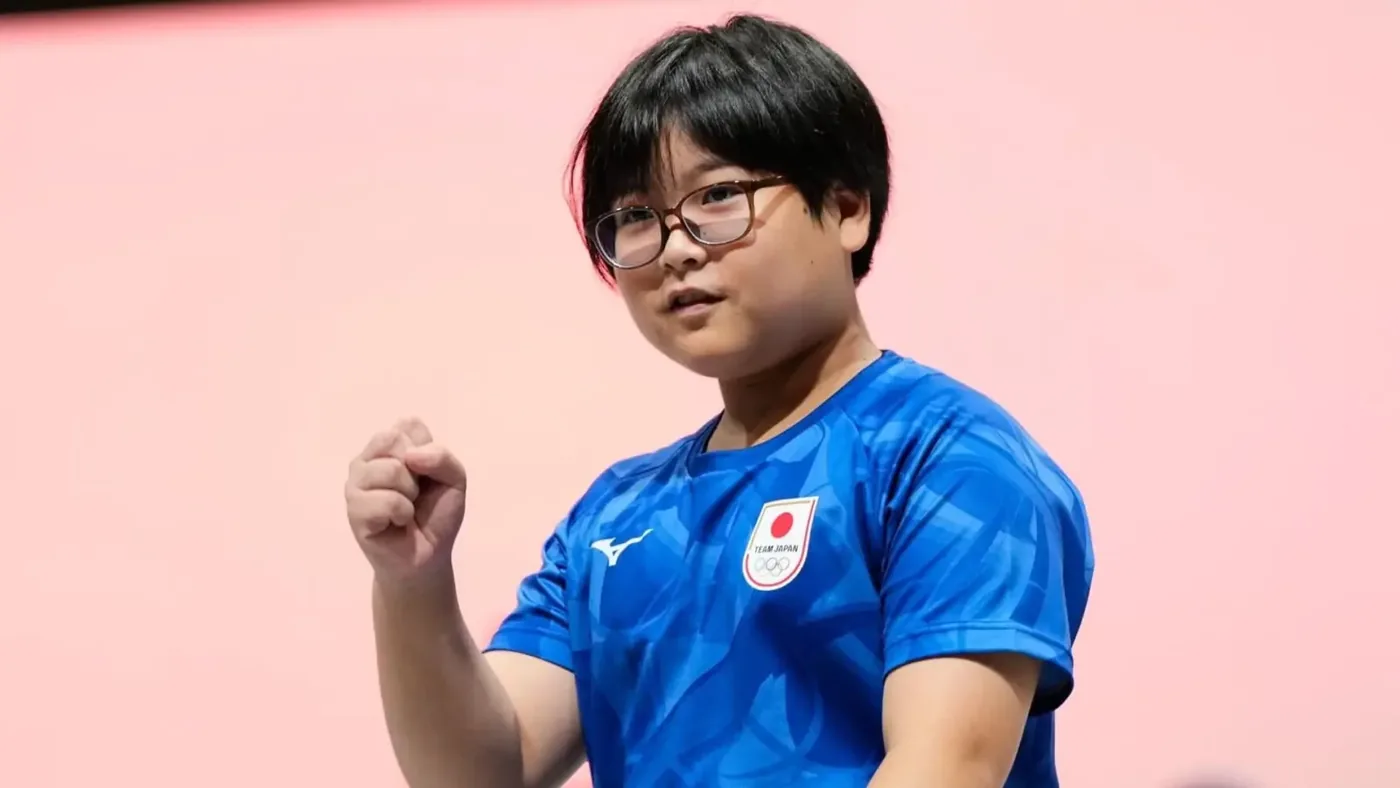
Behind Kurihara’s calm stage presence lies half a decade of steady competitive development. He first picked up the puzzle franchise during his first year of primary school, quickly progressing from casual home practice to competitive local tournaments across Japan. His skill trajectory steepened dramatically over subsequent years as he outmatched veteran competitors across Japan. He secured his pro licence in April. That official credential allowed the elementary school student to compete regularly against adult professionals in sanctioned national brackets [2].
Balancing elite esports preparation with regular primary school assignments and evening cram school demands disciplined scheduling, yet Kurihara continues to view the rigorous routine as genuinely engaging. Kurihara acknowledged the strain of juggling academic responsibilities with tournament practice before traveling to Aichi-Nagoya. ‘It’s hard having to balance it with school and cram school, but it’s really fun,’ he noted. His passion for tactical puzzle solving kept him energized through late study sessions [2].
The dedication required to compete at this level mirrors the commitment seen across Japan’s broader entertainment landscape. PerEXP Teamworks frequently examines youth performers navigating early careers, as highlighted in reporting on the Bless anime cast confirmation. For Kurihara, competitive gaming remains an enjoyable pursuit rather than a burdensome occupation. Support from family and local coaches helped him maintain healthy boundaries between sixth-grade studies and professional esports schedules [2].
Asian Games Milestone for Yuki Kurihara
The gold medal victory places Yuki Kurihara in rare company within Asian Games lore. The Asian Games began in 1951. While continental organizers maintain no comprehensive public archives detailing the youngest medallists since the Asian Games began in 1951, youth triumphs at this level remain exceedingly uncommon. Kurihara stands as the youngest athlete in host country Japan’s delegation history, setting a domestic record that may stand for generations [2].
Recent Asian Games editions have witnessed notable breakthroughs by teenage athletes in emerging disciplines. Indonesia’s Bunga Nyimas claimed a bronze medal in women’s skateboarding at age 12 in Jakarta in 2018. Three years ago in Hangzhou, 13-year-old Cui Chenxi captured gold in women’s street skateboarding. Kurihara at 11 establishes a younger continental benchmark [2].
Esports observers in Tokoname noted that his achievement arrives during a landmark competitive season defined by unprecedented individual masterclasses across global stages. Gamereactor highlighted Kurihara’s victory as part of an extraordinary year for individual prodigies across global gaming, drawing comparisons to chess grandmaster Magnus Carlsen lifting the championship trophy at the Esports World Cup. From world-renowned grandmasters dominating strategic boards in international arenas to an eleven-year-old primary school student topping an Asian Games puzzle podium, the competitive boundaries of global esports excellence continue to expand rapidly [1]. Spectators in Tokoname witnessed history as Kurihara secured host nation Japan’s premier puzzle title against top international contenders [2]. Kurihara’s composure under pressure proved that tactical mastery and emotional poise belong to sharp preparation rather than age alone [1].
Japan celebrated the historic victory [1]. With his gold medal secured, the sixth-grader returns to his classroom routine with a historic accomplishment [2]. His victory leaves the competitive puzzle community anticipating how far the young master can push the game’s tactical boundaries in coming years [1].
- ONLINE NEWS GR Staff. (2026, September 27). Yuki Kurihara storms to Asian Games Puyo Puyo gold. Gamereactor. [Article Link]
- ONLINE NEWS Agence France-Presse. (2026, September 26). Yuki Kurihara, Japan’s 11-year-old e-sports prodigy, wins Asian Games gold. Al Jazeera. [Article Link]
- ONLINE NEWS Dot Esports. (2026). 11-year-old Yuki Kurihara wins Asian Games esports gold for Japan. Dot Esports. [Article Link]


