





Why do zombie cells accumulate in aging organs instead of being cleared away by our immune defenses? In a study published in Nature Aging on October 5, 2026, researchers at the Albert Einstein College of Medicine showed that senescent cells linger because an internal recycling system called chaperone-mediated autophagy slows down with age [1, 2]. As this cellular disposal process weakens, cleanup macrophages fail to engulf damaged cells, allowing senescent tissue to build up over time [1, 3].
Why Are Zombie Cells Bad for Aging Tissues?
Zombie cells harm aging organs because they remain metabolically active and pump harmful chemical signals into surrounding tissues long after they lose the ability to divide [2, 3]. When animals are young, the immune system quickly removes these damaged cells before they cause lasting trouble. As time passes, lingering senescent cells poison the local environment and nudge neighboring healthy cells into the same non-dividing state. “In older animals, age-related changes in both senescent cells and the immune cells responsible for removing them allow these zombie cells to accumulate and play a role in disease,” Dr. Ana Maria Cuervo said [2].
Reporting in Nautilus, science writer Jake Currie noted that cellular waste buildup contributes to vascular problems, metabolic diseases, and neurodegenerative disorders. Damaged proteins collect inside tissues like piles of uncollected trash. When cells cannot break down these worn parts, chronic inflammation spreads through the organ [2, 3]. The resulting damage weakens organ function across the entire body [2].
These lingering cells are not completely useless during early life. In normal physiological settings, senescent cells help support wound healing by releasing chemical signals that recruit other cells to repair damaged tissue. The danger arises when the cleanup system falters with age and allows senescent cells to persist indefinitely. What begins as a temporary repair response gradually turns into a chronic burden that degrades tissue architecture. Instead of departing once a wound heals, aging zombie cells stay behind and disrupt healthy tissue maintenance [2, 3].
How Cellular Senescence and Protein Waste Accumulate
Proteins carry out most vital jobs inside living cells, but they wear out and need routine breakdown. One major pathway responsible for this recycling is chaperone-mediated autophagy (CMA) [1, 2]. Autophagy is the scientific term for a cell digesting its own parts, and CMA uses helper molecules called chaperones to carry damaged proteins into small sacs for disposal [2].
Earlier studies showed that CMA activity slows down as tissues age, leaving cells with less capacity to clear damaged components. To examine how this breakdown influences cellular senescence, Dr. Cuervo and her team isolated ear fibroblasts from young and old mice and treated them with drugs to trigger senescence in the laboratory [1, 2]. Young cells adapted to this stress by turning CMA up, helping them manage damaged proteins. Old mouse cells, however, started with less recycling activity and failed to increase it after becoming senescent [1, 2]. Without proper recycling, older cells ended up dumping unmanaged waste into the surrounding extracellular space [2, 3].

When the researchers deliberately switched off CMA in young cells, those cells began to resemble aged cells, sharing nearly half of their protein changes. Fluid taken from these recycling-deficient cells caused healthy neighboring cells to show signs of senescence. The failure of internal recycling directly speeds up the spread of cellular dysfunction [1, 2].
How Do Zombie Cells Leave the Body?
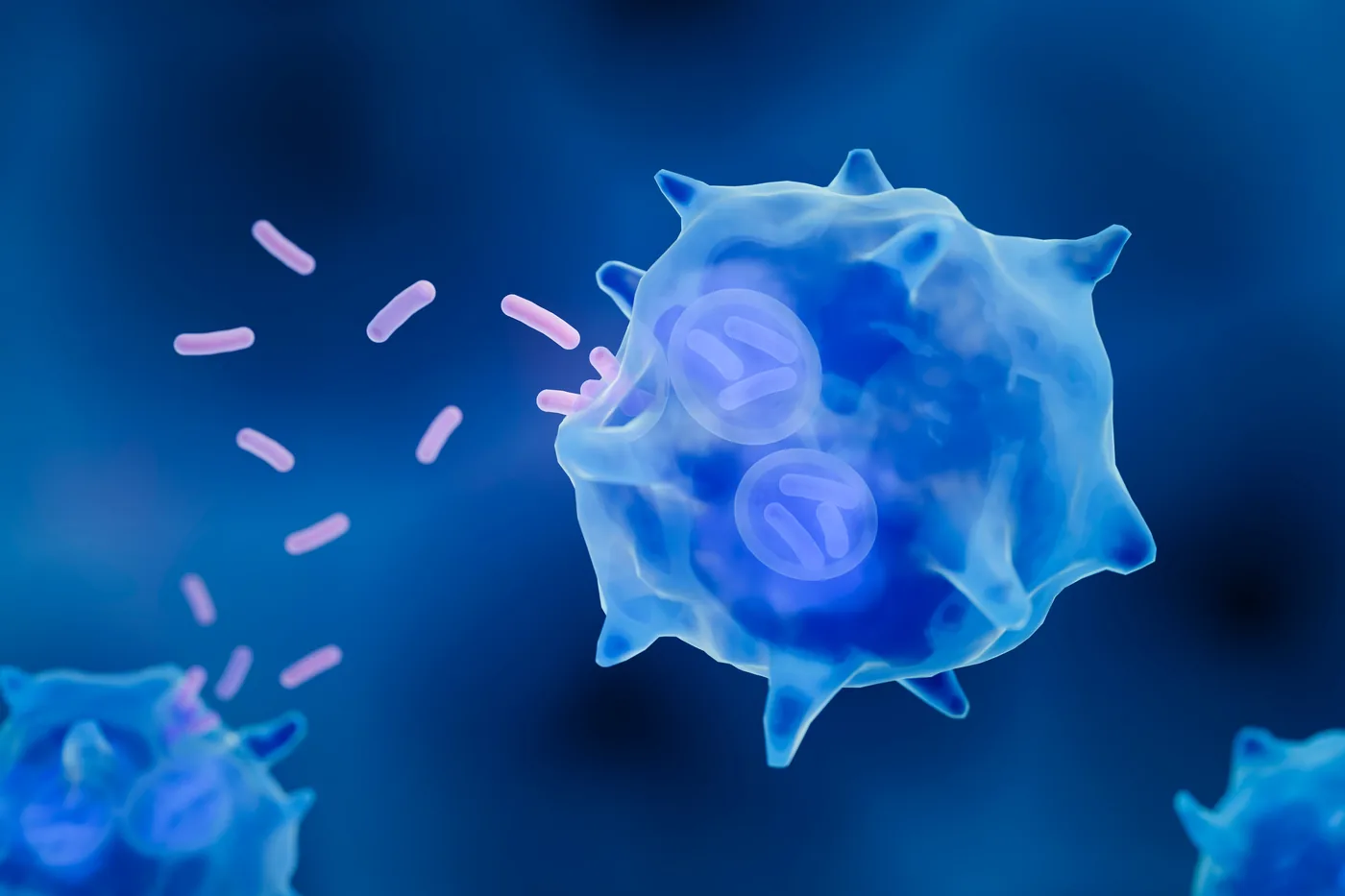
Zombie cells leave the body when specialized immune cells called macrophages detect them, engulf them, and digest them [1, 2]. Macrophages act as the cleanup crew of the immune system, swallowing dying cells, debris, and senescent cells from tissues [2, 3]. In a young body, this cleanup process occurs rapidly, so senescent cells remain in organs only briefly. As an organism grows older, however, macrophages lose CMA activity and struggle to consume dying cells effectively [1, 2].
The researchers traced this cleanup failure to a specific receptor on the macrophage surface that reads a “do not eat me” tag present on other cells [1, 2]. When the receptor picks up this tag, it tells the macrophage to hold back rather than destroy the target. In healthy young macrophages, active CMA pulls the receptor inside the cell and breaks it down so the macrophage can resume eating unwanted cells. In macrophages lacking CMA, the receptor remains stuck on the surface at elevated levels, sending a continuous stop signal that the cell cannot turn off [1, 2]. In other words, old cleanup cells keep receiving an inhibitory command they cannot deactivate [2].
This receptor defect demonstrates how two aging drivers—failing autophagy and accumulating senescent cells—interact within mammalian organs. While astronaut ageing research investigating microgravity focuses on how cosmic conditions accelerate physiological wear in space, research from Albert Einstein College of Medicine clarifies the molecular receptors governing immune decline on Earth [1, 2].


Why Old Macrophages Fail to Clear Senescent Cells
To test whether missing CMA causes real damage in living bodies, the team bred mice whose macrophages lacked the recycling system. At about 23 months old, male mice lacking CMA carried significantly more senescent cells in their lungs, livers, and fat around reproductive organs than normal mice of the same age [1, 2]. This difference was less pronounced in females [2].
Wound healing also slowed down markedly in mice lacking CMA in their immune cells. The researchers tested 12-month-old mice by creating a small round wound measuring a quarter inch across, or about 6 millimeters. After 15 days, the wound remained larger on mice without CMA than on normal mice, and it contained far more cells carrying a senescence marker [1, 2]. In both male and female animals, the livers held larger numbers of dead cells that had never been cleared away. When macrophages lose their recycling mechanism, the entire tissue cleanup timeline collapses [2, 3].
The scientists pointed out that their method of engineering these mice also removed CMA from several closely related immune cells, which may have contributed to the observed delays. Even so, the accumulation of dead cells in both sexes confirms that functioning macrophages are required to keep tissues clean as bodies grow older [1, 2]. Without proper immune recycling, organs gradually fill with biological debris [2, 3].
Restoring Chaperone-Mediated Autophagy With CA77.1 in Mice
Instead of searching for chemicals that poison senescent cells directly, Dr. Cuervo turned to a compound called CA77.1, which turns CMA recycling back up [1, 2]. The compound is covered by a U.S. patent tied to Dr. Cuervo and her colleague Evripidis Gavathiotis. The research team administered CA77.1 inside edible gelatin treats across five months, beginning when the animals were 18 months old. After this treatment period ended, the old mice showed levels of senescent cells in their fat, liver, and lungs close to those seen in six-month-old mice [1, 2].
The experimental groups were relatively small, generally ranging between 5 and 16 mice. When researchers treated old macrophages with CA77.1 in culture dishes for two days, the cells swallowed test particles just as well as young macrophages. Dr. Cuervo explained that reviving cellular recycling lets the body’s natural defenses clear these cells [2].
CA77.1 provided measurable protection in male mice exposed to lung injury modeling idiopathic pulmonary fibrosis. Animals that began taking CA77.1 two days after injury retained more body weight and developed less scarring than mice that started after a week [2]. Early treatment reduced the severity of the lung condition significantly [3]. “We’ve also found that instead of trying to kill zombie cells, we may be able to restore their interaction with the immune system so that the body can clear them naturally,” Dr. Cuervo said [2].
What the Findings Mean for Human Longevity Treatments
None of these procedures has been tested as a treatment in human patients. So far, the team found only an association in human biology: lung samples from four patients with idiopathic pulmonary fibrosis showed lower levels of an essential CMA protein compared to four healthy individuals. There is currently no way to measure CMA directly in living humans [2].
These findings carry important implications for how researchers evaluate senolytic drugs designed to destroy senescent cells. Laboratory experiments commonly assess these treatments using cells isolated from young mice and chemically pushed into senescence, but naturally aged cells handle metabolic waste quite differently [3]. As explored in studies on cellular cannibalism in fighting malicious cells, understanding how immune cells consume targeted cells is essential for designing safe clinical treatments. “The next challenge is determining whether this approach can eventually be developed into a safe treatment for age-related diseases in people,” Dr. Cuervo said [2].
- ACADEMIC JOURNAL Sereda, R., Lindenau, K., Diaz, A., Liu, Z., Santiago-Fernández, O., Khawaja, R. R., Cutler, R., Calyeca, J., McCabe, M., Durand, S., Aprahamian, F., Vanegas, N. D. P., Chen, H., Vilicich, F., Chavda, B., Botbol, Y., Kroemer, G., Finkel, T., Gavathiotis, E.,. Cuervo, A. M. (2026). Decline of chaperone-mediated autophagy in aging impairs macrophage clearance of senescent cells. Nature Aging. [Article Link]
- ONLINE NEWS Gajbhiye, S., & Ralls, E. (2026). Scientists discover why ‘zombie cells’ build up as we age. Earth.com. [Article Link]
- ONLINE NEWS Currie, J. (2026). Why “Zombie Cells” Build Up as We Age. Nautilus. [Article Link]
APA 7: PerEXP Teamworks. (2026). Why Zombie Cells Accumulate and Linger in Old Organs. PerEXP Teamworks Science.


