






Airbnb announced plans to introduce a custom Airbnb AI agent during the first half of 2027, aiming to overhaul how guests discover vacation rentals and organize complex travel plans. The company shared details about the software in its shareholder letter for Q3 2026 [1]. Rather than offering a standard text box, the system will construct responsive visual screens around specific user questions in real time [2]. Chief executive Brian Chesky explained that planning travel requires richer visual tools than general chatbots can provide [3].
How the Airbnb AI Agent Replaces Standard Chat
As reported by Engadget, Airbnb argued in its shareholder letter that conversational chat windows fail when applied to travel itineraries. Matching travelers with lodging requires layouts that show neighborhoods, dates, and pricing together. “Today’s AI agents are good at simple, routine tasks, like making a restaurant reservation or scheduling an appointment,” Airbnb said in the letter [2]. “But planning a trip on Airbnb is different.”
During the company’s earnings call, Brian Chesky expanded on why text-heavy chat interfaces fall short for vacationers who want to explore destinations before committing money. He explained that booking lodging involves an emotional discovery process where users want to browse lodging options, examine interior photographs, and weigh choices with friends or family members. Chesky pointed out that “80% of travelers say they enjoy spending time researching trips,” making spontaneous visual discovery a central part of the booking journey. He told analysts that general-purpose assistants won’t satisfy that demand because people don’t use one bot for everything. Relying only on conversational sentences removes that visual pleasure and makes browsing tedious [3].
Chesky drew a contrast between his firm’s upcoming software and competing assistants that have emerged in the technology sector. He pointed out that standalone tools like Muse and Instinct focus mainly on basic requests, whereas vacation planning involves multiple itinerary components that can’t be reduced to a single text prompt [3]. As The Verge reported, Chesky previously told the Skift Global Forum that the planned system would deliver an interface “much richer than a chatbot” [2].

Generative Interfaces Built for Travel Planning
Instead of forcing users to scroll through standard chat logs, the Airbnb AI agent will assemble custom graphical layouts that adapt to individual inquiries. The software draws from a library containing hundreds of travel components, including interactive neighborhood maps, photo galleries, side-by-side accommodation comparisons, reservation calendars, and structured day itineraries tailored to individual travelers [2]. Rather than producing plain text paragraphs, the platform renders these components together so guests can evaluate lodging details and make bookings inside the view [1].
Chesky described this mechanism as feeling “a little bit like generative UI,” saying that it delivers the right visual tools at the right time based on user context [3]. When someone requests a cabin near hiking trails, the screen displays maps, prices, and home listings. Friends sharing the trip can review identical options on their own screens [2].
This user interface strategy builds upon earlier features that the company tested over the past several quarters. Just a couple of months ago, Airbnb launched an AI search tool that lets users write inquiries using everyday natural language, as well as automated descriptions for property listings [1]. While infrastructure providers expand data center computing capacity under enterprise agreements like the Oracle Cerebras cloud agreement, consumer platforms are investing in customized front-end interfaces to make generative artificial intelligence practical for travelers who need visual clarity. Airbnb executives stated in their shareholder letter that nearly 20 years of experience bringing hosts and guests together gives them an advantage that generalized third-party software can’t match. The company believes that combining deep reservation history with specialized interface elements creates a user experience outside competitors cannot easily replicate [2].


Beyond Bookings and Customer Support
Airbnb plans to use its software far past the first reservation checkout screen. The digital assistant will support travelers during their stay by managing itinerary changes and payment issues. The company explained that “our agent will be able to help guests throughout their trip — from changing a reservation or resolving a payment issue to getting help with refunds, rebooking, or 24-hour safety support” [3].
Handling trip disruptions inside the platform provides an important protection that external chatbots can’t deliver. Because outside assistants lack access to private reservation systems and host messaging channels, they struggle to process refunds or modify active stays. By embedding these capabilities into the app, Airbnb aims to resolve routine friction without requiring guests to call telephone support lines or wait for email replies. Chesky told TechCrunch that outside tools don’t understand the specific policies of individual hosts, whereas an integrated system can make decisions instantly while keeping guest records secure [3].
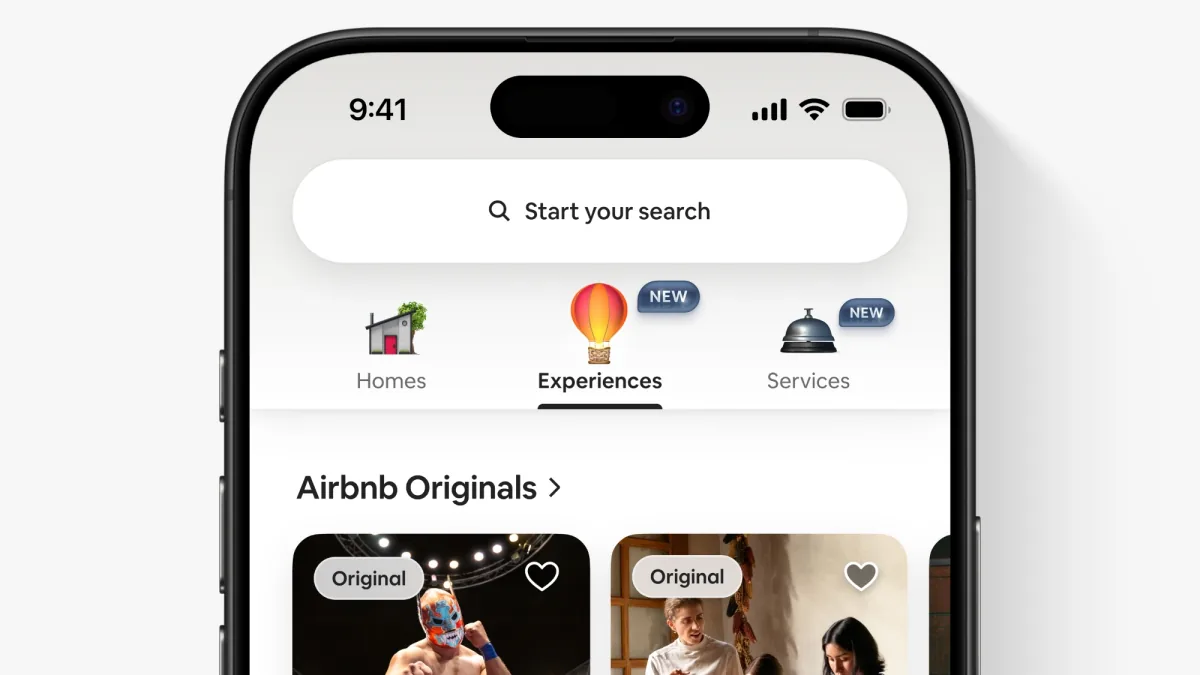
Over time, the company intends to connect the software with a wider catalog of travel services. In recent years, Airbnb broadened its marketplace to offer grocery deliveries, car rentals, and destination rentals like boats and ski gear [1]. Following a redesign last year, services and local experiences became an even bigger priority [3]. The company stated that “we want our agent to help guests plan their entire trip in one place, across homes, hotels, services, experiences and more” [1].
Financial Reacceleration and Third Quarter Earnings
The announcement of the new AI features landed during a strong financial quarter for the rental marketplace. For the third quarter of 2026, Airbnb reported that revenue grew 19% to $4.87 billion, topping consensus estimates on Wall Street. That performance marked the fastest quarterly revenue growth rate the firm has achieved in more than three years [3].
Following the third quarter results, Airbnb increased its full-year 2026 revenue forecast from the mid-teens to the high teens. On the conference call with financial analysts, Chesky expressed confidence in the company’s business path and explained that expansion was speeding up. “Airbnb is back in growth mode,” Chesky told analysts, noting that “it’s rare for a marketplace of our size to reaccelerate growth, but that’s exactly what we’re doing.” He credited the performance to steady booking volumes and ongoing consumer interest in private accommodations [3].

Executive leadership views artificial intelligence as a practical asset rather than a competitive threat. In the shareholder letter, Airbnb stated that AI has become “the best thing to ever happen to Airbnb,” reshaping product development cycles and daily workflow [2]. As reported by TechCrunch, Chesky sees growing revenue and custom AI tools as the foundation for future marketplace expansion [3].
Launch Timeline for the Airbnb AI Agent
Airbnb confirmed that it will begin rolling out its new travel assistant to users during the first half of 2027 [1]. While management had previously hinted at an upcoming trip planner, the Q3 earnings release provided the first firm deployment window for the software [3]. The rollout will start inside the main Airbnb mobile app, letting early travelers test the generative interfaces in real conditions before the features expand to a wider global audience. Engineering teams plan to introduce the interface gradually across select travel routes, gathering direct feedback on performance and interface usability before enabling automated booking capabilities for all registered user accounts worldwide [1].
The phased release schedule gives engineering teams time to refine component generation and verify that itinerary recommendations remain reliable. Airbnb intends to monitor how guests interact with the interactive calendar and mapping components, ensuring that suggestions match actual host availability [2]. Testing the system on genuine inquiries allows the company to calibrate interface components before introducing more complex booking workflows [1].
For travelers, the upcoming Airbnb AI agent represents a noticeable shift away from repetitive text chat windows toward interactive, visual trip discovery. If the 2027 deployment succeeds, vacation planning on the platform may soon feel less like quizzing a generic conversational chatbot and more like exploring a tailored digital guidebook built around personal preferences, group schedules, and verified local inventory [3].
- ONLINE NEWS Moon, M. (2026, November 6). Airbnb is threatening to launch an AI travel agent next year. Engadget. [Article Link]
- ONLINE NEWS Peters, J. (2026, November 6). Airbnb is working on an AI travel agent. The Verge. [Article Link]
- ONLINE NEWS Perez, S. (2026, November 5). Airbnb says it’s launching an AI travel agent in the first half of 2027. TechCrunch. [Article Link]


