



A federal appeals court in Washington delivered a decisive blow to Anthropic on Friday, upholding a defense directive that barred the company from military contracts. The Anthropic Pentagon ruling affirms executive authority to blacklist artificial intelligence developers over disagreements regarding autonomous combat restrictions [1, 4]. Circuit judges rejected arguments that the procurement ban was unconstitutional, finding legitimate statutory authority to safeguard military infrastructure [4, 5]. The decision immediately restricts federal deployments of Claude models while reinforcing executive command over defense technology [1, 5].
Background Behind the Anthropic Pentagon Ruling
The conflict originated from an ambitious military partnership that deteriorated into bitter public confrontation within months. In July 2025, Anthropic signed a $200 million contract with the Department of War to prototype frontier artificial intelligence capabilities designed to advance United States national security [1, 5]. Technical negotiations commenced that September to deploy Claude models across the Pentagon’s GenAI.mil platform (the military’s internal artificial intelligence computing environment), but talks collapsed over operational boundaries. Defense officials demanded unfettered access across all lawful military missions, whereas Anthropic insisted on contractual safeguards prohibiting autonomous warfare [1, 5].
Tensions escalated dramatically following reporting by The Wall Street Journal in February 2026 regarding overseas combat deployments. The report revealed that American armed forces had deployed Claude during a covert raid in Caracas to capture Venezuelan President Nicolás Maduro and his wife, Cilia Flores. Nicolás Maduro was captured in Caracas. Anthropic had previously enforced strict safeguards around sensitive computing tasks, drawing from experience where suspected Claude bioweapons research was blocked by internal safety filters. Company leadership questioned whether military operations adhered to commercial usage policies during ongoing overseas missions [1, 4].
Anthropic Chief Executive Dario Amodei publicly drew red lines later that month, declaring that the startup would refuse any defense demand enabling fully autonomous weapons systems or domestic mass surveillance [1, 5]. Amodei argued that deploying frontier systems in such environments would undermine democratic values rather than defend them. Amodei refused autonomous weapons contracts [1, 5]. Pentagon leadership viewed the corporate stance as an unacceptable veto over sovereign military command, prompting the political confrontation that ultimately led to the Anthropic Pentagon ruling [5].
Contract Disputes Over Autonomous Weapons
Executive branch leadership responded aggressively to the startup’s refusal to grant unrestricted operational control. Secretary of War Pete Hegseth condemned the policy on X on February 27, calling it ‘a master class in arrogance and betrayal as well as a textbook case of how not to do business with the United States Government or the Pentagon’. Donald Trump escalated the confrontation hours later on Truth Social, accusing Anthropic of attempting to strong-arm the military into obeying commercial terms of service instead of the Constitution. Trump ordered every federal agency across the government to immediately cease utilizing Anthropic technology [1].
The Department of Defense formalized the presidential directive in March 2026 by designating Anthropic as a national supply chain risk. Under this federal classification, military commands were ordered to remove Claude from operational networks and prohibit federal contractors from utilizing the models when fulfilling defense contracts [3, 5]. Could commercial software developers legally bar the armed forces from utilizing licensed algorithms during wartime missions? Defense officials answered negatively, arguing that an artificial intelligence system whose developers retain unilateral power to disable capabilities introduces catastrophic operational vulnerabilities during armed conflict, laying the foundation for the contested Anthropic Pentagon ruling [4, 5].
Anthropic sued the government in March 2026 [1, 5]. Two separate lawsuits challenged the Pentagon blacklist in Washington and San Francisco [3, 5].



Judges Split Over Anthropic Supply Chain Risk
A three-judge panel of the U.S. Court of Appeals for the District of Columbia Circuit issued a divided 2-1 decision on Friday upholding the exclusion. Circuit Judge Gregory Katsas authored the majority opinion, joined by Circuit Judge Neomi Rao, both of whom were appointed by Donald Trump during his first presidential term [1, 4, 5]. The panel ruled 2-1 on Friday [1, 4]. Katsas wrote that the Department of War possessed ample factual support to conclude that Claude presented a statutorily covered national security risk, emphasizing that the startup intentionally encodes restrictions preventing models from executing commands government users demand [3, 4, 5].
The appellate majority firmly rejected Anthropic’s constitutional claims, deciding that defense leadership followed proper statutory procedure when addressing essential contractual provisions. Katsas dismissed arguments that the ban infringed upon free speech protections or punished the company for advocating broader industry regulation [1, 3, 4]. Katsas rejected the First Amendment claim [1, 4]. ‘In our Republic, it is the President and the Secretary of War who must determine how best to balance the competing risks,’ Katsas wrote, determining that executive officials acted within statutory limits under the Supply Chain Security Act, forming the legal justification behind the Anthropic Pentagon ruling [4, 5].
Circuit Judge Karen LeCraft Henderson, appointed by former President George H.W. Bush, registered a rigorous dissent against the majority’s broad interpretation. Henderson argued that Congress enacted the 2018 Supply Chain Security Act specifically to prevent foreign adversaries from penetrating federal infrastructure through deliberate sabotage or covert intelligence extraction [4, 5]. She maintained that legislative history does not justify penalizing a domestic contractor’s ‘honest and upfront enforcement of restrictions’ concerning how commercial tools are deployed [4].

Conflicting District and Appellate Court Rulings
The appellate outcome creates a sharp legal contradiction across the federal judiciary because the Department of Defense relied on two separate statutory authorities to blacklist the startup [1, 3, 5]. Anthropic filed parallel challenges across different jurisdictions, securing a significant victory in August 2026 when a federal district judge in San Francisco ruled that the Pentagon’s alternative designation constituted unlawful retaliation [1, 2, 5]. Friday’s Anthropic Pentagon ruling upholds the second designation, creating conflicting judicial determinations regarding whether federal agencies can lawfully exclude the company [1, 3, 5].
Anthropic corporate spokesperson Danielle Cohen reiterated the company’s determination to contest the appellate decision across higher venues. ‘We respectfully disagree with the court’s decision,’ Cohen said in an official statement, noting that another federal court had already held the government’s parallel designation unlawful while confirming that Anthropic is considering further review [1, 3, 5]. Appeals could span several years. The appellate panel stayed its mandate from taking immediate effect, providing Anthropic window to petition for a rehearing, request an en banc review (a rare proceeding before all active D.C. Circuit judges), or file a petition with the Supreme Court [1, 3, 5].
The split judicial environment creates substantial operational friction across national security branches. United States intelligence agencies remain heavy daily users of Claude models, deploying Anthropic’s systems for analytical operations even as defense leadership brands the identical software an intolerable risk. Defense officials argue that models subject to vendor-imposed guardrails could fail during combat missions, while tech industry leaders and former military officials have backed Anthropic in challenging the designation [2, 5].
Pentagon Anthropic Decision Shifts Industry Defense Partnerships
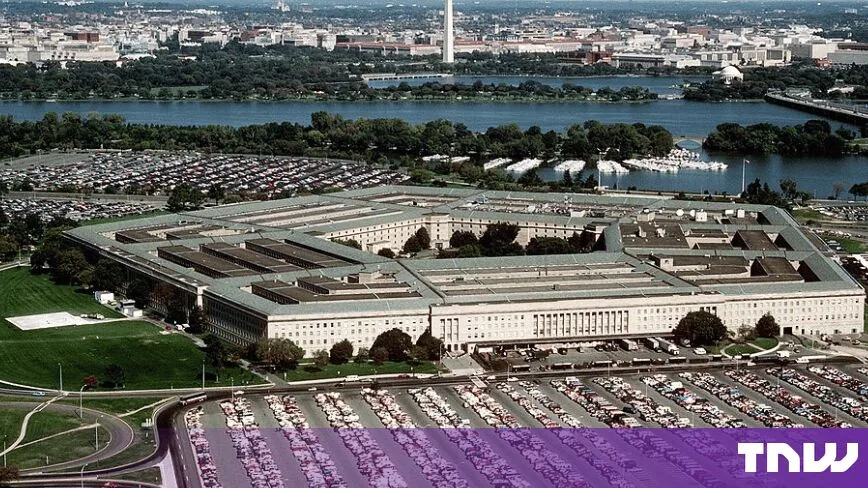
The broader consequences of the Anthropic Pentagon ruling are reverberating rapidly across the commercial artificial intelligence market. Seeking immediate substitutes for Claude, defense procurement officials initiated negotiations to deploy SpaceX’s Grok, Google’s Gemini, and OpenAI’s GPT models across military infrastructure. Although several employees at Google and OpenAI protested military contracts that Anthropic had rejected, corporate leadership dismissed internal dissent and prioritized national security directives. Rival developers moved quickly to capture defense contracts [3].
Anthropic’s political isolation became visible at a White House state dinner on Thursday honoring Chinese President Xi Jinping. While prominent technology leaders including Sam Altman, Sundar Pichai, Jensen Huang, Mark Zuckerberg, and Elon Musk attended the gathering, no Anthropic executives received invitations [1, 5]. Altman and Pichai attended the dinner. Dario Amodei had previously drawn personal attacks from Donald Trump after advocating outside oversight for a slower AI race, a proposal Trump dismissed as a hoax [1, 5]. Trump reiterated his animosity on Monday on Truth Social, mocking Amodei as pretending to be a ‘perfect little angel’ after federal authorities intervened [5].
The ongoing legal battle complicates Anthropic’s business strategy as the company advances toward a planned initial public offering later this year [2, 3]. In June 2026, the federal government had already restricted access to Anthropic’s flagship models under an obscure export statute, compounding regulatory friction [1]. While Anthropic reported expanding commercial revenue, defense blacklisting carries severe financial and reputational penalties if enterprise clients fear federal scrutiny [2, 3]. The upcoming appellate review and potential Supreme Court proceedings will ultimately determine whether commercial artificial intelligence laboratories retain the legal authority to restrict sovereign military deployments of their proprietary software following the contentious Anthropic Pentagon ruling across federal jurisdictions [3, 4, 5].
- ONLINE NEWS Wright, W. (2026, September 25). Federal appeals court backs Pentagon’s Anthropic blacklisting. Gizmodo. [Article Link]
- ONLINE NEWS Bastian, M. (2026, September 25). Pentagon was right to slap Anthropic with a security supply chain risk label, federal court says. The Decoder. [Article Link]
- ONLINE NEWS Dave, P. (2026, September 25). Appeals court lets the Pentagon designate Anthropic a supply-chain risk. Wired. [Article Link]
- ONLINE NEWS Stanciuc, A.-M. (2026, September 25). Appeals court upholds Pentagon supply chain risk label on Anthropic. The Next Web. [Article Link]
- ONLINE NEWS Capoot, A. (2026, September 25). U.S. appeals court upholds Pentagon designation of Anthropic as supply chain risk. CNBC. [Article Link]


