



Can empirical observations ever settle the deepest cosmological questions once and for all? On October 4, 1998, leading astrophysicists gathered inside the Baird Auditorium at the Smithsonian National Museum of Natural History in Washington to address that challenge. The gathering, titled The Nature of the Universe Debate: Cosmology Solved?, evaluated whether recent evidence of cosmic acceleration had unveiled the fundamental structure of the cosmos [1]. Michael S. Turner and P. J. E. Peebles took the stage to weigh cosmological parameters against astrophysical skepticism [2].
- What Defined the Nature of the Universe Debate?
- Is Nature Part of the Universe in Theoretical Cosmology?
- Why Was Dark Energy Central to the Nature of the Universe?
- Why Peebles Argued That General Relativity Left Mysteries Unsolved
- How Observers Mapped the Structure of the Universe
- What Enduring Legacies Flowed from the 1998 Millennium Debate?
What Defined the Nature of the Universe Debate?
The 1998 symposium represented the third public gathering in the Turn of the Millennium Debates organized by Robert Nemiroff of Michigan Technological University and Jerry Bonnell of NASA Goddard Space Flight Center. Sponsored jointly by the Smithsonian National Museum of Natural History, the National Science Foundation, NASA, Michigan Technological University, and the Universities Space Research Association, the program addressed whether humanity had unlocked the essential nature of the universe. Program organizers dedicated the afternoon to theoretical astrophysicist David N. Schramm (1945 – 1997), a pioneer who forged critical theoretical links connecting subatomic particle physics with cosmology before his fatal airplane accident. Schramm had actively helped plan the event before his passing [1].
Introductory lectures framed the historical and physical dimensions of modern cosmological research. Historian of science Owen Gingerich, a senior astronomer at the Smithsonian Astrophysical Observatory who chaired Harvard University’s History of Science Department from 1992 to 1993, presented A Brief History of Our View of the Universe. Joseph I. Silk of the University of California, Berkeley, then reviewed the observational status of cosmological parameters, drawing upon his extensive theoretical research [1].
The cosmic debate intensified. The auditorium fell quiet. Moderator Margaret Geller introduced the core debate. Turner voiced the particle cosmology viewpoint, while Peebles defended astrophysical skepticism. Their exchange confronted whether recent measurements had resolved humanity’s long-standing quest to comprehend the nature of the universe [1].
Is Nature Part of the Universe in Theoretical Cosmology?
In physical cosmology, nature is not an isolated subcomponent of the universe; it encompasses the complete totality of matter, radiation, energy fields, and natural physical laws operating across spacetime. When theorists inquire whether nature and the universe constitute the same reality, astrophysical models clarify that the universe provides the spacetime framework while nature represents the physical principles governing all interactions within it. By connecting microphysics with cosmic structure, inflationary models suggest that fundamental natural laws established during primordial inflation dictated the global distribution of all observable matter [2].
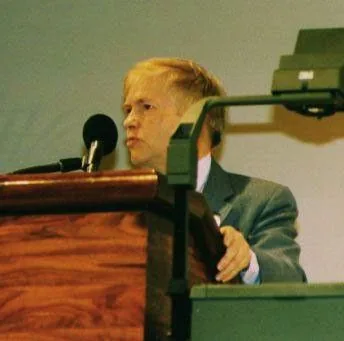
Turner took the podium first. He presented transparencies asserting that observations had finally revealed a flat universe with total density Omega equaling one [1].
Turner, who chaired the Department of Astronomy and Astrophysics at the University of Chicago, presented his lecture titled ‘Cosmology Solved? Quite Possibly!’ with infectious rhetorical energy [1]. He argued that observations had converged decisively around two primary pillars: the cosmic microwave background and inflationary Big Bang dynamics. In Turner’s appraisal, the historic dilemma regarding missing cosmic mass had found its resolution through vacuum energy, demonstrating that ordinary matter and dark matter jointly constitute roughly one-third of critical density while dark energy provides the remaining two-thirds. Turner contended that theoretical physics had successfully revealed the large-scale nature of the universe, providing an elegant cosmological framework supported by recent data [2].
Why Was Dark Energy Central to the Nature of the Universe?
Throughout 1998, astronomical observations transformed the scientific consensus regarding cosmic fate. Ground-based and space-borne telescope surveys tracking distant Type Ia supernovae revealed evidence of an accelerating expansion, challenging the long-standing assumption that gravity would inexorably slow cosmic growth. This observational breakthrough suggested that the cosmological constant Lambda, once introduced by Albert Einstein, acted as a pervasive repulsive pressure across spacetime [2]. The nature of the universe suddenly demanded an invisible dark energy component [1].
This unexpected energy density helped reconcile conflicting estimates between the expansion rate of space and the measured ages of the oldest globular clusters [1]. When astronomers calculated cosmic history solely from matter density, high expansion velocities yielded an uncomfortably young universe that seemed younger than its oldest stars [2]. Incorporating dark energy lengthened the cosmic timescale, mitigating discrepancies that echo into ongoing Hubble tension debates regarding cosmological parameters. Turner stressed that Lambda provided the missing piece required for global geometric flatness [1].
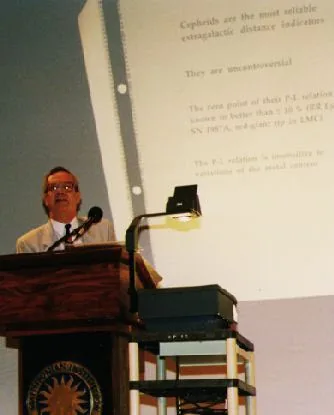
Debate attendees carefully examined the observational papers distributed with conference materials. Attendee John Hornstein, an atmospheric physicist who had studied general relativity texts since the late 1970s, found the preprint paper by Adam Riess and his collaborators exceptionally illuminating. Hornstein noted that Riess clearly articulated observational uncertainties while explaining how supernova measurements required validation from complementary techniques. Hornstein also recognized that emerging evidence regarding ground states and quantum fluctuations indicated that future cosmology would depend on deeper theoretical insights into superstrings or M-branes [2].


Why Peebles Argued That General Relativity Left Mysteries Unsolved
Taking the rostrum for the astrophysical community, Phillip J. E. Peebles of Princeton University challenged the notion that cosmology was effectively closed. As the Albert Einstein Professor of Science and recipient of the 1982 Heineman Prize, the 1995 Bruce Medal, and the 1998 Gold Medal of the Royal Astronomical Society, Peebles brought immense analytical weight to the proceedings [1]. Peebles argued that fitting mathematical values for cosmological parameters did not mean that physical understanding had arrived. Nature presented intricate mechanisms that could overturn simplistic parameterizations [2].
Peebles urged methodological caution [1]. During his rebuttal, he explicitly stated that ‘solving’ cosmology would not ‘solve’ astrophysics, reminding the hall that cosmic history involves fluid dynamics, magnetic fields, and complex stellar evolution. He cautioned that dark matter remained completely undetected by terrestrial laboratory detectors, leaving its true identity unproven. Declaring victory over cosmological parameters without understanding underlying physical mechanisms seemed dangerously premature [2].

Peebles pointed out that astronomers had repeatedly succumbed to bandwagons throughout twentieth-century science. When previous generations believed they had mapped cosmic expansion accurately, hidden systematic errors consistently emerged to disrupt established models. Turner and Peebles had previously collaborated with Edwin Turner and Richard Kron on an overview titled ‘The Evolution of the Universe’ for Scientific American, demonstrating their mutual respect despite their philosophical divide. Peebles closed his remarks with an eloquent dedication to Schramm, drawing enthusiastic applause [2].
How Observers Mapped the Structure of the Universe
Empirical disputes over the structure of the universe centered largely on measuring the Hubble constant and mitigating systematic errors across cosmic distance ladders. In observational astrophysics, statistical selection effects known as Malmquist bias had long plagued distance surveys. Swiss astronomer Gustav Tammann demonstrated how flux-limited telescope samples led investigators to select preferentially luminous objects at great distances, causing some astronomers to overestimate the Hubble constant. Concurrently, Canadian astronomer Sidney van den Bergh showed how calibration uncertainties in Cepheid variable star measurements could lead rival groups to underestimate that same expansion parameter [1].
Mapping unseen matter networks presented equally formidable challenges for observers. In his presentation on fundamental parameters, Joseph Silk detailed how primordial nucleosynthesis constraints set hard mathematical limits on the total density of baryonic atoms in the cosmos. Observations demonstrated that visible stars and interstellar gas accounted for merely a fraction of the mass required to bind galaxy clusters. These early insights into cosmic filaments presaged modern instruments that map the eROSITA cosmic dark matter network across extensive extragalactic fields [1].

Spectators inside the Baird Auditorium witnessed dramatic rhetorical reversals throughout the afternoon. Attendee J. Bruce Rafert recounted that Turner initially brought listeners into full agreement with his viewpoints, only to watch Peebles command the stage and pull the audience solidly into the skeptical camp. Attendee Wellesley E. Pereira praised Turner’s eye-catching transparencies while noting that the presentations clarified cosmic geometry. Meanwhile, scientific programmer Joshua Unger observed that the presentations evolved into a profound dialogue regarding the philosophy of science [2].
What Enduring Legacies Flowed from the 1998 Millennium Debate?
As the debate neared its conclusion, moderator Margaret Geller conducted an informal audience survey that captured the intellectual tension of the era. Geller asked attendees whether they believed the cosmological theories discussed that day would remain accepted eighty years into the future. The audience remained divided. Geller then asked whether future debates would emphasize the same parameters or be framed in entirely new scientific language. Haihong Che noted that the debate underscored how formulating a complete quantum theory had become essential for resolving cosmological conundrums [2].
Six formal papers appeared. In March 1999, the Publications of the Astronomical Society of the Pacific published the full conference proceedings, containing Geller’s tribute to Schramm, historical overviews by Gingerich and Silk, papers by Turner and Peebles, and closing perspectives from Nemiroff and Bonnell. The debate proceedings crystallized the emergence of the standard cosmological model, codifying Lambda-Cold Dark Matter cosmology as the baseline paradigm for modern astrophysics. Educational materials organized by Nemiroff and Bonnell, including Sten Odenwald’s questions and Ned Wright’s cosmology tutorials, disseminated these concepts to students worldwide [2].
Nearly three decades after the Smithsonian gathering, the nature of the universe continues to present profound scientific puzzles. Precision space observatories have confirmed Turner’s flat geometry with extraordinary accuracy, yet the underlying physical mechanisms driving cosmic acceleration remain unexplained by laboratory physics. Peebles’ insistence that measuring cosmological parameters does not solve astrophysics proved remarkably prescient. The 1998 Great Debate demonstrated that while observational parameters delineate cosmic boundaries, every resolved question reveals deeper physical mysteries awaiting exploration [2].
- WEBSITE Stoltz, J. (2026, September 25). The Nature of the Universe Great Debate in 1998: Program. NASA Science. [Article Link]
- WEBSITE Stoltz, J. (2026, September 25). The Nature of the Universe Great Debate in 1998. NASA Science. [Article Link]
APA 7: PerEXP Teamworks. (2026, September 26). NASA Great Debate Weighed the Nature of the Universe in 1998. PerEXP Teamworks. https://perexpteamworks.com/en/nature-of-the-universe-1998-debate/


