






More than 300 million years before modern landscapes formed, a small amphibian relative navigated the swampy delta waters of what is now northern Illinois. Long sequestered within museum drawers under an incorrect classification, the fossil specimen now bears the scientific name Jeanerpeton mazonensis [1]. Undergraduate researchers Payton Kohlberg and Allison Sefcovic identified the animal as an entirely distinct genus while working as summer interns at Chicago’s Field Museum [2]. Both mothers share the name Jean. The discovery demonstrates how historical collections continue to reshape vertebrate evolutionary history [3].
- How Jeanerpeton mazonensis Escaped a Waste Bin Taxon
- Vertebrae and Cranial Clues in the Skeleton
- What Distinguishes the Jeanerpeton Fossil from Amphibamus?
- Rapid Sediment Burial at the Mazon Creek Delta
- Why Mazon Creek Jeanerpeton Reshapes Early Tetrapod Diversity
- Undergraduate Discoveries Inside the Field Museum Mann Lab
How Jeanerpeton mazonensis Escaped a Waste Bin Taxon
The fossil at the center of the investigation was originally discovered decades ago by an amateur collector who subsequently donated the ironstone concretion to the Field Museum in Chicago [3]. Curators initially designated the specimen as Amphibamus grandiceps, a well-documented amphibamiform species common to the Mazon Creek area [1]. Over the decades, A. grandiceps effectively functioned as a taxonomic waste bin, a category where paleontologists historically grouped superficially similar fossils without rigorous comparative analysis [2]. Waste bin taxa obscure true anatomical diversity because distinct lineages remain hidden beneath an umbrella label [3].
The specimen rested in museum storage [3]. Nobody scrutinized its diminutive cranial bones. Two undergraduate researchers decided to reanalyze the skeleton [2].
Allison Sefcovic, an undergraduate at the University of Michigan, and Payton Kohlberg, an undergraduate at the University of Illinois, revisited the specimen through the 2025 Women in Science program [2]. They worked as co-lead authors under the supervision of postdoctoral researcher Calvin So and assistant curator Arjan Mann [1]. The researchers recognized Jeanerpeton mazonensis as an anatomically distinct animal. As Calvin So explained, ‘What we’re finding from the Field Museum’s collection are a bunch of things that historically were grouped together into this waste bin taxon known as Amphibamus grandiceps. Jeanerpeton is one of those species. And now, we’ve found enough evidence to support it being an anatomically distinct animal’ [3].

Vertebrae and Cranial Clues in the Skeleton
The determination that the animal represented a separate genus emerged from meticulous comparisons of its dorsal and lateral skull elements and its axial skeleton [3]. When Sefcovic and Kohlberg compared the specimen directly with known Amphibamus grandiceps fossils and other amphibamiforms from the Carboniferous and Permian periods, they documented several decisive osteological variations. Anatomical comparisons confirmed that Jeanerpeton mazonensis differed significantly from other Carboniferous tetrapods [1]. The new animal possessed a distinctly narrower snout, sharp pointed teeth, and twenty-two trunk vertebrae, differing directly from the twenty trunk vertebrae typical of A. grandiceps [3]. Vertebral column segment counts provide crucial taxonomic markers in early tetrapods because variations in presacral vertebrae reflect stable developmental shifts rather than random individual growth anomalies within a breeding population [1].
These differences were not subtle developmental quirks. The cranial shape and dental profile suggested distinct feeding adaptations within the delta swamp [1]. Pointed teeth indicated an efficient predatory grip on small aquatic invertebrates, while the narrower snout pointed toward specialized prey capture [3]. The team published the formal description of Jeanerpeton mazonensis in the Journal of Vertebrate Paleontology, naming the genus after their mothers, Jean Kohlberg and Jean Sefcovic, and drawing the species name from the Mazon Creek formation [1].
What Distinguishes the Jeanerpeton Fossil from Amphibamus?
Prior to this taxonomic revision, the specimen had already attracted specialized attention from vertebrate paleontologists investigating the locomotor evolution of early tetrapods. In a 2020 study, Arjan Mann and vertebrate paleontologist Bryan Gee examined the fossil’s broad toe pads. Broad pads aided wetland locomotion. Their morphological assessment identified the structure as the earliest body-fossil evidence of lissamphibian-like toe pads documented in a temnospondyl [3]. Temnospondyls were an extensive lineage of four-legged vertebrates that thrived in terrestrial and semiaquatic environments before the rise of dinosaurs [2].
The 2020 investigation focused on locomotor anatomy, leaving broader taxonomic classifications untouched. Sefcovic and Kohlberg broadened the morphological scope by reevaluating the entire skeleton [1]. By contrasting the snout dimensions, teeth, and vertebrae against dozens of comparative museum specimens, they conclusively established that the creature could not remain within Amphibamus [3]. Anatomical reanalysis proved essential to untangling decades of historical assumptions surrounding the collection [2].
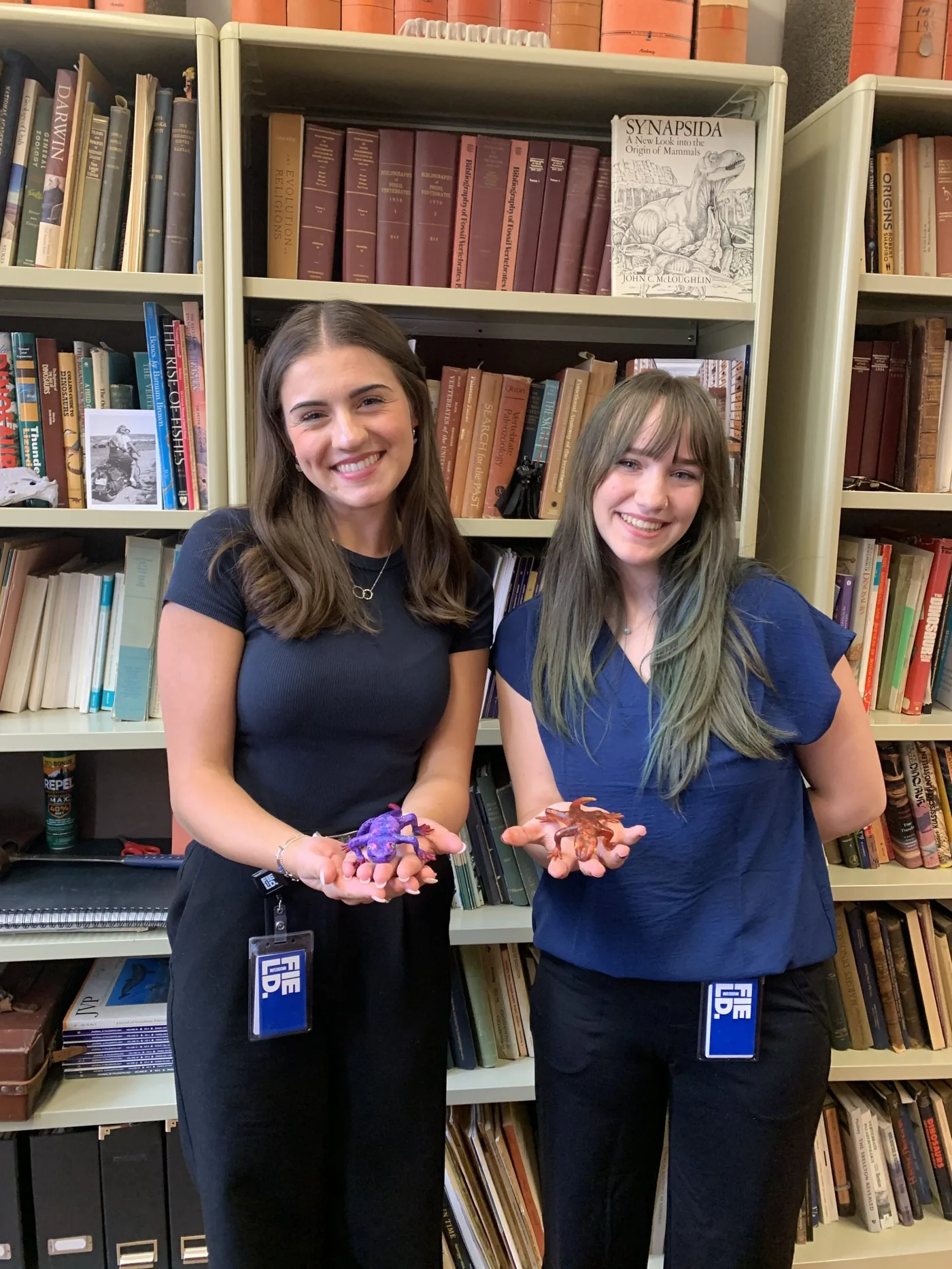
The naming of Jeanerpeton also highlights the human dimension of taxonomic research. While modern behavioral biology documents that chimps and bonobos have long-term memory of friends and relatives, human scientists memorialize their kin across geological epochs. Bestowing their mothers’ shared name upon a 309-million-year-old animal acknowledged the personal encouragement that sustained both young researchers through intensive anatomical study [2].


Rapid Sediment Burial at the Mazon Creek Delta
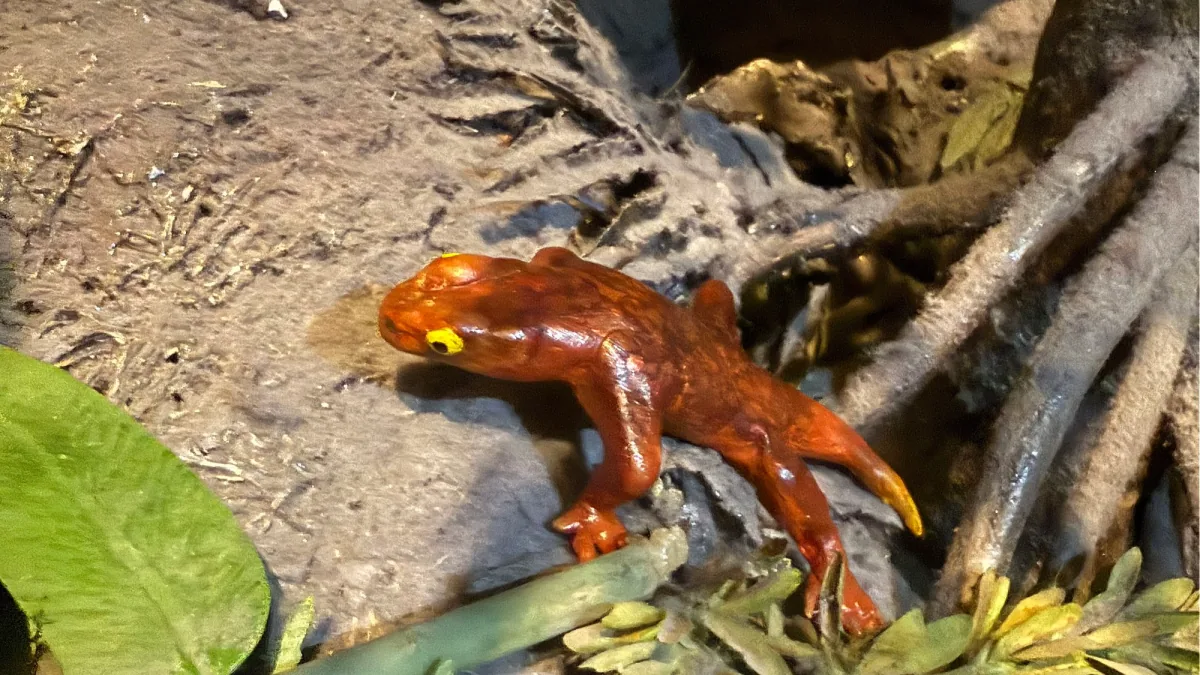
Approximately 309 million years ago during the Carboniferous period, the region around Mazon Creek was a low-lying, tropical river delta situated approximately sixty miles southeast of modern Chicago [2]. Sediment from meandering river channels deposited rapidly over fallen vegetation and animal carcasses, sealing organic remains away from scavengers and oxygen before decay could destroy delicate tissues [3]. The swampy river delta accumulated thick layers of muddy sediment around decaying vegetation, where the unique evolutionary path of lycophytes and ancient ferns formed dense coastal wetland forests [2]. This exceptional depositional environment created a famous Lagerstätte capable of preserving soft structures rarely encountered in typical fossil beds [1].
Allison Sefcovic highlighted the astonishing preservation seen directly within the fossil concretion. ‘What’s really cool about Mazon Creek is that it preserves all of these unusual details—things like toe pads and body outlines,’ Sefcovic remarked [2]. ‘In the fossil of Jeanerpeton, we can see some of the scales on its back and tiny ‘belly ribs’ called gastralia. You can even see the eye impressions! It’s so cool to see’ [3].
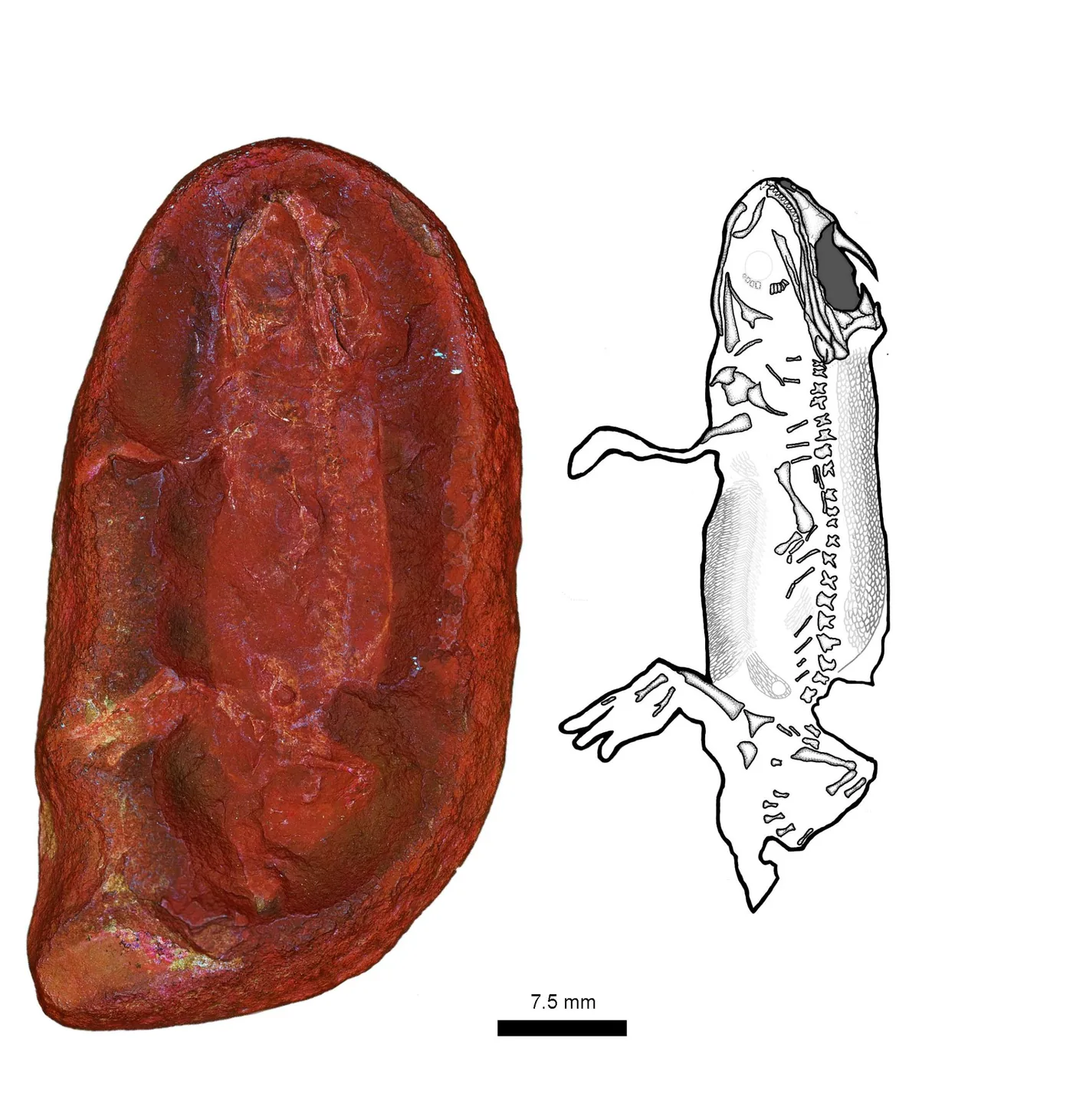
The presence of gastralia (thin belly ribs that supported the abdominal wall) and fine scales provides rare insight into the external anatomy of late Carboniferous tetrapods [3]. Illinois was then a tropical delta [2]. Because soft body tissues rot swiftly in open terrestrial environments, the siderite nodules of Mazon Creek represent an invaluable archive. Without that specific geochemical setting, the intricate physical features separating Jeanerpeton mazonensis from other amphibamiforms would have disintegrated entirely [1].
Why Mazon Creek Jeanerpeton Reshapes Early Tetrapod Diversity
The formal identification of Jeanerpeton mazonensis carries profound implications for how paleontologists reconstruct late Paleozoic biodiversity [3]. For over a century, researchers assumed that the amphibamiform fauna at Mazon Creek was dominated by a single broadly variable species, Amphibamus grandiceps [1]. However, recognizing consistent differences in presacral vertebrae and skull contours proves that multiple distinct amphibamiform taxa coexisted within the delta ecosystem [3]. Historical lumping masked true evolutionary divergence among the earliest relatives of modern frogs and salamanders [2].
This revised taxonomic framework forces paleontologists to reexamine other specimens currently cataloged under A. grandiceps in worldwide institutions [3]. If other historical specimens harbor unrecognized differences in vertebral count or cranial morphology, the Carboniferous tetrapod radiation was far more intricate than previously thought [1]. Jeanerpeton demonstrates that early amphibian ancestors were actively diversifying into specialized ecological niches along Carboniferous river systems [2]. The fossil record of Mazon Creek continues to reveal surprises more than 300 million years after sediment buried the living creatures [3].
Undergraduate Discoveries Inside the Field Museum Mann Lab
The description of Jeanerpeton mazonensis underscores the critical role that undergraduate training programs play in primary paleontological research. Both Sefcovic and Kohlberg joined the project as part of the 2025 cohort of the Women in Science Summer Internship program at the Field Museum. Working within the Mann Lab at the Negaunee Integrative Research Center, they received direct mentoring in comparative vertebrate anatomy from Arjan Mann and Calvin So. The internship provides emerging women scientists with practical research experience in collections-based paleobiology [2].
Payton Kohlberg recalled how hands-on lab work transformed her understanding of scientific capability. ‘Before working in the Mann Lab, I didn’t know much about paleontology,’ said Kohlberg. ‘My experience at the Field and in the Women in Science program has made me more confident in my abilities to try something new. It is scary to take on a project when you feel like you don’t know as much as you should, but I learned with my practical experience that it is possible to overcome that fear with hard work’ [2].
Museum repositories hold thousands of cataloged concretions that have never undergone modern structural comparison. Historical collections remain vibrant frontiers of discovery rather than static archives of past work [3]. As undergraduate researchers continue to reexamine established historical collections with fresh perspectives, they prove that major scientific breakthroughs do not always require extensive new field digs [2]. A forgotten concretion collected decades ago in Illinois has officially rewritten the family tree of early amphibians [1].
- ACADEMIC JOURNAL Sefcovic, A. J., Kohlberg, P. J., So, C., & Mann, A. (2026). Jeanerpeton mazonensis, gen. et sp. nov.: a new, exceptionally preserved, late Carboniferous amphibamiform from the Mazon Creek Lagerstätte, Illinois. Journal of Vertebrate Paleontology. [Article Link]
- ONLINE NEWS Baisas, L. (2026, September 24). Two moms named Jean inspired the name of a 309-million-year-old fossil. Popular Science. [Article Link]
- ONLINE NEWS Brahambhatt, R. (2026, September 25). Scientists Discovered a New Species in a 309-Million-Year-Old Museum Fossil and Named It After Their Moms. ZME Science. [Article Link]
APA 7: TWs Editor. (2026, September 26). Field Museum Interns Identify Jeanerpeton Mazonensis. PerEXP Teamworks.


