





Federal courtroom proceedings in California ended with a massive financial blow on Friday as a jury found that the Apple Taptic Engine infringes proprietary tactile vibration patents held by Taction Technology. The federal jury in San Diego awarded Taction more than $5.7 billion in damages following years of dispute over hardware modules that deliver physical feedback across wearable and mobile devices [2]. The ruling establishes one of the largest patent infringement penalties in consumer electronics history [1].
How Apple Taptic Engine Faced Patent Claims
Taction Technology initiated legal action against the Cupertino tech giant in 2021 after tracking how tactile sensations functioned inside modern hardware. In its original complaint, the company alleged that Apple had infringed and continues to infringe, directly and indirectly, intellectual property protecting vibration systems designed for skin contact [1]. Taction argued in court filings that Apple was capitalizing on Taction’s innovation and success rather than securing appropriate commercial licenses. Both disputed patents share this description [2].
The courtroom clash culminated after five and a half years of contentious pretrial maneuvers before the parties finally presented their arguments to jurors in Southern California. Speaking to CNBC following the verdict, lead counsel for Taction emphasized the endurance required to reach a binding outcome, explaining that the company waited more than half a decade to see its patent rights vindicated in open court [1]. According to legal filings reviewed during trial, Taction asserted that the Apple Taptic Engine drew upon proprietary transducer concepts that the smaller engineering firm had already developed and demonstrated to industry partners. Jurors ultimately concurred with Taction regarding the fundamental scope of patent protection [2].
Courtroom battles involving consumer tech giants often touch on distinct regulatory fronts. While courtroom scrutiny is not unfamiliar for the company—as seen when The Apple Pay fees class action advanced in federal court over financial platform antitrust rules—the dispute in San Diego centered strictly on physical electromechanical components. Taction first filed suit in 2021 [1].
San Diego Jury Imposes $5.7 Billion Damages
Deliberations in the Southern District of California concluded with one of the most substantial monetary awards ever rendered against a technology manufacturer. The San Diego jury determined that Apple must pay $5.7 billion in total damages after concluding that commercial hardware infringed multiple distinct patent claims [2]. Specifically, the verdict established that Apple infringed two claims in one disputed patent and one claim in the other. Apple had vehemently contested each claim throughout expert witness testimony [1].
A central issue during the trial revolved around whether Apple had deliberately copied proprietary hardware architecture from peripheral gaming devices. Taction explicitly accused Apple of reverse-engineering its specialized tactile technology from two Kannon gaming headsets, claiming engineers had examined the underlying mechanism before finalizing consumer products [2]. However, the federal jury did not find that Apple committed willful infringement, a critical distinction under United States patent law that prevented the statutory tripling of the financial award. The jury rejected willful infringement. That decision spared Apple from potentially facing treble damages that could have pushed the final monetary liability above seventeen billion dollars [1].
Reaching an award exceeding five billion dollars signals the enormous sales volume associated with modern mobile devices. Because patent damage calculations evaluate historical shipments across multiple product generations, cumulative liability expanded rapidly over years of retail distribution [1]. Even without a willful infringement finding, the sheer scale of the Apple Taptic Engine deployment created substantial financial exposure across global product lines [2].


Transducer Claims Inside the Taction Patent Lawsuit
The intellectual property battle turned entirely on two specific patent documents registered with federal authorities. As reported by CNBC, the litigation centered on U.S. Patent Nos. 10,659,885 and 10,820,117, both describing vibration-based tactile transducer technology engineered to help users feel an electronic device responding to physical inputs [2]. These patents outline a specialized vibration module (a component providing precise physical sensations directly to the user’s skin) capable of generating subtle vibrational tractions rather than crude mechanical shaking [1].
Taction Technology operates out of California and describes its corporate mission as being obsessed by sound, applying acoustic principles to physical touch mechanics. The company developed proprietary Transporter Technology, an engineering approach that powers the Corsair HS60 Haptic headphones and aims to support high-end audio gear from multiple consumer brands [1]. By utilizing advanced transducers that synchronize tactile sensations with sound waves, Taction created hardware capable of producing directional pulses rather than standard rotational vibrations [2]. Taction argued that this exact tactile sensation became integral to how consumers interact with touchscreens and virtual interface buttons [1].

During trial proceedings, Taction demonstrated how its patented transducer architecture translates electrical impulses into realistic physical feedback for computer users [2]. While conventional eccentric rotating mass motors merely shake an entire casing, specialized transducer modules generate localized tactile impulses that mimic physical clicks and pressure-sensitive triggers [1]. The technical comparison formed the evidentiary backbone of the Taction patent lawsuit, convincing jurors that Apple used protected transducer concepts without licensing permission [2].
Apple Haptic Feedback Patents Across Consumer Hardware
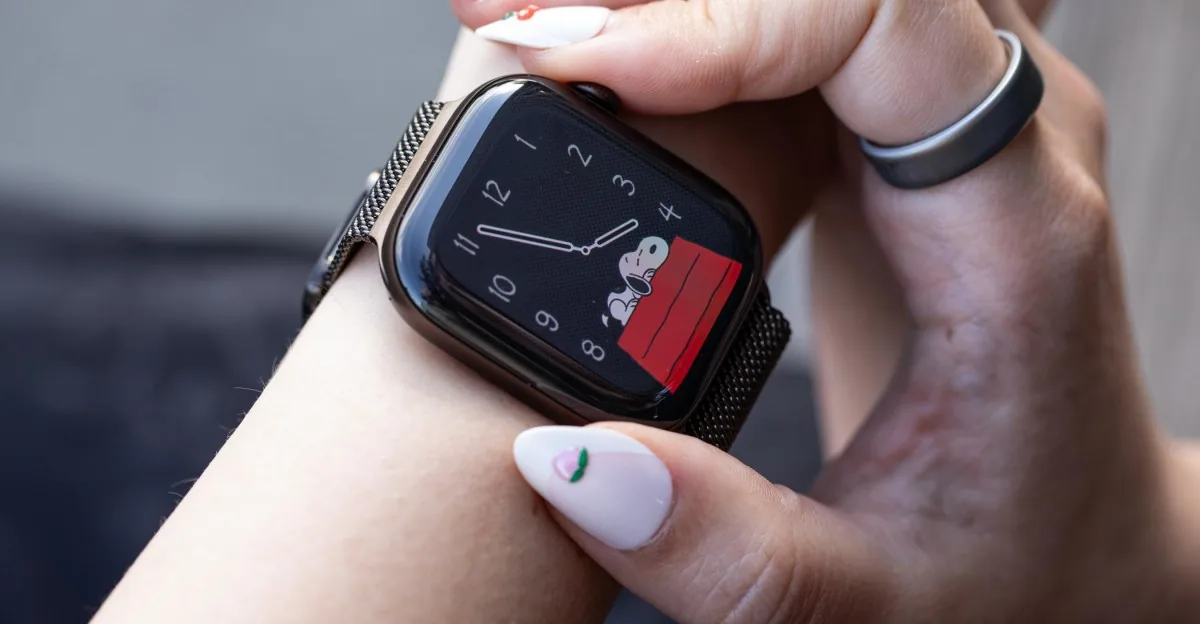
Apple has invested heavily in tactile response mechanisms over the past decade, transforming how owners navigate handheld electronics. The company’s proprietary Taptic Engine first debuted as part of the original Apple Watch in 2014 before arriving on the iPhone 6s and iPhone 6s Plus the following year. This hardware replaced older rotational vibration motors, giving Apple devices the ability to generate distinct, localized pulses for user notifications, simulated button presses, and haptic interface alerts. The hardware debuted in 2014 [1].
Tactile feedback redefined smartphone navigation across global markets [1]. Millions of daily users experienced haptic pulses without realizing an intellectual property battle brewed behind the glass [2].
Integrating physical feedback mechanisms across hundreds of millions of consumer gadgets dramatically raised the stakes in the courtroom. Taction argued that Apple built its premier user experiences directly upon patented transducer principles, making tactile alerts an indispensable selling point for flagship hardware lines [1]. Because consumers interact with haptic feedback repeatedly throughout each day, establishing intellectual property rights over Apple haptic feedback patents carried unprecedented commercial value in front of the San Diego jury [2].
The presence of specialized tactile modules expanded across product generations, embedding the disputed mechanics inside consumer hardware ecosystems. With millions of wearable watches and smartphones relying on responsive haptic pulses, the courtroom scrutiny extended far beyond an isolated manufacturing run [2]. Taction highlighted this ubiquity during closing arguments, emphasizing that Apple incorporated tactile feedback into nearly every flagship mobile device introduced over the past decade [1].
Apple Appeals the Verdict and Rejects Damages
Apple responded swiftly to the multi-billion dollar judgment by issuing a formal rejection of the jury findings. In an official statement, an Apple spokesperson stated: “While we thank the jury for their consideration, we strongly disagree with today’s verdict and the damages awarded, which are entirely unsupported by the facts. Apple’s Taptic Engine is fundamentally different from Taction’s technology, which Taction’s own testing of Apple’s products confirmed during trial. Apple does not use Taction’s technology, and we will appeal.” [1] The corporate response emphasized that technical benchmarks presented during the trial contradicted claims of direct mechanical copying [2].
Defense attorneys argued throughout the proceedings that Apple engineers arrived at their haptic architectures through independent laboratory research rather than external acquisition. By demonstrating that the Apple Taptic Engine relies on distinct electromechanical mechanisms, Apple sought to convince the jury that physical sensations in its devices did not infringe on Taction’s patents [1]. The company highlighted during testimony that Taction’s own product evaluations revealed fundamental differences in magnetic transducer operation [2]. Apple plans an immediate appeal [1].
The verdict now transitions into a protracted appellate process that will scrutinize the jury’s interpretation of federal patent claims and damage methodologies. Appellate courts frequently review whether multi-billion dollar patent awards accurately reflect technical contributions or disproportionately penalize finished commercial goods [2]. As legal counsel prepares opening appellate briefs, the $5.7 billion award will remain stayed pending post-trial motions and appellate review before the United States Court of Appeals for the Federal Circuit [1].
- ONLINE NEWS Miller, C. (2026, September 27). Apple hit with $5.7 billion verdict over Taptic Engine patent infringement. 9to5Mac. [Article Link]
- ONLINE NEWS O’Brien, T. (2026, September 26). Apple hit with $5.7 billion in damages over haptic patents. The Verge. [Article Link]


