






Can scientists track gravitational waves from deep space using laser beams fired over millions of kilometers? The LISA mission, formally known as the Laser Interferometer Space Antenna, will soon attempt that feat through an international collaboration between the European Space Agency and NASA [1]. Instead of observing light like traditional observatories, this space observatory will measure tiny ripples in spacetime caused by accelerating celestial objects [3]. Led by Europe and slated for launch in the mid-2030s, the triangular satellite constellation will detect low-frequency waves that Earth-based instruments cannot sense [1].
What Is the LISA Mission?
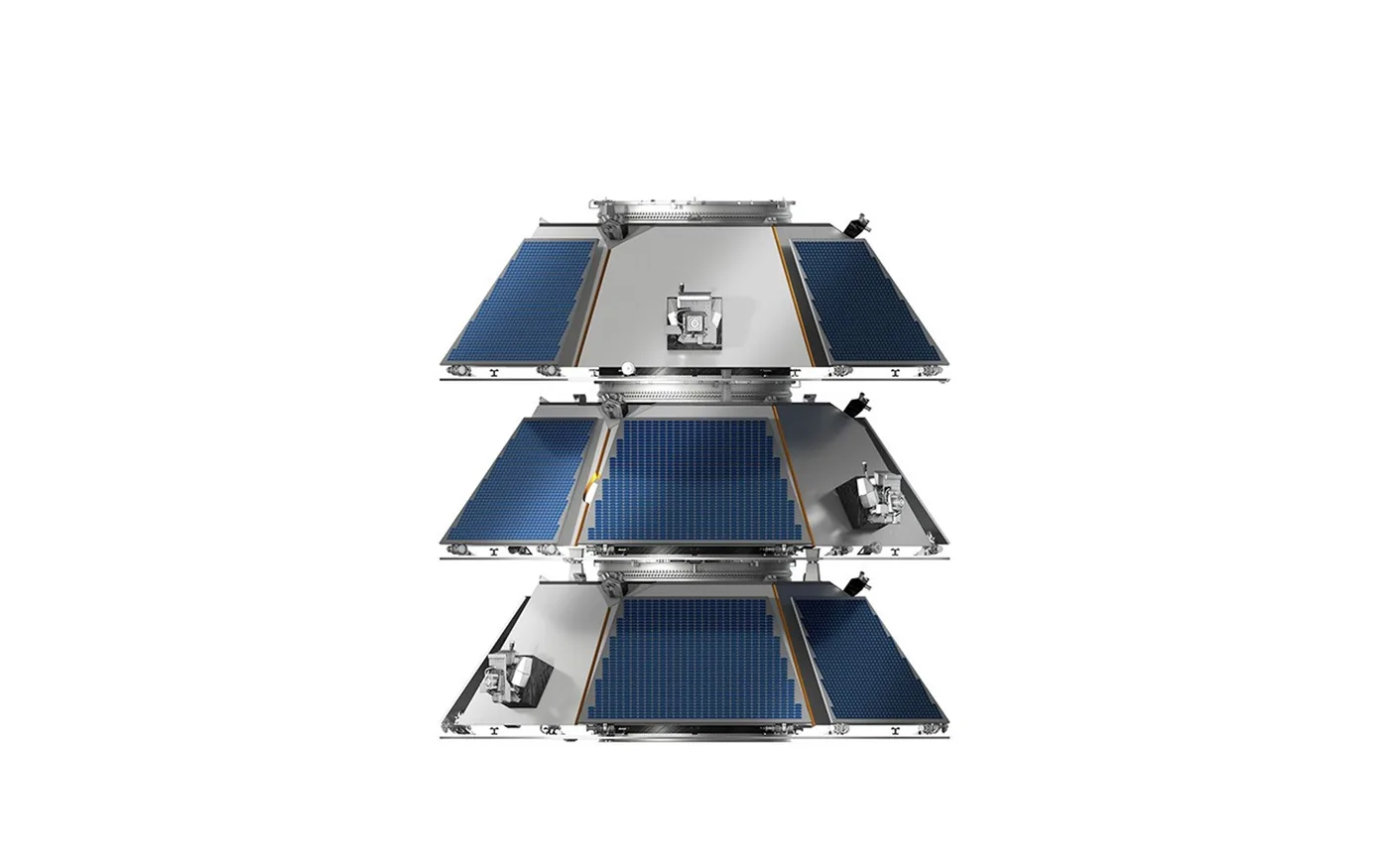
The LISA mission consists of three spacecraft that will fly in an Earth-following orbit around the Sun [1]. These three satellites will arrange themselves into a vast triangular formation measuring 2.5 million kilometers, or 1.6 million miles, along each arm [6]. That distance is so wide that the Sun itself could fit inside the constellation [3]. Each spacecraft contains two optical telescopes and two free-floating cubes made of gold and platinum, known as proof masses. The spacecraft fly around these cubes to shield them from solar wind and other disturbances, allowing each cube to move through space purely under the pull of gravity [1].
To track passing gravitational waves, each satellite will shoot infrared laser beams through its telescopes to the other two vehicles [1]. The onboard instruments will monitor the distance between the proof masses by comparing the arrival times of these laser signals [2]. Passing gravitational waves stretch and squeeze spacetime, altering the distance between the satellites by miniscule amounts. “These changes are tiny, smaller than the width of a helium atom, but through them LISA will reveal a sea of low-frequency gravitational waves that we cannot currently detect through facilities on Earth,” said Ira Thorpe, the NASA project scientist for the mission at Goddard Space Flight Center in Greenbelt, Maryland [1].

Why the LISA Telescope Needs All-Glass Optics
NASA and contractor L3Harris Technologies have begun manufacturing a new test telescope known as the Engineering Test Unit [1]. This telescope serves as the final development step before engineers begin assembling flight-ready units for the spacecraft [6]. Every telescope in the array must act as an afocal beam expander with pupil relays designed to stop angular jitter from leaking into the optical pathlength. Because the light travels 2.5 million kilometers, the telescope must send and receive laser light with extreme precision so that ground teams can extract clear signals [2].
Thermal stability is the main engineering hurdle for these optics. In deep space, temperature swings can cause materials to expand or contract, distorting optical measurements and mimicking gravitational signals [2]. To prevent this problem, engineers construct the entire telescope out of an amber-colored ceramic-glass composite called Zerodur [1]. This composite holds its shape under broad temperature swings, which keeps the optical path steady during long science operations [6]. With a main mirror diameter of roughly 30 centimeters (about 1 foot), the telescope is compact, but it must remain completely rigid while lasers fire continuously between the three orbiters [2].
Building all-glass hardware follows several trial stages. In 2024, L3Harris delivered a prototype telescope to NASA that served as an early engineering unit for laboratory testing [1]. Earlier in June, the team delivered a metal frame model to study structural handling without risking delicate glass [6]. “We’ve put the prototype through rigorous testing, and we’re bringing everything we’ve learned into this new telescope,” said Ritva Keski-Kuha, lead for the LISA Telescope program at NASA Goddard [1]. She said that this Engineering Test Unit will be NASA’s last pre-flight unit and its first optical telescope delivery to ESA [6].
How Lasers and Test Masses Track Spacetime Ripples
The detection method relies on measuring minute shifts between test masses separated by immense distances. These distance shifts are on the order of one picometer, which equals one trillionth of a meter. To measure changes that small, the onboard lasers must generate light that stays exceptionally stable in both frequency and brightness. NASA developed a laser system based on non-planar ring oscillator (NPRO) technology, adapting hardware tested in ground observatories for deep space operations. The laser frequency is locked to an ultra-stable reference cavity derived from the NASA-German GRACE Follow-On mission, while a fiber amplifier strengthens the beam [2].
Keeping the test masses undisturbed matters just as much as stabilizing the lasers. When cosmic rays strike the satellites, they deposit electric charge onto the free-floating gold-platinum cubes inside. If engineers let that charge accumulate, electrostatic forces would push the cubes and mask real gravitational wave signals. NASA teamed up with the University of Florida to develop a charge management system that uses ultraviolet light to remove charges through the photoelectric effect. This new setup relies on UV LEDs that are lighter, smaller, and consume less power than older mercury-vapor lamps [2].
Power control systems also protect the cubes from disturbance. A monitoring system watches laser output power so radiation pressure from the light beam does not push the test mass off its natural path [2]. By balancing laser power, charge removal, and optical alignment, the LISA mission keeps the cubes responding only to gravity. Albert Einstein predicted gravitational waves in his 1916 general theory of relativity, describing how accelerating masses create ripples moving at the speed of light [1]. Ground observatories like the National Science Foundation’s LIGO first confirmed these waves in 2015, but ground noise limits them to higher frequencies [3].


What Cosmic Sources Will the LISA Space Mission Detect?
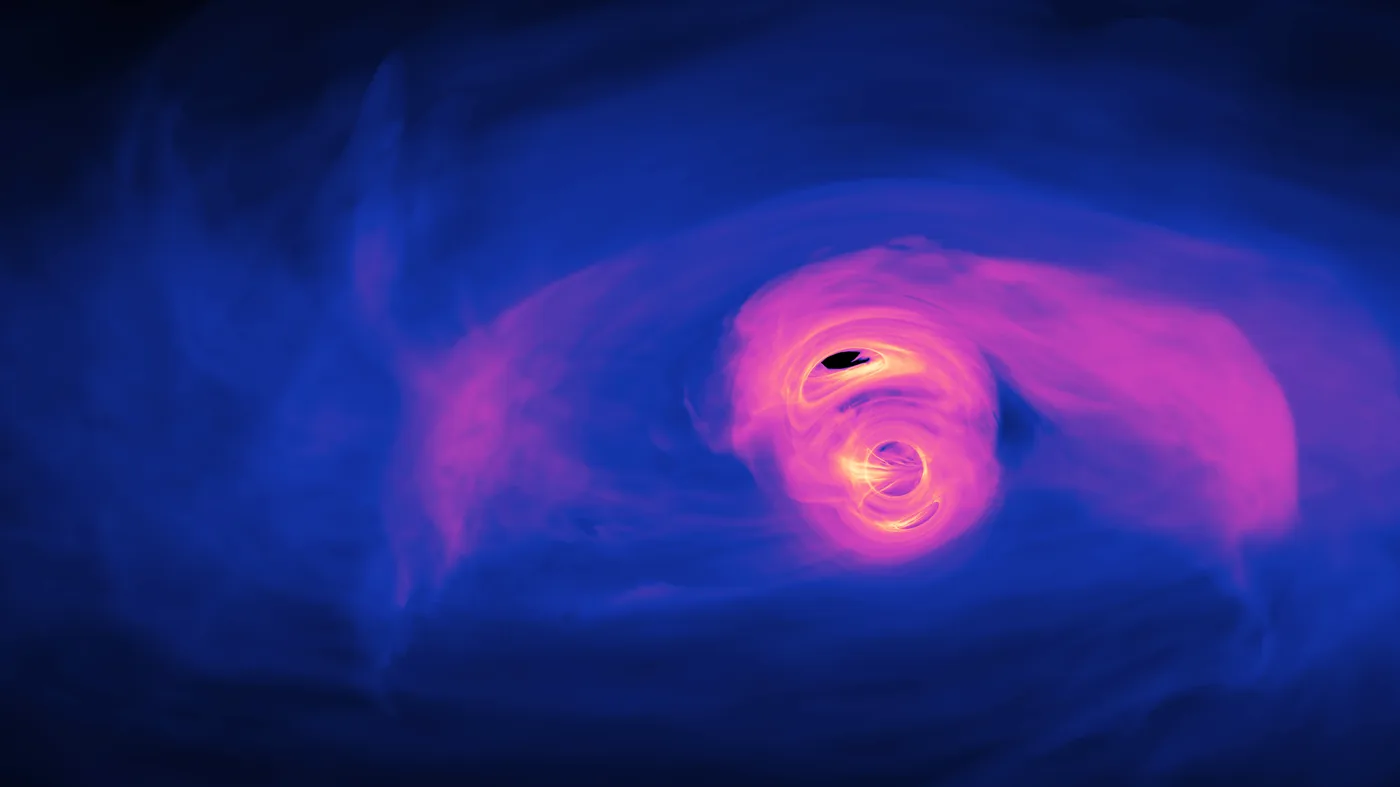
Operating in space opens a window into the millihertz frequency band, where giant cosmic events unfold over hours and days [2]. Earth-based observatories only catch brief, high-frequency signals lasting fractions of a second, but the LISA space mission can watch slow cosmic collisions for months [3]. “The LISA mission will be able to detect mergers of monster black holes billions of light-years away, map compact pairs of white dwarfs, neutron stars, and stellar-mass black holes in our own cosmic backyard, and perhaps provide new insights into gravity itself,” Thorpe said [1]. These observations will help astronomers trace how supermassive black holes formed and grew during early cosmic eras [3].
Beyond monster black holes, the observatory will survey thousands of compact binary systems inside the Milky Way. Pairs of orbiting white dwarfs and neutron stars will produce a steady background hum across the sky [3]. Scientists can also search for extreme mass ratio inspirals, where a small stellar remnant spirals into a giant black hole [2]. Astronomers usually study the cosmos by collecting light, but gravitational waves carry information that light cannot provide. Combining gravitational signals with optical and infrared data from observatories like the Roman Space Telescope survey forms multimessenger astronomy, giving researchers a far richer picture of violent cosmic phenomena [3].
Hardware Heritage from LISA Pathfinder to Orbit
Developing spaceborne gravitational wave detectors required decades of testing and smaller precursor missions. In 2016, the ESA-led LISA Pathfinder mission demonstrated that free-floating test masses could remain isolated from non-gravitational forces in space. That flight proved that electrostatic disturbances and solar radiation pressure could be reduced to levels needed for full-scale gravitational wave detection [1]. NASA participated in LISA Pathfinder, testing charge control methods that originated during the earlier Gravity Probe B mission. The new UV LED charge management system builds on those flight trials, replacing heavier mercury-vapor lamps with compact solid-state hardware [2].
Laser technology also draws on proven spaceflight hardware. The frequency stabilization system uses an upgraded version of the optical reference cavity flown on the joint NASA-German GRACE Follow-On mission. By borrowing flight-tested components, engineers lower technical risks while adapting laser systems for decade-long operations. Ground-based LIGO detectors demonstrated that laser interferometry can measure subatomic shifts, but moving the concept into space requires custom optoelectronics [2]. The LISA mission takes those laboratory-tested ideas and scales them to an interplanetary baseline [1].
Recent development updates show this steady engineering progress. NASA Goddard reported the new telescope progress on Oct. 8, 2026, while news reports from Worldnews and Mirage News documented the development steps that same week [6]. Testing the Engineering Test Unit will confirm that optical pathlength stability meets ESA standards before flight construction begins. Each design refinement brings the international team closer to shipping flight hardware to Europe for integration onto the three spacecraft [1].
NASA Contributions to Deep Space Gravitational Astronomy
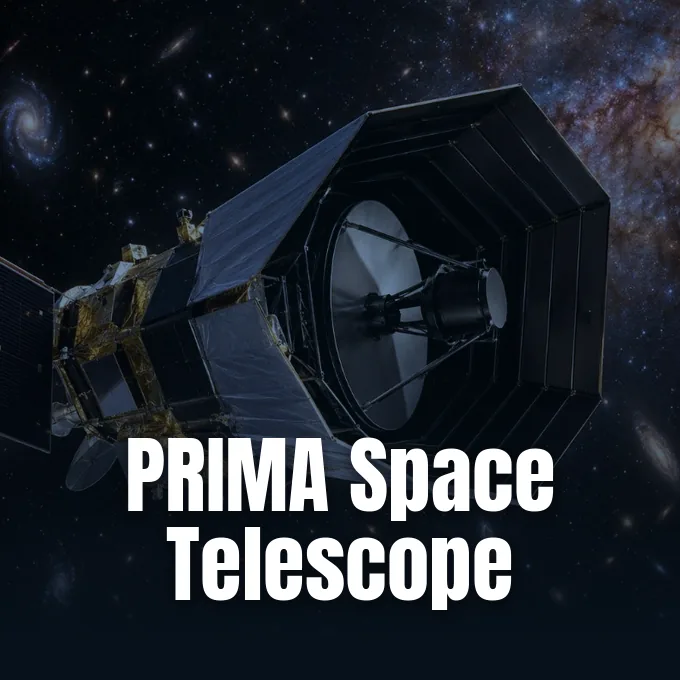
The LISA mission is a joint partnership between ESA and NASA, with Europe leading overall mission architecture while the American space agency delivers core flight hardware. In addition to supplying the Zerodur telescopes, NASA provides the stabilized laser systems, charge management devices, and data processing algorithms [1]. This hardware suite complements other NASA astrophysics initiatives, such as the upcoming PRIMA space telescope mission, which studies the cosmos through far-infrared light [3]. While electromagnetic observatories collect photons from stars and dust, LISA listens to gravitational ripples that pass straight through cosmic gas unhindered [1].
To help the scientific community make sense of incoming data, NASA is setting up a dedicated science center for researchers in the United States. Algorithms developed by NASA teams will isolate individual gravitational wave events from the combined signals of thousands of cosmic sources [2]. Scientists hope these signals will reveal the expansion rate of the universe and probe the fundamental laws of gravity [3]. With test hardware moving through clean rooms at Goddard, the LISA mission is steadily laying the technological groundwork to hear the universe in a completely new way [1].
- PRESS RELEASE Reddy, F. (2026, October 8). NASA Advances LISA Mission Contributions With New Test Telescope. NASA Science. [Article Link]
- WEBSITE National Aeronautics and Space Administration. (2025, January 1). NASA Contributions to LISA. lisa.nasa.gov. [Article Link]
- WEBSITE Kazmierczak, J., & Mattson, B. (2024, February 21). LISA – NASA Science. NASA Science. [Article Link]
- ONLINE NEWS Mirage News. (2026, October 8). NASA Advances LISA Mission With New Test Telescope. Mirage News. [Article Link]
- ONLINE NEWS Worldnews. (2026, October 8). NASA Advances LISA Mission Contributions With New Test Telescope (Goddard Space Flight Center). Worldnews. [Article Link]
- ONLINE NEWS Drake, C. (2026, October 8). LISA Engineering Test Unit telescope for NASA, ESA. Beyond Tomorrow. [Article Link]
APA 7: PerEXP Teamworks. (2026, October 9). Why the LISA Mission Relies on All-Glass Test Telescopes. PerEXP Teamworks. https://perexpteamworks.com/en/lisa-mission-test-telescope/


