





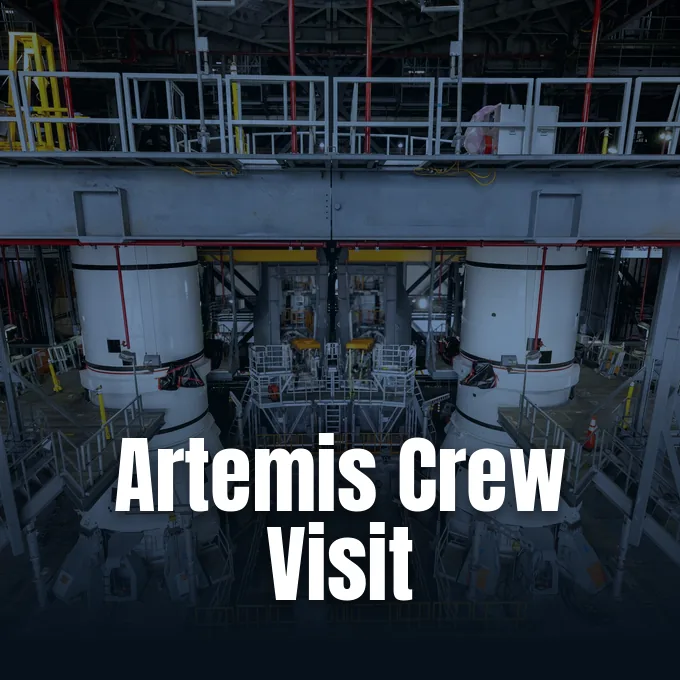
The Artemis 3 mission crew made its first visit to NASA’s Kennedy Space Center on Sept. 2, 2026, to review flight hardware integration. Did the visit signal that lunar surface hardware is already rolling toward the launch pad? In reality, the milestone marked an assessment of twin solid rocket booster stacking and core stage preparations inside the Vehicle Assembly Building for a low Earth orbit test flight. [1, 3]
Artemis 3 Mission Crew Inside High Bay 3
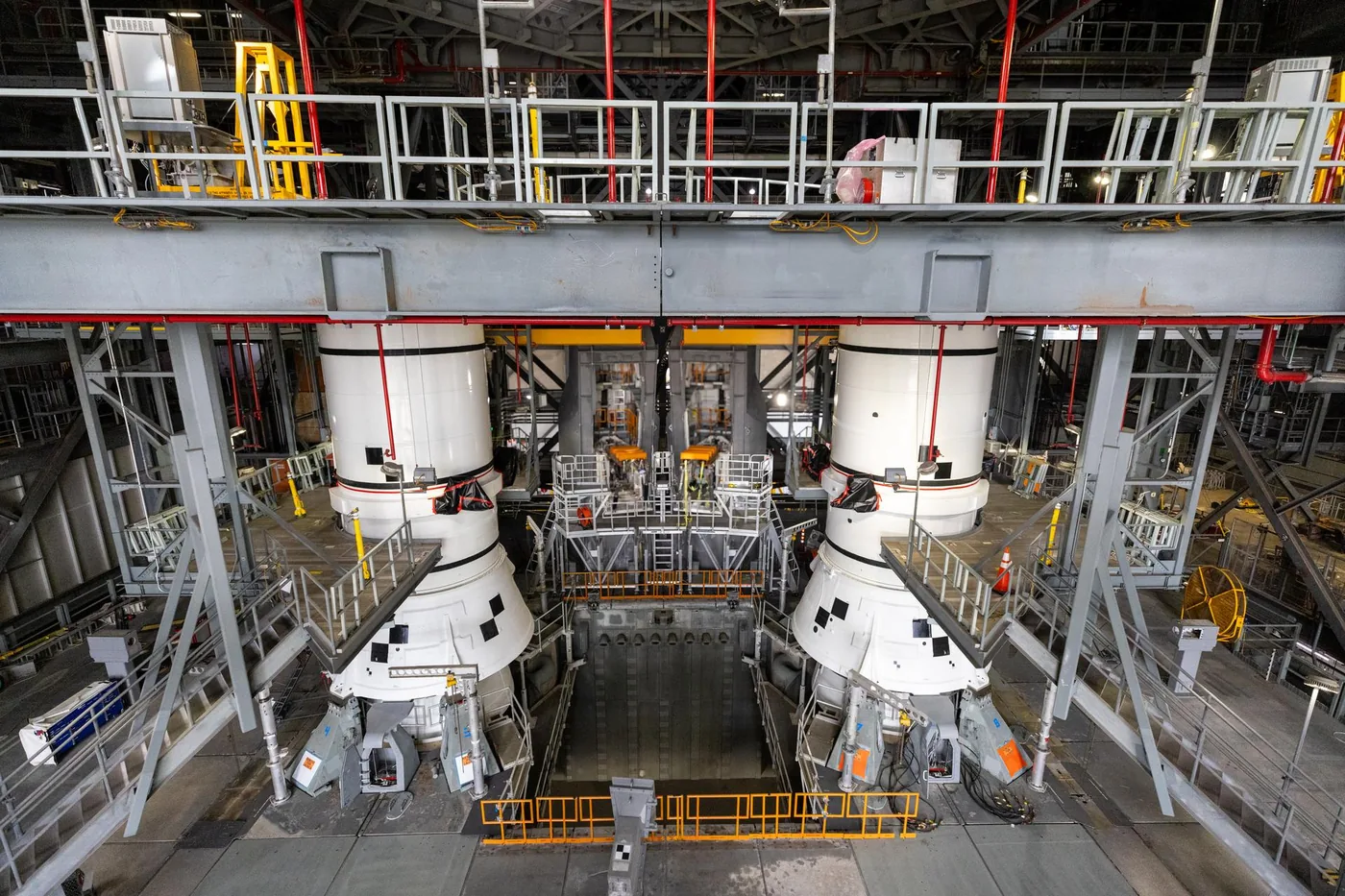
NASA astronaut Randy Bresnik and European Space Agency astronaut Luca Parmitano walked into High Bay 3 inside the Vehicle Assembly Building to inspect booster integration on Wednesday, Sept. 2, 2026. They were joined by NASA astronaut Andre Douglas, NASA astronaut Frank Rubio, and NASA astronaut Bob Hines during the milestone inspection. The gathering represented the first visit to Kennedy Space Center by the entire crew and backup crew members assigned to Artemis III. While international partners coordinate multilateral research initiatives like open science lunar data coordination under the Artemis Accords, human spaceflight requires crew members to familiarize themselves directly with the physical vehicles they will operate in orbit. Parmitano and Bresnik climbed work platforms to observe structural stacking up close. [1, 3]
The Artemis 3 mission crew conducted detailed walkthroughs across the transfer aisle to examine the physical configuration of their launcher with NASA Kennedy Space Center engineers. Four astronauts will fly. Backup crew members train on identical operational parameters aboard ground simulators to ensure full mission readiness. Technicians pointed out newly positioned alignment pins and telemetry wire runs along the booster aft skirts. Hardware assembly continues daily. The inspection gave the Artemis 3 mission crew firsthand familiarity with the towering solid rocket hardware prior to core stage integration. [1, 4]
High Bay 3 serves as the primary vertical integration hub for the Space Launch System at Kennedy Space Center in Florida. Assembly teams erected multi-level access platforms around the mobile launcher to give technicians, flight controllers, and visiting astronauts direct physical access to examine critical structural joints. Bresnik examined electrical cabling harnesses routed along the booster segments. Close coordination between the Artemis 3 mission crew and Kennedy Space Center processing teams helps identify operational constraints and procedural challenges early in the assembly flow. [1, 3]
Stacking the Solid Rocket Boosters
Ground crews initiated booster stacking in July 2026 inside High Bay 3, less than three months after the safe ocean return of the Artemis II crew. Technicians commenced operations by securing the left-hand aft assembly to the mobile launcher, which had undergone structural refurbishment and flame trench repairs following the Artemis II launch. The remaining segments were shipped via train to Kennedy Space Center in June. Each cylinder moved into the Rotation, Processing, and Surge Facility (a dedicated space for inspecting, cleaning, and coating solid rocket booster hardware) before placement into lift stands. Transport crawlers then hauled each segment into the Vehicle Assembly Building to stack atop the mobile launcher. [2]
Stacking demands exceptional structural alignment across all booster joints. Crews position each heavy motor casing with millimeter precision while optical tracking lasers monitor vertical geometry. Twin solid rocket boosters provide the primary initial thrust needed to lift the massive Space Launch System off the pad. The stacking workflow progressed steadily throughout the summer. [2]
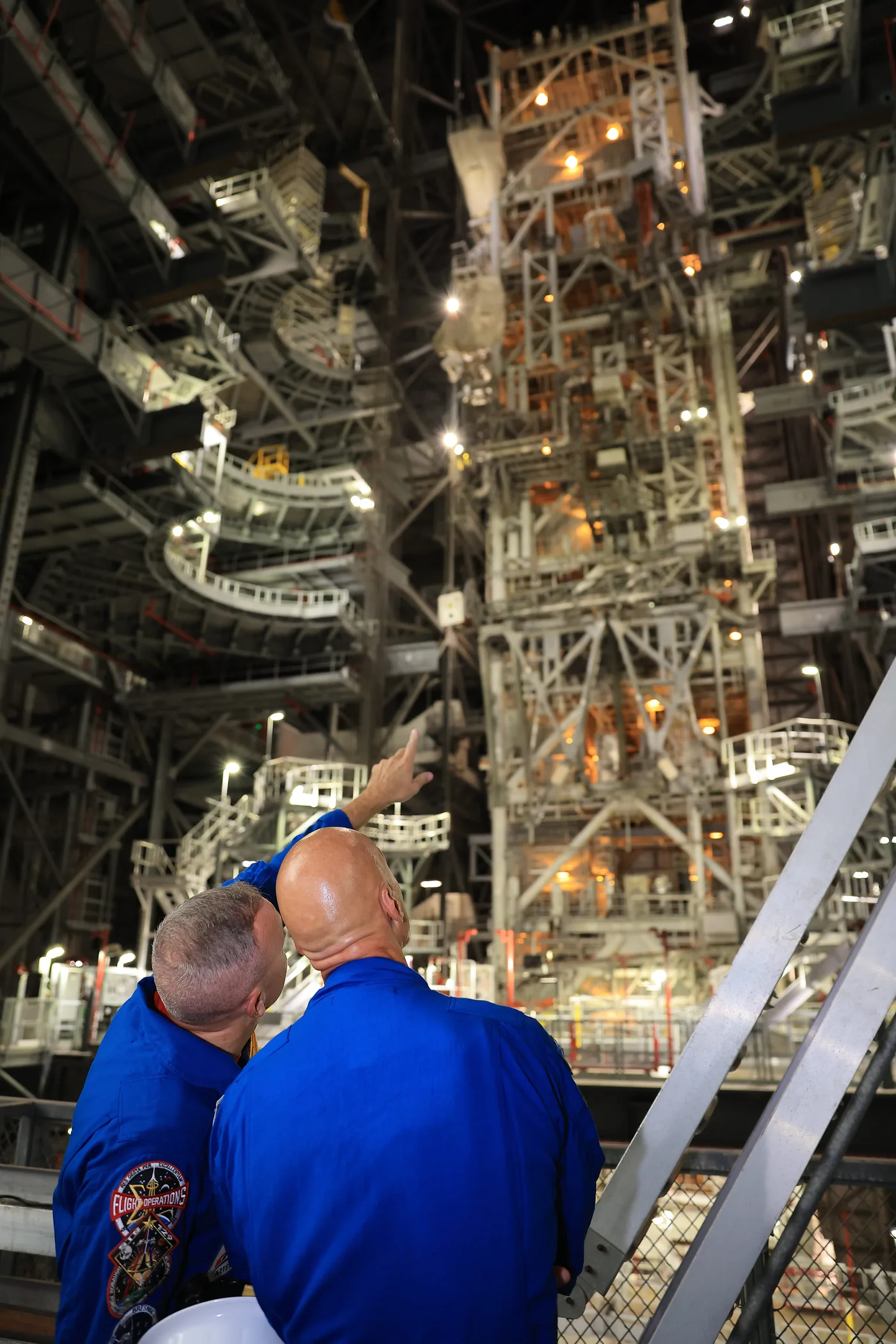
Each booster segment contains solid propellant cast in complex internal star configurations to deliver balanced aerodynamic acceleration throughout early ascent. Specialized technicians at Kennedy Space Center inspect synthetic rubber joint seals and protective insulation blankets before hoisting each casing into the vertical stack. Stacking operations require strict humidity controls inside High Bay 3 to safeguard thermal barriers. Work proceeds methodically toward completion. [2]
Core Stage and RS-25 Engine Integration
Core stage processing advanced simultaneously inside the Vehicle Assembly Building across from the booster integration stands. In May 2026, assembly teams achieved a major structural milestone by mating the four-fifths rocket stage with its engine section to complete the main propellant tank structure. That complex engine section houses liquid propellant feedlines, avionics controllers, and hydraulic actuators designed to gimbal the main engines during flight. While the agency engages the public through public engagement through the NASA Inspiration Tour, manufacturing teams at Kennedy Space Center concentrate strictly on high-stakes cryogenic propellant plumbing. Precision remains critical here. [2]
The first two RS-25 engines arrived at the Vehicle Assembly Building in June 2026 for preliminary receiving checkouts and structural fitting inspections. Once logistics specialists deliver the remaining two engines, technicians will mount all four powerplants onto the engine thrust structure. These four RS-25 powerplants (liquid-propellant rocket engines originally developed for the Space Shuttle program) fire in unison with flight computers to guide the vehicle toward orbit. Installing the four engines will enable final integration of the core stage atop the mobile launcher between the twin boosters. Engine installation is underway. [2]
Cryogenic liquid hydrogen and liquid oxygen fill the massive core stage tanks during launch countdown operations at Kennedy Space Center. The engine section must transfer tremendous mechanical thrust from firing RS-25 powerplants into propellant tanks without structural deflection. Technicians install fuel lines, thermal blankets, and aerodynamic fairings around each engine nozzle. Teams follow rigorous quality checklists before moving the stage to the stack. [2]


Testing the Upgraded Orion Heat Shield
Across the center inside the Neil A. Armstrong Operations and Checkout Building, technicians attached the heat shield for the Artemis III Orion crew module. Orion’s heat shield consists of 186 blocks of an ablative material called Avcoat, with each block meticulously and individually inspected. Engineers at Kennedy Space Center upgraded the manufacturing and bonding processes for this mission. Why did the thermal protection structure require extensive design revisions? Engineers introduced design upgrades to achieve uniformity and consistent permeability of the Avcoat blocks, following extensive analysis and testing of unexpected behavior seen on the Artemis I heat shield. [2]
Orion’s service module also completed acoustic testing inside the Neil A. Armstrong Operations and Checkout Building earlier in the summer. To simulate vibrations experienced during launch, technicians surround the module with a wall of high-power speakers and measure how the structure responds using microphones, strain gauges, and accelerometers. The acoustic evaluations were rigorous. With heat shield installation complete, teams are completing preparations to integrate the crew and service modules together for the crewed mission. [2]
The Artemis 3 mission crew relies on the integrity of the Orion crew module to safeguard human life during high-speed atmospheric reentry. The 186 Avcoat blocks must ablate smoothly to dissipate extreme friction temperatures as the spacecraft decelerates through the upper atmosphere. Quality inspectors at Kennedy Space Center reviewed ultrasonic scan records for every block to verify void-free bonding before flight. Structural validation confirms the capsule is ready for module mating. [2]
Simulating Launch Day in Firing Rooms
NASA Kennedy Space Center teams began conducting monthly launch countdown simulations inside the Rocco Petrone Launch Control Center in May 2026. Engineers practice procedures for loading cryogenic propellant into the rocket tanks and monitor terminal countdown sequencing under rigorous flight rules. Console operators in firing rooms train to handle unexpected sensor readings and valve pressure drops under strict mission timing. Rehearsals sharpen ground crew coordination. [2]
Simulations focus heavily on terminal countdown (the last 10 minutes before launch). During those final ten minutes, automated launch software sequences the final pressurization of propellant tanks, transfers electrical power to internal flight batteries, and arms the booster igniters. The launch team will continue rehearsing and refining operational procedures leading up to the mission’s launch. [2]
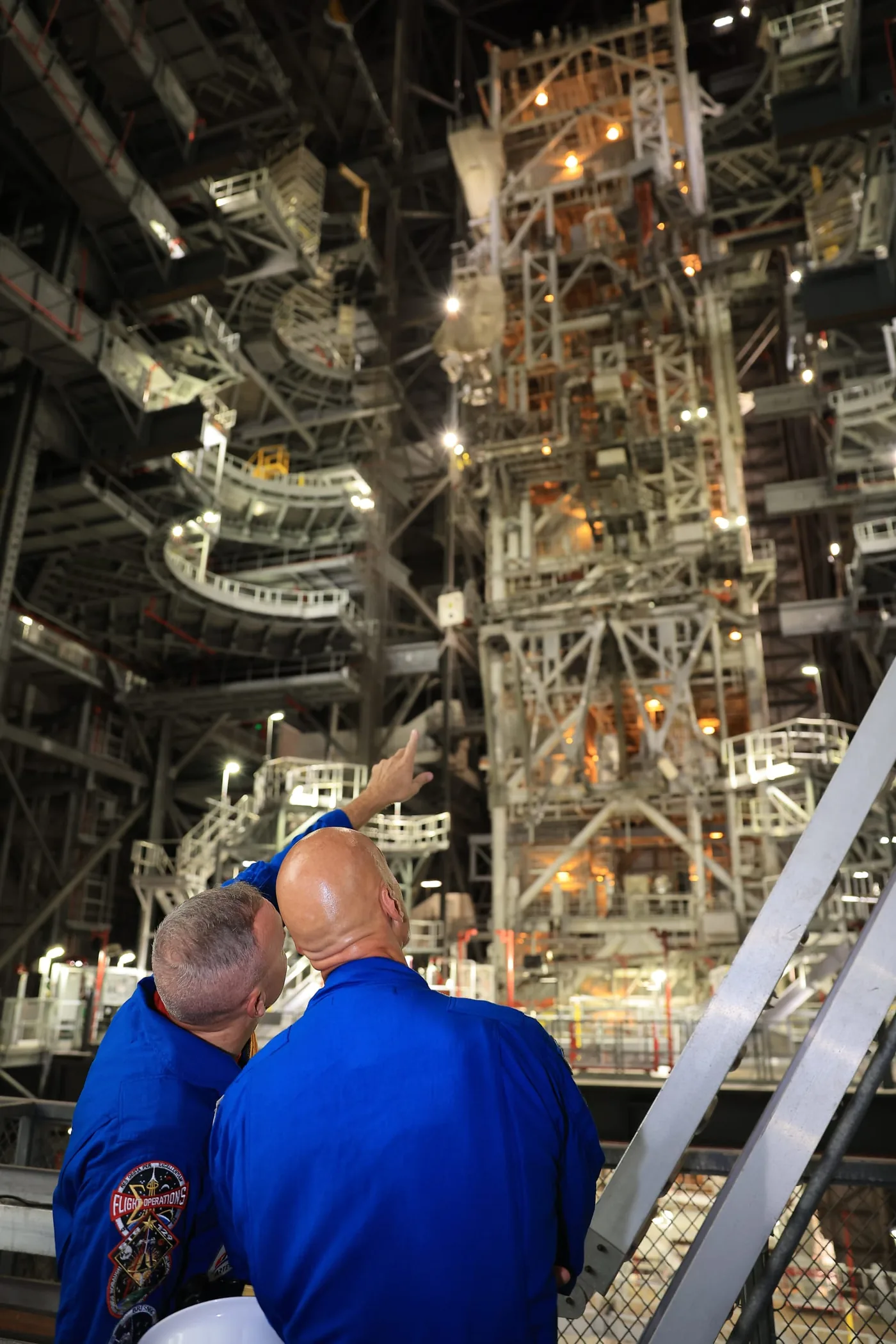
Launch controllers practice abort scenarios in firing room environments inside the Rocco Petrone Launch Control Center. If a cryogenic bleed valve sticks or helium pressurization drops below operating limits, console operators react immediately. Simulating high-pressure countdown events builds operational discipline among test directors and systems engineers. Ground teams will continue monthly countdown simulations through next year. [2]
Why Artemis III Flies to Earth Orbit
Public interest frequently centers on mission destinations. Will the Artemis 3 mission crew land on lunar regolith? [1, 2] NASA planned an orbital test flight instead.
Next year’s Artemis III mission will launch astronauts to low Earth orbit aboard the Orion spacecraft on top of SLS to test rendezvous and docking capabilities between Orion and test versions of commercial human landing systems needed to land Artemis IV astronauts on the Moon in 2028. Testing rendezvous procedures in low Earth orbit allows flight controllers and the Artemis 3 mission crew to verify critical docking sensors, communications links, and pressurized hatch transfers close to home. Operating in low Earth orbit significantly mitigates operational risk. The orbital demonstration validates essential capabilities before astronauts travel to deep space. [1, 2]
Testing critical systems in low Earth orbit ensures that hardware anomalies can be managed before attempting lunar descent. If docking sensors or propulsion thrusters exhibit unexpected behavior, the crew remains within a prompt return trajectory to Earth. Demonstrating critical systems in low Earth orbit provides the operational foundation needed for future lunar landings, beginning with Artemis IV. The booster stacking inside the Vehicle Assembly Building and the detailed inspection by the Artemis 3 mission crew confirm that flight hardware preparations are steadily advancing. [1, 2]
- PRESS RELEASE NASA Headquarters Web Team. (2026, September 15). Artemis III crew visits NASA Kennedy’s Vehicle Assembly Building. NASA. [Article Link]
- PRESS RELEASE Fairley, T. L. (2026, July 13). NASA’s Artemis III flight hardware stacks up at Kennedy. NASA Missions. [Article Link]
- ONLINE NEWS Mirage News. (2026, September 15). Artemis III crew tours NASA Kennedy Assembly Building. Mirage News. [Article Link]
- ONLINE NEWS Lanka Hit News. (2026, September 15). Artemis III crew visits NASA Kennedy’s Vehicle Assembly Building. HitTV.lk. [Article Link]
APA 7: PerEXP Teamworks. (2026, September 15). Why Artemis 3 mission crew toured Kennedy booster stacking. https://perexpteamworks.com/en/artemis-3-mission-crew-vab/


1 comment