





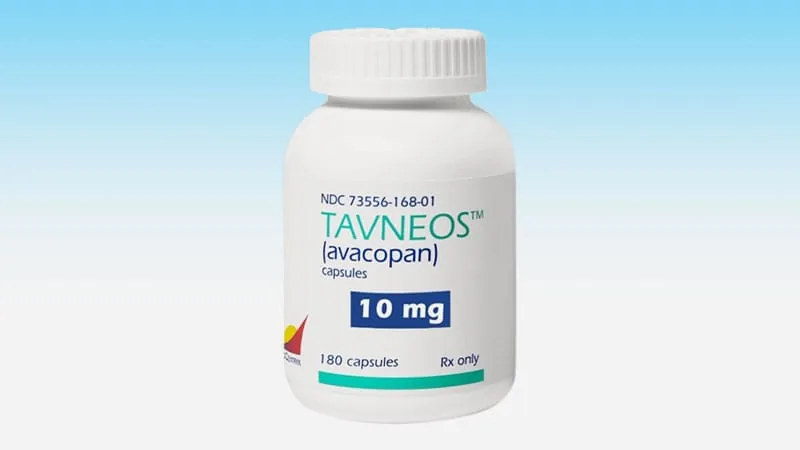
Federal health officials took a rare step in early 2026 when they asked Amgen to pull its vasculitis medication from the American market. The drug, sold under the brand name Tavneos and known generically as avacopan, had earned clearance five years earlier to treat antineutrophil cytoplasmic antibody-associated vasculitis (AAV), a condition that inflames small blood vessels and damages kidneys and lungs. But scrutiny intensified after post-marketing safety registries tracked serious liver injuries and legal disclosures challenged the integrity of the clinical trial data used to approve the pill. Amgen rejected the request and insisted the therapy helps patients who face grim alternatives, turning the dispute over avacopan withdrawal into an uncommon standoff over how federal agencies police medicines once they reach pharmacy shelves [1].
The Conflict Over Avacopan Withdrawal
The disagreement began on January 16 when the Food and Drug Administration (FDA) sent a communication asking Amgen to voluntarily remove avacopan from the market. Amgen had added the product to its sales lineup in 2022 through a $4 billion acquisition of ChemoCentryx, the California biotechnology company that developed the therapy. Agency staff stated that fresh post-marketing safety findings and unverified clinical trial records meant the medication lacked solid proof of benefit. Amgen executives replied on January 28 that they would not pull the drug [2].
Amgen defended its stance in July by submitting a 104-page document to the agency, arguing that the totality of evidence confirms the drug works and provides real help to patients. Tavneos carries a steep price tag: treatment costs roughly $220,000 per year, and annual sales reached nearly half a billion dollars during fiscal year 2025. The company stated that it found no flaws in patient records and believed the benefit-risk balance favored keeping the drug accessible. The annual cost reaches $220,000 [1].

Federal officials took a far harsher view of the company’s history. Tracy Beth Høeg, acting director of the FDA Center for Drug Evaluation and Research, described the situation in stark terms. “Essentially ChemoCentryx swindled billions of dollars by developing a drug that gained FDA approval only because they manipulated the data,” Høeg said. She added: “This can be a deadly drug, and we don’t know if it works.” Eight patient deaths were reported [1].
ADVOCATE Trial Design and Patient Scoring
Clearance for avacopan in October 2021 rested on a single phase 3 study called the ADVOCATE trial, which enrolled 331 patients across international test sites. The trial compared avacopan against a 20-week prednisone taper, assessing whether patients achieved disease remission at week 26 without steroids. Investigators scored clinical status with the Birmingham Vasculitis Activity Score (BVAS), an index that tracks disease activity on a scale from 0 to 63, where zero represents complete remission. ChemoCentryx sought regulatory approval based on non-inferiority at week 26 and superiority at week 52 [4].
From the start, regulatory advisers expressed sharp divisions over whether the trial proved real clinical superiority. When the advisory committee met in May 2021, members voted 10-8 that the overall benefit-risk profile supported approval, but they tied 9-9 on whether the efficacy data was convincing. David Pisetsky, a rheumatologist and researcher at Duke University School of Medicine, voted against approval because comparison patients received only one cycle of rituximab when real-world medical standards called for two. Later disclosures revealed that after ChemoCentryx staff unblinded the study data, an adjudication committee re-scored primary endpoint results for nine of the 331 patients. The panel voted 9-9 on efficacy [2].

Academic scrutiny increased following these revelations. In 2023, rheumatologists S. Kaushik, M. Junek, and Mike Putman published an analysis in Rheumatology pointing out that inadequate maintenance therapy and an untested steroid taper weakened the ADVOCATE conclusions. The crisis peaked in summer 2026 when the New England Journal of Medicine retracted the original 2021 trial paper by Jayne and colleagues. Editor-in-chief E. J. Rubin issued the formal retraction after the study authors requested it, confirming that the central trial underpinning commercial marketing was no longer dependable [5].
Liver Safety Reports and Registry Findings
Safety monitoring after the drug reached clinics revealed liver hazards that went beyond the warnings placed on its first label. The FDA tracked 76 worldwide cases of severe drug-induced liver injury linked to avacopan, including 66 cases in Japan and five in the United States. In 2026, researchers led by Eric T. Roberts and Sharon A. Chung published an analysis in Arthritis & Rheumatology examining real-world records from the RISE national rheumatology registry between October 2021 and March 2025. Their team applied the Roussel Uclaf Causality Assessment Method to evaluate confirmed organ damage among 238 vasculitis patients [3].
Reports from Japan highlighted an uncommon condition called vanishing bile duct syndrome among treated patients. Japanese clinicians saw bile ducts break down, though doctors found no cases outside Japan. Sharon Chung said liver enzyme spikes happen with established medicines like methotrexate. Japan reported vanishing bile duct syndrome [2].
Despite the liver injury reports, some clinical researchers believe the medicine still offers genuine therapeutic value. “This appears to be an efficacious medication,” said Eric Roberts, an epidemiologist at the University of California, San Francisco, pointing to registry data showing disease control. But regulatory critics argue that without verified trial proof, doctors cannot determine whether clinical improvements justify toxic risks. The ongoing debate over avacopan withdrawal highlights how difficult it becomes to weigh infrequent liver damage against the known harms of long-term steroid therapy [1].


Why the FDA Struggles to Rescind Approvals
Forcing a prescription medicine off American shelves involves an arduous path when a manufacturer objects, as shown after the FDA issued its formal request for avacopan withdrawal. Mark Tobolowsky, an attorney with Hyman, Phelps & McNamara who advises pharmaceutical companies, said the agency must provide notice and a public hearing before revoking marketing clearance, unless an imminent hazard exists. “FDA has processes in place to withdraw an approval, including requirements to provide notice and an opportunity for a hearing on the proposal (unless there is an imminent hazard),” Tobolowsky said. He added: “But it’s not a quick process if the company is not cooperative.” Amgen refused to comply [2].
Past regulatory disputes show how long such administrative battles can drag on. In 2020, CDER proposed withdrawing Makena, an unverified injection intended to prevent preterm birth, after a post-approval trial failed to confirm efficacy. Manufacturer Covis requested a formal hearing, which took place in October 2022, and the agency did not finalize the withdrawal until 2023. Similarly, CDER sought to revoke a breast cancer indication for bevacizumab, marketed as Avastin by Genentech, in 2010. Following a hearing in June 2011, the agency pulled the indication on November 18, 2011 [2].

Legal proceedings have complicated the regulatory contest over avacopan. Disgruntled shareholders filed a securities fraud lawsuit alleging ChemoCentryx misled investors about trial results, which Amgen later agreed to settle for a $69 million settlement. Reshma Ramachandran of Yale University warned: “we’re just going to be living in uncertainty in terms of whether or not these drugs actually work [1].”
International Decisions on Tavneos Withdrawal
While American regulators moved through deliberate administrative channels, health authorities in other parts of the world took swift steps to pull the medication. The European Medicines Agency opened a review into the ADVOCATE trial data and concluded that the marketing authorization for Tavneos in the European Union could not stand. European regulators revoked authorization and removed the pill from pharmacies across member states. Shortly after that decision, health officials in the United Kingdom announced that they would also remove the product from British clinics, cutting off distribution in European healthcare systems where the trial results had lost credibility. European clinics stopped dispensing the drug [1].
The divergence between American and European decisions highlights questions about biotechnology development incentives. Sean Nicholson, an economist at Cornell University, explained that large pharmaceutical conglomerates increasingly rely on nimble biotechnology startups to discover new medicines, buying the firms after early trials succeed. David Ridley, a health economist at Duke University, noted that small startup firms operate under immense financial pressure. “Small companies have more to lose,” Ridley wrote. “The entire company can be at stake. That urgency can drive them to work harder and move faster. In rare cases, they might cut corners.” Walter Kraft of Thomas Jefferson University had voted to approve the drug in 2021, but he later stated that his affirmative vote was “based upon an assumption that the sponsor was following the rules of the road [1].”
Treatment Dilemmas for Vasculitis Patients
For patients diagnosed with rare autoimmune vasculitis, the standoff over avacopan creates difficult treatment dilemmas. Without aggressive medication, AAV can trigger swift organ damage in the kidneys and respiratory tract. Physicians usually prescribe heavy doses of glucocorticoids to extinguish acute inflammation, but long-term steroid therapy brings debilitating side effects. Chloe Cusano was a 20-year-old college student when severe leg pain and breathlessness landed her in the hospital for two weeks with AAV. Within six weeks of taking high-dose steroids, Cusano gained 40 pounds, struggled with intense mood swings, and suffered nightly nightmares. Her emotions were “just like crazy,” and she recalled: “I did not like it at all [1].”
Because steroids inflict profound damage on the body, patients and clinicians eagerly welcomed avacopan as a potential steroid-sparing alternative. Sharon Chung pointed out that sparing patients from steroid toxicity represents a major therapeutic advantage, even if liver enzymes must be monitored closely. Yet when trial data manipulation calls efficacy into question, patients cannot be certain whether the expensive pill genuinely replaces steroids or simply introduces unverified hazards. Writing on Substack, Mike Putman called the controversy a pivotal moment for rheumatology, arguing that regulatory oversight failed to detect manipulated data before greenlighting the medicine. As the FDA considers formal hearing steps, the regulatory push for avacopan withdrawal leaves clinicians and patients waiting for reliable evidence on whether the drug can safely treat vasculitis [1].
- ONLINE NEWS Talpos, S. (2026, October 28). The FDA wants to pull its approval of a drug. It’s not so easy. Undark Magazine. [Article Link]
- ONLINE NEWS Young, K. D. (2026, February 23). What’s at issue in the FDA’s request to withdraw avacopan? Medscape. [Article Link]
- ACADEMIC JOURNAL Roberts, E. T., Dadabhoy, D., Antolini, R., Chung, S. A., Schmajuk, G., & Yazdany, J. (2026). Hepatotoxicity of avacopan: Real-world incidence and confirmed cases of severe drug-induced liver injury in a US national rheumatology registry. Arthritis & Rheumatology. [Article Link]
- ACADEMIC JOURNAL Kaushik, S., Junek, M., & Putman, M. (2023). Advocating for better trials in rheumatology. Rheumatology, 62(12), 3776-3777. [Article Link]
- ACADEMIC JOURNAL Rubin, E. J. (2026). Retraction: Jayne DRW et al. Avacopan for the treatment of ANCA-associated vasculitis. New England Journal of Medicine. [Article Link]
- ONLINE NEWS Ars Technica. (2026). The FDA wants to pull its approval of a drug. It’s not so easy. Ars Technica. [Article Link]
APA 7: PerEXP Teamworks. (2026, November 1). FDA Seeks Avacopan Withdrawal as Safety and Trial Doubts Mount. PerEXP Teamworks. https://perexpteamworks.com/en/avacopan-withdrawal-fda-safety/


